
What Is CBT Motorcycle Training? Who Actually Needs It?
This post contains affiliate links. As an Amazon Associate, we earn from qualifying purchases.
Compulsory Basic Training (CBT) is the mandatory starter course you must complete before riding a moped or motorcycle on UK roads. It is a course of instruction, not a pass-or-fail test, covering five elements from bike controls to a two-hour on-road ride. For riders 17 and over, a completed CBT allows you to ride a 125cc bike (up to 11kW) solo on a provisional licence, but you must display L-plates and cannot carry passengers or ride on motorways.
That clearance to ride solo is the whole point. The course is structured to prove you can operate a motorcycle safely enough to practice on your own, not that you’re ready for a test. This is the core of what is CBT motorcycle training. The legal document you get, a DL196 certificate, lasts two years.
What follows is a walkthrough of the five elements, the exact rules on what you can ride, the gear you’ll need, and what to do if the standard one-day format doesn’t fit your pace, clarifying the full scope of what is cbt motorcycle training. This is the baseline every UK rider builds from.
Key Takeaways
- CBT is mandatory training, not a test. You get a certificate (DL196) valid for two years to ride a 125cc bike solo.
- The course has five structured elements (A–E), culminating in a minimum two-hour on-road ride with radio instruction.
- You can be fined up to £1,000 and get 6 penalty points for riding without a valid CBT certificate.
- The instructor-to-learner ratio is strict: 1:4 on-site, 1:2 on the road (or 1:2 throughout for Direct Access training).
- If you struggle, the course isn’t locked to one day. Training continues until you meet the standard or decide to stop.
Who Actually Needs to Take a CBT Course?
The rule is simple: if you want to ride a moped or motorcycle on the road in the UK, you almost certainly need a valid CBT certificate, which is the definitive answer to what is cbt motorcycle training for new riders. This applies if you only have a provisional licence.
There are a few narrow exemptions. You don’t need CBT if you passed your car test before 1 February 2001 and only want to ride a 50cc moped. The same goes if you have a full moped licence from a test taken on or after 1 December 1990, or if you live on certain offshore islands. Everyone else needs the certificate.
The system has a few wrinkles. If you have a full car licence from before 2001, it gives you full moped entitlement automatically. But if you want to ride a motorcycle, even that older licence only gives you provisional bike rights, you still need to complete CBT first.
Common mistake: Assuming a car licence covers you for a 125cc. It doesn’t. You need the CBT certificate to validate your provisional motorcycle entitlement, full stop.
What You Can (and Can’t) Ride After CBT
This is the payoff. Once you have that DL196 certificate, you can ride solo. But the bike and the rules are specific.
For riders aged 17 and over, you may ride a motorcycle with an engine size up to 125cc and a power output up to 11kW (about 14.6 bhp). You must display L-plates (D-plates in Wales), cannot carry a pillion passenger, and are banned from motorways.
If you’re 16, you’re restricted to a moped (up to 50cc, with a maximum speed of 28mph). The same L-plate and passenger/motorway restrictions apply. This isn’t a permanent licence; it’s a learner’s permit validated by your CBT. You have two years from the date on your certificate to pass your full motorcycle test. If you don’t, your CBT expires and you must stop riding or retake the course.
| Your Age | Vehicle Allowed After CBT | Power Limit | Key Restrictions |
|---|---|---|---|
| 16 | Moped | 50cc, 28mph | L-plates, no passengers, no motorways |
| 17+ | Motorcycle | 125cc, 11kW | L-plates, no passengers, no motorways |
The 125cc limit is a hard ceiling. Jumping on a friend’s 250cc “just around the block” invalidates your insurance and licence. The penalty isn’t a talking-to; it’s a potential £1,000 fine and 6 penalty points on your future licence.
The Five Elements of CBT, Explained
The course isn’t a free-for-all. The Driving Standards Agency training document breaks it into five sequential elements, labelled A through E. A trainer can shuffle the order within an element, but all five must be covered.
The CBT syllabus is a continuous assessment of a trainee’s ability. Consequently the training will not necessarily be a one day course, nor will it take a set number of hours. Each item of the syllabus must be covered adequately, taking into account the aptitude of the trainee.
Element A: Introduction. This is paperwork and theory. The instructor will check your provisional licence and your eyesight; you must be able to read a vehicle registration mark with letters and figures 79.4 mm high at a distance of 20.5 metres. You’ll go through the aims of CBT, what the certificate allows, and the gear requirements.
Element B: Practical On-Site Training. You’re with the bike, but not riding it yet. This is a hands-on lesson on:
- What every control does (throttle, clutch, brakes, gears).
- Basic safety checks: tyres, lights, brakes, and the operation of the vehicle’s electrical systems.
- How to get the bike on and off its stand and wheel it around.
You don’t need to be a mechanic. The standard is to “point out what you are looking for.” If a physical disability prevents you from doing a check, you must arrange for someone else to do it regularly.
Element C: Practical On-Site Riding. Now you start the engine. In a safe, off-road area like a car park, you’ll learn to:
- Start and stop the engine safely.
- Move off and stop.
- Ride in a figure-of-eight.
- Use the brakes properly and change gear.
- Perform a controlled stop and a U-turn.
This is where low-speed control and clutch feel are everything. The goal is stability before you ever see traffic.
Element D: Practical On-Road Training. A classroom session before hitting the road. The instructor will cover:
- Road positioning.
- Junctions, roundabouts, and traffic lights.
- How to deal with hazards.
- The “Observation-Signal-Manoeuvre” (OSM) routine.
Element E: Practical On-Road Riding. The final, and longest, element. You’ll head out on the road for supervised riding. The instructor will follow, giving directions and feedback via radio. They’re assessing whether you can apply the training safely in real traffic. If you meet the standard, you’ll head back, get a debrief, and your DL196 certificate will be signed.
What to Bring and Wear: The Non-Negotiables
Showing up unprepared can delay or cancel your day. Here’s the checklist.
Documents:
- Your UK provisional driving licence (the photocard).
- Your theory test pass certificate (if you have one, it’s not required for CBT but is for the full test).
Gear:
This is where my gear-testing background shouts loudest. The syllabus is specific, and for good reason.
- Helmet: By law, an approved safety helmet. Don’t borrow a dubious old one. Fit is critical, it shouldn’t move on your head when you shake it. An ECE 22.06 rated helmet is the current safety benchmark.
- Eyewear: If you need glasses or contacts to pass the eyesight test, you must wear them for the entire course and every time you ride.
- Jacket & Trousers: Durable, full-length clothing. Denim or motorcycle-specific textiles/leather. No shorts.
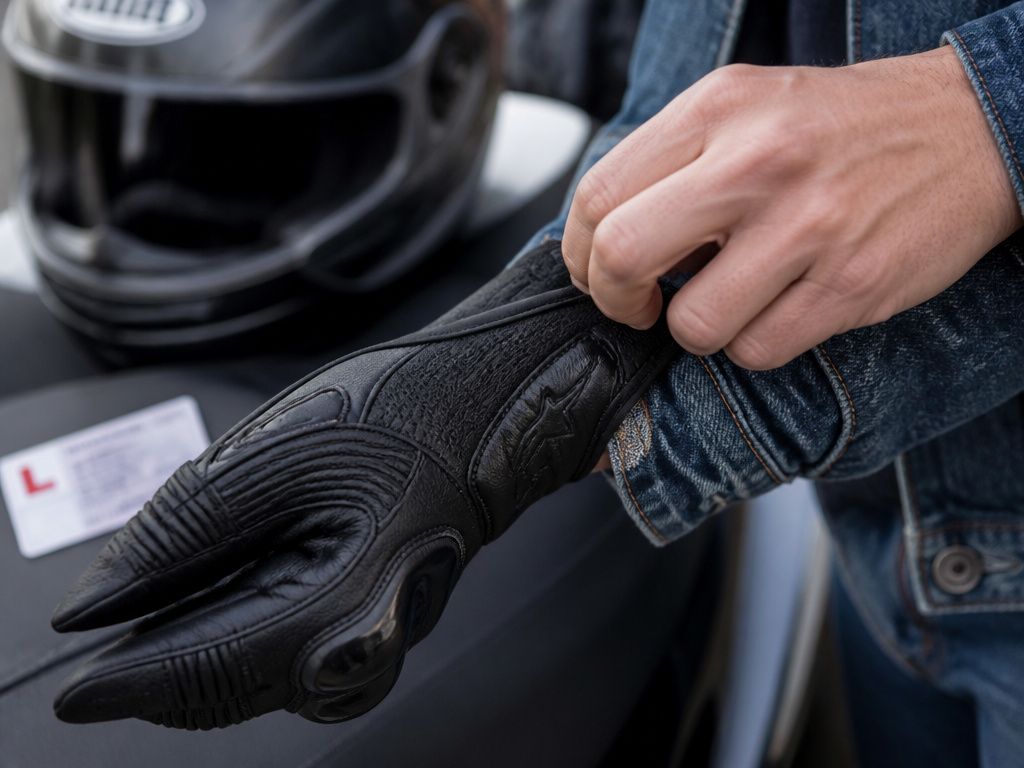
- Gloves: Must fully cover your wrists. Good gloves aren’t just for cold weather; they’re your first layer of protection in a slide. Good gloves or gauntlets are vital when riding a motorcycle.
- Boots: Supportive footwear that covers your ankles. No trainers. Proper motorcycle boots protect the small bones in your feet and ankles during a tip-over.
Training schools usually have helmets and jackets to borrow, but your own, well-fitted gear is always better. Scrimping on gloves or boots is a classic beginner error your skin will regret.
How Long Does CBT Take and What If You Struggle?
The “one-day course” label is a guideline, not a guarantee. The official stance is that training continues until each element is covered adequately for your ability. Many people finish in a day, but some do not.
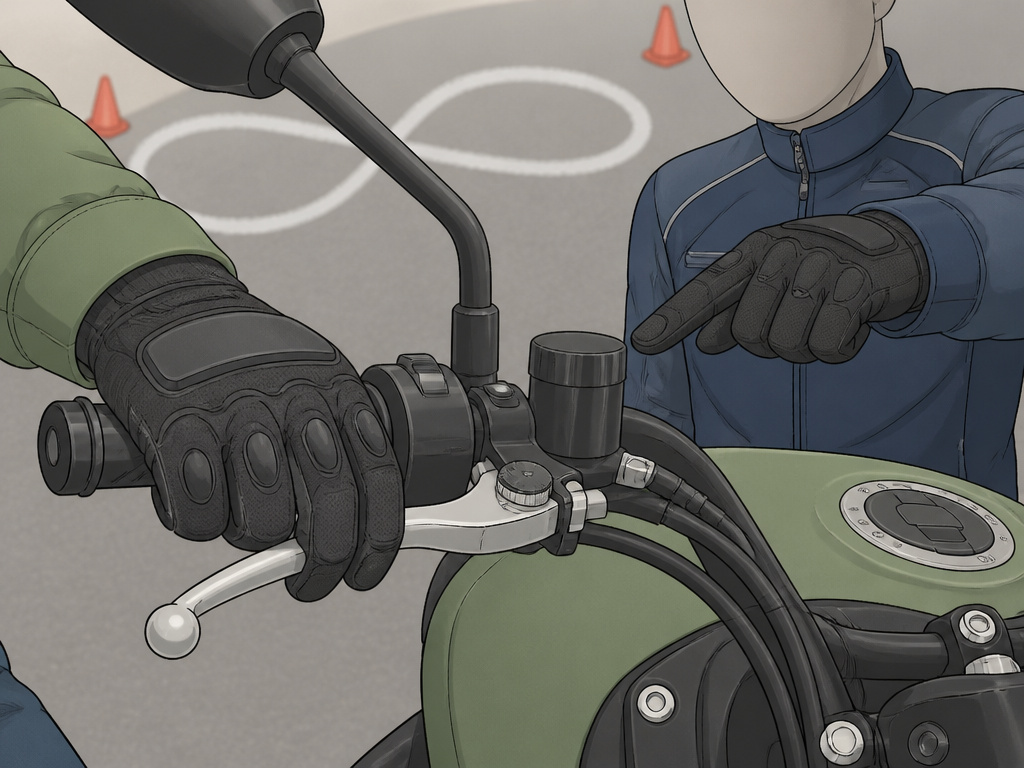
If you’re struggling with, say, the clutch control for the figure-of-eight in Element C, the instructor won’t just pass you to keep to schedule. They’ll keep coaching. If the day ends and you’re not ready for the on-road ride, you’ll book a follow-up session to continue where you left off. You only pay for the extra training time.
There is no “fail.” But you also don’t get the certificate until the instructor is satisfied you can ride safely alone. If you decide the bike isn’t for you, you can stop at any time, you just won’t get the DL196.
Where this goes sideways: Rushing because you booked a single day. Book with a school that offers a modular approach. A two-session course over a weekend kills the clock pressure and lets skills settle overnight.
Your Next Steps After the CBT Certificate
You’ve got the DL196. Now what? You’re legal to ride a 125cc solo, but the DVSA itself states that “CBT on its own will not be sufficient to adequately prepare candidates for the full-accompanied motorcycle test.”
Your certificate is a two-year timer. Use it.
- Practice. Get comfortable on your 125. Practice the maneuvers from Element C in empty car parks. Work on riding confidence in different traffic conditions.
- Book your theory test. If you have a full car licence, you’re exempt. Otherwise, you need to pass the motorcycle theory test.
- Consider further training. An MSF course or similar post-CBT training is invaluable. For post-CBT training using learner machines, a maximum training ratio of 4 learners to each instructor is permitted.
- Prepare for the practical test. When you’re ready, you’ll need to pass the two-part practical test: Module 1 (off-road maneuvers) and Module 2 (on-road riding). Professional instruction for the road skills test can be valuable at this stage.
How much does a CBT course cost
The cost of a CBT course is set by individual training schools, not by the government. The price will reflect the nature of the training, which is based on continuous assessment rather than a fixed-length course. You are paying for the instructor’s time and expertise, as they must be certified and adhere to strict rules, such as maintaining a maximum ratio of learners to instructor during the on-road riding element. Remember, riding without a valid CBT certificate can result in a fine and penalty points, so it’s a necessary investment for legal riding.
Frequently Asked Questions
How hard is it to “pass” a CBT?
It’s not a pass/fail test, but a training standard. The difficulty is in mastering basic control under instruction. Most complete it in a day. The real challenge is the on-road ride, managing real traffic while listening to radio instructions is mentally taxing for a first-timer. If you’ve never ridden, expect a steep learning curve for clutch control alone.
Can I do a CBT on my own bike?
Yes, provided it’s legal (125cc or under, L-plates fitted, taxed, insured, and with a valid MOT if over 3 years old). Many schools encourage it, as you’ll learn on the bike you’ll practice on. Just make sure you can get it to the training centre legally, you can’t ride it there yourself without the CBT.
How long does CBT training take?
For most, a full day (typically 8-9 hours). However, the syllabus is based on competency, not time. If you need more practice, it can spill into a second session. Don’t book a course that promises a fixed-time guarantee; book one that promises to train to the standard.
What’s the difference between CBT and the MSF Basic Rider Course?
CBT is the UK’s legal minimum to ride solo. The MSF (Motorcycle Safety Foundation) Basic Rider Course is a more detailed, often longer, training program common in the US that usually concludes with a skills test for licence endorsement. In the UK, post-CBT courses offered by schools are similar in spirit to the MSF’s skills-building approach.
Can I ride a 125 without doing a CBT?
No. The only way to ride a 125cc motorcycle on the road without a CBT is if you already have a full motorcycle licence for that category (gained by passing the practical test). A car licence alone does not grant this right.
What happens if my CBT expires?
If you don’t pass your full motorcycle test within the two-year validity of your CBT certificate, it expires. You must stop riding immediately. To continue, you must either retake the CBT or, if you’ve already booked your full test, you can ride to and from that test without a valid CBT.
Before You Go
The CBT is your on-ramp. It gets you rolling legally, but it’s not the destination. That two-year window on the certificate is shorter than it feels.
The single best investment after your CBT isn’t a louder exhaust or a new helmet; it’s dedicated further training, such as a motorcycle safety course. The CBT teaches you to be safe enough to practice alone; a dedicated motorcycle safety course teaches you how to survive out there. The habits you build in your first 1,000 miles stick, so build good ones from the start.
