
Motorcycle Airbag Vest Pros and Cons: Is It Worth It?
This post contains affiliate links. As an Amazon Associate, we earn from qualifying purchases.
Motorcycle airbag vests protect the torso and collarbone by inflating in a crash, but they have clear limits on speed, cost, and maintenance. The main pros are a documented reduction in serious thoracic injury risk and coverage that foam armor can’t match. The cons are high initial cost, mandatory rearming fees after deployment, battery dependence for electronic models, and a protection ceiling around 40 km/h for direct impacts.
That 40 km/h figure comes from crash testing. It’s the threshold where the physics of a direct impact overwhelm what an airbag can absorb. This is a key point when considering motorcycle airbag vest pros and cons. It isn’t about the vest failing to deploy; it’s about the sheer energy involved.
What follows is a breakdown of where an airbag vest genuinely earns its keep, where it’s just expensive peace of mind, and the real-world math on owning one when you compare a motorcycle airbag vest pros and cons. This section examines the injury statistics, the two main system types, the hidden costs, and the specific scenarios where the technology reaches its limit.
Key Takeaways
- The core benefit is thoracic protection: the Klim/In&Motion manual cites an ONISR finding that 75% of very serious motorcycle injuries affect the thorax, an area where traditional armor does little.
- Speed is the limiting factor: The IRC-19-76 Conference Paper indicates serious injuries (AIS3+) occur with direct impacts at 40 km/h or falls at 60 km/h, even with an airbag deployed.
- Electronic systems need power: Battery life varies by brand and model; forgetting to charge it turns the vest into a very expensive sweater.
- Deployment resets cost money: After an inflation, you must replace a gas canister ($$) and possibly mail the vest for service, a process that takes days or weeks.
- They don’t replace other gear: An airbag vest is an addition to, not a substitute for, a full-face helmet, armored jacket, gloves, and boots.
The Speed and Impact Protection Reality
A 2019 biomechanics study presented a sobering limit. The International Research Council on Biomechanics of Injury study analyzed real crashes and lab tests, concluding that airbag jackets offer good protection up to a threshold. The data showed that a direct impact at 40 km/h or a fall at 60 km/h could not prevent serious trunk injuries (classified as AIS3+) even with an airbag.
The airbag jackets seem to offer limited protection from a threshold speed which can be estimated to an impact around to 30-40km/h but these speeds differ with the impact configuration. . IRC-19-76 Conference Paper
This isn’t a product failure but a key part of the motorcycle airbag vest pros and cons; it’s a physics boundary. The vest inflates in milliseconds to absorb and distribute force, but the human body can only handle so much deceleration. Think of it like a car airbag in a 70 mph head-on collision, it helps, but the crash energy exceeds the system’s design parameters.
Where this goes sideways: Assuming an airbag makes you invincible. It’s optimized for the more common, survivable crashes, the sub-40 mph get-offs and low-sides. For highway-speed direct impacts into a fixed object, the protection is drastically reduced.
| Impact Scenario | Airbag’s Role | Realistic Outcome |
|---|---|---|
| Low-side slide at 50 km/h | Cushions torso impact with ground, protects from blunt trauma. | High likelihood of preventing serious chest/spine injury. |
| Direct broadside impact at 40 km/h | Attempts to absorb and distribute crash energy. | May not prevent serious (AIS3+) internal injuries. |
| Stationary drop / tip-over | May not deploy (electronic) or will deploy (tethered). | Protects against minor impact; expensive reset for a scratch. |
The takeaway isn’t that airbags are useless. It’s that they have a job, and that job has a speed limit. Your helmet has a similar limit. Understanding that boundary is how you assess their value.
Tethered vs. Electronic: Two Philosophies, One Goal
The core split in airbag vest technology is the trigger. You have two proven paths, and your riding style picks the winner.
Tethered systems use a physical lanyard clipped to your bike. You fall, the lanyard pulls, and a mechanical trigger inflates the vest. It’s stupidly simple.
- Pros: No batteries, no electronics to fail, generally lower upfront cost. It works every time the lanyard pulls.
- Cons: You must remember to clip in. Forget once, and you’re unprotected. The tether can snag. And it will deploy if you walk away without unclipping, a costly lesson.
Electronic systems (like the Alpinestars Tech-Air or Dainese Smart Air) use inertial sensors and an algorithm to detect a crash. They’re independent of the bike.
- Pros: No tether to manage. Can theoretically offer more nuanced crash detection (e.g., high-sides, certain low-sides). Some work on and off the bike.
- Cons: They need charged batteries. The sensor logic can theoretically fail to deploy or, worse, false deploy. They cost significantly more upfront.
My bias leans pragmatic. For a commuter who rides the same bike daily, a tethered system is brutally effective. No charging, no Bluetooth, no doubt. For someone who track days, tours multiple bikes, or rides off-road where a tether is impractical, electronic is the only choice.
The Drive With Care airbag vest guide provides a solid, neutral comparison of these core deployment types. Their take mirrors the garage consensus: choose the system that matches your ritual. If you’ll faithfully charge it, go electronic. If you just want to clip and go, the tether wins.
What Are the Real Injury Reduction Stats?
You want a number. Here’s what the data points to.
The Klim/In&Motion manual cites a French road safety observatory (ONISR) finding: among seriously injured motorcyclists, 75% of those very serious injuries affect the thorax. Traditional back and chest protectors are static. They dampen a direct hit but do nothing to mitigate the whipping motion or massive compression of a crash. An airbag’s value is in managing that energy across the entire torso and supporting the neck and collarbone.
Certifications translate this into a measurable standard. A Level 2 rating under EN 1621-4 (the specific airbag safety ratings standard) means the system has reduced transmitted force in testing to a very low level. For example, the Alpinestars Tech-Air 3 V2 is certified Level 2 for the full chest and back. The Dainese Smart Air is a Level 2 Central Back and Divided Chest protector.
Common mistake: Comparing airbag protection to foam armor. They work on completely different principles. Armor is local impact absorption; an airbag is a full-torso energy management system.
Do they prevent all injury? No. The earlier speed limit data proves that. But for the vast middle ground of crashes, the ones most riders walk away from with aches or broken bones, the evidence and biomechanics suggest they can change the outcome from a life-altering thoracic injury to a hospital visit and a recovery.
The Ownership Calculus: Cost, Maintenance, and Hassle
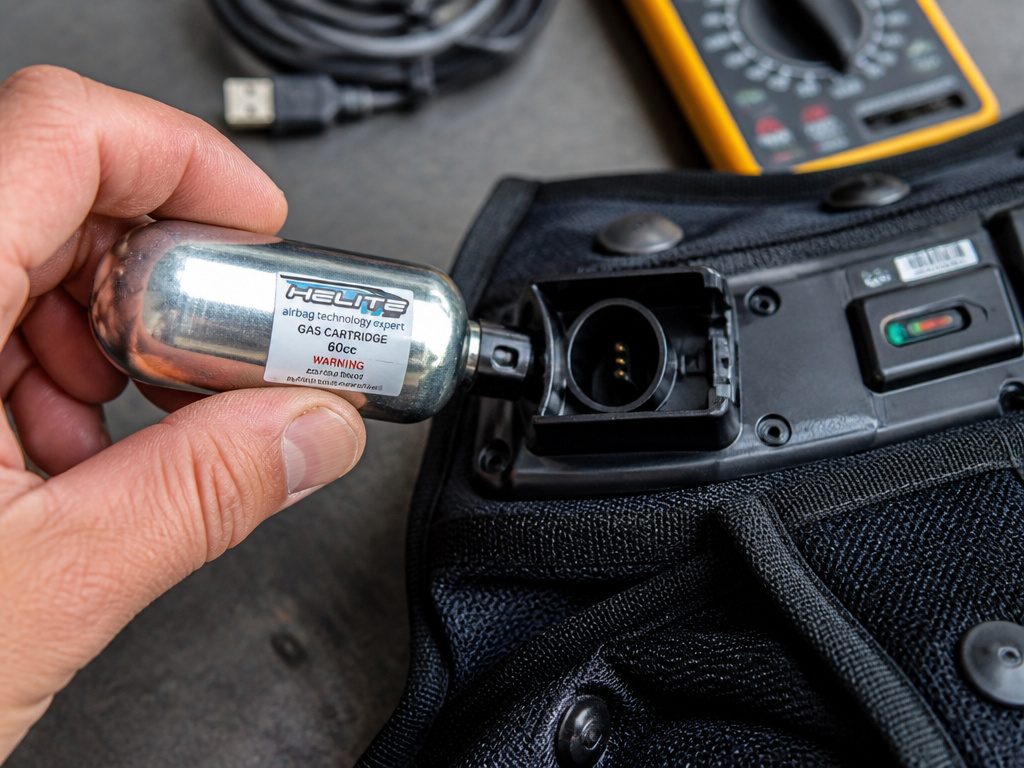
This is the part marketing videos gloss over. An airbag vest isn’t a one-time purchase; it’s a safety system with ongoing costs and demands.
Initial Investment: An electronic vest from Alpinestars or Dainese is a significant sum. You can buy a premium armored jacket for less. You’re paying for R&D, sensors, and the gas inflator technology.
The Rearm Cost: This is the big one. After a deployment, the vest is a deflated, non-functional garment. You must buy a new gas canister and, for most electronic systems, send the control unit in for reset. Some brands, like Klim/In&Motion, design their vest to withstand 3 inflations before a mandatory inspection. Alpinestars mandates a full service after the third deployment. This process isn’t instant, it can take weeks, leaving you without the vest.
Battery and Sensor Maintenance:
- Electronic Vests: You must charge them. The Alpinestars Tech-Air 3 V2 claims up to 40 hours; the Klim/In&Motion In&box lasts about 20 hours. Let the battery die, and you’re riding unprotected.
- Sensor Health: Service recommendations vary. Alpinestars recommends a routine inspection every 2 years or after 500 hours of use, while Klim/In&Motion designs its vest to withstand 3 inflations without mandatory return for inspection.
Compatibility and Care: You can’t just throw it on. It must be worn correctly, not under a jacket that’s too tight to allow inflation. Our guide on vest compatibility covers the fit pitfalls. Cleaning is hand-wash only; submerging the electronics or inflator ruins them.
| Ownership Factor | Tethered System | Electronic System |
|---|---|---|
| Pre-Ride Check | Clip lanyard. | Verify battery charge, system “armed” light. |
| Post-Deployment Action | Replace gas canister (often user-serviceable). | Replace canister + often mail unit for service reset. |
| Long-Term Upkeep | Inspect lanyard and trigger for wear. | Scheduled electronic inspections, battery management. |
| “Oops” Cost | Forgetting to unclip and deploying it. | False deployment, dead battery, corrupted sensor data. |
The verdict? Factor in at least one rearm cost over the vest’s life. If that math gives you pause, the vest might not be for you. A thorough airbag vest maintenance routine is essential.
Where the Technology Falls Short (Right Now)
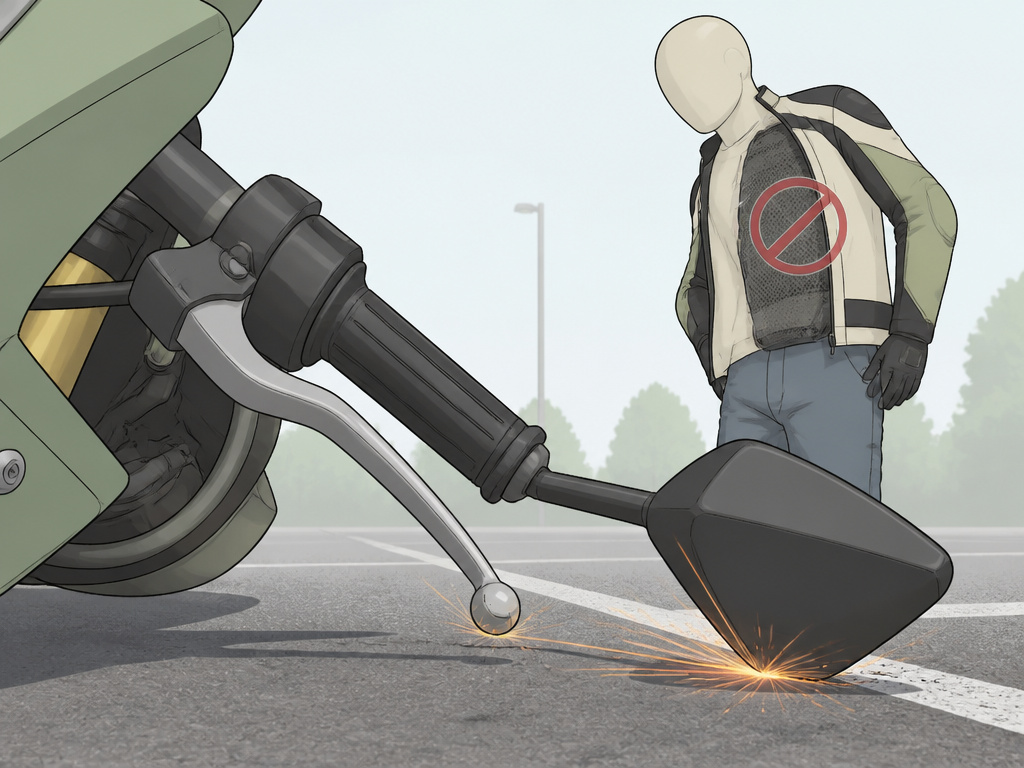
Airbags aren’t a magic force field. Acknowledging their gaps is part of being a smart user.
Low-Speed and Stationary Drops: This is a major owner complaint. Most electronic systems have a minimum speed threshold for deployment. Activation thresholds vary. Helite’s wireless system, for example, only detects falls above 20 km/h, while the IRC-19-76 paper estimates a protection threshold around 30-40 km/h for impacts. Tip your bike over in a parking lot at 5 km/h? The sensors likely won’t see it as a crash. A tethered system will deploy in this scenario, which is protection, but a $100+ reset for a scratched mirror.
Coverage Zones: Every manual states it clearly: the vest protects the torso. The Klim/In&Motion manual explicitly says, “The airbag vest is not designed to protect your lower limbs, upper limbs, head.” You still need a helmet, gloves, boots, and armored pants. It’s a supplement, not a replacement.
Environmental Limits: Electronics have operating limits. The Klim/In&Motion system must be used between -10°C and 45°C (14°F to 113°F). This matters for year-round riders and tourers.
The Human Factor: You must engage the system. For tethered, that’s clipping in. For electronic, it’s ensuring a full charge and that the “armed” indicator is on. It’s one more pre-ride ritual, and humans are forgetful. The consequence of forgetting is absolute: zero protection.
These aren’t deal-breakers for a disciplined rider. They’re the fine print. Read it.
Brand and model comparisons
When comparing different airbag vests, look at the practical specifications that affect daily use. Battery life varies significantly by brand and model. For example, Klim/In&Motion claims about 20 hours, Helite claims around 25 hours, Alpinestars Tech-Air 10 claims about 24 hours, and Alpinestars Tech-Air 3 V2 claims up to 40 hours. Warranty periods are commonly two years from purchase, though some manufacturers offer an extended warranty if you register the product promptly. Service requirements differ. For example, Klim/In&Motion states its vest is designed for 3 inflations without mandatory inspection, while Alpinestars recommends routine inspection every 2 years or after 500 hours for its Tech-Air 3 System. Always check the certified protection levels and the specific operating temperature ranges for the system you are considering.
Real-world crash testimonials
While personal stories are powerful, the underlying data provides a crucial reality check. Research cited by Klim/In&Motion indicates that among injured riders, 17% sustain very serious injuries, and 75% of those affect the thorax. This highlights the vital protection area an airbag vest covers. However, other research sets clear limits. The IRC-19-76 Conference Paper concludes that airbag jackets offer protection starting from a threshold speed. The IRC-19-76 Conference Paper data shows that a direct impact at 40 km/h or a falling accident at 60 km/h cannot prevent serious injuries to the trunk even with an airbag deployed. Understanding these limits is key to setting realistic expectations for the technology’s role in a crash.
Historical context/evolution of technology
The core goal of motorcycle airbag technology has remained constant: to protect the rider’s torso, which is highly vulnerable in a crash. Early systems were tethered, relying on a physical connection to the motorcycle to detect a separation. Modern evolution has moved towards complex electronic systems. Today’s vests use wireless sensors and algorithms to detect a crash. Some systems now incorporate multiple sensors and artificial intelligence for crash detection, aiming to differentiate between a minor spill and a serious impact. This shift to autonomous, algorithm-driven deployment represents the significant technological leap, moving protection from a simple mechanical trigger to a sophisticated electronic decision-making process.
Frequently Asked Questions
Are motorcycle airbag vests worth it?
They are if your risk assessment values targeted thoracic protection and you’re willing to maintain the system. For a rider who does frequent highway miles or values collarbone protection, the cost can be justified. For a casual around-town rider, the expense and hassle may outweigh the statistically lower risk.
What is the biggest downside of airbag vests?
The dual downside is cost and complexity. The high initial price is followed by inevitable rearm costs after a crash. Electronic models add battery anxiety and the potential for sensor failure, turning a piece of safety gear into a tech device that can fail silently.
Will an airbag vest deploy in a rear-end collision at a stop?
It depends on the system. A tethered vest will not, as the lanyard isn’t pulled. An electronic vest might, if the algorithm interprets the sudden forward acceleration and impact as a crash scenario. However, low-speed impacts are a known weak spot for crash detection algorithms.
How many times can you use an airbag vest?
Most are designed for multiple uses with cartridge replacement. Klim/In&Motion states its vest is designed for 3 inflations before a mandatory inspection. Alpinestars mandates a full service upon the third deployment. Each deployment requires a new gas canister and, for electronics, a system reset.
Can I wear an airbag vest under any jacket?
No. The outer jacket must be loose enough to allow the vest to fully inflate without restriction. A jacket that’s too tight can pin the airbag, reducing protection and increasing pressure on your body. Always check the manufacturer’s fit guidelines, detailed in our over-jacket fit article.
What happens after the airbag deploys?
The vest will be deflated and non-functional. You must follow a post-crash reset procedure: replace the spent gas canister, and for electronic vests, often send the control unit to a service center to be reset and tested. This process incurs parts and labor fees and takes you off the road for a period.
The Bottom Line
An airbag vest is a serious tool for a specific problem: protecting your core in a crash. It is not a universal solution, and it is certainly not cheap.
If you’re considering one, let this be your filter: Are you the type of rider who will unfailingly perform the pre-ride check, clip the tether or verify the charge? Can you absorb a $150+ rearm bill without financial stress if you go down? Do you ride in the sub-70 mph envelope where its protection is most effective?
If you answer yes, then a vest from the leading vest models is a rational, potentially life-altering investment. If any answer is no, your money is likely better spent on a top-tier helmet, a perfectly fitted CE Level 2 armored jacket, and top-quality gloves and boots. Those are the essential foundation. The airbag is the advanced course. The airbag is the advanced course.
Fit first, features second. That rule applies to the decision as much as the gear itself.
