
4 Best Motorcycle Airbag Vests in 2026
This post contains affiliate links. As an Amazon Associate, we earn from qualifying purchases.
Our best overall airbag vest is the Alpinestars Tech-Air 5 Plasma System for its advanced electronics, comprehensive upper-body protection, and minimal 2.2-pound weight. Riders wanting autonomous operation will like the REV’IT! Avertum Street Tech-Air, while those seeking a simple, reusable system for both motorcycles and horses might prefer a Hit-Air MLV vest.
Modern airbag vests add a critical safety layer, cushioning your spine, chest, and ribs upon impact. For a rider, the right choice balances protection with everyday comfort and convenience.
This guide helps you navigate those choices. Our research-based evaluation compares specifications, deployment technology, and owner feedback on four top models to pinpoint the best for different needs.
Top 4 Motorcycle Airbag Vests in the Market
Certain content that appears on this site comes from Amazon. This content is provided "as is" and is subject to change or removal at any time.
The Best Motorcycle Airbag Vests, Reviewed
Alpinestars Tech-Air 5 Plasma System

What We Like
- Ultra-lightweight at 2.2 pounds for minimal fatigue
- Full coverage for shoulders, chest, ribs, and back
- Breathable, stretch-mesh construction for superior comfort
- Slim profile designed to be invisible under a jacket
Trade-offs
- More complex system than simpler tethered vests like the Hit-Air MLV
Weighing just 2.2 pounds, the Alpinestars Tech-Air 5 Plasma System disappears under your jacket, so you can ride all day without noticing the safety it provides. This vest is for the rider who refuses to compromise between comprehensive protection and all-day comfort. Its full upper-body coverage and CE Level 1 back protector create a formidable safety net, while the adaptive stretch fit and breathable mesh mean it won’t cook you on a summer ride. The research indicates it sets the benchmark for integrated, algorithm-based protection.
The trade-off for this advanced protection is a system that demands a bit more engagement from the rider to select the correct algorithm mode, especially when switching between street and off-road use. It represents a premium, feature-rich approach to safety. For someone seeking a simpler, purely mechanical solution without electronics, a tethered vest like the Hit-Air MLV offers a more straightforward alternative, though with less upper-body coverage.
Product photos
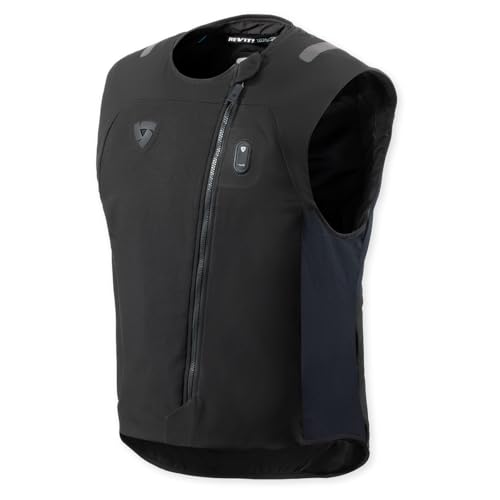
REV'IT! Avertum Street Tech-Air
What We Like
- Fully autonomous operation with no tether
- Fast 50-millisecond inflation for rapid protection
- High Level 2 CE certification for chest and back
- Can be worn over or under compatible gear
Trade-offs
- At 19.0 x 13.0 inches, it is a larger chassis than some systems
- The one-pound weight adds bulk to your riding setup
The autonomous operation is the defining feature, eliminating the need for a physical tether to your bike. This freedom is perfect for riders who switch between motorcycles or who simply want a self-contained safety system. Combined with its six integrated sensors and 50-millisecond inflation, it provides comprehensive, hands-free crash detection. Its water-resistant build and flexible wear options make it a versatile choice for dedicated riders seeking premium, set-and-forget protection.
Its autonomous operation requires no external tether to the motorcycle, so the system works on any bike you ride. This design does add physical bulk, however. At 1.0 pounds and with a substantial chassis, it creates a more noticeable layer under a jacket than some minimalist vests. For riders who prioritize the absolute lightest and least obtrusive layer, a simpler tethered system might be preferable. However, if you value the convenience and bike-agnostic safety of a fully self-contained system, the Avertum Street’s capabilities are hard to match.
Product photos
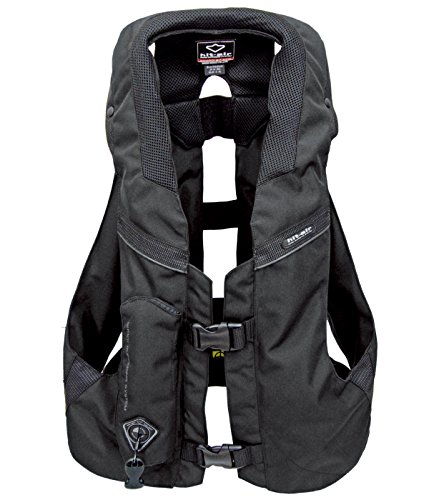
Hit-Air MLV Airbag Vest
What We Like
- Automatic inflation within milliseconds of separation.
- Reusable system with easy CO2 canister replacement.
- Unisex, adjustable fit worn over riding gear.
- Single vest works for motorcycle and horseback riding.
Trade-offs
- Requires separate purchase of 60cc CO2 cartridges.
- Lanyard system must be manually connected each ride.
Its universal connection system is the key feature, letting you use the same vest on a motorcycle or a horse by simply swapping the activation lanyard. This makes it a remarkably versatile piece of safety gear for riders who enjoy both activities, eliminating the need for two separate vests. The automatic deployment happens in milliseconds when you separate from the bike or saddle, protecting your spine, chest, and neck. It’s a straightforward, mechanical system designed for multiple uses, so you can rearm it quickly and get back to your ride.
This vest uses a mechanical lanyard system, so riders must clip in before each use. The design also requires keeping spare CO2 canisters available, as the 60cc cartridge is sold separately. However, its reusable and refillable system rearms quickly for multiple uses, offering a straightforward safety net. For those who also ride horses, the universal connection means swapping only the lanyard lets the same vest work in the saddle.
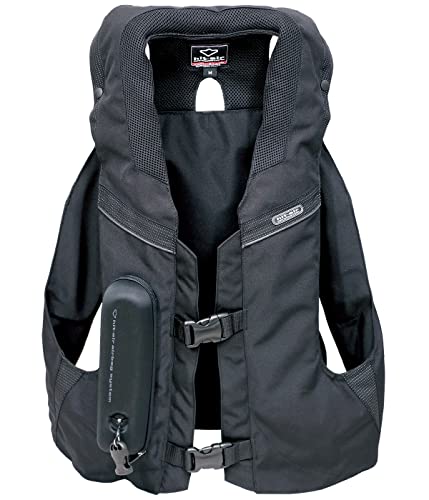
Hit-Air MLV2 Airbag Vest
What We Like
- Reusable after deployment with simple cartridge replacement
- Single vest works for both motorcycle and horseback riding
- Lightweight, breathable construction minimizes bulk
- Adjustable unisex design fits over existing riding gear
Trade-offs
- Lanyard system requires physical tether to the bike
- Some equestrian saddles need a separately purchased lanyard
A refillable CO2 cartridge system defines the MLV2’s practical appeal. After an incident, you just swap in a new 60cc cartridge and repack the airbag, no tools or factory service needed. This makes it a straightforward choice for riders who want a mechanical, self-maintained safety layer. The universal design is equally clever, as swapping the trigger lanyard lets the same vest protect you on a motorcycle or a horse, which is perfect for multi-sport enthusiasts who value gear simplicity.
A mechanical lanyard physically tethers the rider to the bike for activation, a proven and reliable method. This system is user-serviceable, as the vest ships with a CO2 cartridge installed and can be reused after a deployment by replacing the cartridge and repacking the airbag. Its universal connection allows the same vest to work for both motorcycle and horseback riding by swapping the lanyard, a dual-purpose design for riders who split time between these activities.
How We Evaluated Motorcycle Airbag Vests
Our process relied on manufacturer documentation for specifications, expert round-up reviews, and patterns in owner feedback across rider forums and retailers. We prioritized criteria that determine real-world usefulness: the system’s activation method (electronic vs. Mechanical tether), coverage area, and overall comfort and fit.
We focused on how each vest integrates into a riding routine, whether it’s worn over or under a jacket, how quickly it deploys, and if it can be reused. Our research also considered certification levels as a key indicator of verified protection.
An evaluation based on research cannot replicate the physical experience of a crash test. This guide relies on reported data and cross-references claims from multiple expert sources and user experiences. For a wider look at options, our comprehensive air vest guide explores the category in more detail.
What To Look For In Motorcycle Airbag Vests
An airbag vest is a significant investment in your riding safety, so understanding the key differences between models is crucial. Focus on the deployment system, the protection it actually offers, and how it fits with your gear.
Key considerations are activation method (electronic autonomous vs. Mechanical tether), certified coverage area (Level 1 or 2), and everyday factors like weight, comfort, and whether it integrates under or over your riding jacket.
Activation Method
Airbag vests use one of two main triggers. Electronic systems use onboard sensors and algorithms to detect a crash, deploying autonomously without a physical connection to the bike. This offers convenience and works even if you are separated from the motorcycle, often activating in under 50 milliseconds.
Mechanical systems rely on a lanyard physically clipped to the motorcycle frame. A hard pull on this tether triggers a CO2 canister. This simpler method needs no batteries and is often more affordable. It does require you to remember the connection every ride, however, and may not activate in every crash scenario, like a low-side slide where the tether isn’t pulled.
Protection Level & Coverage
Not all airbags protect the same areas to the same degree. Look for the CE certification level, which indicates performance against impacts. A Level 2 certification means the vest passed more stringent force-dispersion tests than Level 1.
The coverage map is equally important. Some vests protect only the back and spine, while full-coverage models also shield the chest, ribs, shoulders, and sometimes the neck. A vest like the Alpinestars Tech-Air 5 Plasma offers comprehensive protection for all these critical zones, which is a significant safety upgrade.
Comfort & Integration
You’re more likely to wear your airbag vest on every ride if it’s comfortable. Weight is a major factor; a sub-3-pound vest causes far less fatigue than a heavier one over long distances. Breathability from stretch-mesh construction helps manage heat.
Consider how the vest integrates with your existing gear. Slim-profile vests are designed to be worn invisibly under a jacket, while over-jacket models often have a more rugged, outer-shell construction. For riders comparing integrated systems, our article on airbag jacket options provides useful context.
- Check if the vest is compatible with your primary riding jacket’s fit and closure.
- Verify the battery life for electronic systems or the cost and availability of replacement CO2 cartridges for mechanical ones.
- Look for adjustable straps or sizing that allows for layering seasonal clothing underneath.
- Ensure the activation system (tether clip or electronic arming) is quick and intuitive for your pre-ride routine.
The best airbag vest is the one you will wear consistently, so prioritize comfort and a good fit with your gear.
Motorcycle Airbag Vests Compared
The following table highlights the key specifications and features of our top picks at a glance, making direct comparisons easier.
| Product | Weight | Deployment Trigger | Protection Areas | Certification |
|---|---|---|---|---|
| Alpinestars Tech-Air 5 Plasma System: title: Alpinestars Tech-Air 5 Plasma System, L, Black | Weight: 2.2 pounds; Coverage: Full upper body; Back Protector CE Level: 1 Nucleon Plasma; Profile Design: Ultra-slim, invisible under jacket; Construction: Mono-layer stretch mesh | dims: L 26.0 inches, W 13.0 Inches, H 5.0 inches, W 2.2 pounds | bullets: Full Upper Body Coverage | Ultra-Lightweight Construction | Ultra-Slim, Invisible Profile Design | Superior Comfort and Breathability | PLASMA Technology for Advanced Protection | 2.2 pounds | N/A | Full upper body | CE Level: 1 Nucleon Plasma |
| REV'IT! Avertum Street Tech-Air: title: REV'IT! Men's Avertum Street Tech-Air Airbag (Black – Large) | Deployment Time: 50-millisecond inflation; Protection Level: CE-certified Level 2; Protection Areas: Chest and back; Sensor System: 6 integrated sensors; Weather Resistance: Water-resistant chassis | dims: L 19.0 Inches, W 13.0 Inches, H 2.0 Inches, W 1.0 pounds | bullets: Advanced airbag system with 6 integrated sensors for comprehensive crash detection and monitoring | Autonomous operation with no external connections required – 50-millisecond inflation time | Water-resistant chassis with waterproof electronics for all-weather functionality | CE-certified Level 2 impact protection for both chest and back areas | Versatile design allows wear over or under compatible motorcycle gear | 1.0 pounds | Autonomous sensor system | Chest and back | CE-certified Level 2 |
| Hit-Air MLV Airbag Vest: title: Hit-Air MLV Motorcycle Airbag Vest, Automatic CO2 Deployment, Black, L | Deployment Trigger: Automatic lanyard system; Protection Areas: Spine, chest, neck, hips; CO2 Cartridge: 60cc (replaceable); Weight: 1.1 Pounds; Certification: CE Certified | dims: W 1.1 Pounds | bullets: AUTOMATIC AIRBAG DEPLOYMENT: Vest inflates within milliseconds when the rider is separated from the bike, helping protect the spine, chest, neck, and hips durin | MOTORCYCLE OR HORSEBACK, SAME VEST: Hit-Air airbag systems share one universal connection, so this is not a different vest for equestrian riders. Swap the lanya | REUSABLE & REFILLABLE SYSTEM: Designed for multiple uses with easy-to-replace CO2 canisters. Rearms quickly so you are ready for every ride. This size L uses a | UNISEX & ADJUSTABLE FIT: Designed for men and women. Easily worn over jackets, leathers, or racing suits without restricting mobility. | CE CERTIFIED FOR IMPACT PROTECTION: CE certified to meet rigorous European safety standards for personal protective equipment. Trusted by riders worldwide. | 1.1 Pounds | Automatic lanyard system | Spine, chest, neck, hips | CE Certified |
| Hit-Air MLV2 Airbag Vest: title: Hit-Air MLV2 Motorcycle Airbag Vest, CE Certified, Black, M | Deployment Trigger: Lanyard separation from motorcycle/horse; Refill System: Replaceable 60cc CO2 cartridge; Weight: 1.5 pounds; Fit: Unisex, adjustable over gear; Use Case: Motorcycle and equestrian | dims: W 1.5 Pounds | bullets: AUTOMATIC AIRBAG DEPLOYMENT: Inflates within milliseconds when the rider is separated from the motorcycle or horse, helping protect the neck, spine, chest, ribs | MOTORCYCLE OR HORSEBACK, SAME VEST: Hit-Air airbag systems share one universal connection, so this is not a different vest for equestrian riders. Swap the lanya | REUSABLE & REFILLABLE: Ships with a CO2 cartridge installed. After a deployment, replace the cartridge and repack the airbag and the vest is ready to ride again | LIGHTWEIGHT & DURABLE: Built with breathable, lightweight materials and reinforced construction for reliable performance without added bulk. | UNISEX & ADJUSTABLE FIT: Designed for men and women, with adjustable straps for a secure fit over jackets, leathers or riding gear. | 1.5 pounds | Lanyard separation | neck, spine, chest, ribs | CE Certified |
Frequently Asked Questions
What is the best motorcycle airbag vest?
The best overall vest for most riders is the Alpinestars Tech-Air 5 Plasma System. It wins for its combination of advanced electronic crash detection, full upper-body coverage, and an ultra-lightweight, low-profile design that maximizes comfort without sacrificing protection, making it easy to wear on every ride.
Are motorcycle airbag vests worth it?
Yes, for most riders, the added protection is a worthwhile investment. An airbag vest can significantly reduce the force of an impact on your spine, chest, and ribs, areas highly vulnerable in a motorcycle crash. When compared to potential medical costs, a quality vest is a proactive investment in safety.
What are the best airbag vests for motorcycle riders?
The best vests depend on your priorities. For the lightest, most advanced protection, choose an electronic system like the Alpinestars Tech-Air 5. For tether-free convenience, consider the REV’IT! Avertum. For a simple, reusable system suitable for multiple activities, the Hit-Air MLV vests are excellent choices.
Who makes the best motorcycle vests?
Leading manufacturers like Alpinestars, Dainese, REV’IT!, and Helite/Hit-Air are at the forefront of airbag vest technology. Each brand offers different strengths, from sophisticated electronic systems to reliable mechanical designs. The “best” maker depends on the specific type of system and fit you need.
Should I get an airbag vest or an airbag jacket?
This depends on your existing gear and preference. An airbag vest is versatile and can be worn under or over various jackets you already own. An integrated airbag jacket is a streamlined all-in-one solution but locks you into that single garment. For a detailed breakdown, see our vest versus jacket comparison.
The Bottom Line
For riders seeking the pinnacle of electronic airbag protection, the Alpinestars Tech-Air 5 Plasma System is the clear best overall choice. Its full coverage, extreme lightness, and comfortable design make it a set-and-forget safety layer.
If your budget is a primary concern or you prefer a purely mechanical system, the reusable Hit-Air MLV vest offers solid protection without electronics. Conversely, riders who prioritize autonomous operation and high-level certification should look at the REV’IT! Avertum Street Tech-Air.
Ultimately, the most important factor is consistent use. Choose a vest whose activation method, weight, and fit encourage you to wear it on every single ride, because that’s when it becomes truly invaluable.
