
Dual Sport Motorcycle Helmet Pros and Cons: How to Choose
This post contains affiliate links. As an Amazon Associate, we earn from qualifying purchases.
A dual sport helmet trades quiet, aerodynamic highway comfort for off-road utility: a sun peak, goggle compatibility, and aggressive ventilation. It’s a compromise helmet for a compromise ride. If you split your miles 50/50 between pavement and dirt, it earns its keep. If you ride 80% highway, the daily wind noise and buffeting will make you wish you’d bought a dedicated full-face street helmet.
That 50/50 split is the hinge. The peak isn’t a style accessory; it’s a functional piece that defines the helmet’s behavior. On the trail, it blocks sun and roost. At 70 mph, it becomes a sail, which is a key point in any discussion of dual sport motorcycle helmet pros and cons.
What follows is a breakdown of the dual sport motorcycle helmet pros and cons, grounded in manufacturer specs, owner reports, and a couple of sobering federal recall notices. This article details the unique advantages, unavoidable drawbacks, and the solutions offered by specific models like the Arai XD5 and Touratech Aventuro Carbon2 Plus. By the end, you’ll know which side of the split you’re really on.
Key Takeaways
- The peak often causes wind buffeting at highway speeds; some designs (like the Arai XD5’s, which a review says catches less wind) aim to reduce it, but it remains a common trade-off.
- Goggle compatibility and a wide eye port are essential for serious off-road work, a clear win over street helmets.
- Ventilation is superior to a street lid, but those same vents let in more road and wind noise, making earplugs essential.
- Modular/flip-up dual sport designs add convenience but introduce documented chin-bar failure points, as seen in NHTSA helmet recall reports.
- The best choice comes down to a honest assessment of your road-to-dirt ratio; wishful thinking leads to buyer’s remorse.
The Core Trade-Off: Peak and Ventilation vs. Quiet and Aero
The entire argument for or against a dual sport helmet lives in its silhouette, which is central to the dual sport motorcycle helmet pros and cons. That fixed peak up top and the cavernous eye port below are the source of its greatest strengths and most persistent weaknesses.
A dual sport helmet’s peak catches oncoming air, creating lift and buffeting that can fatigue your neck on long highway stretches. The larger eye port and numerous vents, designed for off-road airflow, also allow more turbulent wind and road noise to reach your ears. This is the fundamental physical trade-off.
On a slow, technical trail, that peak is a lifesaver. It shades your eyes from a low sun and deflects roost from the bike ahead. The big eye port gives you a wider field of view to pick lines, and it’s designed to accommodate goggles when you swap out the face shield for a dusty day. The ventilation, often 6 intake vents like on the Touratech Aventuro Carbon2 Plus, floods your head with air when you’re working hard at low speeds.
Switch to an interstate. The physics flip. That same peak acts like a small wing, generating lift and rhythmic shaking.
The difference is a physical sensation you feel in your neck and ears after an hour. Some designs mitigate it. The Arai XD5 uses a shorter, reshaped peak designed to catch less wind at speed. But the rule holds: a feature built for slow-speed utility becomes a liability at high speed.
Why Goggle Compatibility Isn’t Just a Checkbox
For pure street riding, you’ll never use it. For mixed riding, this feature allows you to shift modes without changing helmets.
Trying to fit goggles under it usually means pressing the frame against your face or leaving a gap. A dual sport helmet has a taller, wider opening. You can remove the shield entirely and run goggles with a full, secure seal. This is critical when trail riding, where a fogged shield is dangerous and dust management is everything.
The catch is the transition. Stowing a removed face shield on a multi-day trip is awkward. The Touratech Aventuro Carbon2 Plus’s removable visor attaches with three screws. Systems like the Arai XD5’s tool-free shield removal help, but you’re still managing more parts than with a simple street helmet.
Specific Models and Their Lessons
Looking at real helmets shows how manufacturers wrestle with the dual-sport compromise. The specs tell one story; long-term owner reports often tell another.
| Helmet Model | Key Feature | Intended Benefit | Real-World Catch |
|---|---|---|---|
| Arai XD5 | Redesigned, shorter peak | Reduced wind buffeting at speed | New shape can increase turbulence and noise inside |
| Touratech Aventuro Carbon2 Plus | Removable sun visor, “no tools needed” per marketing | Convert from street to clean off-road look | A reviewer found the side screws counterintuitive and reported bending levers during removal |
| Leatt MOTO 2.5 | 360° Turbine pads, breakaway visor | Claims up to 40% reduction in rotational forces | Weight spec conflict: summary says “from 1030g,” size table lists XS/S at 1070g |
| Scorpion XT9000 | Kwikfit EMT cheek pads, 50mm speaker cavities | Emergency cheek pad removal, easy comms install | Fit system is different; not all pads are compatible |
Where this goes sideways: Believing a “no tools needed” claim without testing it yourself. A Touratech reviewer installed the side levers backward, bent them, and needed a replacement set from the dealer, hardly a trailside fix.
The AGV Tourmodular and Carbon Modular recalls are a separate, critical lesson. These are flip-up modular helmets within the dual-sport/adventure category. The NHTSA reports show the added mechanical complexity isn’t theoretical:
- The 2025 AGV Tourmodular recall involves a chin guard plate that may break over time, affecting 2,278 helmets produced between October 2021 and July 2023.
- The 2018 AGV Carbon Modular recall involved cyanoacrylate glue on screws contacting the polycarbonate chin base, causing premature deterioration.
These are documented failure modes in flip-up mechanisms. A fixed chin bar, whether on a dual-sport or a street full-face, doesn’t have these specific hinges, plates, or glue points. When you choose a modular for convenience, you’re accepting a more complex mechanical system with more potential failure points. The NHTSA AGV helmet recall report and the NHTSA Dainese helmet recall report are the primary source documents.
The Major Pros: Where Dual Sport Helmets Shine
If your riding includes dirt, gravel, or slow adventure trails, these advantages aren’t just nice-to-haves. They change the experience.
- Sun and Debris Protection. The peak is a practical brow shade. It also deflects small branches, roost, and rain from your visor. On a forest road with dappled light, it’s more effective than squinting or a tinted shield.
- Unmatched Ventilation. You’ll have more intake vents, larger exhaust ports, and often a chin vent that’s twice as large as the previous version of the same model (like the Arai XD5’s). When you’re stopped or moving slowly, airflow is spectacular.
- True Goggle Compatibility. This is the killer app. The eye port is shaped for it. Swapping a fogged shield for a pair of ventilated goggles in 30 seconds turns a miserable ride into a manageable one. For our deep dive on other helmet styles, see our guide to different helmet types.
- Wider Field of View. The larger eye port improves peripheral vision. On technical terrain, seeing more of the ground beside your front wheel helps with balance and line choice.
- Durability-First Mindset. Many dual sport helmets, like the MMG Storm, are rated for multiple sports (ATV, UTV, dirt bike, adventure motorcycle, and snowmobile).
The Major Cons: What You Give Up on the Pavement
These are the costs of admission. Some can be mitigated; none can be eliminated.
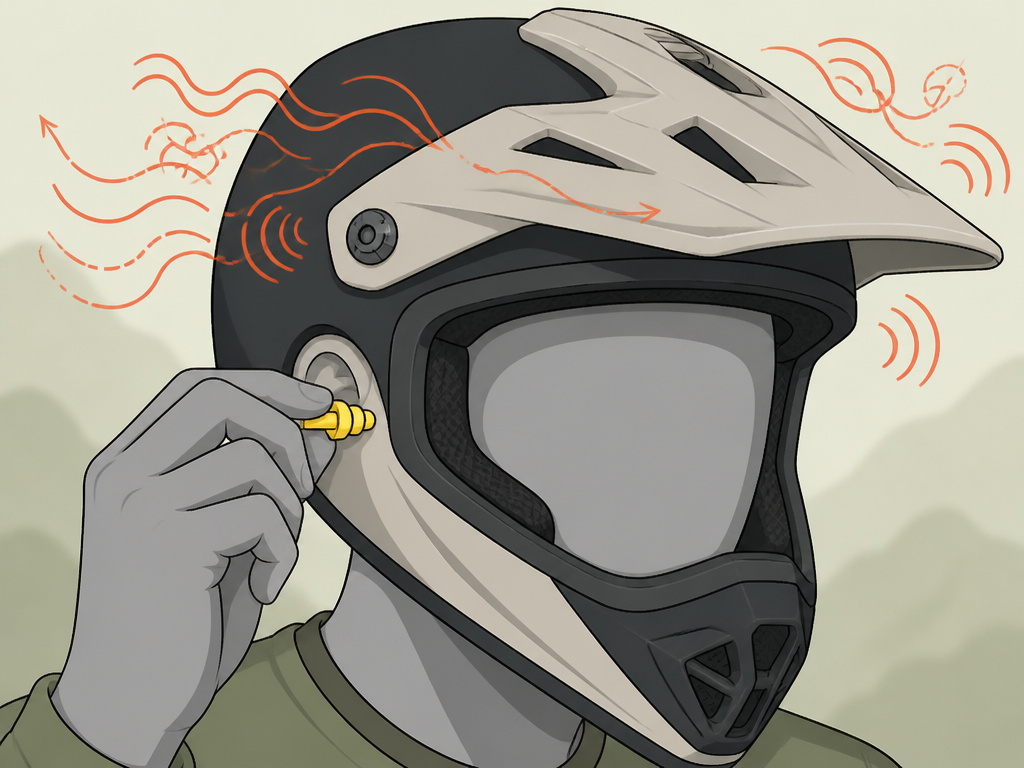
- Wind Noise and Buffeting. This is the biggest complaint. The peak disrupts smooth airflow, creating noise and helmet shake. Earplugs are not optional for highway miles. Even advanced designs only reduce the problem.
- Increased Weight. The extra structure of the peak and a larger shell often adds grams.
- Aerodynamic Drag. That peak creates drag, which can translate to neck fatigue at high speed. It feels like a gentle, constant tug.
- Potential for Fogging. The vast interior volume and high airflow can, paradoxically, make fogging worse in certain cold, humid conditions if vents are mismanaged. A photochromic visor or a Pinlock-equipped shield is a wise investment.
- Fit Complexity. Accommodating goggles can mean a different cheek pad shape. Some, like Scorpion’s Kwikfit, are designed for emergency removal, which changes how the helmet feels. Getting the right fit is crucial, and our dual sport helmet guide stresses trying before buying.
Dual Sport vs. Street vs. Dirt: Choosing Your Camp
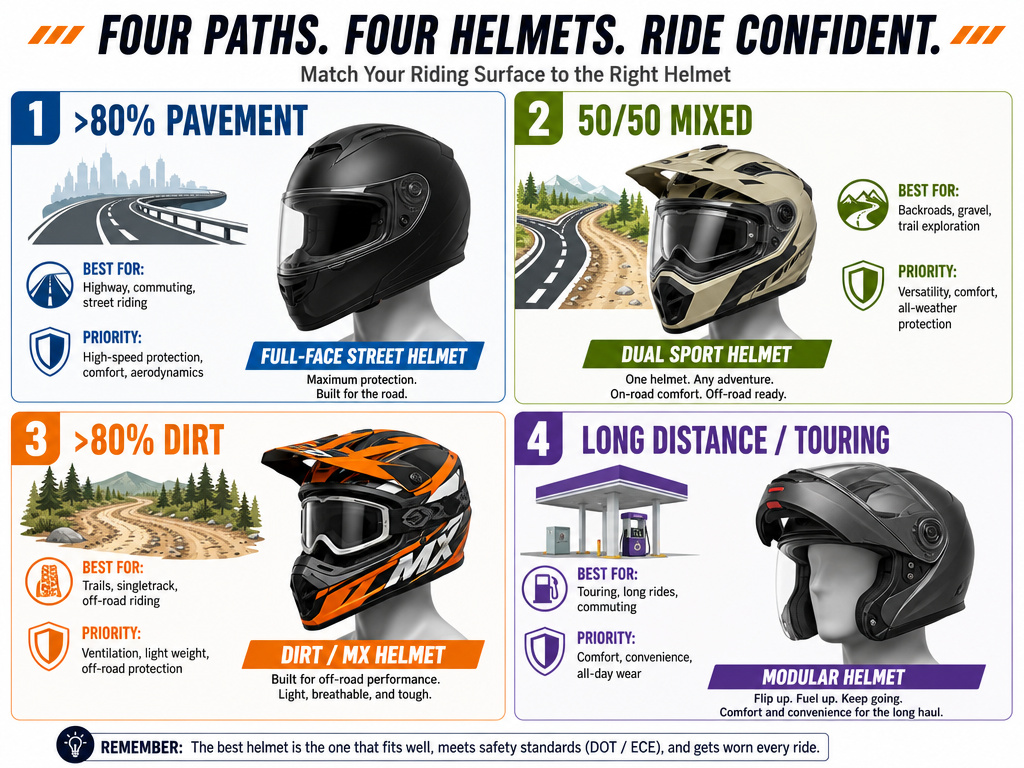
This is about which helmet is best for the riding you actually do. Use this matrix to match the helmet to the mission.
| Riding Scenario | Recommended Helmet Type | Why It Wins |
|---|---|---|
| >80% Pavement (Commuting, Touring) | Full-Face Street Helmet | Quiet, aerodynamic, and comfortable for long, fast rides. Lacks the dual-sport’s noise and buffeting tax. |
| 50/50 Mixed (Adventure, Fire Roads) | Dual Sport Helmet | The compromise is worthwhile. You get the peak and goggles for the dirt, while tolerating the highway downsides. |
| >80% Dirt (Motocross, Enduro) | Dirt/MX Helmet | Lightest weight, maximum ventilation, and designed exclusively for use with goggles. Poor choice for any extended road work. |
| Convenience Focused (Frequent stops) | Modular Helmet | Flip-up chin bar is handy, but be aware of the potential mechanical complexity and weight versus a fixed full face helmet. |
The “2-2-2 Rule” you might hear about is folk wisdom, not a standard. The real rule from manuals like the 130R’s is stricter: discard the helmet after an accident or impact.
Mitigating the Downsides: Practical Owner Tips
You bought a dual sport helmet. Here’s how to live with its flaws, straight from forum and owner playbooks.
- Fight Buffeting with Adjustment. First, ensure your helmet fits perfectly. A loose helmet will shake more. Experiment. Sometimes a slightly lower peak angle reduces lift.
- Mandatory Earplugs. Don’t try to tough it out. Use high-fidelity, filtered earplugs. They cut wind noise but preserve important sounds like horns and sirens. Your ears and focus will thank you after three hours.
- Manage Visor Fogging. Use a Pinlock insert if your shield accepts one. Crack your chin vent open to create an airflow path.
- Secure Your Communication System. The larger speaker pockets (like the Scorpion XT9000‘s 50mm cavities) are a pro. Use them.
- Perform the Screw Check. Before any trip, check the tightness of the screws holding your peak and visor.
For riders dedicated to exploring beyond the pavement, pairing the right helmet with the right dual sport boots completes your core protection setup.
Specific Helmet Model Recommendations and Brands
When looking at specific models, it’s wise to consider recent safety recalls alongside features. The AGV Tourmodular had a recall for chin guard plates that could break over time, affecting helmets made between October 2021 and July 2023. An earlier AGV Carbon Modular model was recalled because cyanoacrylate glue on its screws could contact the polycarbonate chin base and cause premature deterioration. For newer technology, the Leatt MOTO 2.5 helmet claims its 360 Turbine system can reduce peak brain acceleration up to 30% and peak rotational acceleration up to 40% at concussion-associated impact speeds. Always check a helmet’s certification and ensure any communications system you want to use is compatible, as some models only work with specific brand accessories.
Frequently Asked Questions
What is the 2 2 2 rule for motorcycle helmets?
It’s an easy-to-remember, non-official guideline suggesting you replace your helmet every 2 years, after 2 drops, or after a 2-second slide. However, official manufacturer instructions are more absolute: any impact that transmits force to your head means the helmet must be replaced, regardless of visible damage. Time alone is less critical than how the helmet is stored (away from heat, chemicals, and sunlight).
What is the best dual sport helmet?
There isn’t one “best” for everyone. The right choice depends on your head shape, budget, and specific feature needs. Models like the Arai XD5 are praised for refinement and a redesigned peak, while the Bell MX-9 Adventure offers MIPS technology at a lower price point. Start with our curated list of best dual sport helmets to see top-rated options across categories.
Why do dual sport helmets have a visor (peak)?
The peak, or visor, serves two main functions: it shades the rider’s eyes from the sun and overhead glare, and it helps deflect rain, mud, and roost (rocks and debris kicked up by other bikes) away from the face shield. It’s a functional piece borrowed from motocross helmets.
Are dual sport helmets safe for highway riding?
Yes, when they are certified (DOT, ECE, or both). They provide the same fundamental impact protection as a full-face street helmet. The safety trade-off concerns the potential for increased noise and buffeting to cause rider fatigue, which can indirectly affect safety on long highway stints. Always wear hearing protection.
The Bottom Line
A dual sport helmet is a tool for a specific job: mixed terrain. Its value collapses if you’re honest about your riding and find it’s 80% street.
If you ride true adventure miles, gravel roads, forest trails, and the highways that connect them, the peak and the goggles are worth the highway hassles. Ensure the helmet has a comfortable fit, a well-ventilated shell, and a peak design that minimizes buffeting. Check the off-road vs dual sport helmet comparison if you’re leaning toward more extreme dirt.
If your off-road is just the occasional graded dirt path, a standard full face helmet or even a model with an internal sun visor is the quieter, more comfortable daily rider. Buy the helmet for the ride you take, not the ride you see in magazines.
