
Full Face Motorcycle Helmet Pros and Cons: How to Choose
This post contains affiliate links. As an Amazon Associate, we earn from qualifying purchases.
A full face motorcycle helmet offers the highest level of impact, facial, and environmental protection for street riding, making it the default choice for safety. The trade-offs are increased weight, potential for heat buildup, a more confined feeling, and typically a higher initial cost compared to open-face designs.
That protection isn’t just about covering your chin. It’s a system. The shell, the energy-absorbing liner, the sealed visor, and the fit work together to manage crash forces, block debris, and cut wind noise in a way no other helmet type can fully replicate. A discussion of full face motorcycle helmet pros and cons often centers on this integrated protection.
What follows is a breakdown of where that protection comes from, the real-world compromises you’ll feel on the road, and how to decide if the trade-offs are worth it for your kind of riding when you compare a full face motorcycle helmet pros and cons.
Key Takeaways
- Full face helmets provide 360-degree head and full facial coverage, which is critical as studies show a high percentage of impacts occur in the chin/jaw area.
- The sealed environment significantly reduces wind noise compared to an open-face helmet at highway speeds, which matters for long-term hearing and fatigue.
- Proper fit is essential; a helmet that moves on your head during a “roll-off test” is too large and won’t protect as designed, regardless of its safety rating.
- Manufacturers like Schuberth and Suomy state a helmet must be replaced after any single impact or a drop from as low as four feet, while Airoh recommends having it checked by qualified personnel after a bang.
- The initial cost is higher, but the per-year cost can be lower than replacing damaged visors or buying separate goggles on an open-face helmet over the same 5-year lifespan.
The Core Safety Advantage: Impact Protection
The number one reason to choose a full face helmet is where you are statistically most likely to hit the ground. It’s not the top of your head.
In the event of an accident, the helmet is designed to absorb the energy of only one impact through the partial destruction of its inner and outer shell. This damage is rarely visible, which is why manufacturers like Schuberth and Suomy mandate replacement after any accident or significant drop.
This mechanism is why fit is your first safety feature. A helmet that can be rolled off your head when you grasp the back and pull forward, or the front and pull backward, is too loose. The Bell manual states this test clearly: if it comes off, don’t wear it. The shell might be strong, but if it shifts on impact, your brain takes the force.
The full face design adds two critical protective elements an open face helmet lacks: a chin bar and a full wraparound jaw area. This isn’t just for direct hits. In a slide, your face isn’t exposed to asphalt. Some helmet designs include features to prevent the helmet from rolling off the head during an impact.
Where other helmet types fall short:
- Open Face/Three-Quarter Helmets: Leave your entire face exposed. The HJC IS-CRUISER manual includes an explicit disclaimer: “This helmet does not provide as much coverage or protection as a full face helmet.”
- Modular/Fli p-Up Helmets: Offer full-face protection when closed, but the hinge is a potential mechanical weak point. The 2018 NHTSA recall of the AGV Carbon Modular helmet, where cyanoacrylate glue applied to screws could contact the polycarbonate chin base, causing a chemical reaction and material deterioration, highlights a failure mode unique to modular designs.
For most riders on pavement, the safety calculus in the full face motorcycle helmet pros and cons question is simple. A full face helmet provides the most complete coverage where you are most likely to need it.
Weather, Noise, and Practical Comfort
A full face helmet is a climate-controlled cockpit for your head. That control cuts both ways.
On a cold, wet ride, the sealed visor and chin curtain are a revelation. Rain beads up and gets blown away. Wind chill on your face drops to near zero. The Schuberth C3 Pro‘s “minimum ventilation function” guarantees fresh air flow from speeds as low as 30 kph, fighting visor fogging even with all vents closed. The Schuberth C3 Pro manual also notes that when riding in France, local law requires reflective safety stickers on the front, back, and both sides of the helmet.
Noise reduction is a major, often underrated pro. The enclosed chin bar drastically cuts wind turbulence. While you’ll still hear your engine and traffic, the constant, fatiguing roar of air hitting your face is gone. This can mean the difference between arriving tired and arriving alert after a long highway stint.
The cons here are all about management. Ventilation is more complex. You have chin vents, forehead vents, and top vents to manage. Get it wrong on a hot day, and you can feel like you’re in a slow cooker. The key is flow-through: make sure the air intakes in front are open and aligned with the exhaust ports at the back. If your helmet feels stuffy, check that the rear exits aren’t blocked by a backpack or your jacket collar.
And yes, it feels more confined. Putting on a full face helmet is a deliberate act. You can’t take a quick drink or have a conversation at a stoplight without lifting the visor or removing the helmet. For some, this feeling triggers claustrophobia. The fix is almost always fit. A properly fitted helmet should feel snug, not suffocating. Your cheeks should be pressed but not painfully so, and you should be able to breathe deeply without restriction.
Weight, Vision, and Everyday Convenience
This is where the practical trade-offs live. A full face helmet is almost always heavier than an open-face counterpart. That weight sits on your neck all day. On a sporty bike with an aggressive riding position, you’ll feel it in your shoulders by hour three. Neck strength matters.
Peripheral vision is legally mandated to be sufficient, but it is objectively less than an open face offers. You lose the wide-open view below your chin and your lower peripheral sight lines are framed by the cheek pads. You adapt quickly by turning your head more, a safer practice anyway. The bigger issue is the visor itself. A scratched or dirty visor is a major hazard, especially at night. Cleaning it requires care—using harsh chemicals like petroleum-based solvents, as warned against in the Bell manual, can permanently damage its optical clarity and mechanical strength.
Convenience is a series of small chores. You need a place to put the helmet when you’re off the bike; it doesn’t hang easily from a mirror. Eating, drinking, or talking requires removing the helmet or at least flipping the visor. Mounting communication systems or action cameras is more involved, often requiring specific clamp kits that don’t interfere with the helmet’s integrity.
Common mistake: Using a tinted visor or an internal sun visor at night. Both the Suomy S1-XR and Bell Star manuals explicitly warn that tinted shields are for “Day time use only” and impair vision in low light, a direct safety risk.
Yet, for every inconvenience, there’s a counterpoint. The weight often brings better materials and construction. The need to remove the helmet for a break forces you to rest. The internal sun visor, a common feature, eliminates the need to carry separate sunglasses and is far safer than wearing shades that can fly off.
Cost Analysis and Long-Term Value
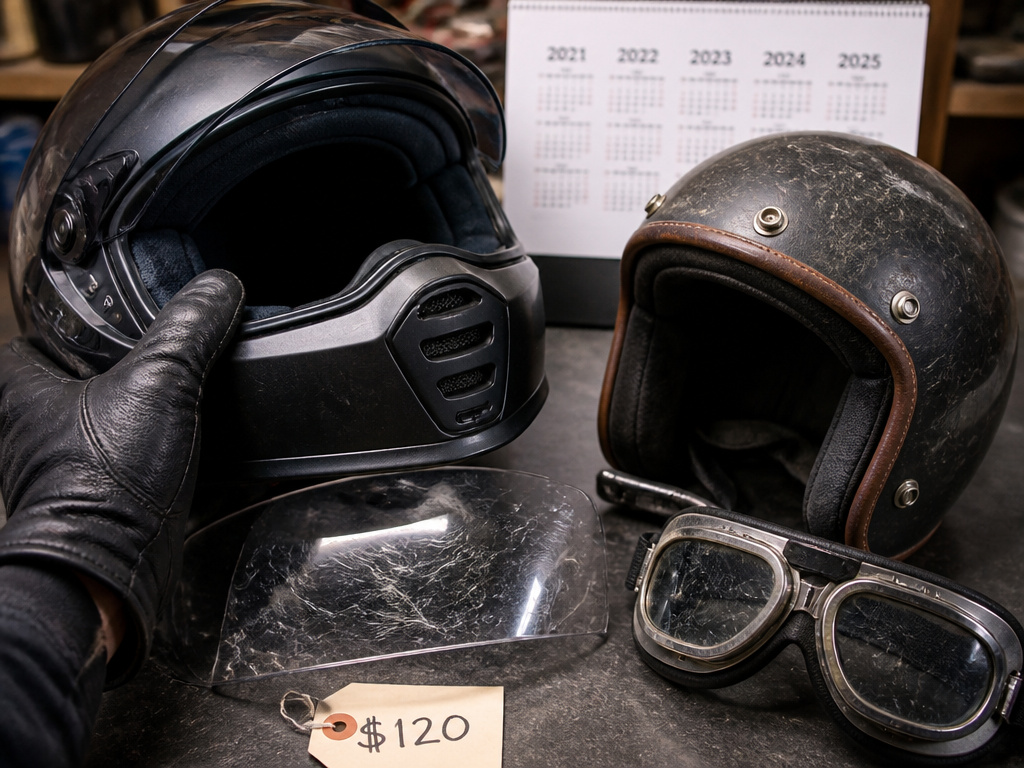
Looking only at the price tag misses the real cost. You have to factor in the entire ownership cycle.
The initial purchase price for a full face helmet is higher. You’re paying for more material, more complex molding for the chin bar, and often higher-end components like a premium visor mechanism. But then the cost curve flattens. A clear visor, if it gets deeply scratched, can be replaced. Cheek pads and liners can be washed (by hand, in water under 30°C as per the Suomy manual) or replaced as they wear.
Compare that to an open-face helmet. You might save $50-$100 upfront. But you’ll immediately need to buy a pair of quality riding goggles or glasses to keep bugs and debris out of your eyes. Those can scratch, get lost, or break. Over a five-year period, replacing scratched lenses or lost glasses can easily eclipse the initial savings.
The real financial commitment is the replacement schedule. Manufacturers disagree on the calendar. The Suomy S1-XR manual says 3 to 5 years depending on use. The consensus is that adhesives and materials degrade with UV exposure and time. More critically, every manual from Schuberth to KATSURA agrees: one impact means replacement. A drop from kitchen-counter height (about four feet) can compromise the EPS liner. That’s a fixed, unavoidable cost.
| Cost Factor | Full Face Helmet | Open-Face Helmet |
|---|---|---|
| Initial Outlay | Higher | Lower |
| Eye Protection | Integrated visor (included) | Separate goggles/glasses (extra) |
| Visor/Shield Replacement | $30 – $80 per visor | $20 – $60 per goggle lens |
| Impact Replacement Mandate | After any drop/impact (all types) | After any drop/impact (all types) |
Warranties, like Bell’s five-year limited warranty, protect against defects, not wear or crashes. They don’t change the fundamental cost of ownership. A full face helmet is a bigger upfront investment that typically delivers more value per year if you ride regularly.
Sizing, Fit, and Care Specifics
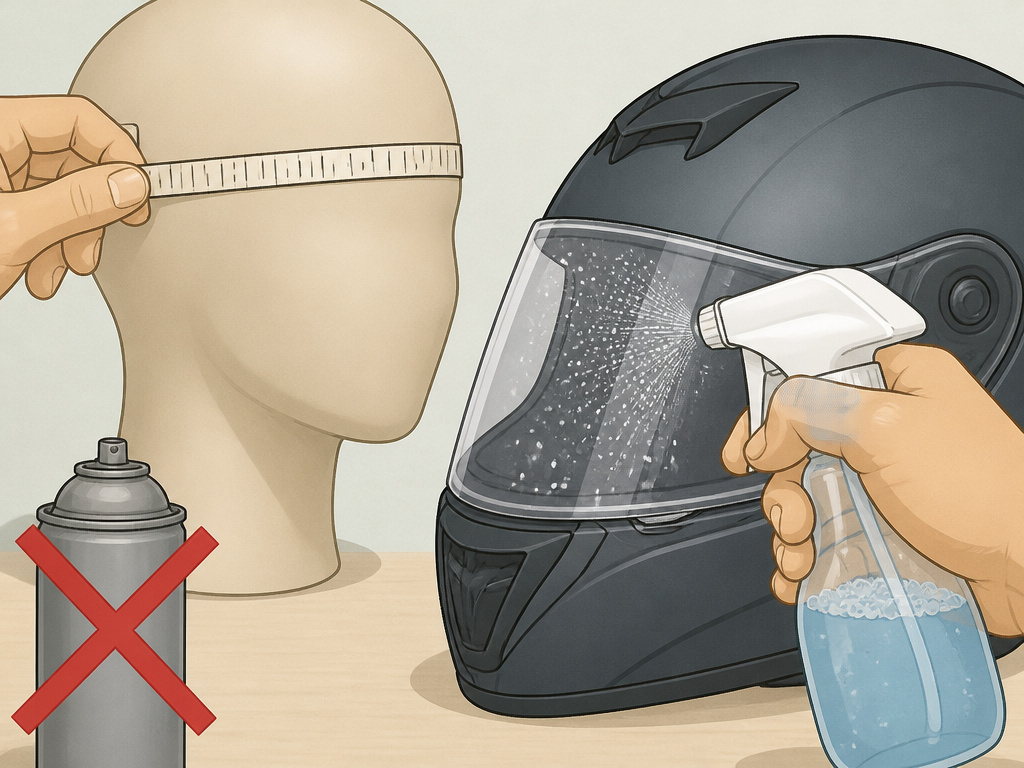
Buying the right size is the most important decision after choosing the helmet type. Get it wrong, and none of the pros matter.
Manufacturers have slightly different methods. The KATSURA v2 manual says to measure about 2.5cm above your eyebrows. Airoh’s FAQ says about 2 cm above the eyebrows, in the temple area. Both agree: use a cloth tape measure, get the largest circumference, and if you’re between sizes, choose the smaller one. A new helmet should be snug, with firm, even pressure around your forehead and cheeks. You should feel the cheek pads pressing against your flesh. After 20-30 minutes, that pressure should ease slightly as the pads begin to mold.
Care is where many riders accidentally damage their gear. The manuals are very specific about what not to do:
- Shell: Never use motor fuel, thinners, solvents, or chemical cleaners (Schuberth E2, KATSURA v2). Use only mild soap and water.
- Visor/Shield: Never use hot water, salt water, benzene, gasoline, petroleum products, solvents, or commercial shield cleaners (Suomy S1-XR, Bell Star). These can craze the polycarbonate.
- Interior: Hand-wash removable liners at a maximum of 30°C (Suomy S1-XR). Let all parts dry at room temperature—never use direct heat from a hairdryer or heater.
- Storage: Never leave the helmet in direct sunlight or near a heat source like a radiator. The KATSURA v2 manual warns that leaving the helmet in direct sunlight or close to heat sources can damage the shell and liner.
Following these rules keeps the helmet’s safety systems intact. Ignoring them can cause invisible damage that voids its protective capability.
Addressing Common Concerns and Misconceptions
Two worries come up constantly: neck injuries and claustrophobia. The data and experience don’t support the first, while the second is manageable.
“Full face helmets cause neck breaks in a crash.” This is a persistent myth. No credible crash study or standard (DOT, ECE, Snell) has ever found that a full face helmet increases the risk of cervical spine injury. In fact, the energy management of the helmet likely reduces the jarring forces transmitted to the neck. The heavier weight is a fatigue issue, not a trauma one.
“I feel trapped.” This is real. The solution is almost always a better fit. A helmet that is too tight will feel oppressive. Go through the sizing process carefully. Also, practice at home. Sit with the helmet on, visor down, for increasing periods. Breathe deeply. Most riders acclimate within a few rides as they associate the feeling with riding itself.
Another practical concern is integrating gear. Bluetooth communication systems are designed for full face helmets, with mounts that clamp to the side without interfering with the impact zone. The same goes for action cameras. The key is to follow the mount instructions and avoid placing anything with sharp edges or heavy mass in a spot that could concentrate impact force.
When should you replace a helmet after an impact?
Manufacturers are clear that a single impact can compromise a helmet’s safety. Manuals state a helmet must be replaced after any fall, accident, or violent impact. Some specify replacement is needed after a drop from as low as four feet, noting that a safety mechanism can cause small cracks even from a drop of less than one metre. The internal foam liner is designed to crush once to absorb energy; after that, its protection is significantly reduced. If your helmet suffers any bang, the safest practice is to have it inspected by qualified personnel and be prepared to replace it. Never continue using a helmet that has been impacted, as its ability to protect you in a subsequent crash is unknown.
Frequently Asked Questions
What is the main disadvantage of a full face helmet?
The main disadvantages are increased weight, which can cause neck fatigue on long rides; greater potential for heat buildup in hot weather; a more confined feeling that some riders find claustrophobic; and less convenience for talking, drinking, or eating while stopped compared to open-face designs.
Are full face helmets safer than modular?
When the chin bar is locked down, a modular helmet is designed to meet the same safety standards as a full face helmet. However, the hinge mechanism is an additional point of potential failure that a true full face helmet does not have. For pure, uncompromised structural integrity, a full face helmet is considered the safer choice.
Can you wear glasses with a full face helmet?
Yes, but it requires a helmet designed for it. Look for models with dedicated channels or recesses in the EPS liner around the temples. Trying on the helmet with your glasses is essential—some frames will be pinched or bent, causing discomfort and potentially breaking the glasses or damaging the helmet’s lining.
How often should you replace a full face helmet?
Manufacturers’ recommendations vary; for example, the Suomy S1-XR manual suggests replacement every 3 to 5 years depending on use, while the Schuberth E2 manual suggests 5 to 7 years. You must replace the helmet immediately after any impact, even if no damage is visible. The Suomy S1-XR manual states a drop from as low as four feet is enough to cause internal damage.
Is a full face helmet worth the extra money?
For most street riders, yes. The full facial protection, superior noise reduction, and better weather sealing provide tangible safety and comfort benefits that outweigh the higher initial cost and minor inconveniences. The long-term value, when you factor in not needing separate eye protection, often makes the cost difference negligible.
The Bottom Line
A full face helmet is the benchmark for a reason. It provides the most complete package of impact protection, environmental sealing, and noise reduction available. The trade-offs—weight, heat, cost—are real, but they are the price of that comprehensive safety.
Your decision should start with the assumption that a full face helmet is the right choice. Then, see if your specific riding style justifies a step down. If you’re a city commuter who values maximum convenience and airflow, a modular helmet might be a viable compromise. If you’re a cruiser rider who prioritizes a classic look and open feeling, an open face helmet is an option, but you must accept the significantly reduced facial protection.
For anyone riding at highway speeds, touring, or simply wanting the highest probability of walking away from an accident, the full face helmet isn’t just a logical choice. It’s the only logical one. Buy for fit first, features second, and maintain it by the book. That helmet is a long-term investment in your riding future.
