
What to Wear Under Motorcycle Leathers: A Practical Guide
This post contains affiliate links. As an Amazon Associate, we earn from qualifying purchases.
Wear a purpose-built motorcycle undersuit under your leathers. It needs to do three jobs: manage sweat, let the suit slide over your skin in a crash, and add no bulk. For leather suits, that means a tight, slippery layer of moisture-wicking fabric like lycra or a lycra blend. A one-piece undersuit is the standard for track riding, while a two-piece set offers more versatility for the street.
The fabric’s slipperiness is a direct safety requirement from the EN 13595-1:2002 standard for protective clothing, not merely a comfort feature. The guide for manufacturers notes that garment linings must slide freely against the outer shell to reduce shear injury during an impact. That’s the historical reason riders wore silk under leathers, it’s the original low-friction base layer and a key part of what to wear under motorcycle leathers.
What follows is the breakdown of that three-part system: moisture, friction, and fit. This section details the safety differences between leather and textile suits, lists important features, and shows why regular athletic wear often fails as motorcycle undergarments.
Key Takeaways
- The EN 13595-1:2002 standard requires a low-friction layer between you and the suit to prevent shear injuries, making a slippery undersuit an essential part of the safety system.
- One-piece undersuits are preferred for the track to eliminate bunching; two-piece sets are more practical for street riding and layering.
- Never wear cotton. It holds moisture against your skin, leading to chills and making the suit harder to put on and take off.
- Sources disagree: the general advice is that most purpose-built undersuits are designed to be worn commando, while Aerostich recommends wearing a long-sleeved shirt and pants under your suit as a thermal barrier.
- Textile suit warning: The Aerostich R-3 manual warns that its nylon fabric can generate frictional heat in a slide and recommends a thermal barrier layer, contradicting the “slippery layer” advice for leathers.
How a Base Layer Protects You in a Crash (The Two Theories)
This is where most guides give you one rule. Actually, two opposing theories exist, and which applies depends on your suit’s material.
Garment linings in high-risk zones must be able to slide freely against the outer shell to reduce shear injury.. EN 13595-1:2002, as cited in the manufacturer’s guide.
This is the rule for leather. A crash isn’t a static event; you tumble and slide. If your skin sticks to the suit’s interior, the suit’s movement transfers directly to your body, potentially causing severe shear injuries. A low-friction base layer, silk, satin-finish synthetics, or modern lycra blends, allows the leather to slide over it. Your skin stays put, the suit moves, and the energy disperses more safely. This is why the Bison Track blog emphasizes that your suit should be able to move slightly on your body.
Now, the edge case. If you ride in a high-tech textile suit like the Aerostich R-3, the manufacturer’s manual flips the script.
The R-3’s fabrics differ from leather and there is a theoretical possibility of skin burns from frictional heating during a high speed slide. Wearing a long-sleeved shirt and pants under your suit is recommended to provide a thermal barrier.. Aerostich R-3/R-3 Light Owner’s Guide.
Their concern isn’t shear; it’s heat. The R-3’s 500D Cordura TLTex nylon is more slippery than leather (you’ll slide about 25% further, they note), and there is a theoretical possibility of skin burns from frictional heating during a high speed slide. Their solution is a thermal barrier, not a slippery layer.
| Suit Type | Primary Crash Risk | Base Layer Priority | Rationale Source |
|---|---|---|---|
| Leather | Shear Injury | Low-Friction, Slippery Layer | EN 13595-1:2002 Standard |
| Abrasion-Resistant Textile (e.g., Aerostich R-3) | Frictional Heat Burns | Thermal Barrier Layer | Aerostich Owner’s Manual |
So which is right? Both, for their context. For a traditional leather racing suit, follow the EN standard. For a modern, abrasion-focused textile suit, heed the manufacturer’s specific warning. This is the kind of specific, conflicting advice a generic guide on base layers might miss.
The 3 Jobs of a Motorcycle Base Layer
Forget “comfort.” Break the base layer’s role into three mechanical functions for what to wear under motorcycle leathers. If a garment doesn’t perform all three, it’s just expensive underwear.
1. Moisture Management (Wicking)
You will sweat, even on a cold ride. A base layer must pull that moisture away from your skin and spread it across the fabric’s surface to evaporate. Cotton fails catastrophically here, it absorbs sweat like a sponge and holds it against you. When you stop moving, that wet layer turns cold fast. Synthetics like polyester or specialized fabrics like Dainese’s Dryarn hydrophobic polyamide are engineered for this. Merino wool is a superb natural alternative, managing moisture and resisting odor over multi-day trips.
2. Friction Reduction (The Slide)
As covered above, this is the safety-critical function. The fabric must have a smooth, often slightly shiny face that reduces grab against the suit’s interior. You can feel the difference. A proper undersuit feels like you’re putting on a second, slick skin. The benefits of a compression undersuit start here: the even, tight fit eliminates loose fabric that can catch and bind.
3. Bulk Elimination (The Second Skin)
Any extra volume between you and the suit compromises the suit’s fit. Padded armor won’t stay in place over a bunched-up t-shirt. A proper base layer is compression-fit. It should feel snug when you first put it on, then relax slightly as you move. This intimate fit is what allows for the precise fit of a leather suit that keeps knee sliders where they belong. Bulk also traps air, which disrupts a proper layering system for temperature control.
What to Look for in a Motorcycle-Specific Undersuit
General athletic wear gets the first job (moisture) half-right. Motorcycle-specific gear adds features that address the unique hassles of riding gear.
- Thumb Loops & Ankle Straps: The REV’IT! Excellerator 2 has these. They keep sleeves and legs from riding up when you wrestle into a tight leather suit. It’s a tiny feature that saves genuine frustration in a hot pit lane.
- Strategic Zippers: A diagonal front zipper (like on the Excellerator 2) or a crotch zipper (like on the Bison men’s one-piece) are concessions to reality. They make bathroom breaks possible without fully undressing.
- Long Shirt Tails: On two-piece sets, Bison designs theirs with long shirt bottoms so they stay tucked and overlapped even in a full tuck on the bike.
- Seamless Construction: The Dainese Dry Suit highlights its “lack of seams for great comfort and mobility.” Seams are ridges, and ridges become hot spots after an hour in the saddle.
- Specialized Fabrics: Look beyond “lycra blend.” ZeroFit uses a mesh structure on the back of its IceMesh layer for air intake. Dainese uses Dryarn for its hydrophobic properties. These are engineered solutions, not just marketing.
Where this goes sideways: Using running tights as a base layer. They’re designed for forward motion, not the seated, bent-knee posture of riding. The seams often land right on your kneecaps, and the fabric can be too grippy, fighting the suit’s movement.
One-Piece vs. Two-Piece Undersuits
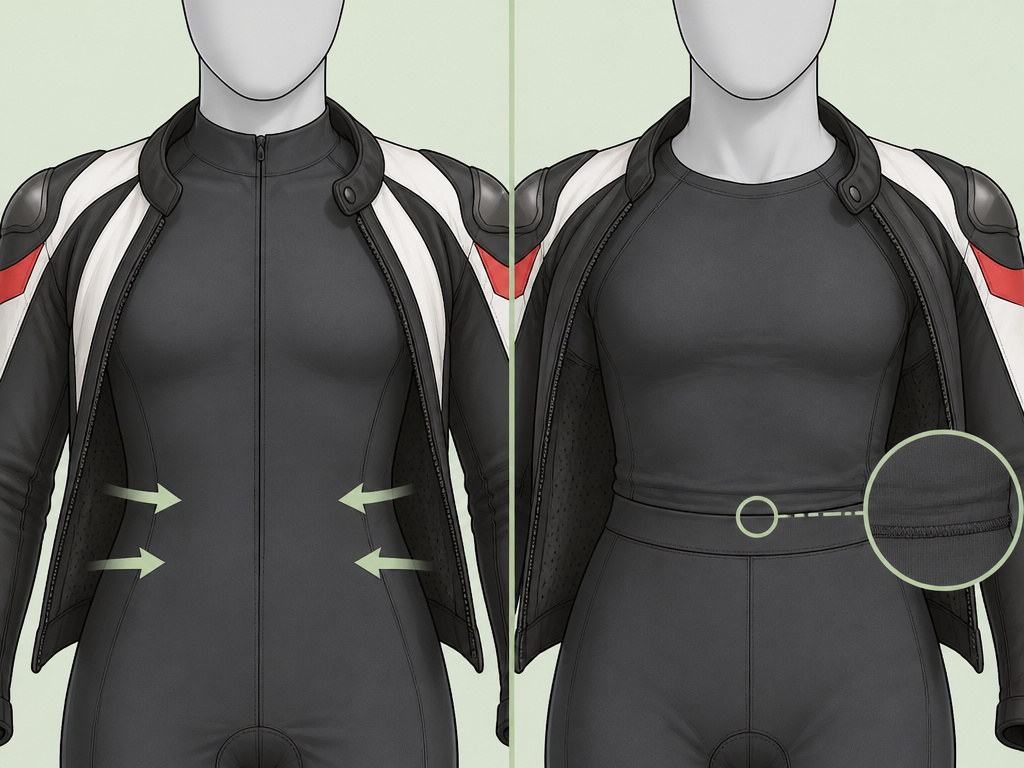
This choice comes down to your riding style. There’s a best tool for each job.
One-Piece Undersuits (e.g., REV’IT! Excellerator 2, PsycleSkins, Bison Thor.1) These are the standard for track days and racing. They mirror the shape of a one-piece leather suit, providing a completely seamless interface. PsycleSkins argues this design is superior because it “eliminates excess material bunching where the top and bottom overlap.” The fit is uniform, and there’s zero chance of the top riding up. The downside is practicality: getting in and out of it for a bathroom break is an ordeal, often requiring you to partly disrobe.
Two-Piece Sets (Top & Bottom) This is the versatile choice for street riders and tourers. The primary advantage is modularity. You can wear the top under a mesh jacket on a scorching day as part of your summer riding kit, or pair the bottoms with jeans. They’re also easier to put on and launder. The trade-off is the waistband seam, which can create a pressure point. Look for sets designed specifically for riding, with high-waisted bottoms to avoid overlap gaps.
| Aspect | One-Piece Undersuit | Two-Piece Base Layer Set |
|---|---|---|
| Best For | Track riding, racing, maximum performance | Street riding, touring, commuting, versatility |
| Fit & Feel | Seamless, uniform compression, no bunching | Modular, can have a waistband seam |
| Practicality | Difficult for bathroom breaks | Easy to put on/take off, easy to wash |
| Example Use Case | Worn under a one-piece race suit all day at the track | Wearing the top under a jacket on a hot summer commute |
What NOT to Wear Under Your Leathers
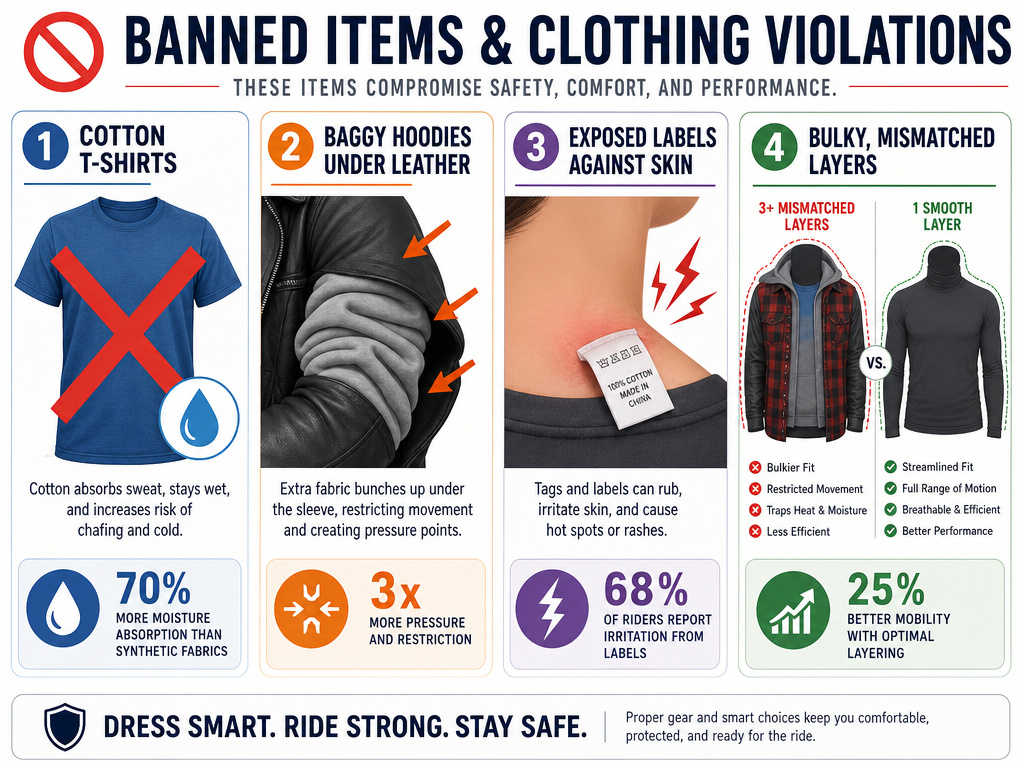
The banned list is shorter and more important than the recommendation list.
- Cotton Anything: T-shirts, hoodies, jeans. Cotton is the enemy. It absorbs moisture and loses all insulating properties when wet. That sweat-soaked cotton tee will leave you shivering during a lunch stop.
- Loose-Fitting Clothing: Baggy shirts or pants create folds and bunches. These become pressure points and prevent your armor from sitting flush against your body.
- Clothing with Thick Seams or Labels: That raised label on the back of your neck? It will feel like a woodpecker is attacking you after 30 minutes. Any internal tag or bulky seam will announce itself loudly on a long ride.
- Multiple Layers of Regular Clothes: The “thermal barrier” advice for textile suits means one thin, dedicated layer. Stacking a t-shirt, a hoodie, and a flannel adds dangerous bulk and compromises suit fit.
Your goal is a single, continuous, smooth layer between your skin and the suit’s interior. Anything else is working against you.
Seasonal Adjustments: Hot, Cold, and Variable Weather
The base layer is your primary climate control interface. You change its weight, not its function.
For Hot Weather (Summer Riding)
The job is maximum moisture evacuation and cooling. Look for fabrics like the ZeroFit IceMesh’s mesh panel or Dainese’s Dryarn fabric. Many companies offer “summer” or “ice” versions. The ZeroFit IceMesh uses a mesh panel on the back for air intake. The Dainese Dry Suit uses its Dryarn fabric to push sweat away quickly. In extreme heat, some riders use an evaporative cooling vest over a very thin base layer. The key is to avoid cotton at all costs, as it’s the quickest route to heat exhaustion. Our dedicated guide to best motorcycle clothing for hot weather dives deeper into this system.
For Cold Weather (Winter Riding)
Here, moisture management is still job one, if sweat soaks your base layer, you’ll freeze. The solution is a thermal base layer that wicks and insulates. Merino wool is a superb natural alternative. It retains heat even when damp and naturally resists odor. This is the first step in a proper layering system for cold weather riding.
Common mistake: Adding a thick cotton hoodie for warmth. It works for the first hour. Once sweat saturates it, you lose heat faster than if you wore nothing at all. I made this exact error on early spring rides. A merino wool base layer solved it permanently.
For Variable Conditions (Touring)
This is where a two-piece system shines. Start with a lightweight merino top and bottom. Pack a lightweight windproof jacket that can go over your base layer but under your leather suit. If a cold front hits, add the shell. If it warms up, remove it. The base layer stays constant, managing moisture while you add or subtract a single, thin mid-layer.
Hygiene and Care: Making Your Undersuit Last
A base layer sits against your skin and absorbs sweat. Proper care is essential for its performance and durability.
- Wash After Every Use. This isn’t a jacket you can air out. Salt and acids in sweat will degrade both the technical fibers and your suit’s interior lining over time.
- Use Tech Wash. Avoid standard detergents and fabric softeners. They coat the synthetic fibers, clogging the moisture-wicking channels. Use a dedicated technical gear wash.
- Air Dry Only. Never put a compression undersuit in the dryer. The high heat will break down the elastic fibers (lycra/elastane), permanently killing its fit and recovery. Lay it flat or hang it to dry.
- Have a Spare. If you ride frequently, invest in two identical sets. It ensures you always have a fresh, dry base layer and allows for proper washing cycles.
How to put on and take off leathers easily
Putting on a tight leather suit is a struggle without the right base layer. A smooth, slippery undersuit made from lycra or similar blends allows the leather to slide over your skin, simplifying the process. Look for features designed specifically for this purpose, such as thumb loops and ankle straps that keep sleeves and legs in place as you pull the suit on. Some one-piece designs also include a fly or crotch zipper for practical convenience. This low-friction layer not only aids in dressing but also serves a critical safety function by allowing the outer suit to move independently during a slide.
Frequently Asked Questions
What do MotoGP riders wear under their leathers?
They wear custom-fitted, one-piece compression undersuits from brands like Dainese or REV’IT!. The fabrics are high-tech moisture-wicking and friction-reducing materials. The fit is absolutely precise to avoid any bunching or restriction. It’s the pinnacle of the “second skin” concept.
Can I just wear athletic compression gear instead?
You can, but it’s a compromise. Generic athletic wear is designed for running or gym postures, not the seated, forward-lean riding position. Seams may be in the wrong places (like behind the knees), and the fabrics are often grippier than ideal. Motorcycle-specific gear includes thumb loops, ankle straps, and crotch zippers that address real riding hassles.
How tight should an undersuit be?
It should feel like a firm, uniform hug, snug but not restrictive. You shouldn’t have loose fabric you can pinch anywhere. When you move into a riding tuck, you should feel the suit move with you, not bind or pull. PsycleSkins advises choosing the same size as your leather suit. If in doubt, size down; the lycra will relax slightly with wear.
Is it really necessary to wear no underwear underneath?
Most manufacturers design their undersuits to be worn commando. The reason is to eliminate seams, the waistband and leg openings of underwear are prime chafing points on a long ride. The undersuit’s seamless construction is meant to be the only layer. If you must wear something, make it seamless athletic underwear, but expect it to diminish the anti-chafe and moisture-management benefits.
How do I choose between all these brands (Dainese, REV’IT!, Bison, etc.)?
Fit is king. Brands cut their patterns differently. REV’IT! And Dainese often have a more European, athletic cut. Bison and PsycleSkins may accommodate different body shapes. Look at the specific features: need a crotch zipper? Go Bison. Want a specific fabric like Dryarn? Dainese. Prefer a balance of features and price? REV’IT! Excellerator 2. Your best bet is to check the brand’s size chart against your leather suit size and read reviews from riders with a similar build.
Before You Go
The right layer underneath your leather suit is the single biggest upgrade you can make. Skip the decade-long trial-and-error phase. Get a purpose-built undersuit that manages moisture, reduces friction, and adds zero bulk. For leather, that’s a slippery, compression-fit layer. For advanced textile suits like the Aerostich R-3, read the manual and consider the thermal barrier warning.
Start with a two-piece set if you’re new to this; the versatility is forgiving. Once you feel the difference, how much easier the suit goes on, how much cooler you stay, how the armor stays put, you’ll understand why this is considered essential gear, not an accessory. Then go ride.
