
How to Dress for Cold Weather Motorcycle Riding
This post contains affiliate links. As an Amazon Associate, we earn from qualifying purchases.
To dress for cold weather motorcycle riding, build a system of three technical layers, a moisture-wicking base layer, an insulating mid-layer, and a waterproof outer shell, and protect your extremities with heated or heavily insulated gloves, boots, and a sealed helmet. Heated grips or handguards are a more effective first investment than a heated jacket liner for maintaining hand control.
The difference between a comfortable three-hour ride and a miserable, dangerous one is not just more layers. It is the right layers, placed in the right order, with a clear understanding of what wind and moisture actually do at speed. Your body’s heat is a resource; your job is to manage its loss, which is the core principle of how to dress for cold weather motorcycle riding.
The following is a practical, sourced breakdown of the how to dress for cold weather motorcycle riding system. We will start with the layer-by-layer logic, move to the critical extremities, address the role of heated gear and bike modifications, and end with the essential safety rules that override all comfort advice.
Key Takeaways
- Use a three-layer system (wicking, insulating, waterproof) but size your outer jacket to accommodate the layers underneath without restricting movement, a snug fit over multiple layers is a common mistake.
- Heated grips or handguards are a better initial investment than a heated jacket liner for maintaining hand control; cold, numb hands are a direct safety hazard.
- Bright or reflective outer clothing is not optional; Polaris notes a motorist’s failure to see a motorcycle is the leading cause of accidents.
- Always check your motorcycle’s available amperage before wiring in heated gear, and only use the manufacturer-supplied harness, as Harley-Davidson explicitly warns.
The Three-Layer System Explained
Forget “dressing warm.” You are building a microenvironment. Each layer has a specific mechanical job: moisture management, dead-air insulation, and wind/water sealing.
The base layer‘s job is to move sweat away from your skin. If it holds moisture, you get wet, and evaporation sucks heat 25 times faster than dry air. Look for materials branded as merino wool or specific synthetics; cotton is a sponge and a liability.
Technical Insight: A laminated waterproof membrane, where the membrane is bonded directly to the outer fabric, provides the most reliable seal against wind and water infiltration. Garments with removable liners offer versatility, but the fixed air gap in a laminated design acts as a consistent insulating barrier.
The mid-layer traps warm air. Fleece or lightweight synthetic puffers work well. The key is loft without bulk, too much bulk under a riding jacket restricts shoulder and arm mobility. Your jacket should be sized to fit over this mid-layer comfortably.
The outer shell is your fortress. It must be windproof and waterproof. As Dainese notes, a membrane here is essential for winter riding. It stops the wind chill that would otherwise drain heat from your other layers. Always zip your jacket to your pants to seal out drafts.
Protecting Your Extremities: Hands, Feet, and Head
Your core might be toasty, but cold hands, feet, or a fogged visor will end your ride.
Hands: They are out in the wind, often wet, and cramp easily when cold. A good winter glove has a waterproof membrane (like Gore-Tex) and insulation, but its insulation is useless if the wind flattens it. That is why external wind protection is more effective than more insulation.
Heated grips are highly effective because they heat your hands from the inside, where the blood flows. Heated gloves are the next step. Dainese also suggests mittens that fit over summer gloves as a simple, highly effective wind block.
Where this goes sideways: Wearing heated glove liners under non-waterproof outer gloves. The liners get soaked with rain or sweat, the heating elements stop working efficiently, and you end up with wet, cold hands. The heat source must be in the outermost, waterproof layer.
Feet: The same wind-chill principle applies. Winter riding boots have a built-in membrane. The critical mistake here is sock layering. Dainese explicitly warns against wearing two pairs of socks. They compress, restrict circulation, and make your feet colder. One pair of good merino wool or thermal socks is the answer.
Head & Neck: Your helmet is a fixed environment. A thin balaclava or neck gaiter does two things: it stops cold air from rushing down your jacket, and it wicks sweat from your forehead to prevent visor fog. For the helmet itself, ensure it’s properly fitted with no gaps at the neck; a pinlock visor insert is mandatory for fog prevention.
| Extremity | Primary Threat | Best Defense | Common Mistake |
|---|---|---|---|
| Hands | Wind chill, wetness | Heated grips, waterproof gloves with membrane | Bulky gloves that reduce bar feel |
| Feet | Circulatory constriction | Single pair of thermal socks, insulated boots | Wearing two pairs of socks |
| Head/Neck | Fogging, drafts | Pinlock visor, sealed balaclava | Loose helmet fit allowing air flow |
Heated Gear: Power, Placement, and Pitfalls
Heated gear can extend your riding season, but it is a system, not a magic garment. It adds complexity and electrical load.
Your first heated purchase should be grips or handguards. Control is everything, and cold hands lose fine motor skills fast. If you still need more, a heated vest or jacket liner is next. It should go over a light shirt and under your windproof outer layer. This placement allows the heat to warm the trapped air in your mid-layer, which is far more efficient than trying to heat your skin directly.
Common mistake: Wiring a heated jacket or gloves directly to your bike’s accessory port or a battery tender lead. Harley-Davidson’s service manual states: “Use only the connecting harness supplied with your Harley-Davidson Heated Clothing. DO NOT use the battery tender harness that may already be installed on your motorcycle.” The supplied harness has an integrated fuse and correct wire gauge for the load.
Before installing any heated gear, check your motorcycle’s charging system capacity. A heated jacket liner, gloves, and grips can draw a significant amount of current. Older or small-displacement bikes may not support that without draining the battery.
My take: Battery-powered heated gear is overrated for anything but short commutes. The high setting can drain a battery pack relatively quickly. For touring, bike-powered systems from brands like Oxford, Gerbing, or Warm & Safe are the only reliable choice.
Bike Modifications That Matter as Much as Gear

Your motorcycle itself can be your first line of defense. Gear fights the symptoms; bike mods treat the cause, wind exposure.
A tall, wide windscreen is the single biggest comfort upgrade for cold or wet weather. It pushes the wind blast over your head and shoulders, drastically reducing the cooling effect on your core and helmet.
Handguards or “bark busters” do for your hands what a windscreen does for your body. They deflect wind and rain from the backs of your gloves. Heated grips behind handguards are the ultimate winter hand solution.
Don’t forget tire pressure. Cold air lowers tire pressure, which reduces grip. Check and adjust pressures before a cold ride. Also, surfaces like painted road lines and metal bridge decks become slicker near freezing.
The Non-Negotiables: Safety Overrides Comfort
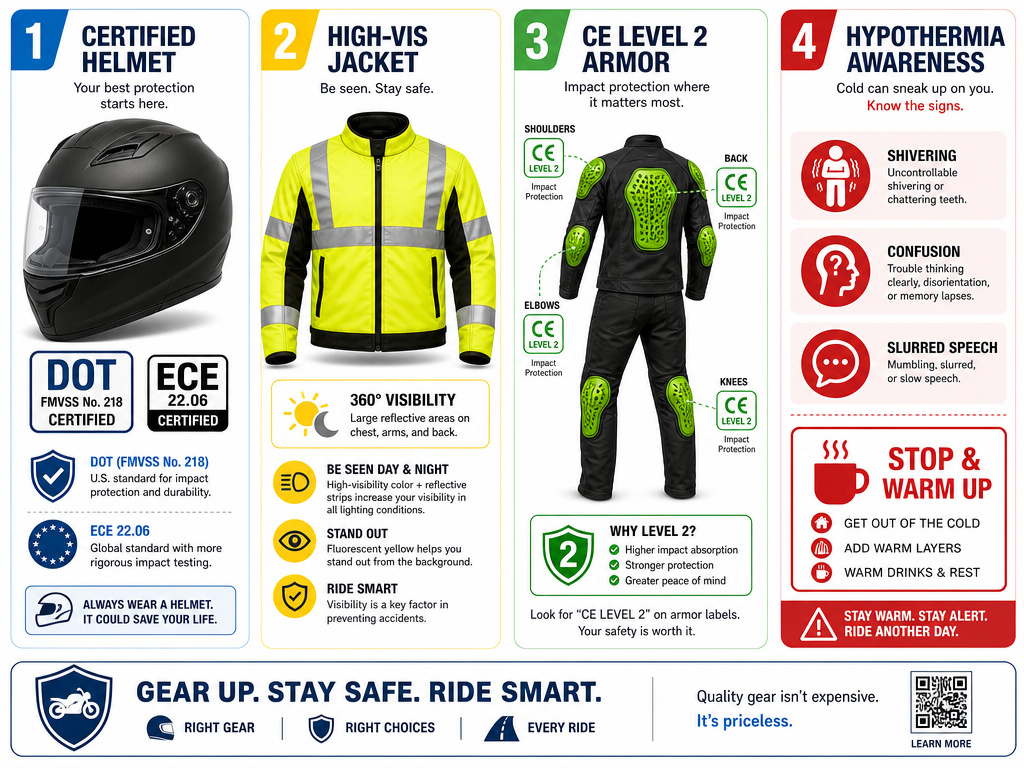
All the insulation in the world is pointless if you are not visible or protected in a crash. This is where manufacturer and regulatory advice is absolute.
Helmet: It must have a safety certification, DOT or ECE 22.05 at a minimum. As Polaris states, “Head injuries are the leading cause of fatalities in accidents involving motorcycles.” The helmet must fit snugly and show no damage.
Visibility: Polaris also notes that a motorist’s failure to see a motorcycle is the leading cause of accidents. Your outer layer must be bright, light-colored, or have reflective panels. This is not a style choice.
Abrasion & Impact Protection: Your jacket and pants should have CE-certified armor at the shoulders, elbows, knees, and back. Gloves should have palm sliders and knuckle protection. Boots must cover your ankle and provide a stiff, protective sole.
Hypothermia Awareness: Know the signs, uncontrollable shivering, confusion, slurred speech, loss of coordination. If you or a riding partner show these, stop, seek shelter, and warm up immediately. Riding while impaired by cold is as dangerous as riding drunk.
Budget-friendly tips or alternatives
Start by focusing on the core principles of how to dress for cold weather motorcycle riding. Look for jackets and pants that incorporate a waterproof membrane, as this is essential for blocking wind and water. Instead of buying a new heated suit, consider adding a removable membrane to your existing gear; the space between the outer layer and the membrane acts as an extra insulating air cushion. For your hands, mittens are a highly effective option that keep air out well and can allow you to use lighter gloves you already own. Prioritize bright or light-colored clothing for visibility, as this is a critical safety feature that doesn’t require a high cost.
Frequently Asked Questions
What is the 12 second rule on a motorcycle?
The “12-second rule” is a visual lead-time guideline for increasing your following distance in adverse conditions, including cold weather when roads may be slick. It advises you to look 12 seconds ahead down the road (instead of the usual 2-4 seconds) to identify potential hazards like ice, gravel, or standing water earlier, giving you more time to react safely.
What temperature is too cold for motorcycle riding?
There is no universal “too cold” temperature, as it depends on gear, bike, and tolerance. However, practical safety limits appear around freezing (32°F/0°C). Below this, black ice becomes a real risk on roadways, especially on bridges, overpasses, and in shadows. Even with excellent gear, tire traction and physical reaction times are compromised. Most seasoned riders set a personal cutoff based on local road conditions, not just the thermometer.
What is the best clothing for motorcycles in cold weather?
The best clothing is a system, not a single garment. It consists of:
- A wicking base layer (merino wool or synthetic).
- An insulating mid-layer (fleece or lightweight puffer).
- A waterproof, windproof outer shell with armor (CE-certified jacket and pants).
- Dedicated winter riding boots and gloves with waterproof membranes.
- A full-face helmet with a pinlock visor and a balaclava.
Why do my feet get colder when I wear two pairs of socks?
As highlighted in the Dainese guide, wearing two pairs of socks compresses your feet inside the boot. This compression restricts blood circulation, which is the body’s primary method of delivering warmth to your extremities. With reduced blood flow, your feet actually get colder faster. One good pair of thermal socks is warmer than two compressed pairs.
Before You Go
Cold-weather riding is an exercise in thermodynamics and risk management. Start by blocking the wind with a better windscreen and handguards. Build your personal layering system from the skin out, using technical fabrics, not cotton. Invest in heated grips before a heated jacket.
Remember the one rule that overrides all others: visibility and protection come first. No amount of clever winter layering matters if your cold weather gear lacks armor or can’t be seen. For the specifics on certification standards, the Australian Good Gear Guide for riders remains a foundational, government-published resource. Now go check your tire pressure.
