
Motorcycle Base Layer Guide: How to Choose and Size
This post contains affiliate links. As an Amazon Associate, we earn from qualifying purchases.
A motorcycle base layer is the first skin-tight garment you wear under your riding gear, designed to manage moisture and regulate temperature. The choice comes down to two distinct categories: simple moisture-wicking layers and certified armored layers that integrate impact protection. For most riders, a well-fitting synthetic or merino wool base layer is the foundation of a comfortable ride, while armored versions are for those seeking integrated protection under a non-armored jacket.
That split between comfort and protection is the entire game. One type is about moving sweat; the other is about stopping impacts. Mixing them up, or wearing the wrong one for your outer layer, leaves you either sweaty and cold or unprotected. This is the core principle of any motorcycle base layer guide.
What follows: a breakdown of the two base layer types, the specific materials and certifications that matter, and how to match your base to your jacket and the weather as outlined in this motorcycle base layer guide. By the end, you’ll know whether you need a simple wicking layer or a full armored system.
Key Takeaways
- Your riding jacket dictates your base layer. A mesh or textile jacket without armor needs an armored base layer; a jacket with its own CE armor works with a simple moisture-wicking layer.
- For odor resistance over multi-day trips, different technologies are used: Adventure Spec uses silver ion yarn, claiming it is like merino wool but more washable, while Harley-Davidson uses a polypropylene blend for odor inhibition.
- Fit is essential. A base layer must be skin-tight without restricting movement. Loose fabric bunches and chafes; too tight cuts off circulation.
- Certifications are your proof. An armored base layer should cite a standard like EN 1621-1:2012 for limb protection or EN 17902-6:2020 for undergarments. Simple layers have no such certification.
- Warranty terms vary. Dainese cites a 2-year legal guarantee in the EU, while Harley-Davidson offers a 1-year limited warranty on its FXRG base layer pants.
The Two Types of Motorcycle Base Layers
This isn’t one category. It’s two separate products with different jobs, and buying the wrong one is a costly mistake.
The first type is the moisture manager. Think of the Dainese Technical Motorcycle Undershorts made from Dryarn fabric or the Harley-Davidson FXRG Base Layer Pant. Their job is simple: pull sweat away from your skin to keep you dry and regulate temperature. They have no impact protection. You wear these under a riding jacket that already has its own CE-certified armor in the shoulders, elbows, and back.
The second type is the protector. The Triumph Adventure Experience Pro Base Layer and the Harley-Davidson Layering System Armored Base Layer are the examples here. These are essentially compression shirts with built-in armor pockets holding CE-rated protectors for shoulders, elbows, chest, and back. Their job is to provide impact protection you’d normally get from a jacket, allowing you to wear a lighter, non-armored shell over top.
A simple moisture-wicking base layer is apparel. An armored base layer may be a certified protective device, though Triumph explicitly notes its product ‘is not considered to be ‘personal protective equipment’’ under EU regulation. The latter comes with specific CE standard numbers on the label; the former does not.
Why does this distinction matter? If you buy an armored base layer and wear it under a jacket that already has bulky armor, you’ll have two sets of hard plastic fighting for space. The armor won’t sit correctly over your joints, compromising safety. Conversely, wearing a simple base layer under a mesh jacket with no armor leaves you vulnerable in a crash.
How to Choose the Right Base Layer Material
The fabric decides how you feel after the first hour and whether your gear smells after a week-long trip. The top contenders each have a clear strength.
Synthetics (Nylon, Polyester, Dryarn): These are the workhorses. They wick moisture fast and dry quickly. Dainese’s Dryarn fabric is a hydrophobic synthetic that, as their site states, focuses on “keeping the body dry at all times.” The Harley-Davidson FXRG pants use a 98% nylon, 2% polypropylene knit, with the polypropylene added for odor inhibition. Synthetics are durable and handle repeated washing well. The downside? They can hold odors.
Silver Ion Yarns: This is a high-tech synthetic blend. Adventure Spec uses a proprietary mix of Nylon, Lycra, and Silver Ion yarns in its Core Shorts. The company claims the silver ion technology offers odor resistance “like Merino wool, but more washable.” The ions inhibit bacterial growth, meaning you can wear the layer for multiple days on a trip.
Merino Wool: My personal pick for multi-day riding. It naturally regulates temperature, wicks moisture, and resists odors incredibly well. It’s less durable than synthetic and requires more careful washing.
Cotton: Just don’t. It absorbs sweat, holds it against your skin, and makes you cold. Cotton should be avoided as it absorbs and holds moisture.
| Material | Best For | Key Limitation |
|---|---|---|
| Synthetic (Nylon/Dryarn) | Daily riding, hot weather, fast drying | Can retain odors after heavy sweating |
| Silver Ion Yarn | Multi-day trips, minimal packing, odor control | Premium cost, specific to brands like Adventure Spec |
| Merino Wool | Variable climates, multi-day wear, natural odor resistance | Higher cost, requires delicate washing |
| Cotton | (Avoid) | Absorbs and holds moisture, causes chilling |
Decoding Armored Base Layer Certifications
If you’re looking at an armored base layer, the certification codes are your only objective proof it works. These aren’t marketing terms.
The Triumph Adventure Experience Pro Base Layer lists three specific standards for its D3O protectors:
- EN 1621-1:2012 Level 1: For shoulder and elbow protectors.
- EN 1621-2:2014 Level 1: For the back protector.
- EN 1621-3:2018 Level 1: For chest protectors.
These numbers mean the protectors were tested to meet defined impact absorption thresholds for those body zones.
The Harley-Davidson Layering System Armored Base Layer is certified to a different standard: EN 17902-6:2020. This is a standard for “Undergarment” protective devices. It covers the entire assembly, the garment and its integrated D3O Ghost armor (parts 98104-22VR for shoulders, 98103-22VR for elbows, etc.), as a single protective unit.
Where this goes sideways: Assuming any “armored” shirt is safe. Triumph explicitly states its product “is not considered to be ‘personal protective equipment'” under EU regulation. Always verify which component, the inserts or the full garment, is actually certified.
This is the critical step most buyers skip. They see “armor” and buy. You need to see “EN 1621-1” or “EN 17902-6” on the product page or label. No standard number means no verified level of protection.
Fit, Sizing, and the Layer System
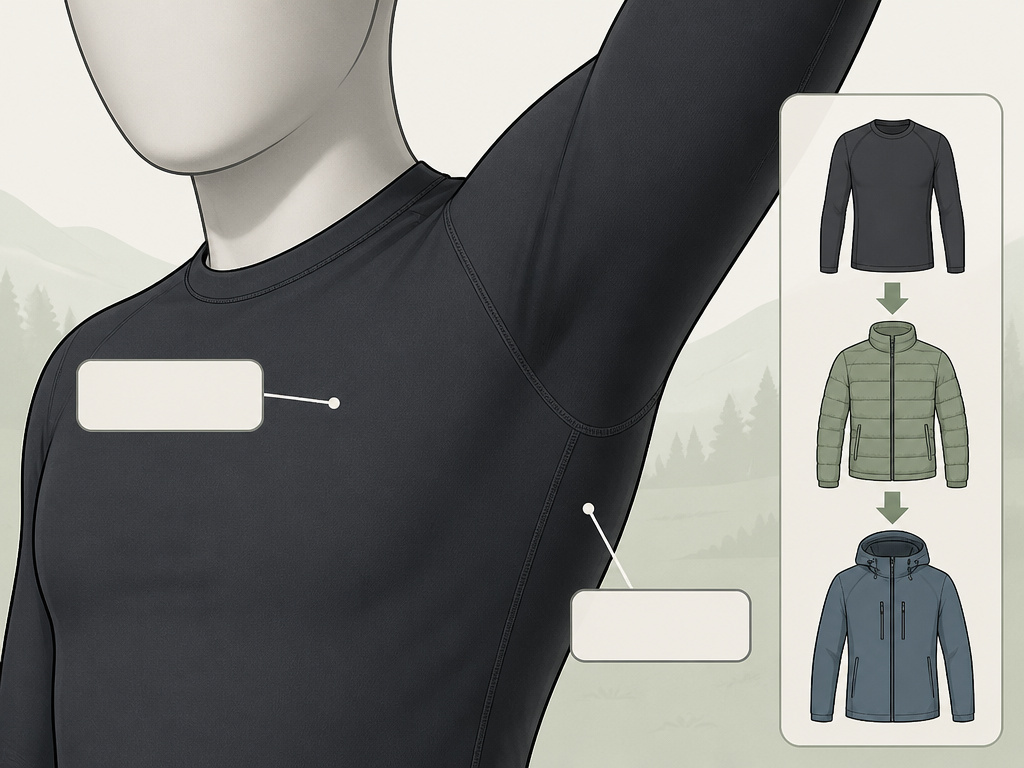
A base layer must disappear on your body. Any bunching under your riding pants or jacket turns into a hot spot. Any looseness means the moisture-wicking can’t work effectively.
The fit is compression-like, snug but not restrictive. You shouldn’t have loose fabric anywhere. When trying one on, move through a riding position: reach for imaginary handlebars, twist your torso. The seams shouldn’t pull or dig.
Sizing can be bizarre. Dainese uses a highly specific measurement guide. For neck circumference, they instruct measuring “at 2 cm below the Adam’s apple in the front, and at the 7th cervical vertebra in the back (i.e. NOT horizontally).” This isn’t your typical clothing size chart. If you’re between sizes with a brand like this, size down for a base layer. The stretch in the material will accommodate you, and a tighter fit performs better.
Your base layer is step one in a system. Adventure Spec puts it bluntly: “If you do not use a suitable baselayer system under your technical over layers, they will not work.” The sequence is:
- Base Layer: Manages moisture (and provides armor if needed).
- Mid Layer: Insulates (a fleece or lightweight jacket).
- Outer Shell: Blocks wind and rain (your riding jacket).
This system, a key point in any motorcycle base layer guide, is how you handle a 40-degree morning and a 75-degree afternoon on the same ride. You add or subtract the mid layer. A good guide to winter motorcycle layering will emphasize this modular approach, but it works year-round.
Care, Durability, and When to Replace
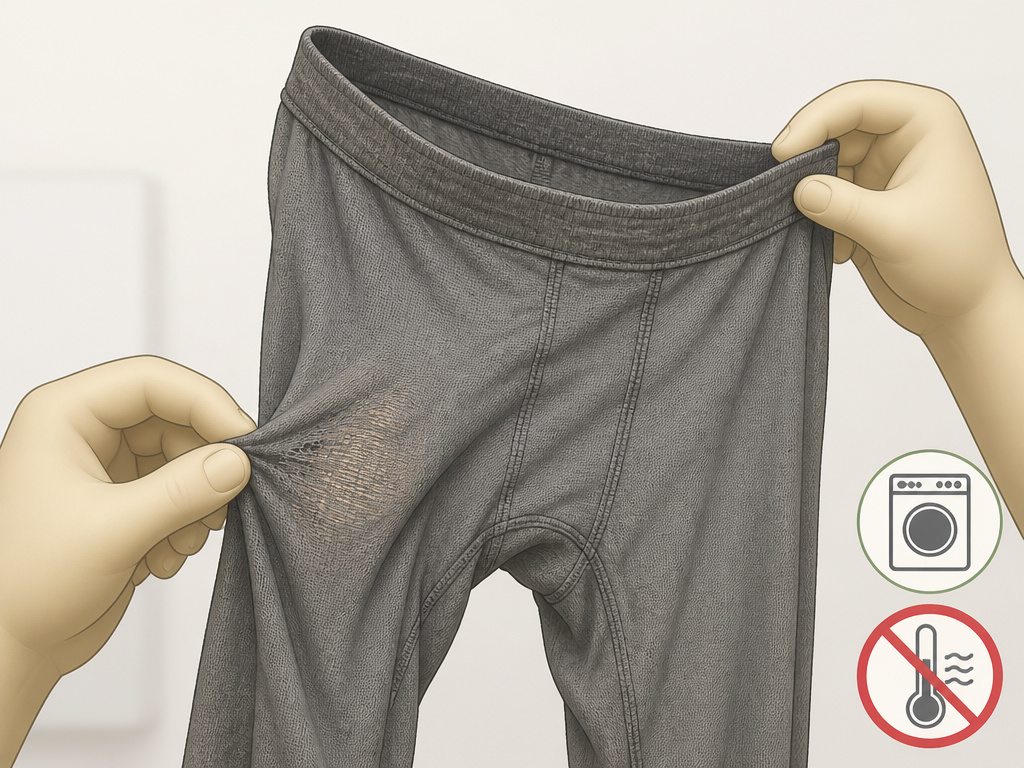
A base layer lives a hard life. It gets sweaty, compressed under armor, and washed frequently. How you care for it determines its lifespan.
Washing is the biggest factor. Always follow the label. Merino wool needs a gentle, cold wash with a wool-specific detergent. Aggressive washing and hot water will shrink it and break down the fibers. Synthetic and silver ion layers, like the Adventure Spec Core gear, are more robust but still benefit from cold water and air drying. Tumble drying on high heat melts elastic fibers (Lycra/Spandex), killing the garment’s stretch and fit.
Durability clues are in the fabric blend. The Harley-Davidson armored base layer uses an 85% nylon, 15% spandex knit, a tough, stretchy combo meant to hold armor in place.
There’s no set mileage for replacement. Replace a base layer when:
- The elastic at the wrists, waist, or ankles loses its snap.
- The fabric becomes thin or see-through, especially at friction points like the knees or seat.
- It no longer fits snugly, indicating the elastic fibers are dead.
- Odors won’t wash out, meaning the odor-control treatment (silver ions, polypropylene) has degraded.
Warranties are a last resort, but know your coverage. As noted in the fact sheet, warranties differ: Dainese offers a 2-year legal guarantee in the EU, while Harley-Davidson offers 1 year. These typically cover manufacturing defects, not wear and tear from use.
Seasonal Differences (Summer vs. Winter base layers)
The right base layer changes with the weather. For summer, you want a layer focused on keeping you dry and cool. Look for fabrics designed for the hottest season that actively move sweat away from your skin. Some are made with seamless construction for comfort and mobility during long, hot rides. For winter, your base layer’s primary job is still moisture management, but you’ll rely on it to work as part of a system under insulating mid-layers. The key is choosing a base that performs its core function without adding bulk, so your technical over layers can do their job effectively. The principle remains: start with a dry foundation.
Frequently Asked Questions
What is the best base layer for motorcycle touring?
For multi-day touring, a merino wool or silver ion yarn base layer is best due to superior odor resistance. You can wear it for multiple days without washing, which is crucial when packing light.
Can I wear an armored base layer under any jacket?
No. An armored base layer is designed to be worn under a non-armored outer shell, like a mesh jacket or an adventure riding jersey. Wearing it under a jacket that already has CE armor creates bulk, discomfort, and can misalign the protectors. It’s meant to be your primary protection layer.
How tight should a motorcycle base layer be?
It should be skin-tight like a second skin, with no loose fabric, but not so tight that it restricts breathing or movement. You should feel compressed but not constricted. When in doubt, size down, the material will stretch.
What is the difference between a base layer and a compression shirt?
All good motorcycle base layers have compression fit, but not all compression shirts are good base layers. A motorcycle-specific base layer will use technical fabrics (moisture-wicking, odor-resistant) and often have a lack of seams for comfort and mobility. A generic compression shirt might be cotton-blend and lack the necessary performance features.
Before You Go
The base layer decision anchors your entire gear system. Get it wrong, and your expensive jacket and pants can’t do their job.
If your riding jacket lacks built-in armor, your path leads directly to a certified armored base layer with EN standard numbers. If your jacket is already armored, invest in a moisture-wicking layer with merino or silver ion fabric for trips longer than a day.
Fit that layer snug. Follow the wash instructions. And remember that this single piece of clothing, more than any other, determines whether you finish a ride comfortable or miserable. It’s the one piece of gear you put on first and feel all day. Choose it with the same care you choose your helmet.
