
How to Dress for Summer Motorcycle Riding: Step-by-Step
This post contains affiliate links. As an Amazon Associate, we earn from qualifying purchases.
To dress for summer motorcycle riding, you need gear designed for heat: a ventilated helmet, a mesh jacket with CE armor, summer pants, wicking base layers, and ventilated gloves and boots. The aim is to build a protective system that allows air to flow while protecting you from abrasion, impact, and the sun. Avoid cotton, prioritize fit, and choose gear with recognized safety labels like DOT, ECE, or CE.
The right gear doesn’t just protect you in a crash; it keeps your core temperature in check so you can focus on the road. When sweat turns your jacket into a sauna, your reaction time drops. This guide builds your summer kit from the skin out, layer by layer, and is a complete guide on how to dress for summer motorcycle riding.
What follows is the breakdown: the base layer that keeps you dry, the jacket and pants that breathe, the helmet that vents, and the accessories that keep you cool when the mercury climbs.
Key Takeaways
- Start with a technical base layer, avoid cotton T-shirts as they hold sweat against your skin, making you feel colder when wind hits the fabric.
- A full-face helmet with chin and crown vents with adjustable flaps is essential for safety; look for chin and crown vents with adjustable flaps to control airflow.
- Mesh jackets with CE-rated armor in the shoulders, elbows, and back provide the best balance of airflow and impact protection for hot-weather riding.
- For footwear, choose boots over sneakers; even summer-specific motorcycle boots protect your ankles and shins, while sneakers offer almost none.
- Hydrate before and during your ride, and consider practical cooling aids like a damp neck gaiter or a technical cooling vest for extreme heat.
The Foundation: Base Layers Are Your Secret Weapon
Your first layer decides how the rest of the ride feels when you consider how to dress for summer motorcycle riding. A cotton T-shirt is the worst choice you can make. As Pirelli’s gear guide notes, cotton absorbs and retains sweat. On a motorcycle, that trapped moisture gets cooled by the wind, which can create a chilling effect. It also sticks to your skin, making your outer layers feel clammy.
The fix is a technical base layer. These are garments made from polyester, merino wool, or proprietary blends designed to wick moisture away from your skin. Pirelli advises avoiding cotton, while BMW Europe-Moto suggests wetting a cotton T-shirt can be used for evaporative cooling. Motorcycle News (MCN) calls this a “clever cooling effect.” It keeps your skin dry, which helps you stay comfortable.
Where this goes sideways: Wearing a cotton shirt under a mesh jacket. The wind cools the sweat-soaked fabric directly against your skin, which can drop your core temperature and become distracting.
Look for tops marketed as motorcycle-specific base layers or summer athletic wear. A long-sleeve version is actually better for summer, as it prevents chafing from any protective pads in your jacket and provides a thin sun barrier. Brands like Rynox and others specialize in this category. This is the first step in building a functional motorcycle base layer guide for yourself.
The Summer Motorcycle Jacket: Mesh, Vents, and Color
A summer motorcycle jacket has one job: let air in while keeping abrasion resistance and impact protection high. The classic hot-weather solution is a mesh jacket. These are constructed from large panels of strong synthetic mesh, with solid abrasion-resistant material (like Cordura) on the shoulders, elbows, and back. BMW’s blog points to two main ventilation technologies: opening systems like their AirVent zippers and 3D mesh panels.
The armor is what makes it protective. A mesh shell is just a tough net. You need CE-certified armor at the shoulders, elbows, and preferably the back. Look for labels like EN 1621-1 (for limbs) and EN 1621-2 (for back protectors). This armor should be tight-fitting and not shift around when you move.
| Jacket Feature | What It Does | What to Look For |
|---|---|---|
| Mesh Panels | Maximizes airflow across the torso and arms. | Large, durable panels on the chest, back, and sleeves. |
| Ventilation Zips | Allows you to open or close airflow as needed. | Zippers with large, easy-to-grab pulls, located on chest and sleeves. |
| CE Armor | Absorbs impact energy in a crash. | Shoulder and elbow armor certified to EN 1621-1; back protector to EN 1621-2. |
| Abrasion Shell | Prevents road rash if you slide. | Reinforced material (e.g., 600D Cordura) on high-impact zones like shoulders and elbows. |
Color matters more than you think. Dark jackets absorb radiant heat from the sun. Light-colored or brightly colored jackets reflect it and make you more visible to other drivers, a point underscored in the Polaris owner’s manual. For a combination of visibility and cooling, consider a light-colored or brightly colored mesh jacket. You can explore specific models in our dedicated guide to the best summer motorcycle jackets.
Pants: The Trade-Off Between Cool and Protected
Your legs are close to the engine and exposed to the sun. The choice here is between dedicated riding pants and technical riding jeans. There’s a clear safety hierarchy, and the sources don’t fully agree on the final answer.
Pirelli states that technical biker jeans are more protective than regular denim but “the level of protection is not up to that of technical biker trousers.” MCN echoes this, noting riding jeans are cooler than leathers “although they won’t do the same job of protection.” This gets to the core of the European EN 13595 standard for professional rider clothing and the how to dress for summer motorcycle riding dilemma. Pirelli states technical biker jeans are more protective than regular jeans but not as protective as technical trousers, while MCN notes riding jeans are cooler than leathers but offer less protection.
For summer, look for pants with the same philosophy as jackets: ventilation. Many textile pants feature full-length mesh-lined legs or large zip-open vents on the thighs. The key is that they should still include CE-rated knee armor (and ideally hip armor) that stays in place. The best summer motorcycle pants will list these features clearly.
A well-ventilated textile pant with CE armor is the safest hot-weather option. Riding jeans are a step down in abrasion protection but a step up in casual comfort, know the difference before you buy.
Helmets, Gloves, and Boots: The Essential Trio
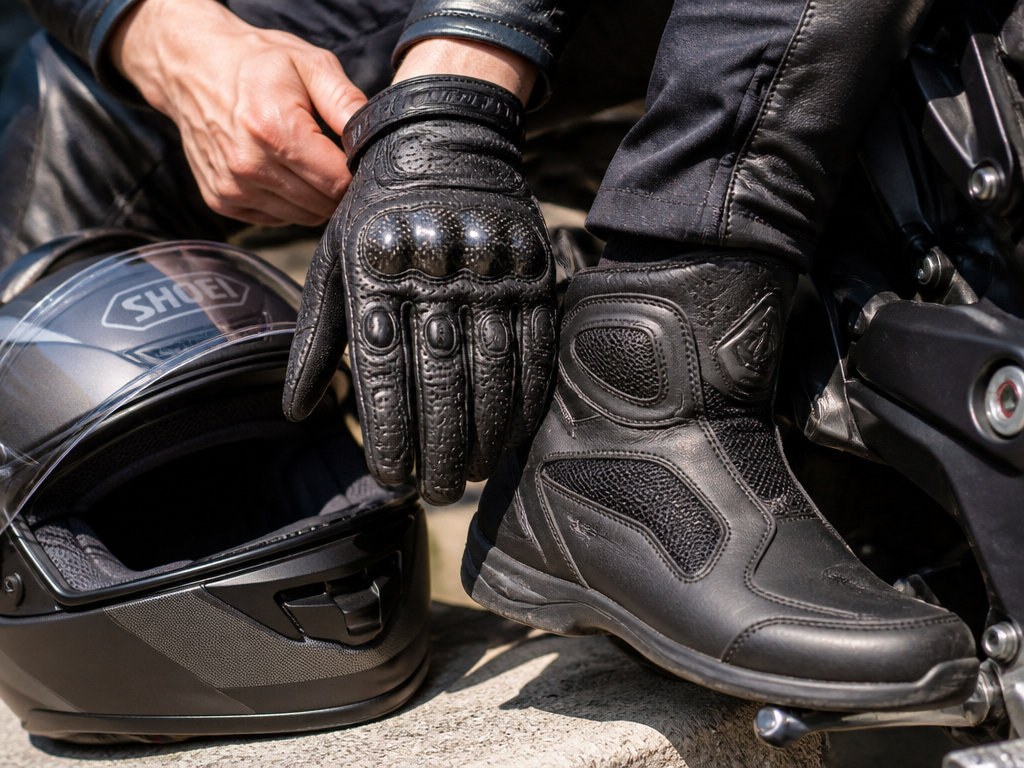
The Helmet: Your Only Full-Face Option
Pirelli’s guide is blunt: “it is the full-face helmet that guarantees maximum safety.” A summer helmet should have good ventilation. Check for adjustable intake vents on the chin bar and exhaust ports at the rear. These should have flaps or sliders so you can open them fully in summer and close them in cooler weather. The approved safety labels are your guide: a DOT sticker for the USA/Canada or an ECE 22.05 label for Europe, Asia and Oceania. A snug, proper fit is more important than extra vents. For more on managing heat at the top, see our tips on how to keep cool in a helmet.
Summer Gloves: Protection with Perforations
Your hands are critical for control and are often the first point of contact in a fall. Summer gloves use perforated leather or mesh on the backs and fingers for airflow but retain solid protection on the palms and knuckles. MCN notes that shorter-cuffed summer gloves can still have knuckle guards and thick palm padding. Some gloves are certified to standards such as EN 13594. They must fit snugly without restricting movement, baggy gloves can twist in a slide, leaving skin exposed.
Footwear: Boots Beat Sneakers, Every Time
This is a common point of confusion. Pirelli says motorcycle sneakers are “good for a light ride but do not protect the ankle.” The Polaris manual advises wearing “boots with low heels” to prevent catching on footrests. The synthesis is clear: for any meaningful ride, boots are the only safe choice.
Summer motorcycle boots solve the heat problem with breathable, waterproof membranes (like Gore-Tex) and perforated panels or mesh sections. They extend above the ankle, providing crucial support and protection for the shin and Achilles tendon, areas utterly exposed in sneakers. Some boots are certified to standards such as EN 13634. Boots provide more protection than sneakers, and modern designs aim for comfort. Our review of the best summer motorcycle boots details the best options.
Advanced Cooling Strategies and Riding Adjustments
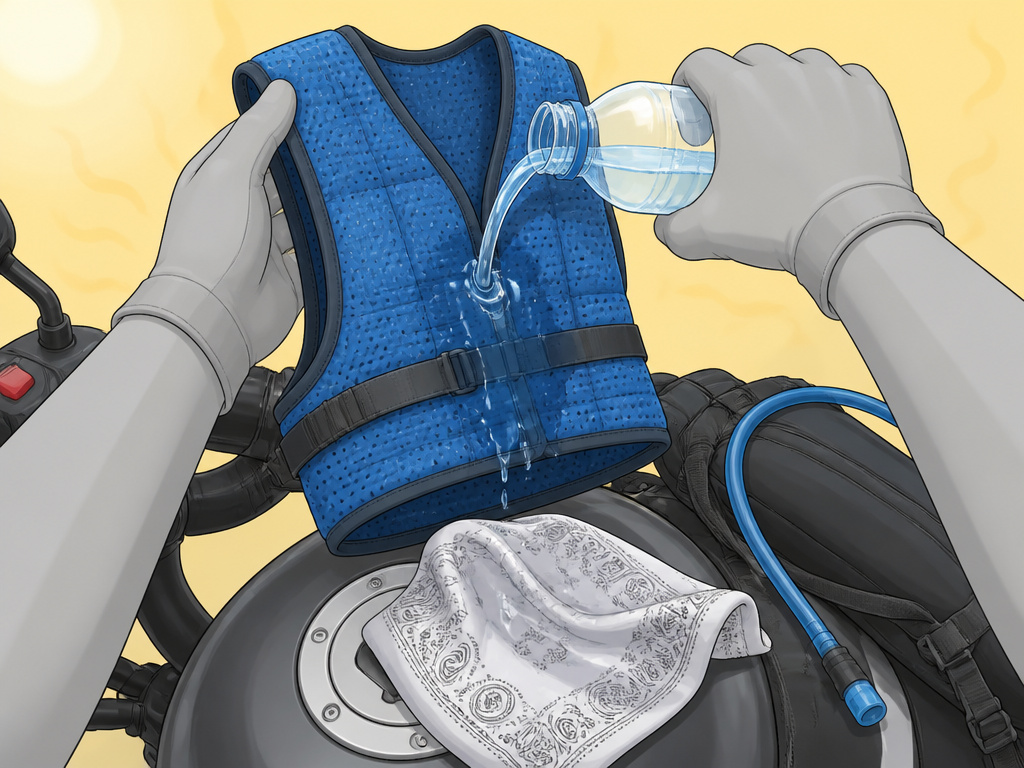
When standard summer motorcycle gear isn’t enough, you need a plan B. This is especially true for riding in desert climates or during heatwaves.
Cooling Accessories:
- Evaporative Cooling Vests: These vests are soaked in water and worn under your jacket. As the water evaporates, it provides a cooling effect. They’re simple and effective for dry heat.
- Phase-Change/Technical Vests: More advanced vests use special cooling packs or crystals that absorb heat. They’re reusable.
- The Bandana Trick: A low-tech winner. Soak a cotton bandana or neck gaiter in water, wring it out, and tie it around your neck. The evaporation provides a cooling effect, and it can be re-wet at stops. BMW’s blog specifically suggests wetting a neck warmer for evaporative cooling.
Riding Behavior:
- Hydrate Relentlessly: Drink water before you feel thirsty. Use a hydration bladder in a backpack if your bike doesn’t have a convenient place for a bottle.
- Avoid Peak Heat: Plan rides for early morning or evening. BMW’s experts suggest avoiding the hottest hours, between 12 p.m. And 4 p.m.
- Soak Your Shirt: In extremely dry heat, soaking your technical base layer shirt in water before putting on your jacket can provide significant relief for the first hour of your ride. This is where the source disagreement on cotton matters, this trick is often recommended for wicking fabrics.
For detailed information on all these methods, our guide on how to stay cool on a motorcycle has you covered.
Navigating Gear Standards and Certifications
The alphabet soup on a gear tag (DOT, ECE, CE) isn’t marketing. It’s a verified claim about how that item was tested. Understanding the basics helps you cut through hype.
- Helmets: DOT (U.S. Standard) and ECE 22.05 (European standard) are the two major global benchmarks. Helmets must bear the appropriate safety label for the region, such as DOT or ECE.
- Armor (CE): EN 1621-1 is the standard for limb armor (shoulders, elbows, knees). EN 1621-2 is for back protectors. CE armor may have Level 1 or Level 2 ratings, which indicate different levels of impact absorption.
- Gloves & Boots: EN 13594 covers gloves, and EN 13634 covers boots. Their presence means the item has been tested for abrasion resistance, seam strength, and impact protection.
The Australian government’s official motorcycle and scooter protective apparel guide is a primary-source reference that breaks down these standards in detail. It’s a dry read but the definitive word on what the certifications actually mean.
Note on CE-marked gear: Sources have noted that while CE-marked gear was once rare, it is now widely available from major manufacturers.
How to follow ATGATT in hot weather
The principle of wearing All The Gear All The Time does not change with the temperature. You still need a snug, approved helmet, a jacket, gloves, long pants, and boots to prevent injury. One approach is to choose summer-specific versions of this gear. Proper summer kit uses lighter, more breathable materials to keep you cool without compromising safety. Look for jackets and pants with mesh panels or ventilation zips. Wear light-colored and reflective clothing to stay visible and reflect heat. Hydrate well before and during your ride, and consider using a damp neck warmer for evaporative cooling.
How to maximize airflow and avoid getting baked
Effective ventilation is important to allow hot air to escape. Effective summer riding gear manages airflow with purpose-built systems. Look for jackets and pants that combine opening systems, like zippered vents, with breathable membranes or 3D mesh fabrics. This allows hot air and moisture to escape while letting cooler air flow through. Your helmet should have a ventilation system with adjustable intakes you can open fully. The goal is to allow airflow to help carry away heat and sweat.
Frequently Asked Questions
What should a female wear on a motorcycle ride in summer?
The principles are identical: a full-face helmet, a mesh or ventilated jacket with armor, protective pants (not leggings), boots, and gloves. The difference often comes down to fit. Women-specific gear is designed for a female fit, which can help keep armor in place. The goal is the same: protection without overheating.
Are mesh jackets safe?
Yes, when they are real motorcycle jackets. A safe mesh jacket has a strong mesh shell (not flimsy netting) and, most importantly, CE-certified armor fixed in the shoulders, elbows, and back. A safe mesh jacket includes CE-certified armor fixed in key areas. They are absolutely safer than wearing a non-protective hoodie or no jacket at all.
Can I just wear riding jeans?
You can, but know the compromise. Modern riding jeans with Kevlar or Dyneema lining and removable knee armor are far better than regular jeans. However, they generally do not meet the same stringent abrasion-resistance standards (EN 13595) as dedicated motorcycle trousers. For city commuting or short rides in heat, they are a popular choice. For longer, faster rides, proper pants are the safer bet.
How do I know if my helmet vents are working?
You should feel it. With all vents open and while moving, place your hand inside the helmet near your mouth. You should feel a distinct flow of air coming in from the chin vent. You should feel airflow from the vents while moving. If you feel no movement, the vents may be blocked or poorly designed.
What’s the one piece of summer gear you’d never skip?
The helmet. Full stop. Then the gloves. Your head and hands are almost guaranteed to hit the pavement in any accident. A ventilated full-face helmet and perforated gloves with palm sliders don’t just protect you, they keep you cool enough to wear them, which is the whole point.
Before You Go
Dressing for summer riding isn’t about finding the lightest t-shirt. It’s about assembling a system. That system starts with a wicking base layer, is built around a ventilated jacket and pants with certified armor, and is locked down by a full-face helmet, protective gloves, and real boots.
The threshold for action is simple: if any piece of your current kit is a decade old, was bought for fashion, or makes you think “it’s too hot to wear,” it’s time for an upgrade. Modern summer motorcycle clothing is engineered to solve the heat problem without asking you to gamble with skin.
Fit first, features second. Gear that’s loose, tight, or distracting is gear you’ll regret wearing when it matters. Get a snug fit, trust the labels that matter (ECE, CE), and you’ll have a summer on the road that’s as safe as it is enjoyable.
