
What Is Motorcycle Lane Splitting? Safety Rules and Risks
This post contains affiliate links. As an Amazon Associate, we earn from qualifying purchases.
Motorcycle lane splitting is legally defined in California as riding a two-wheeled motorcycle between rows of stopped or moving vehicles in the same lane. It became a codified part of the state vehicle code on January 1, 2017. The practice is conditionally safe according to state-sponsored research when traffic moves at or below 50 MPH and the rider’s speed does not exceed surrounding traffic by more than 15 MPH.
The legal definition is specific and excludes things like riding on the shoulder. It also creates a framework where safety isn’t a yes-or-no question, but a calculation based on speed, space, and rider experience. A key question in this framework is what is motorcycle lane splitting.
What follows is a breakdown of the law, the conflicting safety advice from official sources, and the physical realities of splitting lanes that most guides gloss over, starting with the core what is motorcycle lane splitting question. By the end, you’ll know the exact thresholds where risk spikes and how to build a mental checklist before you ever roll between cars.
Key Takeaways
- Lane splitting is explicitly legal in California under state law.
- The UC Berkeley safety study concluded lane-splitting appears to be a relatively safe motorcycle riding strategy if done in traffic moving at 50 MPH or less and if motorcyclists do not exceed the speed of other vehicles by more than 15 MPH.
- The UC Berkeley study identified the primary risk as a sudden lane change by another vehicle, while the CHP warns that the risk of death or serious injury increases as speed and speed differential increases.
- Over a third of car drivers mistakenly think splitting is illegal, and a majority disapprove of it, which affects how they react.
- Inexperienced riders should not lane split; the California DMV notes more than half of all motorcycle collisions involve riders with less than six months of experience.
The Official California Definition (and What It Isn’t)
California Vehicle Code Section 21658.1 isn’t long. It defines lane splitting as “driving a motorcycle… That has two wheels in contact with the ground, between rows of stopped or moving vehicles in the same lane, including on both divided and undivided streets, roads, or highways.” The law took effect on January 1, 2017.
That definition does a lot of work. It applies to moving and stopped traffic on any type of road. The California Vehicle Code defines it as driving a motorcycle that has two wheels in contact with the ground.
Lane splitting is defined by California Vehicle Code Section 21658.1 as driving a motorcycle that has two wheels in contact with the ground, between rows of stopped or moving vehicles in the same lane, including on both divided and undivided streets, roads, or highways. The California Highway Patrol is authorized to develop educational guidelines for the practice.
The CHP’s guidelines draw sharp lines around what isn’t splitting. Riding on the shoulder is illegal and is not considered lane splitting. This is a critical distinction for riders tempted to bypass stopped traffic on the right; that’s a separate traffic violation with its own penalties.
This legal foundation for what is motorcycle lane splitting is why a rider’s lane splitting legality depends entirely on their location. While California’s model is often discussed, the official California lane splitting statute is unique. Understanding this specific definition is the first step in any discussion about safety or technique.
Lane Splitting vs. Filtering: A Global Perspective
While California law uses “lane splitting” as a blanket term, riding culture elsewhere makes a distinction. Lane filtering typically refers to moving between stopped vehicles, often at a red light. Lane splitting usually means passing between rows of moving traffic. California’s definition covers both.
Globally, the practice is more accepted. In much of Europe and Asia, filtering through stopped traffic is standard and seen as a way to reduce congestion. The Wikipedia page on lane splitting notes that major safety reports like the Hurt Report and the MAIDS Report found lane-splitting was a rare pre-crash factor. The European MAIDS Report, for instance, found it was the pre-crash motion in only 0.4% of accidents studied.
The point isn’t that it’s universally safe. It’s that the context, speed, traffic flow, and driver expectation, changes everything. What feels aggressive and unexpected on a U.S. Freeway is routine and anticipated in London or Bangkok. This cultural dimension matters because it influences driver behavior, which is your biggest variable.
The 50 MPH / 15 MPH Rule That Defines ‘Safe’ Splitting
The most cited data comes from a California lane splitting safety study by UC Berkeley. Researchers analyzed 5,969 motorcycle collisions from 2012-2013. Their conclusion created a clear safety framework.
Lane-splitting appears relatively safe if done in traffic moving at 50 MPH or less and if the rider does not exceed the speed of surrounding vehicles by more than 15 MPH.
The numbers show why. The study found “no meaningful increase in injury incidence until traffic speed exceeded roughly 50 MPH.” For head injuries, the average occurrence was 6.6% in collisions at or below 50 MPH. Above 50 MPH, it jumped to 16.7%. Speed differential showed a similar threshold. Differentials up to 15 MPH didn’t increase injury likelihood; above that, risk climbed.
| Risk Factor | ‘Safe’ Threshold | Observed Injury Increase |
|---|---|---|
| Traffic Speed | ≤ 50 MPH | Head injuries: 6.6% avg. Below, 16.7% avg. Above |
| Speed Differential (You vs. Traffic) | ≤ 15 MPH | Meaningful injury increase begins above this point |
Where this goes sideways: Ignoring the speed differential rule. Going 20 MPH faster than traffic that’s crawling at 10 MPH puts your effective speed at 30 MPH, still within the 50 MPH traffic cap. But if that traffic is moving at 40 MPH, a 20 MPH differential puts you at 60 MPH, breaching both safety thresholds. The risk compounds.
This isn’t theoretical. It’s the difference between a low-speed tip-over and a high-energy impact. The CHP’s warning that “the risk of death or serious injury… Increases as speed and speed differential increases” directly echoes this data. Your defensive riding strategy should start with governing your right wrist against these two numbers.
Why Official Advice Disagrees: The DMV vs. The Data
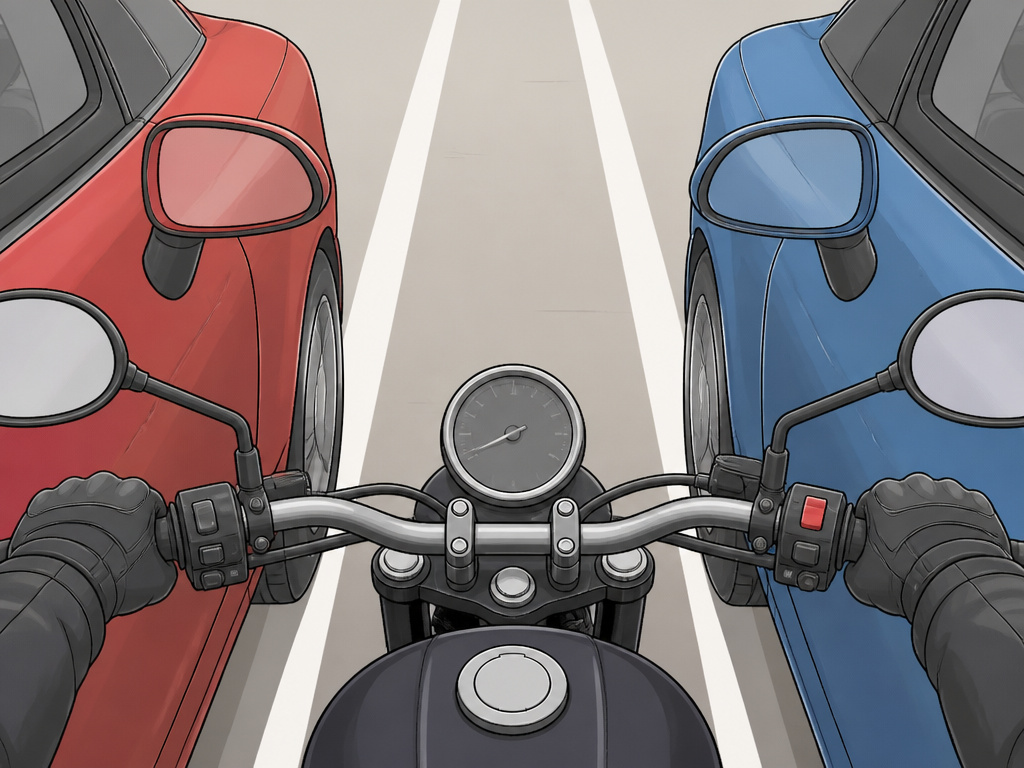
Here’s the friction riders face. The California Motorcycle Handbook PDF states: “Vehicles and motorcycles each need a full lane to operate safely. Riding between rows of stopped or moving vehicles in the same lane can leave you vulnerable.”
Meanwhile, the state-sponsored UC Berkeley study concludes the practice can be relatively safe under specific conditions. This isn’t a mistake; it’s a difference in purpose.
The DMV handbook provides baseline, conservative advice for all riders, especially novices. It emphasizes universal vulnerability. The study provides a data-driven analysis for riders who are going to split lanes regardless. The CHP bridges the gap with its official CHP motorcycle safety page, offering conditional safety tips while stressing extreme caution.
The practical takeaway? The DMV’s warning is your default mindset. The study’s thresholds are the exception you earn with experience and strict discipline. Treating the study as a permission slip is how riders get hurt.
The Physical Hazards Between the Lines
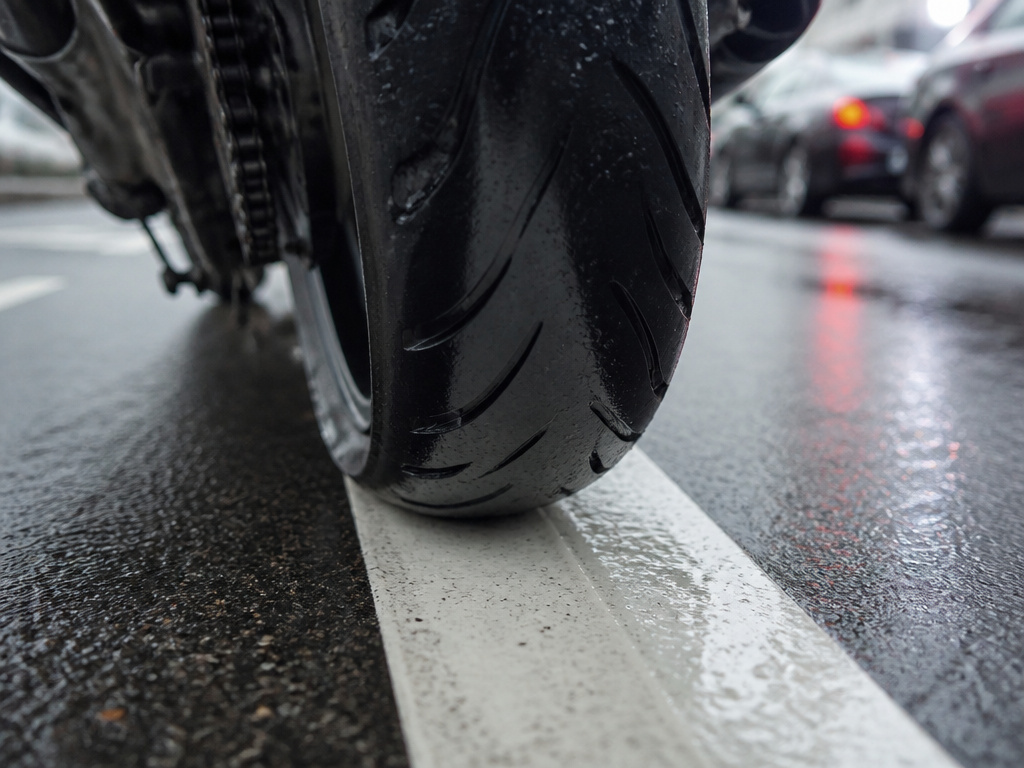
Splitting isn’t just about cars. The roadway itself presents unique threats you don’t face in a full lane. The Berkeley study listed them: uneven pavement, raised lane markings like Botts’ Dots, and metal bridge joints. When you’re riding the line, these become obstacles.
Then there’s the door zone. Filtering next to parked cars introduces the risk of a door opening. At even 15 MPH, that’s a catastrophic impact.
Your tires spend a lot of time on painted lines, especially in rain. That paint becomes slick as ice when wet. A little throttle or brake input on a wet stripe can break traction instantly.
A Rider’s Checklist: How to Split Lanes (If You Must)
The CHP says lane splitting “should not be performed by inexperienced riders.” Heed that. If you have the skills and decide to proceed, this checklist orders the priorities.
- Assess Traffic Speed. Is the flow at or below 50 MPH? If it’s faster, stay in your lane. This is your first and hardest rule.
- Check Your Differential. Can you proceed without exceeding traffic speed by more than 15 MPH? If not, wait.
- Pick Your Lane. The CHP advises it is “typically safer to split between the far left lanes.” Avoid splitting next to large trucks, buses, or RVs where you vanish in their blind spots.
- Scan for Escape Routes. Always know where you’ll go if a car drifts, a gap ahead, a widening in the lane, even the shoulder as a last resort. This is core defensive riding strategies.
- Maximize Visibility. Ride with your headlight on. Wear bright gear. Position yourself in the mirror sightline of the car ahead. Our guide on how to be more visible on a motorcycle covers this in depth.
- Cover Your Controls. Keep two fingers on the front brake lever and your foot hovering over the rear brake. Reaction time is measured in feet, not seconds.
- Be Prepared to Stop. The gap can close in an instant. If your path narrows or traffic suddenly brakes, smoothly merge back into a lane. Forcing it is how you go down.
This process is a continuous loop, not a one-time decision. Your lane positioning within the split space is a constant, subtle adjustment to see and be seen.
What Car Drivers Get Wrong (And Why It Matters to You)
The Berkeley study surveyed drivers. The results explain a lot. 36% of motorists incorrectly believed lane splitting on multi-lane roads was illegal. Another 12% were unsure. That means nearly half of drivers aren’t expecting you.
Furthermore, 61% “somewhat” or “strongly” disapproved of the practice. Disapproval fuels frustration, and frustration can lead to aggressive or inattentive driving, like deliberately closing a gap.
This is the “SMIDSY” problem on steroids. “Sorry Mate I Didn’t See You” isn’t just an excuse; it’s often a statement of fact. If a driver doesn’t think you’re allowed to be there, they won’t look for you. This is especially critical at intersections, where crossing traffic is a major threat for motorcycles.
The CHP’s advice to drivers is simple: if you’re in the far left lane and see a motorcycle splitting, move to the left within your lane to give them room. For riders, the lesson is to assume you are both unseen and unwelcome. That assumption keeps you alive.
What happens if you lane split illegally?
In states where the practice is not explicitly legal, lane splitting falls under general traffic laws. You could be cited for violations like improper lane use, reckless driving, or illegal passing. The specific penalties vary by jurisdiction but typically involve fines and points on your driving record. Riding on the shoulder is illegal; it is not considered lane splitting. Because many motorists are unaware of the laws, a significant portion incorrectly believe lane splitting is illegal, which can contribute to road tension and unexpected maneuvers by other drivers.
Does lane splitting affect who is at fault in a crash?
Lane splitting does not automatically assign fault in an accident. Liability is determined by the specific circumstances of the collision, such as which party was negligent. The primary risk while lane-splitting is the lane-changing of other vehicles. If a driver changes lanes without checking their mirrors and blind spots and strikes a splitting motorcyclist, the driver may be found at fault. Conversely, if a motorcyclist is splitting at an excessive speed differential or in an unsafe manner, they may share or bear full responsibility. Insurance companies will investigate these details to apportion liability, which directly impacts claims and premiums.
Frequently Asked Questions
What’s the point of lane splitting?
What states allow lane splitting for motorcycles?
As of now, California is the only state with an explicit law legalizing lane splitting. Our detailed state laws on lane splitting article breaks down each one.
Is lane splitting safer than sitting in traffic?
The data suggests it can be relatively safe under strict conditions. The UC Berkeley study concluded lane-splitting appears to be a relatively safe motorcycle riding strategy if done in traffic moving at 50 MPH or less and if motorcyclists do not exceed the speed of other vehicles by more than 15 MPH. Sitting in traffic eliminates the unique hazards of splitting but exposes you to a higher risk of being rear-ended.
Can I lane split on any motorcycle?
Legally, in California, only two-wheeled motorcycles qualify.
How do I start learning to lane split?
Don’t. The CHP and all safety authorities recommend against it for inexperienced riders. First, master riding in traffic in your lane, including slow-speed control, emergency braking, and hazard scanning. If you later choose to split, begin only in ideal conditions: daylight, dry roads, and slow, predictable traffic.
The Bottom Line
Lane splitting is a calculated risk, not a right. The law permits it, the data defines its safety window, and your skill determines the outcome.
The one rule that overrides all others: if traffic speed is over 50 MPH, don’t split. Full stop. That single threshold is where the injury data turns. Below that, your discipline with the 15 MPH speed differential decides everything else.
For drivers, the ask is simple: check your mirror, signal your moves, and if you see a bike coming up the lane divide in slow traffic, just hold your line. For riders, it’s more complex. It demands a level of traffic riding skill and judgment that goes beyond basic competency. If you lack that confidence, the safest path is to stay in your lane. The road will still be there when the traffic clears.
