
How to Treat Motorcycle Road Rash: First Aid and Recovery
This post contains affiliate links. As an Amazon Associate, we earn from qualifying purchases.
Treat motorcycle road rash by first stopping any bleeding with gentle pressure, then cleaning the wound with cool running water to remove debris, applying a thin layer of antibiotic ointment like Bacitracin or Neosporin, and covering it with a sterile, non-stick dressing. Change the dressing regularly and watch for signs of infection. Deep wounds, embedded debris, or road rash on the face, head, ears, hands, feet, groin, or buttocks require a doctor.
Road rash is a friction burn where pavement acts like sandpaper, grinding dirt and bacteria deep into skin layers. The standard first-aid steps are simple, but the devil is in the details, like whether soap belongs in the wound or if you should let it dry out, which is why knowing how to treat motorcycle road rash correctly is critical. Get those details wrong and a minor injury turns into a two-month infection battle.
What follows is the clinic-level breakdown most riders never see: the cleaning debate, the ointment comparison, the dressing types that actually work, and the specific timeline for when home care fails in the how to treat motorcycle road rash protocol. This is the protocol that bridges the gap between a garage rag and an ER visit.
Key Takeaways
- Clean road rash with cool running water first; sources disagree on using soap directly in the wound, with the Motorcycle Legal Foundation recommending antibacterial soap, alcohol, or disinfectant, while the Bourne Law Firm and Acibadem Hospitals Group advise plain water or using soap only on surrounding skin.
- Apply a thin layer of antibiotic ointment (Bacitracin or Neosporin) and keep the wound slightly moist under a dressing; research confirms ‘wet healing’ is faster and reduces scarring compared to letting a scab form.
- Seek a doctor for road rash that is deep, has embedded debris, or is on the face, head, ears, hands, feet, groin, or buttocks; infection signs like spreading redness, pus, or fever over 100.4°F mean stop home care.
- Most road rash heals within 2 weeks with proper care; once closed, protect new skin from the sun with high-SPF sunscreen.
The 5-Step First Aid Protocol for Road Rash
You’re off the bike, adrenaline is high, and your arm is burning. This is where most riders fumble. The goal isn’t to be a medic; it’s to not make things worse before you can get proper care. Follow these steps in order.
Before you start: If the rider hit their head, is dizzy, has severe pain elsewhere, or can’t move a limb, call 911. Urgent trauma assessment trumps wound cleaning. Also, put on nitrile gloves if you have them, your hands aren’t sterile.
First, control any bleeding with gentle, direct pressure using a clean cloth or gauze. Don’t scrub. For most road rash, bleeding is minimal and stops quickly.
Now, clean the wound. This is the most critical step and where sources give conflicting advice. The Motorcycle Legal Foundation says to rinse with antibacterial soap, alcohol, or disinfectant. The Bourne Law Firm advises using cool running water or a clean damp cloth, noting plain water works fine. Acibadem Hospitals Group advises that mild soap may be used on the surrounding skin, but harsh scrubbing should be avoided.
The safest bet is cool running water. Use steady, gentle pressure to rinse away loose gravel, dirt, and debris. If you have a saline wash in your kit, use it. The priority is removing visible contamination without grinding it deeper.
If dirt, glass, or gravel is deeply embedded and won’t rinse out, stop. Acibadem Hospitals Group states that deeply embedded debris is best removed by a professional. Forcing it can cause more damage and infection.
After rinsing, pat the area dry with sterile gauze or a clean towel. Don’t rub. A dry wound bed helps the next layer stick.
Apply a thin layer of antibiotic ointment. This isn’t optional. Products like Bacitracin or Neosporin kill surface bacteria and create a moist healing environment. Smothering the wound doesn’t help, a thin, even layer is all you need. The ointment also keeps the upcoming dressing from sticking to the raw skin.
Finally, cover it. Use a sterile, non-stick dressing or an advanced wound dressing like a hydrocolloid bandage. Secure it with medical tape or a wrap. The cover protects the wound from new dirt and keeps the ointment in place.
Common mistake: Leaving road rash uncovered to ‘let it breathe’. An uncovered abrasion dries out, forms a thick scab, and cracks with movement. That reopens the wound and increases scarring. Research cited by the Bourne Law Firm shows ‘wet healing’ under a dressing works better.
First, Know What You’re Dealing With: Severity Levels
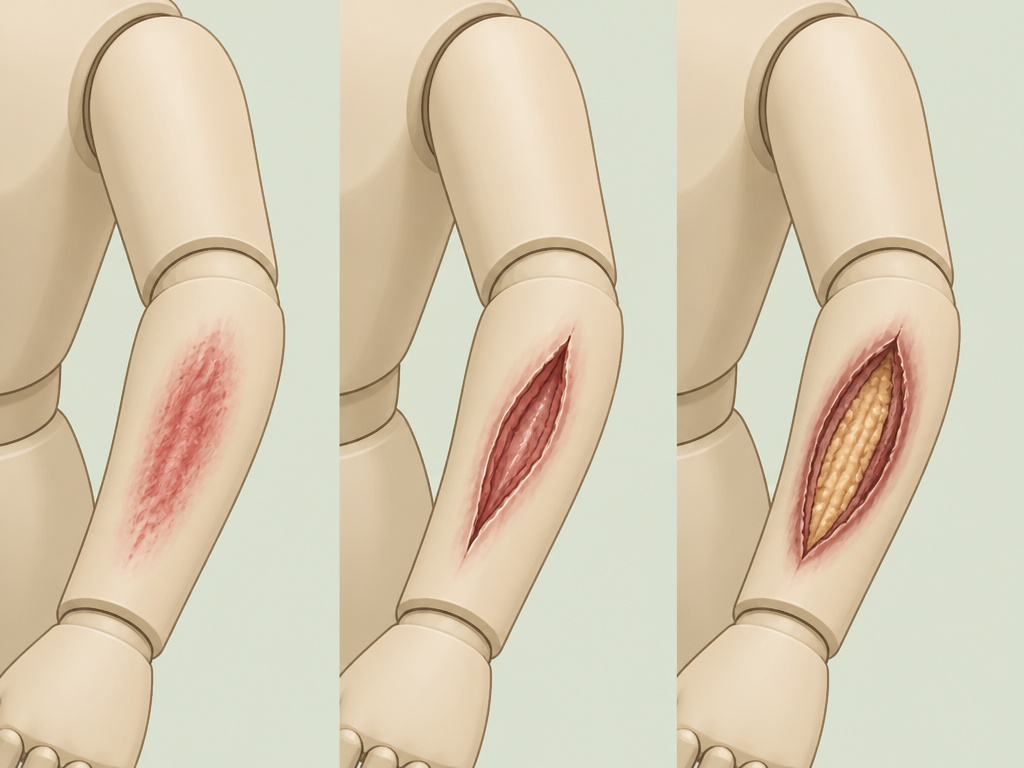
Not all road rash is equal. Treating a deep, muscle-exposing gouge the same way as a surface scrape is how people end up in the OR. Medical sources use two classification systems, and knowing both helps you communicate clearly if you need a doctor.
The layperson system you’ll hear in garages and forums is degrees, like burns.
- First-degree: A superficial scrape affecting only the top skin layer (epidermis). Think red, raw skin, maybe minor bleeding. It stings but heals quickly.
- Second-degree: The epidermis is torn away, exposing the deeper dermis. This looks like a deep, moist laceration and bleeds more. It needs medical attention for proper cleaning and often requires stitches.
- Third-degree: The most severe. The dermis is peeled away, exposing fat, muscle, or even bone. This is a surgical emergency requiring skin grafts.
The medical community often uses different terms: superficial, partial thickness, and full thickness abrasions (or Grades I-III). The Rensch & Rensch article notes this, citing sources like the Cleveland Clinic and NCBI Bookshelf.
The label matters less than the reality. If you see yellow fatty tissue, white tendon, or deep, gaping skin, it’s a third-degree/full-thickness injury. Your job is to apply a clean dressing, apply gentle pressure if bleeding heavily, and get to an ER. Don’t attempt advanced cleaning.
| Layperson Term | Medical Equivalent | Key Visual Cue | Action Required |
|---|---|---|---|
| First-degree | Superficial / Grade I | Red, scraped skin, minor bleeding | Home care possible |
| Second-degree | Partial thickness / Grade II | Deep cut, torn skin, visible deeper layer (dermis) | Doctor for cleaning, possible stitches |
| Third-degree | Full thickness / Grade III | Exposed fat, muscle, or bone | Emergency room, likely surgery |
Your first aid focus changes completely based on what you see in that first minute. This is also why understanding common injuries from a crash helps you prioritize.
When Road Rash Needs a Doctor (The Red Flag List)
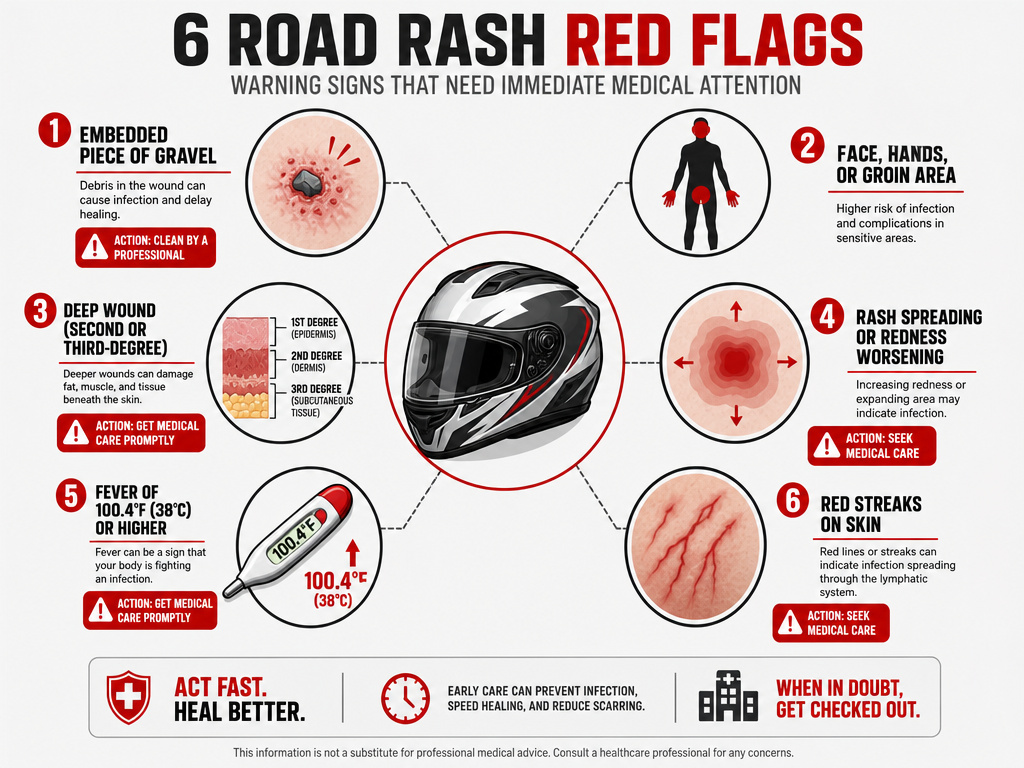
You can handle a lot at home. But stubbornness here leads to infection, permanent scarring, or worse. The Cleveland Clinic, via Rensch & Rensch, recommends urgent evaluation for road rash that is deep, large, contaminated, worsening, or on sensitive body parts.
Go to a clinic or ER immediately if:
- Debris is embedded and you can’t get it all out with gentle rinsing. Gravel or asphalt that stays in becomes a ‘traumatic tattoo’ and a source of infection.
- The wound is on your face, head, ears, hands, feet, groin, or buttocks. These areas are complex, prone to worse scarring, and often need specialized care.
- It’s a second- or third-degree injury per the table above.
- You have other injuries like a possible head impact, severe pain, dizziness, or an inability to move a limb. As Acibadem notes, trauma assessment comes first.
Where this goes sideways: Waiting to see if an infection ‘gets better’. Infection doesn’t improve on its own; it spreads. Once it’s in the deeper tissue or bloodstream, you’re looking at IV antibiotics and a hospital stay.
You also need to see a doctor if, during home care, you see any signs of infection. The Bourne Law Firm lists clear markers:
- Redness that spreads beyond the wound edges.
- Swelling that gets worse, not better.
- Pus or cloudy, foul-smelling drainage.
- Increased pain or throbbing.
- Fever over 100.4°F.
- Red streaks leading away from the wound (a sign of lymphangitis, a serious infection).
If your road rash shows no signs of healing after a week of consistent care, that’s another ticket to the doctor’s office. It might need professional debridement (removing dead tissue) or prescription-strength ointments.
This is part of the broader set of post-crash steps you should know. Getting medical documentation is also crucial if your crash involved another vehicle.
Daily Care and Changing Dressings
The first cleaning is a one-time event. The daily care routine in how to treat motorcycle road rash is what decides if you heal in two weeks or two months. It’s boring, repetitive, and essential.
Change the dressing regularly, or whenever it becomes soaked with drainage. Never reuse an old bandage. Before you touch the wound, wash your hands.
Gently remove the old dressing. If it sticks, soak it with lukewarm water or saline to loosen it, don’t rip it off. Once it’s off, you don’t need to scrub the wound again. Rinse it lightly with cool water or saline to remove any leftover ointment and drainage. Pat dry.
Apply a fresh thin layer of antibiotic ointment. This maintains the moist healing environment. Then cover with a new sterile dressing.
What dressing should you use? For most first-degree and shallow second-degree road rash, a simple non-stick gauze pad (like Telfa) works. For larger or oozing areas on joints, consider a hydrocolloid bandage. These advanced dressings absorb fluid, manage moisture better, and can stay on for several days, which reduces pain during changes.
The part nobody mentions: The itch. As it heals, the wound will itch intensely. Do not scratch. Scratching reopens micro-tears. Instead, keep the area moisturized with the antibiotic ointment or, once the skin is fully closed, a gentle lotion. A cool compress over the dressing can also help.
If the road rash is over a joint like a knee or elbow, limit bending. Keep the joint elevated when resting to reduce swelling. Compressive sleeves are not recommended in the early stages as they can trap moisture.
Healing Timeline and Scar Care
With proper care, most road rash heals within 2 weeks, according to the Bourne Law Firm. The new skin will be pink, sensitive, and thin. This is the most vulnerable period for scarring.
Scar formation is your body laying down collagen to repair the damage. You can influence whether that scar is flat and faint or raised and dark. Start scar care only after the wound is fully closed, no scab, no open areas, no drainage.
First, protect the new skin from the sun. UV exposure will permanently darken the scar. Keep it covered with clothing or apply a high-SPF sunscreen whenever it’s exposed.
You can also use topical treatments: * Silicone gel or sheets: These can help reduce scar thickness and redness.
- Gentle massage with vitamin E oil or lotion: Once or twice a day, massage the scar in a circular motion for a few minutes. This breaks up collagen fibers and improves flexibility.
If you have a ‘traumatic tattoo’ from embedded debris, a dermatologist can often improve it with laser treatments. That’s a discussion for much later.
Healing is physical and mental. The process of getting back on the bike often starts with seeing your body recover. Be patient.
Why This Matters: The Data Behind Road Rash
This is based on math. According to the National Highway Traffic Safety Administration, motorcycle riders are 5 times more likely to be injured in a road accident than people in enclosed vehicles.
A road rash injury is rarely just a road rash injury. It’s a marker of a high-energy crash that can include fractures, internal bleeding, or head trauma. Proper first aid stabilizes what it can and flags the rest for professionals. It’s also a vivid reminder of what protective gear is designed to prevent. After any crash, you must inspect gear for damage, a compromised jacket won’t protect you twice.
Do I need a tetanus shot for road rash?
Road rash, especially second-degree road rash where the epidermis is torn or third-degree where deeper layers are exposed, introduces dirt and debris from the road directly into the wound. This creates a risk for tetanus, a serious bacterial infection. If your road rash is deep, large, contaminated, or located on sensitive areas, you need urgent medical evaluation. A healthcare professional can assess the wound and determine if your tetanus immunization is current. This is a critical step often overlooked in the immediate focus on cleaning and bandaging the visible injury.
Frequently Asked Questions
Should you cover a road rash or let it breathe?
Always cover it with a sterile, non-stick dressing. Letting it ‘breathe’ allows the wound to dry out and form a thick scab. Scabs crack with movement, reopening the wound, slowing healing, and increasing scarring. Modern wound care science, cited by the Bourne Law Firm, confirms that a moist environment (‘wet healing’) under a dressing promotes faster healing with less scarring.
What is the best ointment to use on a road rash?
For most cases, a standard over-the-counter antibiotic ointment like Bacitracin or Neosporin is the best choice. Both create a moist barrier against infection. Bacitracin has a lower risk of allergic reaction for some people. Avoid fancy ‘natural’ salves or heavy petroleum jelly (like plain Vaseline) in the initial healing phase, as they don’t contain antibiotics to fight infection. Once the wound is fully closed and you’re in the scar care phase, you can switch to plain moisturizers or silicone gel.
Do I put Neosporin on road rash?
Yes, Neosporin (which contains antibiotics neomycin, polymyxin B, and bacitracin) is a perfectly acceptable choice for treating road rash. Apply a thin layer after cleaning and before covering with a dressing. A small percentage of people are allergic to neomycin, so if you notice increased redness or itching after using it, switch to plain Bacitracin ointment instead.
Is Aquaphor good for road rash?
Aquaphor is an excellent moisturizing ointment best used after the road rash has fully closed and you are in the scar moisturizing phase, as it is not an antibiotic. During the initial healing period, you need an antibiotic ointment (like Bacitracin or Neosporin) to actively prevent infection in the open wound.
The Bottom Line
Road rash treatment depends on three essential rules: clean it with water, keep it moist with antibiotic ointment, and cover it with a clean dressing. The moment you see embedded debris, a deep wound, or signs of infection, your job is to stop and get to a doctor.
The National Trauma Data Bank number, 400 deaths from reported road rash cases in one year, is a line on a chart drawn from real crashes where infection or trauma won. Your gear is your first defense, knowing how to fall safely is your second, and having this protocol in your head is your final backup. Don’t guess. Clean it, cover it, and know when to call it.
