
What to Do After a Motorcycle Crash: Step-by-Step Guide
This post contains affiliate links. As an Amazon Associate, we earn from qualifying purchases.
After a motorcycle crash, your personal safety is the first priority. If you or anyone else is injured, assess the severity and call for emergency help. Do not move or remove your helmet unless directed by paramedics. If the engine is running, turn it off and check for fluid leaks and loose critical parts like the handlebar, brakes, and wheels before considering if it’s safe to ride slowly away.
That sequence from the Honda owner’s manual is the official starting point. It works because it’s mechanical: stop, breathe, check people, then check the machine. The gap between those two checks is where adrenaline lies, and where most riders make their first mistake—assuming they’re fine because nothing hurts yet. Knowing what to do after a motorcycle crash is critical in that moment.
What follows is the rest of the process for what to do after a motorcycle crash, from the scene to the shop, built on manufacturer procedures and state legal codes.
Key Takeaways
- Do not remove your helmet after a crash unless paramedics tell you to. Moving it can turn a spinal injury into a permanent one.
- Call 911 every time, even for a minor drop. A police report documents the scene and is foundational for any insurance claim or legal case.
- Seek medical evaluation immediately, even if you feel fine. Adrenaline masks concussions, internal bleeding, and fractures for hours.
- Report the crash to your state’s DMV if required. In California, you must file an SR-1 form within 10 days if there’s injury, death, or over $1,000 in property damage.
- Have your dealer check the frame and suspension after any serious impact. Honda’s manual states this clearly—hidden damage can fail later.
The First 60 Seconds: Safety and Scene
Your brain is flooded with chemicals. The world sounds muffled. Your first thought is rarely the right one. Ignore the urge to jump up and check the bike.
The Honda CB1000RC manual is blunt: “Personal safety is your first priority after a crash.” That means you. Check yourself for pain, numbness, or an inability to move a limb. Then check your passenger and anyone else involved. If anyone is seriously hurt and it’s safe to do so, call 911 now. Do not attempt to move injured people unless they are in immediate danger from fire or traffic.
Where this goes sideways: Removing your own helmet. The California legal guide cites paramedic advice: keep it on until trained personnel assess you. A cervical spine injury isn’t always painful at first, and twisting to pull off a helmet can cause catastrophic damage.
If you’re able to move safely, get yourself and your bike out of the flow of traffic. A motorcycle lying in a lane is a secondary crash waiting to happen. If the bike is rideable, move it to the shoulder. If it’s not, leave it and get yourself to safety.
Managing Shock and the Adrenaline Blind Spot
You stand up, dust yourself off, and feel a strange calm. Nothing seems broken. You tell the other driver you’re fine. This is the adrenaline blind spot, and it has wrecked more claims than any at-fault driver.
The human body’s stress response suppresses pain signals. Riders have walked away from crashes feeling “fine,” only to discover injuries later.
Your job in this phase is to override the feeling. Assume you are injured even if you aren’t. Do not say “I’m okay” to anyone—the police, the other driver, a witness. Those words end up in the report and the insurance adjuster uses them to argue your injuries aren’t serious. Instead, say “I’m assessing” or “I’m waiting for medical help.” It’s a factual statement that protects your next steps.
This is also when you call 911, if you haven’t already. Do this even for a low-speed parking lot tip-over. A police report is an important piece of evidence. The officer will document vehicle positions, road conditions, witness statements, and their initial opinion on fault. As the McPartland Law guide notes, in Washington state, if an officer doesn’t come to the scene, you generally must submit your own collision report within four days if there’s injury or at least $1,000 in damage.
Your Legal Duties at the Scene
The law doesn’t care if you’re shaken up; it sets specific requirements for what to do after a motorcycle crash.
First, stay at the scene. California Vehicle Code §20001 requires any driver involved in an accident resulting in injury or death to remain. Leaving, even to go get help, can be construed as hit-and-run. Exchange information with the other driver: name, address, driver’s license number, insurance company, and policy number. Get the vehicle make, model, and license plate. Use your phone to take pictures of their license and insurance card—it’s faster and more accurate than writing.
Gather witness contact information. If someone saw it happen, ask for their name and phone number. A simple “I may need a statement later, could I get your number?” is enough. Do not debate fault with the other driver. Do not apologize. Anything you say can be used to assign you comparative negligence later.
| What to Collect | Why It Matters | If You Miss It |
|---|---|---|
| Other driver’s license & insurance photos | Establishes identity and coverage | Claim may be denied if driver is uninsured/underinsured |
| Witness names & phone numbers | Neutral third-party account of events | Becomes “your word vs. Theirs” |
| Photos of vehicle positions & road conditions | Preserves scene before vehicles are moved | Insurance adjuster reconstructs scene to their advantage |
| Police officer’s name & badge number | Lets you follow up for the report | Delays getting the official document by weeks |
Document everything with your phone. Take wide shots of the entire scene, then close-ups of vehicle damage, skid marks, debris, and any road hazards like potholes or gravel. Get a picture of the street sign or intersection so the location is clear. This documentation is crucial for any insurance claim or legal case.
The Non-Negotiable: Medical Attention
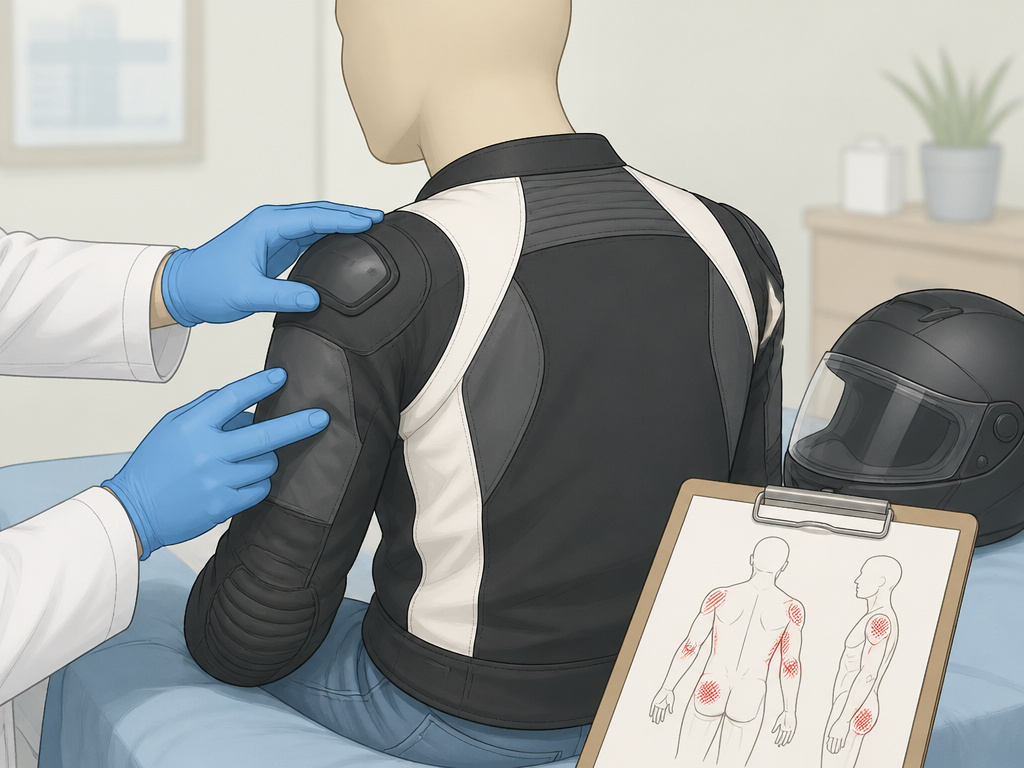
Go to the emergency room or an urgent care center from the scene. Do not go home first. Do not wait until morning.
This is the most common and costly piece of advice riders ignore. The medical record created today links your injuries directly to the crash. If you wait even one day, the insurance company can claim your neck pain resulted from sleeping poorly, not from the crash. Tell the doctor exactly what happened: “I was in a motorcycle crash at 3 PM. I hit the ground on my left side. My left shoulder and knee took the impact.” This guides their examination.
They will look for obvious trauma. You must ask them to perform a concussion check and imaging for any body part that took impact. An X-ray can find a hairline fracture. An MRI can show soft tissue damage. These records are your proof.
Follow-up is not optional. Attend every physical therapy appointment. Fill every prescription. Consistent care creates a paper trail of recovery that translates directly into compensation. For a detailed look at specific injuries, our guide on the most common motorcycle crash injuries breaks down what to watch for in the days after.
Inspecting Your Motorcycle After a Crash
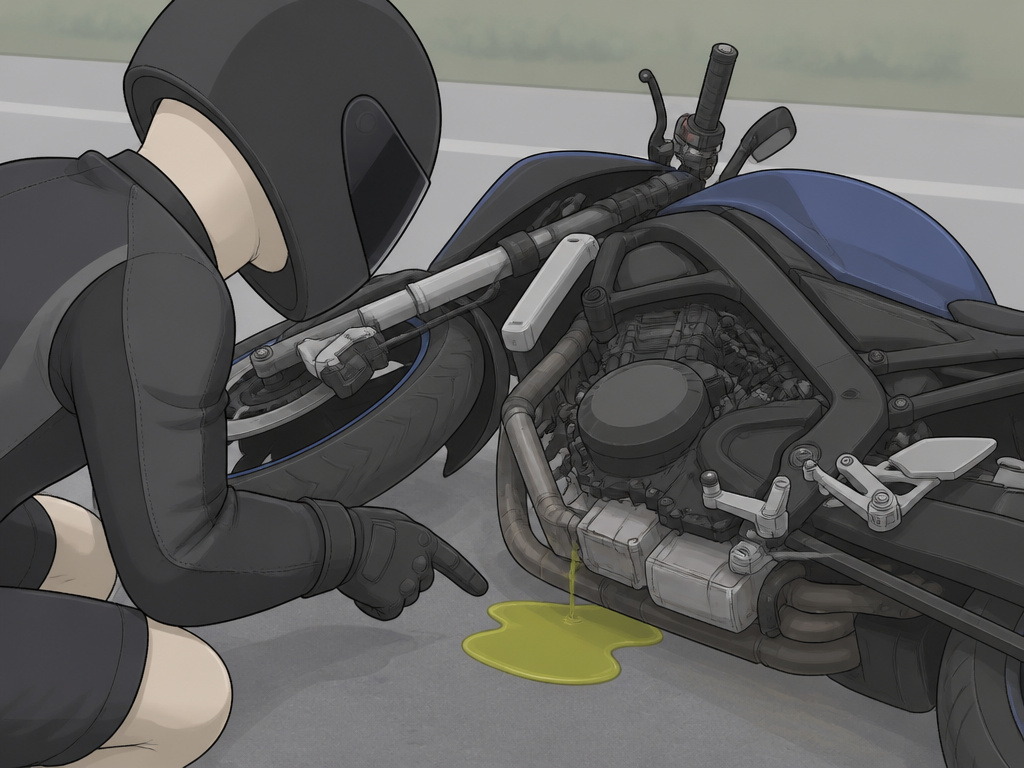
The bike is your second patient. The Honda CRF110FG manual gives the field checklist: if the engine is running, turn it off. Look for fluid leaks—gas, oil, coolant. Check the tightness of critical nuts and bolts. Secure the handlebar, control levers, brakes, and wheels.
If there’s minor damage or you’re unsure, the manual says you can try riding slowly and cautiously. This is a judgment call. A wobble in the handlebars means stop. A leaking fork seal means stop. A cracked footpeg bracket means stop. If anything feels or sounds wrong, the bike gets a tow. Trying to ride a damaged motorcycle can cause a second, worse crash.
The part nobody mentions: The smell of gasoline. If you smell it strongly after a tip-over, the bike may have flooded. Wait before trying to restart it to avoid a backfire or engine damage.
For serious crashes, your inspection is just a triage. The real assessment happens in a shop. As the Honda GL1800E manual states, “Sometimes, crash damage is hidden or not immediately apparent… You should have your motorcycle thoroughly checked at a qualified service facility as soon as possible.” This isn’t a suggestion. A bent frame or a cracked suspension mount isn’t always visible, but it will fail under stress. Your dealer has the jigs and tools to measure alignment. This inspection is also the basis for your insurance claim’s repair estimate. Learn the proper technique to safely move the bike with our guide on how to lift a dropped motorcycle.
The 24-72 Hour Checklist: What Most People Forget
This list keeps you on track.
Day 1 (The Day After):
- Notify your insurance company. Report the crash. Give them the police report number and the other driver’s information. Stick to facts: “I was involved in a collision at [location] on [date]. The police report number is X. The other driver is Y.” Do not give a recorded statement about fault or injuries yet.
- Follow up on medical care. Schedule any follow-up appointments your ER doctor recommended. If you woke up with new stiffness or pain, call your doctor and report it.
- Preserve your gear. Do not wash your helmet, jacket, gloves, or pants. Place them in a garbage bag. This gear is evidence of impact. The scuffs and tears show how you hit the ground. Your insurance may cover replacement of damaged safety gear, but they need to see it first. Here’s how to inspect motorcycle gear after a crash to document its condition.
Day 2-3:
- Obtain the police report. Contact the precinct or use the online portal to get a copy. Review it for accuracy. If there’s a major error (wrong street, missing witness), contact the officer to file a supplement.
- Start a dedicated file. A physical folder or a digital drive. Put in it: the police report, all medical bills and records, repair estimates, photos of the scene, and a log of every conversation with insurance (date, time, person, summary).
- Report to the DMV if required. State laws vary. In California, you must file an SR-1 form within 10 days if the crash involved injury, death, or property damage over $1,000. Florida and Washington have different thresholds and deadlines. Missing this can lead to a suspended license.
Navigating Insurance and Legal Deadlines
Motorcycle insurance claims are different. In Florida, the no-fault Personal Injury Protection (PIP) system explicitly excludes motorcycles under § 627.736. This means there’s no automatic medical coverage from your own policy in that state. Your recovery depends on the at-fault driver’s liability coverage, your own health insurance, and any “med pay” or uninsured motorist coverage you carry.
This changes the strategy. You must identify every possible source of payment. An attorney can map this out early. The value of a claim hinges on documented expenses (medical bills, lost wages, bike repair) and non-economic damages (pain and suffering). Insurance companies have formulas, but they also weigh the risk of a lawsuit.
| State-Specific Nuance | California | Florida | Washington |
|---|---|---|---|
| Helmet Law | All riders must wear DOT-compliant helmet. | Riders under 21 must wear helmet. Riders 21+ can ride without if they carry $10,000 in medical benefits. | All riders must wear DOT-compliant helmet. |
| DMV Report Required | SR-1 form within 10 days if injury, death, or >$1,000 damage. | Not required for property damage only; required for injury/death. | Driver’s report within 4 days if no police report and injury/death or >$1,000 damage. |
| Statute of Limitations | 2 years for personal injury (CCP §335.1). | 2 years for accidents on/after March 24, 2023. | 3 years for personal injury. |
| Unique Consideration | Government claim within 6 months if crash caused by road defect. | No PIP coverage for motorcyclists. UM/UIM coverage is critical. | Comparative negligence state; your recovery reduced by your % of fault. |
These deadlines are absolute. The government claim rule in California is a trap: if a pothole or faulty road design caused your crash, you have six months to file a claim against the city or state, per California Government Code §911.2. Miss it, and you lose the right forever.
Long-Term Recovery and Returning to Riding
Physical healing has a timeline. Emotional and mental recovery does not. Fear is a normal response. The key is to separate rational caution from paralyzing fear.
Start small. Sit on your bike in the garage. Then roll it up and down the driveway. Then a slow ride around a quiet neighborhood. Rebuilding muscle memory and confidence is a process. For some riders, a formal return to riding course or track day in a controlled environment helps reset the experience.
Address your gear. If your helmet impacted anything, replace it. The foam liner is designed to crush once; it is now compromised. Most insurance policies will cover this. Inspect your jacket and pants for torn seams or compromised armor. Leather can be repaired, but compromised abrasion-resistant textiles should be replaced. This is also the time for an honest fit check. If you lost or gained weight during recovery, your gear may no longer fit correctly, which means it won’t protect as designed.
Your body may have new limitations. A stiff knee might mean adjusting your riding position or brake pedal. A shoulder injury might make a heavier bike difficult to manage. Listen to your physical therapist. Adapting your bike or your technique is smarter than fighting through pain and causing a new injury. Understanding the mechanics of what happened can also help; read about low side vs high side crash dynamics to process the event.
What should a bystander do at a motorcycle crash scene?
Your first action is to ensure safety for yourself and others. Park your vehicle well clear of the accident to avoid creating another hazard. Check on the rider and any other involved persons. If anyone is injured, call for emergency assistance immediately. Do not remove a rider’s helmet unless you are directed to by paramedics, as this could worsen a neck or spinal injury. If it is safe and you are able, help direct traffic around the scene or provide basic first aid until professional help arrives. Follow applicable laws and regulations regarding reporting the incident.
How to handle a high-speed motorcycle crash
After any serious crash, especially at high speed, personal safety is the absolute first priority. Take time to assess your injuries and call for help if needed. The forces involved mean you should not try to ride the bike away, even if it appears functional. High-speed impacts can cause hidden damage to the frame and suspension that isn’t immediately visible. You should have your motorcycle thoroughly checked at a qualified service facility as soon as possible. Be sure to have your dealer check the frame and suspension after any serious crash. Do not assume the bike is safe because it starts.
Frequently Asked Questions
Should I remove my helmet after a crash?
No. Do not remove your helmet unless paramedics or a doctor direct you to. There is a risk of cervical spine injury. Let trained medical personnel, who can stabilize your neck, remove it properly. This is one of the most critical first aid steps at the scene.
What if I feel fine after the crash?
You still need a medical evaluation. Adrenaline masks serious injuries like concussions, internal bleeding, and fractures. The pain often appears hours later. A medical record from the day of the crash is also essential for connecting your injuries to the event for any insurance claim.
Do I need to call the police for a minor crash?
Yes. Call 911 every time. You need an official police report for your insurance company. In many states, you are also legally required to report crashes that meet certain damage or injury thresholds. The report is a neutral third-party account that prevents “he said, she said” later.
How does motorcycle gear actually protect me in a crash?
Modern gear is a system. The abrasion-resistant outer shell (leather or textile) prevents road rash. The CE-rated armor at knees, hips, elbows, and shoulders absorbs and disperses impact energy. A CE-rated fit keeps everything in place so it works as designed. This is how motorcycle gear reduces injury severity.
How long do I have to file a claim or lawsuit?
It varies by state, typically between 1-3 years from the date of the crash for a personal injury claim. However, other deadlines are much shorter. In California, you only have 6 months to file a claim against a government agency for a road defect. Consult an attorney in your state immediately to understand all applicable deadlines.
The Bottom Line
A crash is a sequence of failures—mechanical, situational, sometimes human. Your response is a sequence of deliberate actions. Follow the manufacturer’s safety order: people first, then the machine. Let the medical system document your injuries, let the police document the scene, and let a professional mechanic document the bike’s damage. The insurance and legal processes are built to follow that paper trail.
The gear you wore did its job. Now your job is to manage the aftermath with the same deliberate care you used in choosing it. Preserve the evidence, know your state’s rules, and don’t rush the recovery. The goal isn’t just to settle a claim; it’s to get you, and your bike, back on the road safely.
