
How to Get Rid of Odor in a Motorcycle Helmet: Fresh Again
This post contains affiliate links. As an Amazon Associate, we earn from qualifying purchases.
To get rid of odor in a motorcycle helmet, you must remove the sweat and oil residue that bacteria feed on, not just cover the smell. The proven method is to hand-wash removable liners and cheek pads in lukewarm water with mild, unscented soap, then air-dry everything completely for 24 to 48 hours before reassembly. For non-removable components, use a cleaner specifically designed for motorcycle helmet liners.
That residue is the real problem. Scented sprays fail because they float on top while the bacteria underneath keep eating, which is why learning how to get rid of odor in a motorcycle helmet is key. You need to break that cycle at the source, which means getting the padding clean and, more importantly, completely dry.
What follows is the exact wash sequence, the critical warnings from helmet manuals that most riders miss, and how to set a cleaning schedule that stops the funk before it starts, answering the core how to get rid of odor in a motorcycle helmet question.
Key Takeaways
- Hand-wash removable liners in lukewarm water with mild soap; some manufacturers, like Suomy, specify a maximum of 30°C (86°F) to avoid damaging adhesives and foam.
- Air-dry all components away from direct heat for a full 24–48 hours; rushing this step invites mold.
- For non-removable liners and EPS foam, use only water and a soft cloth or a cleaner designed for helmet liners, never saturate or use cleaners not designed for helmets.
- Never use solvents like ammonia, bleach, or glass cleaner; they degrade the protective EPS foam invisibly.
- Wear a washable wicking balaclava every ride; it’s the single most effective odor prevention tactic.
The Step-by-Step Wash for Removable Liners
Do you have cheek pads and a comfort liner that snap out? That’s the best-case scenario. This is the core cleaning routine that, done every few weeks in riding season, stops most odors permanently.
First, remove every piece that detaches. Check the owner’s manual if you’re unsure, some liners have tricky clips. Fill a sink or basin with lukewarm water. The Suomy S1-XR manual specifies a maximum of 30°C (86°F) for washing the internal lining. Use a mild, unscented liquid soap or a drop of shampoo. Submerge the pads and liner, gently agitating them and squeezing the soapy water through the fabric. Keep going until the water runs clear, which means you’ve flushed out the salts and oils.
The part nobody mentions: Rinse with the same care. Use lukewarm water and squeeze, don’t wring, the components until no soap suds emerge. Wringing twists and deforms the padding.
After rinsing, press the pieces between clean towels to remove excess water. Do not twist them. Then, lay them flat on a clean towel in a well-ventilated area out of direct sunlight. A fan pointed nearby speeds evaporation. They must be bone-dry before you even think about reassembly. That takes 24 hours minimum, often 48 in humid conditions. A damp liner reassembled into a dark shell is a mold incubator.
Bottom line: This isn’t a quick rinse. It’s a full flush. The time is in the drying, not the washing.
What NOT to Use on a Helmet
This is where garage logic gets helmets ruined. The cleaning agents you keep under the sink are often solvents that attack helmet materials at a chemical level, and the damage isn’t always visible.
The Sedici helmet manual provides the definitive banned list: petrochemicals, glass cleaners, ammonia, bleach, gasoline, paint thinner, benzene, acetone, bug repellent, and any acid-based or alkali-based cleaner. These chemicals can degrade the shell’s resin, craze the face shield, and, most dangerously, break down the energy-absorbing EPS foam liner inside the shell. You won’t see the foam turning brittle, but its ability to protect your head in a crash diminishes.
| Common Household Product | Why It’s Dangerous | The Likely Result |
|---|---|---|
| Glass cleaner (ammonia-based) | Degrades plasticizers in shield & shell | Cloudy, brittle visor; weakened shell |
| All-purpose spray cleaners | Often alkali-based; can damage adhesives | Liner detaches from shell prematurely |
| Isopropyl alcohol (rubbing alcohol) | Dries out and cracks EPS foam | Invisible loss of impact absorption |
| Fabric softener or scented detergents | Leaves residue that traps more dirt & oil | Odor returns faster, skin irritation |
The Bell Helmets manual is famously blunt: “Clean your helmet with soap and water only.” It’s a one-sentence rule that prevents most cleaning disasters. If you need to disinfect, their Star Series manual notes a solution of bicarbonate and soda water can be used for odor removal. That’s as aggressive as you should get without moving to a purpose-made helmet deodorizer.
Handling Non-Removable Liners and EPS Foam
Not all helmets have snap-out liners. Cleaning a fixed interior is a different, more cautious job. The goal is surface cleaning without saturation.
The Sedici manual has a specific warning here: “Be very careful when cleaning non-removable helmet liners. Improper cleaning may damage the adhesives… It is best to use a cleaner designed for washing motorcycle helmet liners.” Dampen a soft cloth with a small amount of the approved cleaner or mild soapy water. Wipe the fabric surfaces gently, then immediately follow with a cloth dampened with clean water to rinse. Blot dry with a towel. Never pour or spray liquid directly into the helmet.
Where this goes sideways: The EPS foam, the polystyrene layer that crushes to absorb impact, is the most delicate part. The manual is explicit: “Use extreme care… Press very softly and use only warm water and a dry cloth. Blot dry… Never apply heat or solvents.” If you get this foam soaking wet, it may not dry fully for weeks, leading to mildew and structural compromise. This is a wipe-only zone.
If your helmet has a fixed liner and a severe odor, the problem of how to get rid of odor in a motorcycle helmet may be deeper than surface cleaning can reach. In that case, consistent use of a helmet deodorizer between rides is your best management tool, but know that some smells may be permanent.
Drying and Storage: The Make-or-Break Phase
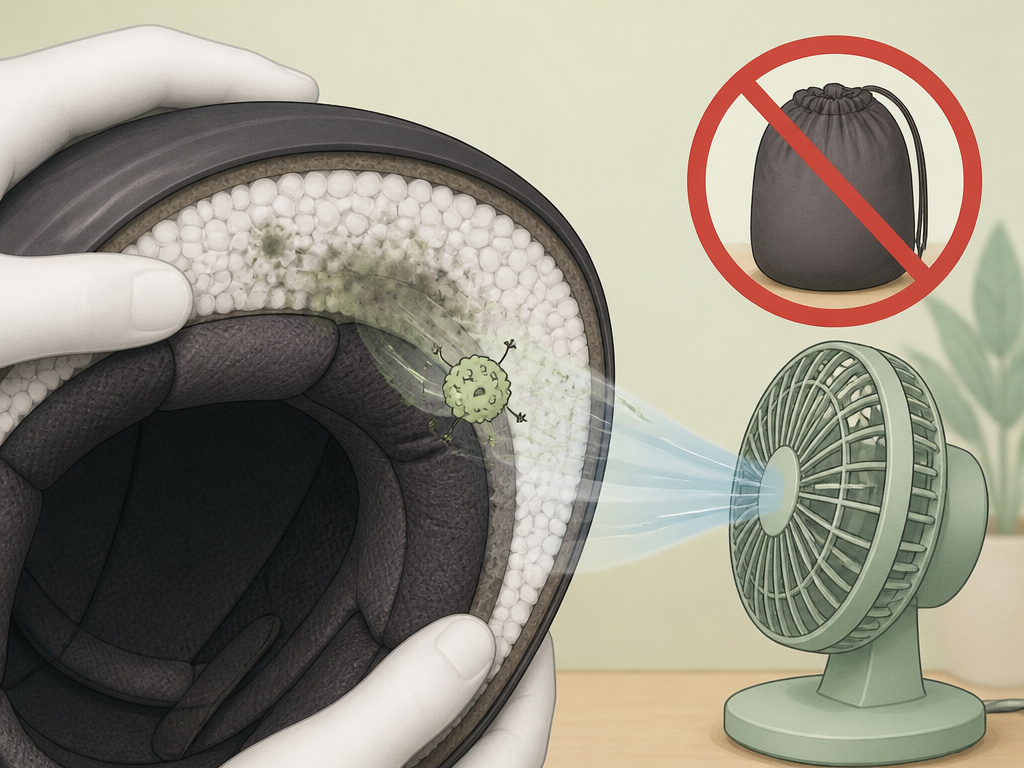
A perfectly washed helmet can be ruined in a few hours of bad drying. Moisture left inside is an invitation for mildew, which brings a musty, pervasive odor that’s incredibly difficult to remove.
After washing, you must commit to a full air-dry cycle. Place the helmet shell (with all removable parts out) and the washed components in a room with good airflow. Use a fan, but do not point it directly at the EPS foam lining inside the shell, as forced air can drive moisture deeper. Avoid all direct heat sources.
Common mistake: Storing a helmet in a sealed gear bag or a hot trunk. This traps moisture and heat, creating a perfect environment for bacterial growth and material degradation.
This is also where manufacturer specs disagree on safe temperatures. The Sedici manual says to keep the helmet away from heat in excess of 120ºF. The Bell Star Series manual states temperatures over 150ºF can damage the energy-absorbing liner. Manufacturers disagree on safe temperatures: Sedici advises keeping the helmet away from heat in excess of 120ºF, while Bell states temperatures over 150ºF can be damaging. A conservative approach is to avoid high heat from radiators, space heaters, and direct summer sun. For long-term helmet storage, a cool, dry closet shelf is ideal. If you’ve been caught in the rain, our guide on how to dry motorcycle gear outlines safe methods.
Prevention: How to Stop Odor Before It Starts
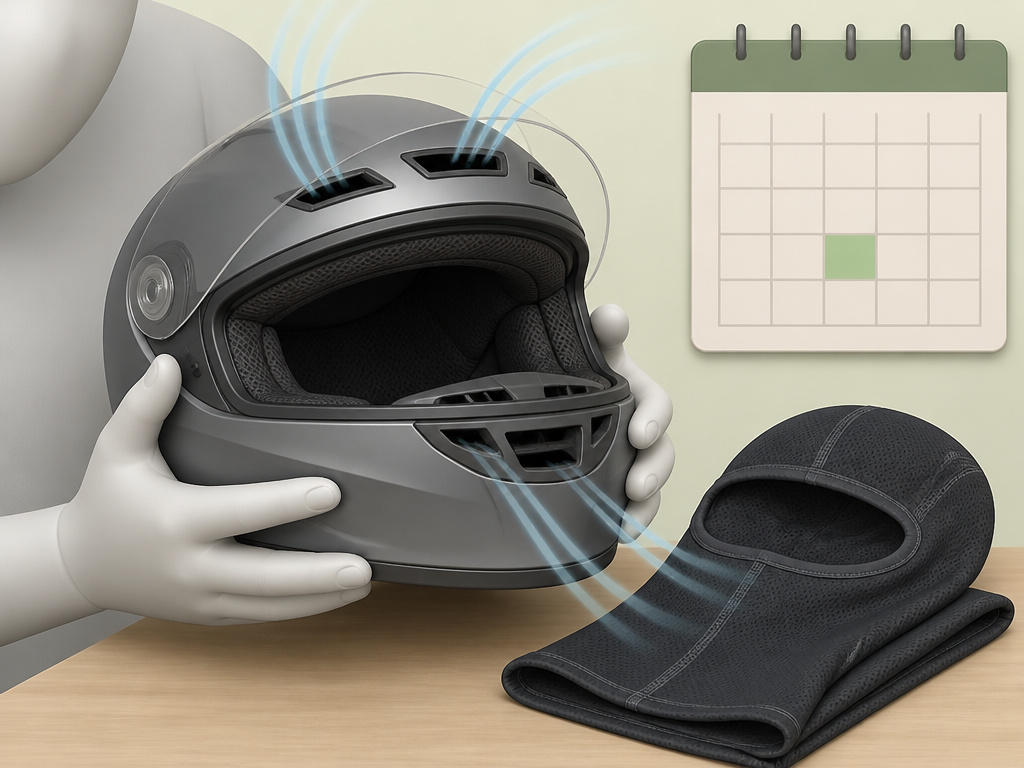
Cleaning is a reaction. Prevention is the goal. A simple routine makes deep cleans a rare event instead of a regular chore.
Start with a wicking balaclava or skull cap. This thin layer absorbs sweat directly, keeping it off the helmet’s liner. It’s machine washable, so you can swap it out every few rides. After each ride, don’t just toss the helmet in a bag. Take a minute to open all the vents and set it somewhere with airflow. This simple airing-out evaporates the day’s moisture.
Consider the helmet’s technology. Some models, like the Bell Star Series, have interiors treated to fight odor-causing microorganisms. Others, like the HJC RPHA MAX, feature proprietary materials like Cool4ever™, designed to be wicking and bacterial-resistant. These features help, but they don’t replace basic care. For summer riders, managing sweat is the biggest challenge; our tips on how to keep cool in a helmet can reduce the moisture load in the first place.
Set a schedule. During peak riding season, a quick wash of the removable liner every 3-4 weeks is sufficient for most. If you ride daily in hot weather, wash it more often. This regular helmet cleaning prevents residue from building up.
Frequently Asked Questions
Can I machine wash my helmet liner?
Only if your owner’s manual explicitly states it is safe. Most do not. The safe, universal method is to hand-wash. If you must machine wash, use a gentle, cold cycle inside a zippered mesh laundry bag, never use heat or aggressive spin cycles. The agitation and heat of a dryer will break down the foam’s structure.
What is the best deodorizer for motorcycle helmets?
The best deodorizers are enzymatic cleaners designed for helmets or gear. They work by breaking down the organic matter bacteria feed on, rather than masking the smell. Avoid heavy perfumes; look for unscented or lightly scented options specifically marketed for helmet or sports gear use.
Can I use Dawn dish soap to clean my helmet?
Yes, a small amount of mild dish soap like Dawn is generally safe, as it’s designed to cut oils without harsh additives. Ensure it is fragrance-free and use it sparingly. The key is a thorough rinse to remove all soap residue.
My helmet smells like mold. Is it salvageable?
Mild mildew smell might be tackled with a meticulous clean and prolonged drying in sunlight (UV light kills mold). However, if the smell is deep and the mold is visible on the EPS foam, the helmet’s safety may be compromised. Mold roots can degrade the foam. When in doubt, replacement is the safer choice.
The Bottom Line
Helmet odor is a maintenance issue, not a design flaw. The fix is straightforward: remove the liner, wash it gently, and dry it completely. The complexity comes from knowing what to avoid, solvents, heat, and haste.
Your single most effective tool isn’t a cleaner; it’s a washable wicking balaclava. Wear it every ride. It turns a helmet that needs a deep clean every month into one that only needs it once a season. If you follow the manual for your specific model, whether it’s a Sedici, Bell, or Suomy, you’ll never have to wonder how to handle a helmet disinfecting emergency from a smell again. Just keep it clean, keep it dry, and it’ll keep you safe without the funk.
