
How to Store a Motorcycle Helmet: Step-by-Step
This post contains affiliate links. As an Amazon Associate, we earn from qualifying purchases.
Store a motorcycle helmet in a dark, cool, and dry place, away from direct sunlight, chemicals, and anything that could cause a fall. Match three things: the spot’s temperature, the type of surface, and a secure method that prevents drops. Bell’s manual states exposure above 150°F damages the protective liner, and OGK Kabuto warns against heat above 122°F. A car’s interior on a sunny day hits those numbers in under an hour.
That temperature gap is the first clue that storage is a set of conditions defined by the helmet’s materials, the EPS foam liner that crushes on impact and the outer shell that distributes force. Both degrade under heat, UV light, and chemical contact in ways you can’t see until you need them. This is why knowing how to store a motorcycle helmet matters.
What follows: the specific thresholds from four manufacturer manuals, the 2-2-2 rule for daily use, a head-to-head breakdown of hooks vs racks vs bags, and the steps for putting a helmet away for the season.
Key Takeaways
- Store helmets in a dark, cool, and dry place. Bell’s manual specifies temperatures above 150°F cause damage; OGK Kabuto and BRP set the limit at 122°F.
- Never allow contact with gasoline, insect repellent, or petroleum products. These chemicals degrade the energy-absorbing liner silently.
- Use the 2-2-2 Rule for daily parking: never leave it in direct sun for extended periods, never on a narrow surface (like a mirror), and always with a secure method if leaving it on the bike.
- For long-term storage, clean the liner first, use a breathable storage bag, and place it on a flat, stable shelf in a closet, not a hook.
- Inspect before you store. Any crack, change in fit, or impact means replace it, damage is not always visible.
Where Temperature Actually Matters (150°F vs. 122°F)
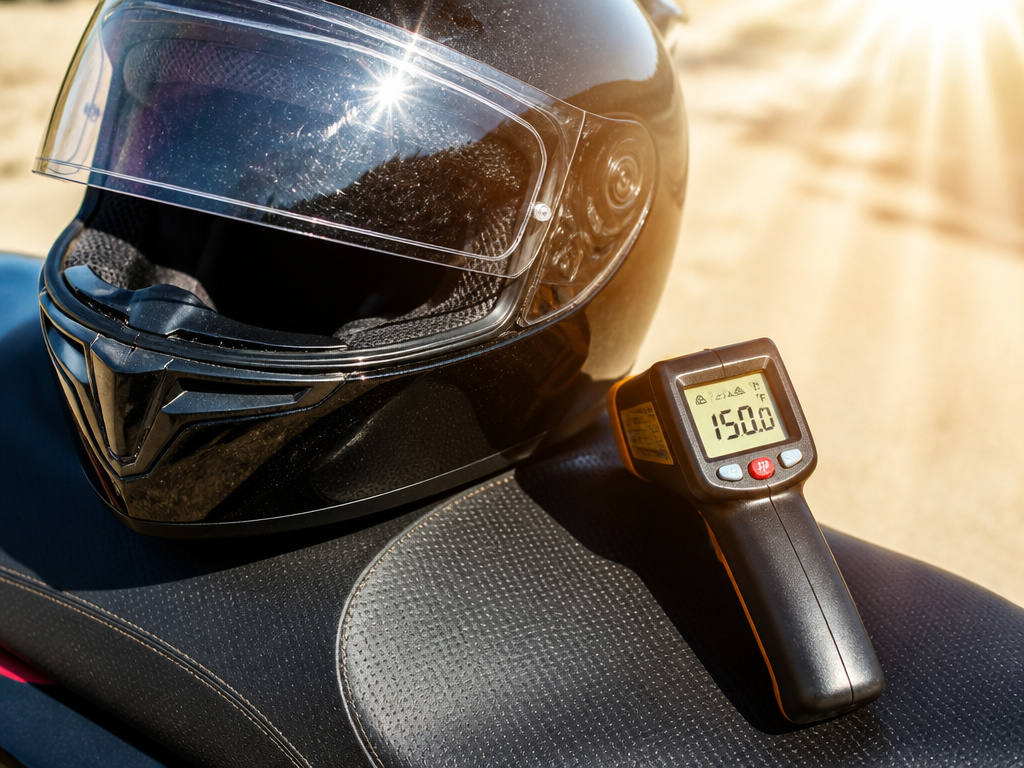
Bell’s manual is direct: “Exposure to direct sunlight or temperatures in excess of 150 degrees F can cause damage, resulting in a loss of protection.” It adds that the interior of cars on sunny days can exceed 150°F. OGK Kabuto’s manual says “Do not leave the helmet in direct heat above 50ºC (122ºF) e.g. Next to a heater or under direct sunlight in a car.”
Those aren’t the same number.
Manufacturers Disagree on the Threshold
Brand Stated Max Temperature Source Bell Helmets 150°F (65.5°C) PS100856 Manual OGK Kabuto 122°F (50°C) F172206 Manual BRP (PYRA) 122°F (50°C) User Guide Schuberth “Cool place” (no specific temp) E2/C5 Manual
Why the difference? It likely comes down to the specific foam compounds in the energy-absorbing liner and the resin in the shell. Some materials glass-transition, turn softer and less effective, at a lower heat. Others hold up longer. Manufacturers disagree on the threshold: Bell Helmets advises against temperatures above 150°F, while OGK Kabuto and BRP advise against heat above 122°F.
A black helmet on a black motorcycle seat in direct summer sun can reach dangerous temperatures quickly. The dashboard of a parked car gets there faster. You won’t see a change. The liner just won’t crush as designed when you need it to.
The 2-2-2 Storage Rule (and Why It Works)
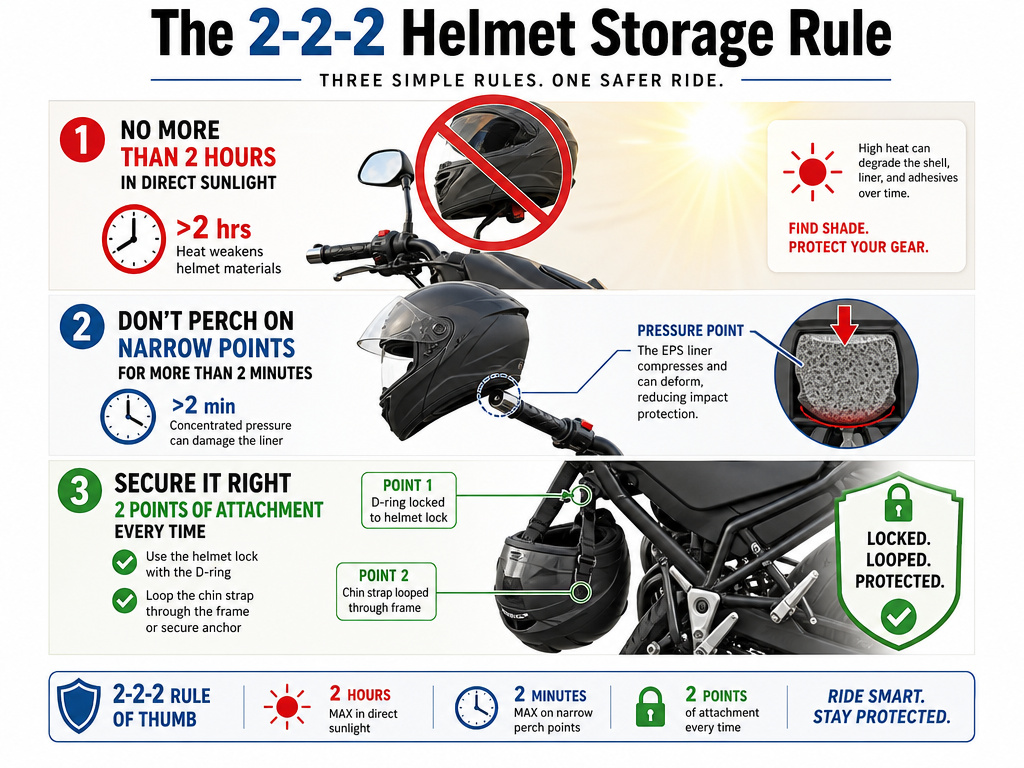
For the times you’re off the bike but not at home, lunch, a fuel stop, a quick errand, use this. It’s not official. It’s what prevents the three most common parking mistakes.
1. No More Than 2 Hours in Direct Sun
Leaving a helmet in direct sun for extended periods can allow interior temperatures to climb into the danger zone on a hot day. If you’re stopping longer, find shade or bring it inside. A helmet left on a sissy bar or mirror stem for an afternoon barbecue is baking.
2. No Surfaces Under 2 Inches Wide
Mirror stems, handlebar ends, and narrow sissy bar posts concentrate the helmet’s weight on a tiny point. This can deform the soft EPS liner inside, creating a pressure spot that changes the fit. The Bell Helmets Motorcycle Helmet Instruction Manual explicitly warns: “do not ‘park’ your helmet on mirror stock or sissy bars.”
3. Always Use 2 Attachment Points if on the Bike
If you must leave the helmet on the motorcycle, use the helmet lock and the chin strap. Loop the strap through the lock or a fixed part of the frame, then secure the lock. Two points prevent the helmet from swinging and hitting the tank or exhaust if the bike is bumped. Bell’s manual also advises against carrying the helmet on the bike’s helmet lock while riding, as vibration can damage it.
Where this goes sideways: Parking a helmet on a mirror for “just a minute.” A gust of wind knocks it off. The fall from handlebar height is enough to compromise the shell, and that damage isn’t covered by most warranties.
Chemical Hazards: Gasoline, Repellent, and Pets
The manuals list specific threats no generic guide mentions. These are about molecular damage, not dirt.
- Gasoline & Petroleum Products: Bell states, “Never allow your helmet to come in contact with gasoline or other petroleum products, as this will cause serious damage to the energy absorbing liner and/or the outer shell.” BRP echoes this for its PYRA helmet. These solvents can break down the polystyrene foam and the resins in the composite shell, weakening them without visible change.
- Insect Repellent: BRP’s manual adds, “Never use insect repellent on or around your helmet.” DEET and other repellent chemicals are aggressive plasticizers. They can make plastic brittle or gummy.
- Household Pets: Bell Helmets warns that household pets will chew on an unattended helmet if given the chance. The damage is obvious, but the risk is real if you store the helmet on a low shelf or in a garage.
The rule for how to store a motorcycle helmet is simple. Store it where these things aren’t. That means not on a garage workbench near fuel cans, not on a porch table where you spray repellent, and not on the floor where the dog sleeps.
Home Storage: Hooks, Racks, Bags, and Shelves
You have four main options. Each has a best-use case and a specific failure to avoid.
| Method | Best For | Risk If Done Wrong |
|---|---|---|
| Wall Hook | Daily use, saving floor space | Deforms liner if helmet is heavy and hook is narrow; can fall if not mounted securely. |
| Dedicated Helmet Shelf/Rack | Long-term storage, multiple helmets | Safe if shelf is flat and wide; takes up dedicated real estate. |
| Breathable Storage Bag | Protection from dust, scratches, and light | Traps moisture if liner is damp or bag is non-breathable, leading to mold. |
| Flat, Stable Shelf (in closet) | Optimal long-term preservation | Out of sight, can be forgotten; requires a dedicated clean space. |
Helmet Hooks: A good helmet hook mounts securely into a wall stud and has a broad, padded contact surface. Never use a narrow metal hook or a coat hook not rated for the weight. The pressure point can permanently compress the liner.
Helmet Bags: A quality protective helmet bag is made of breathable fabric like cotton or nylon, not plastic. Its job is to block dust and UV light, not to seal the helmet in. Always let the helmet air out after a ride before bagging it.
The Shelf Winner: For ultimate safety, a flat, stable shelf inside a closet is best. It supports the entire base of the helmet, prevents falls, and keeps the helmet in a dark, temperature-stable environment. This is the method all the OEM manuals point toward when they say “store in a dark, cool, and dry place.”
Long-Term & Winter Storage Steps
Putting the helmet away for months? Don’t just bag it and forget it. The liner holds sweat and skin oils that can degrade over time.
- Clean It First. Follow a thorough helmet cleaning guide. Remove the cheek pads and liner if possible. Use mild soap and water, rinse well, and let it air dry completely for 24-48 hours. Any moisture left will smell like a damp basement by spring.
- Deodorize. If there’s any lingering smell, use a dedicated helmet deodorizer, an odor-absorbing insert or a spray designed for helmets. Don’t use household air fresheners; they often leave a residue.
- Bag and Place. Put the fully dry helmet in a breathable storage bag. Place it on a flat shelf in a closet, not on a hook. The goal is zero pressure on the liner.
- Check the Date. Note the purchase date or last impact check. Remember the typical helmet lifespan is 5-7 years from manufacture, and storage time counts.
This process for how to store a motorcycle helmet is similar to how you should store a motorcycle leather suit, clean, dry, supported, and in a stable environment.
Common mistake: Storing a helmet with a damp liner. The moisture has nowhere to go. You’ll get a sour mildew smell that’s hard to eliminate from your motorcycle helmet later.
Security & Theft Prevention While Parked
A locked helmet is a deterrent. A carried helmet is safe. Choose based on your stop.
- On-Bike Helmet Lock: Use it for quick stops under 30 minutes in low-theft areas. Thread the chin strap through the lock, not just the D-rings. This makes it harder to cut free. Know that a determined thief with bolt cutters will beat it.
- Cable Lock: A light cable lock passed through the face opening and around a fixed object (like a seat rail) is better than the bike’s built-in lock. It’s more visible and takes extra tools to defeat.
- Take It With You: For longer stops or in urban areas, just carry it. This is the only 100% effective method.
If you’re buying a used bike and the helmet lock is missing or broken, factor in a replacement. It’s a small convenience that encourages proper storage.
Inspection Before You Store: When to Replace
Storage is pointless if the helmet is already compromised. Before you put it away, do a five-point check.
- Shell: Look for any cracks, scratches down to the substrate, or dull, chalky spots (UV degradation).
- Liner: Check for permanent compression, tears, or a change in fit. If it feels looser than when new, the EPS may have aged.
- Strap & Hardware: Look for fraying, rust on the D-rings, or a ratchet that doesn’t hold.
- Impact History: If it’s been dropped from waist height or higher, or suffered any impact, replace it. Bell’s rule is clear: “replace the helmet immediately, even though damage may not be visible.”
- Age: Check the manufacture date stamp inside (usually on the liner). Even with perfect storage, the materials degrade. Bell recommends that helmets be replaced every 3–5 years.
If any point fails, the helmet is a display piece, not protective gear. Store it on a shelf as a reminder, not in your rotation.
Frequently Asked Questions
What is the 2-2-2 rule for motorcycle helmets?
It’s a quick checklist for parking your helmet off the bike: never leave it in direct sun for more than 2 hours, never rest it on a surface narrower than 2 inches (like a mirror stem), and if securing it to the bike, use 2 attachment points (the helmet lock and the chin strap). It prevents heat damage, liner deformation, and falls.
What is the best way to store motorcycle helmets at home?
The best way is on a flat, stable shelf in a dark, cool closet. This supports the entire helmet base, prevents falls, and meets all manufacturer climate requirements. Use a breathable storage bag to keep dust off. Avoid narrow hooks that can deform the liner over time.
Can I store my helmet in its original box?
Yes, but only if the box is stored in a climate-controlled space (like a closet, not a garage or attic). The box provides excellent protection from dust and light. Ensure the helmet is completely dry and clean first, and don’t seal the box with tape, you need some air circulation.
How do I store my helmet on my motorcycle?
Use the bike’s helmet lock for very short stops. For longer security, use a secondary cable lock through the face opening. Always check that the helmet isn’t touching the hot exhaust. The best practice is to take it with you, as vibration while riding with the helmet on the lock can cause damage.
Does hanging a helmet ruin it?
It can. Hanging a helmet on a narrow hook concentrates its weight on a small point inside the liner, potentially creating a permanent pressure dent that changes the fit. If you use a hook, choose a wide, padded one designed for helmets and don’t leave it hanging for months on end.
Before You Go
Storage involves the helmet’s condition when you put it away and the environment you leave it in. The manuals give you the numbers: 150°F, 122°F, 3-5 years. Your job is to apply them.
One rule overrides all the nuance: if you have any doubt about the helmet’s integrity, a drop, a change in fit, visible wear, retire it. A perfectly stored compromised helmet is still compromised.
Clean it, dry it, shelf it. That sequence works every time.
