
How Fast Does a Motorcycle Airbag Deploy? Key Takeaways
This post contains affiliate links. As an Amazon Associate, we earn from qualifying purchases.
How fast a motorcycle airbag deploys depends entirely on the system. For street and race models, full inflation times vary by system, with cited times ranging from about 25 to 50 milliseconds. Off-road systems operate within a 200-millisecond total intervention window. This speed is a certified performance envelope tied to specific crash conditions and sensor logic.
That 25–45ms window is faster than the blink of an eye, but it’s only part of the story. The real question isn’t just how fast the bag inflates, but whether it inflates in time for the specific crash you’re in. A key part of this is understanding how fast does a motorcycle airbag deploy. Every manufacturer defines a strict “envelope of protection”, a combination of speed, impact angle, and crash type where they guarantee the system will work. Step outside that envelope, and those milliseconds might not save you.
What follows is a breakdown of the exact numbers from the official manuals, the certified limits you must know, and the maintenance that keeps the clock ticking. By the end, you’ll know which spec matters for your riding and the one mistake that disables the system before you ever need it.
Key Takeaways
- Street and race electronic airbags inflate in 25 to 45 milliseconds, but are only guaranteed within a certified speed and angle envelope.
- Off-road airbag systems have a slower, 200-millisecond total intervention time because they must detect a complex crash sequence.
- Most systems have a low-speed cutoff around 25 km/h (15 mph); below this, deployment is not guaranteed.
- Letting the battery enter a deep discharge state permanently kills the airbag’s electronics, a failure you won’t see coming.
- The gas inflator cartridge has a 4-year life span and the entire system has a 10-year maximum functional lifespan per Alpinestars.
The Milliseconds That Matter: Street vs. Off-Road vs. Race
Forget the generic “milliseconds” claim. The inflation time printed in a manual, which answers how fast does a motorcycle airbag deploy, is a key performance metric measured under specific test conditions. And the number changes dramatically based on what you’re doing with the bike.
The fastest systems are built for pavement. The Alpinestars Tech-Air Street system claims a deployment time of about 25 milliseconds, according to its user guide. The Tech-Air Race manual states about 45 milliseconds. The newer Tech-Air 7x and the KTM-badged Tech-Air 5 system list maximum times of 44 milliseconds and about 40 milliseconds, respectively. These are all in the same ballistic range, blisteringly fast.
The Alpinestars Tech-Air 3 V2 System achieves full deployment in approximately 50 milliseconds and is validated for direct impacts at 25–63 km/h per the Dolomiticert Protocol. This certified speed range is the system’s performance envelope, not just a marketing point.
Off-road is a different world. The Alpinestars Tech-Air Off-Road System manual states it is expected to inflate and protect within 200 milliseconds from the start of a motorcycle-into-obstacle crash. That’s four to eight times slower. Why? The algorithm has to distinguish a catastrophic crash from a simple tip-over or a planned dismount. It’s evaluating a more complex sequence of events, and that takes more sensor data and processing time. That 200ms includes the entire chain: detection, decision, and inflation.
| System Type | Cited Inflation/Intervention Time | Primary Use Case | Key Limitation |
|---|---|---|---|
| Street (Alpinestars Tech-Air Street) | About 25 ms | Pavement, commuting, touring | Low-speed cutoff (~25 km/h) |
| Race / Advanced Street (Tech-Air 5, 7x, Race) | 40-45 ms (max) | Track, aggressive street riding | Requires regular firmware/sensor checks |
| Off-Road (Alpinestars Tech-Air Off-Road) | Within 200 ms | Motocross, enduro, hard off-road | Strict crash type & angle envelope (45°-135°) |
| Mechanical Tether (Typical) | ~80-100 ms (e.g., MotoAirBag S164S: 89.6 ms) | Touring, commuting, simplicity | Requires tether connection; slower physics |
The numbers are tools for choosing. If you need the absolute fastest reaction for high-speed pavement, a street system is the call. If you ride off-road, you accept the slower time for the sake of fewer false deployments. This is the core of comparing tethered vs electronic systems, one trades pure speed for absolute reliability, the other uses sensors to be smarter but has more conditions.
The Envelope of Protection: When Speed Isn’t Enough
An airbag can inflate in 25ms and still be useless. It has to inflate before you hit the ground, a car, or your own handlebars. This is where the “envelope of protection” comes in, the specific set of crash conditions the manufacturer certifies.
For the Alpinestars Tech-Air Off-Road system, that envelope is very narrow. The manual guarantees protection only within a relative arrival speed of 25-50 km/h and impact angles of 45° to 135°. A low-speed tip-over or a direct head-on collision outside that angle range might not trigger the system in time. The 200ms clock only starts for “motorcycle-into-obstacle” crashes.
Street systems have envelopes too. The Tech-Air Street manual is explicit: if the vehicle speed is less than 25 km/h (about 15 mph), the system may not deploy at the time of collision. It might still go off if you’re thrown from the bike, but that initial low-speed impact could be unprotected. Above 25 km/h, it should deploy regardless of angle. This directly answers the common “People also ask” question: yes, many systems have a 20-25 mph deployment threshold.
The MotoAirBag S164S data sheet adds another layer: operating temperature. It states the system should only be used between 0°C and 45°C (32°F to 113°F). Outside that range, sensor accuracy or gas inflator performance could lag, adding unpredictable delay. Electronic systems like the Tech-Air 5 and 7x have charging limits of 0°C to 40°C, while the MotoAirBag S164S has an operating range of 0°C to 45°C.
Common mistake: Assuming an airbag is a universal shield. It’s a calibrated tool. A crash outside its certified envelope, in speed, angle, or type, is a gamble.
This is why understanding how airbag vests work, including the how fast does a motorcycle airbag deploy detail, is critical. The technology is physics and software working within tested boundaries. Your safety depends on knowing those boundaries as well as the salesman does.
What Actually Happens in a Crash: The Sensor Chain
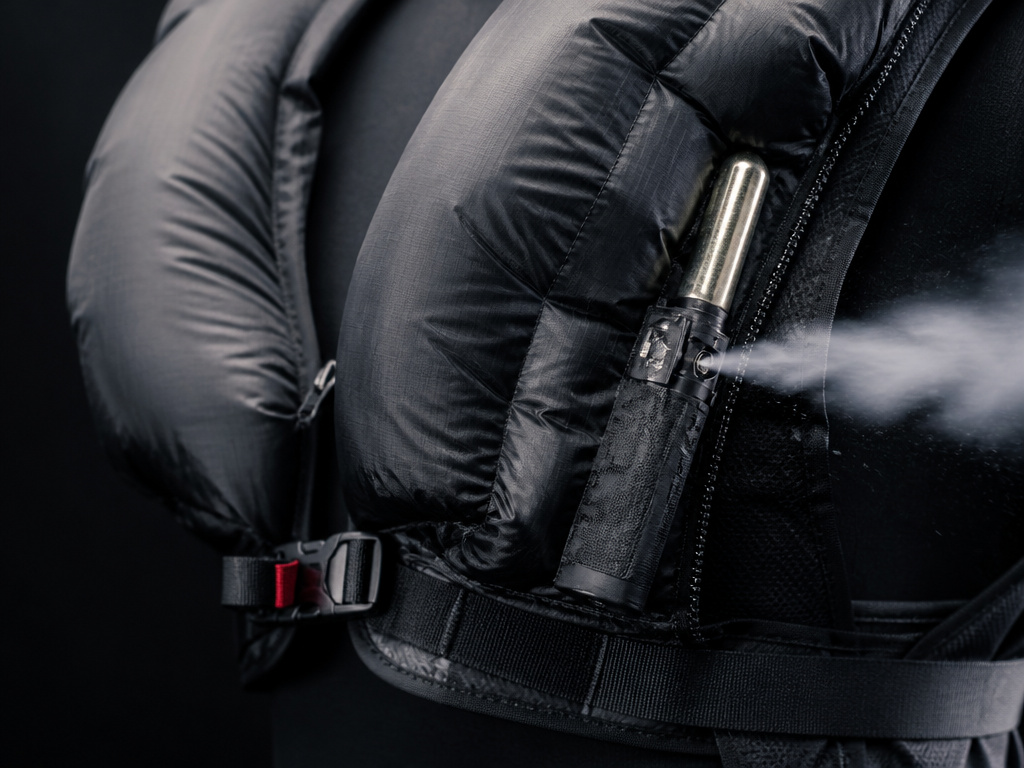
Deployment time is a sequence: detection, processing, ignition, inflation. A delay in any link breaks the chain.
The sensor suite in a modern electronic vest like the Tech-Air 7x includes accelerometers and gyroscopes to detect crash signatures. They don’t just look for a single large force reading. They look for an improbable sequence of forces, a specific signature of a crash. This algorithm, refined over millions of kilometers of riding data, is what decides to fire. This processing takes a few precious milliseconds itself.
Once the decision is made, the system triggers a pyrotechnic gas inflator. A small explosive charge bursts a seal, releasing pressurized gas into the airbag bladders. This is the “inflation time” in the specs, the 25-50ms it takes for the bags to fill and harden. You’ll hear a loud, sharp BANG and feel the vest instantly expand and stiffen around your torso and neck.
A mechanical tether system cuts the sensor and processor out of the loop. When the tether pulls from its D-ring, it yanks a mechanical trigger that releases compressed CO2. Simpler, but physically slower, the MotoAirBag system averages 89.6 ms. The trade-off is stark: electronic systems offer smarter detection for complex crashes but introduce software and power dependencies; tethered systems are dumb, reliable, and slower.
The Maintenance That Keeps the Clock Ticking
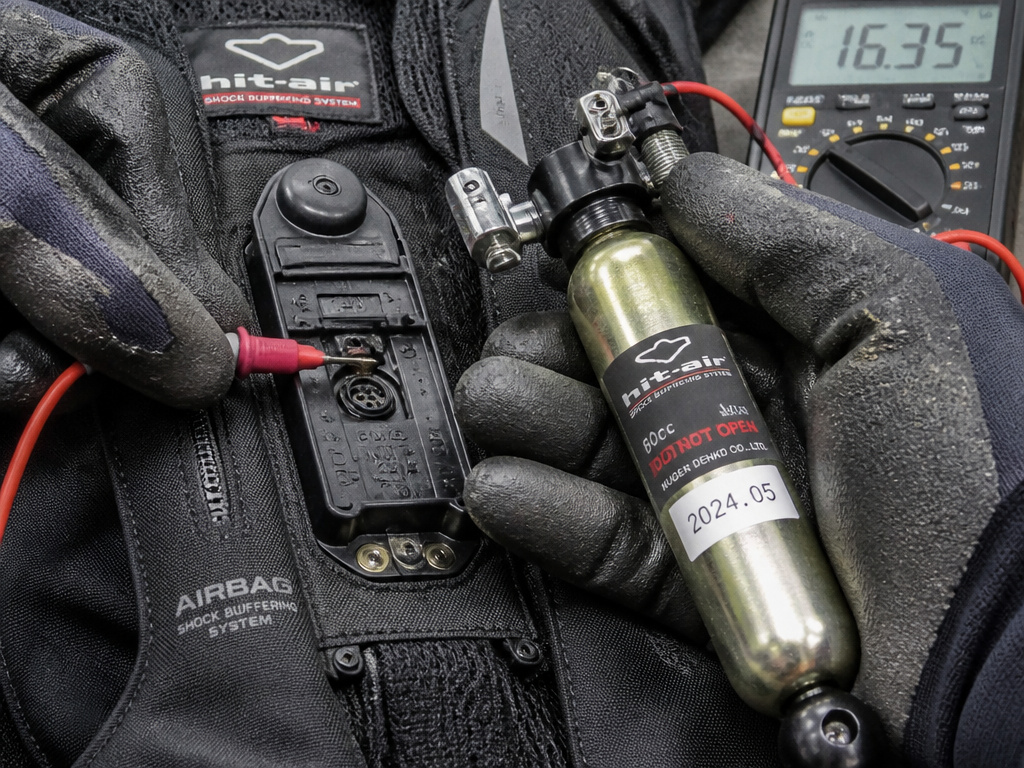
The fastest inflation time on paper is zero if the battery is dead. This is the most overlooked part of the speed equation. Electronic airbags are not “fit and forget.”
The manuals hide the critical failure mode in the storage instructions. The Tech-Air Street guide warns that if the battery enters a deep discharge state, the system may not function. The system is bricked. No warning lights, no error codes, just a dead $800 safety device. You must recharge the system periodically, even if you’re not riding, to prevent the battery from entering a deep discharge state.
Regular service is essential. For the Tech-Air Race system, Alpinestars mandates a routine service at least every 2 years, but recommends an inspection every 6 months to 1 year for extensive use. If you ride extensively, they recommend an inspection every 6 months to 1 year. This service checks the electronics, inspects the airbag for wear, and replaces the gas inflator if needed.
The gas inflator itself is a consumable. The Tech-Air Off-Road manual states these cartridges have a normal life expectancy of approximately 4 years and must be replaced before their expiration date. Even if unused, the sealed gas can degrade or leak.
Finally, the system has a total lifespan. Alpinestars explicitly states that after 10 years, they cannot guarantee the Tech-Air Race system will always function as intended. Materials degrade, components age. This isn’t planned obsolescence; it’s the reality of a complex pyrotechnic and electronic safety device.
Following a strict airbag vest maintenance schedule is what keeps those promised milliseconds available when you need them. A checklist beats luck.
Factors That Delay or Prevent Deployment
Speed is conditional. Several factors can slow the reaction or stop it entirely.
- Low Speed: As covered, most systems have a ~25 km/h (15 mph) threshold. A parking lot drop may not trigger it.
- Crash Type: Some systems won’t deploy if you don’t separate from the bike. A low-side where you stay with the motorcycle might not register as a crash.
- Battery Charge: A low or dead battery prevents arming. The system performs a self-check at startup; a low battery may prevent it from arming.
- Loose Clothing or Backpacks: Wearing a loose jacket over the vest or a heavy backpack can impede the airbag’s expansion. The KTM Tech-Air 5 manual notes it’s only safe with backpacks under 6 kg (13 lbs).
- Sensor Obstruction: The shoulder sensors on electronic vests must have a clear path to move. A too-tight outer jacket or a chest strap pinning them down can dampen the crash signal.
- Extreme Temperatures: Operating outside the specified range (e.g., below freezing) can affect sensor sensitivity and gas expansion rates.
Where this goes sideways: Storing a vest in a garage over winter without charging it. The cold accelerates battery discharge, and by spring, you might be strapping on a useless vest.
This is why the final step before any ride is the system check. A solid green light is the only confirmation that all these variables are within limits and the system is ready to deliver its promised speed.
How fast is a car airbag compared to a motorcycle airbag?
Motorcycle airbag systems operate on a similar principle but face a different challenge: they must detect a crash without the enclosed structure of a car. While the fastest motorcycle systems claim deployment times as low as 25 milliseconds, others are designed for a broader window, up to 200 milliseconds, to account for complex off-road crashes. The key difference isn’t just speed, but the scenario. A car bag protects you inside a cage; a motorcycle bag must become your primary buffer against the open environment, which can require a different deployment strategy.
Frequently Asked Questions
Can a motorcycle airbag deploy at 20 mph?
Yes, but it’s the lower threshold for many systems. The Alpinestars Tech-Air Street manual states deployment is not guaranteed below 25 km/h (about 15.5 mph). At 20 mph (32 km/h), you are above this threshold, so deployment should occur in a qualifying crash. However, a very minor incident at that speed might not generate the force signature the algorithm requires.
How effective are motorcycle airbags?
They are highly effective at reducing injury severity within their certified envelope. They spread impact forces over a larger area of the body, support the neck, and protect the spine and collarbones, areas where traditional armor does little. They do not prevent all injuries, but studies and real-world data show significant reductions in chest and back trauma.
What happens after an airbag deploys?
The vest will remain inflated for several seconds before deflation valves open. Afterward, the system is disabled. You must send it in for service to have the used gas inflator replaced and the system inspected. Our guide on how to reset a deployed airbag vest walks through the exact process and costs.
Are electronic or tethered airbags faster?
Electronic airbags are generally faster on paper (25-50ms vs. 80-100ms). However, “faster” only matters if the electronic system correctly detects the crash faster than the tether is pulled. In a straightforward separation crash, a tether is mechanically immediate and foolproof. The electronic system’s advantage is in complex, multi-impact crashes where a tether might not pull.
How long does an airbag vest last?
For the Alpinestars Tech-Air Off-Road System, the gas inflators normally have a life expectancy of approximately 4 years and must be replaced. For the Alpinestars Tech-Air Race System, Alpinestars cannot guarantee that after 10 years the system will always function. Regular service every 2 years is required to maintain the warranty and ensure safety.
The Bottom Line
The number isn’t 45 milliseconds. It’s the four-year inflator replacement you calendar, the monthly battery check you actually do, and the honest admission that no airbag works for every single crash. Speed is a product of engineering, but reliability is a product of habit.
For the majority of street riders looking at best airbag vests or airbag jackets, the 25-45ms inflation time is more than adequate. The smarter choice is picking a system whose maintenance schedule and cost you will stick to for a decade. The fastest vest in the world is the one that’s charged, serviced, and properly worn when the road disappears. Everything else is just a spec sheet.
