
Heated Motorcycle Jacket Liner Pros and Cons
This post contains affiliate links. As an Amazon Associate, we earn from qualifying purchases.
Heated motorcycle jacket liners add warmth by drawing from your bike’s 12V system or a portable battery. The Harley-Davidson liner is designed to keep you warm in temperatures between 45°F – 70°F or 7°C – 21°C, but they add cost, bulk, and a 6-amp electrical load that can overwhelm some charging systems.
That’s the short answer. The long one is about matching the tech to your actual riding, a 12V liner gives you continuous heat as long as the engine runs, while a battery-powered liner’s runtime shrinks fast on high settings. Both have wiring and a weight penalty. The decision isn’t just about comfort; it’s about whether your bike’s electrical system can handle the extra draw without leaving you stranded. Considering the heated motorcycle jacket liner pros and cons is essential for this choice.
What follows: a breakdown of where the heat actually comes from, the specific electrical math you need to do, the two brands that disagree on how to wear the thing, and a checklist for buying a used liner that won’t fail on you.
Key Takeaways
Where the Heat Actually Comes From (And How Long It Lasts)
Heated liners aren’t magic. They run on electricity through thin wires sewn into the fabric. The quality brands, like the Harley-Davidson BTC series, use what they call Carbon Nano-Core heating elements, these are designed to spread heat more evenly and use less power than old-school wire coils. You get three oversized panels: two on the chest, one on the back that runs up into the collar.
The controller is your only interface. Most have three settings: Low, Medium, High. That’s it. No fine-tuning, no app, just a physical dial or button on a flap. The heat is continuous as long as power flows.
A Harley-Davidson Heated Jacket Liner draws 77 watts / 6.00 amps (cold) from a 12V system. That number is non-negotiable, it’s printed in their service manual. If your bike’s charging system can’t spare 6 amps, the liner becomes a liability.
Runtime is the other half of the equation. If you’re on battery power, the clock is ticking. A Tourmaster Synergy Pro-Plus jacket on its 12V lithium-ion battery gives you about 5.0 hours on Low, 2.5 hours on Medium, and 1.5 hours on High. Pants get less: 3.0 hours on Low, 2.0 hours on Medium, and 1.5 hours on High. That’s on a full charge. In the cold, those numbers drop. You’re trading unlimited engine-powered heat for a few hours of portable warmth.
The 12V vs. Battery Power Trade-Off That Changes Everything
This is the single biggest fork in the road. Your choice here decides your entire experience.
A 12V liner plugs straight into your motorcycle’s battery via a harness. The heat is constant and doesn’t fade. It’s also free, in the sense that your alternator is making the electricity as you ride. The catch is the wiring. You have to install a harness, which means routing a cable from the battery to a connector near your seat. That’s a permanent mod to your bike. And you’re tethered, unplug to walk away, and the heat stops.
A battery-powered liner is portable. You can wear it off the bike. There’s no wiring harness to install. The trade-off is finite heat and added weight. For example, the H-D Dual-Source Heated Jacket Liner weighs 2.3 lbs (liner only) with a 0.8 lb battery. You also have to remember to charge it. For example, the Tourmaster Synergy Pro-Plus lithium-ion battery takes approximately 3 hours and 50 minutes for a full charge. Forget once, and you’re carrying dead weight.
| Power Source | Best For | The Catch |
|---|---|---|
| 12V (Wired) | Long rides, cold commutes, riders who hate charging things | Permanent wiring, 6-amp draw, you’re plugged in or you’re cold |
| Battery (Portable) | Short trips, off-bike use, riders who switch bikes often | Finite runtime (1.5–5.0 hrs), added weight, you must charge it |
There’s a third option: dual-source liners, like the H-D Dual-Source Heated Jacket Liner. They have a pocket for a battery and a port for a 12V harness. You get both. You also pay for both, in cash and in complexity, you’re managing two systems now. For most riders, picking one lane and staying in it is cleaner.
The deeper layer here is how heated gear integrates with your overall electrical setup, a key part of the heated motorcycle jacket liner pros and cons that most heated gear reviews don’t cover. It’s not just about the liner, a point most heated gear reviews don’t cover.
The Electrical Load That Can Drain Your Battery
Your motorcycle’s charging system has a finite output. It makes a certain number of amps to run the engine, lights, and electronics, plus a little extra to keep the battery topped up. Add a heated liner, gloves, and maybe a GPS, and you can exceed that output.
The math is simple and unavoidable. A Harley-Davidson liner pulls 6.00 amps. Heated gloves add additional electrical load. Your bike’s service manual lists the charging system’s output. If your total accessory draw exceeds what the system can produce while running, you start draining the battery. A dead battery on a cold ride is more than an inconvenience; it’s a roadside failure.
Where this goes sideways: Wiring a liner without checking your bike’s available amperage. The battery discharges over an hour or two of riding, and the bike won’t restart at your fuel stop.
You must do the calculation. Add up the amp draw of every electrical accessory you’ll run at once (headlight, heated gear, phone charger). Compare that to your bike’s rated charging output. If the draw is within 2–3 amps of the output, you’re in the danger zone on a low-RPM ride. This is why a proper wiring guide matters, it’s not just connecting wires; it’s understanding load.
This also frames the battery vs 12V heated gear choice, a central part of the heated motorcycle jacket liner pros and cons. A battery-powered liner takes this load off your bike entirely. That’s its hidden advantage.
The Pros: What You Actually Gain
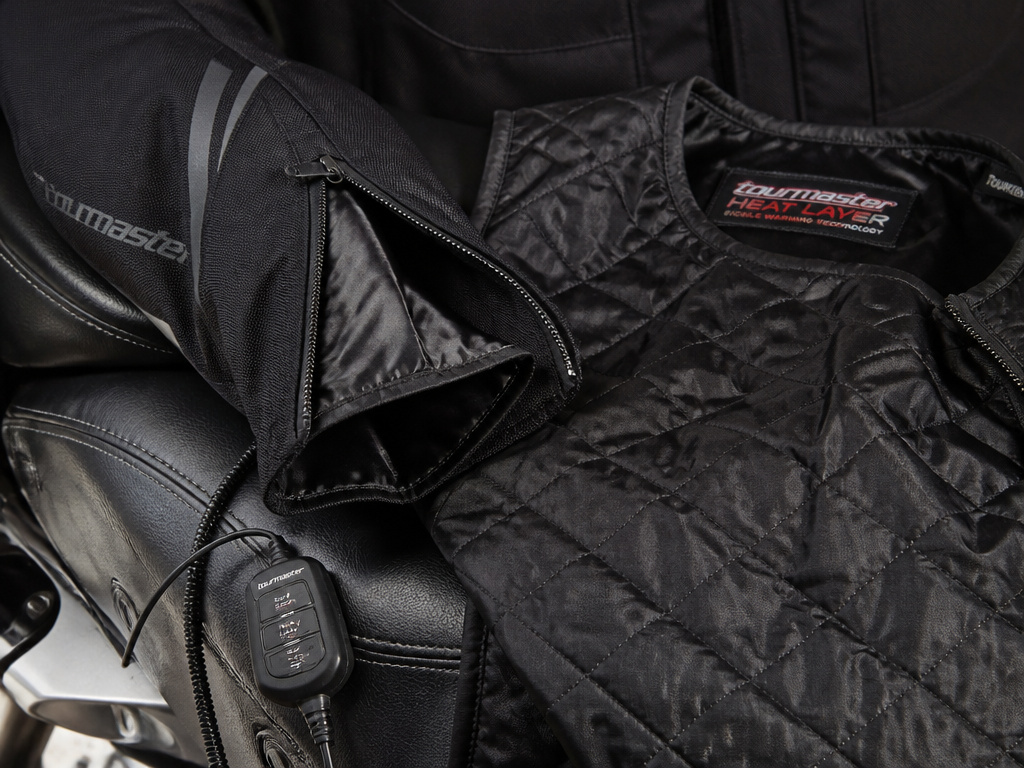
The benefits are real, but they’re specific.
Extended Riding Season. This is the big one. A liner like the Harley-Davidson model is designed to keep you warm in the 45°F to 70°F range. That’s early spring and late fall for a lot of riders. You’re not adding bulk; you’re adding targeted warmth right where you lose heat: core and back.
Less Bulk. Compared to piling on three thermal layers, a heated liner is thin. You wear it under your regular riding jacket. The wind protection comes from your outer shell; the heat comes from the liner. It’s a more streamlined solution for cold weather.
Consistent, Adjustable Heat. You’re not at the mercy of the sun or a random cloud. Three heat settings let you dial in what you need. If you understand how heated gear controllers work, you know it’s a simple on/off cycle, but that’s enough to keep the chill off.
Integration with Other Gear. Most liners have pass-through ports for heated gloves or pants. You can run a whole heated system from one power source. That’s a complete heated clothing lineup from one controller.
The warmth feels like a cheat code. It’s immediate. You forget about the cold and focus on riding. For multi-hour trips in variable weather, that’s a genuine safety boost, shivering riders make worse decisions.
The Cons: The Drawbacks Nobody Hides (But Some Downplay)
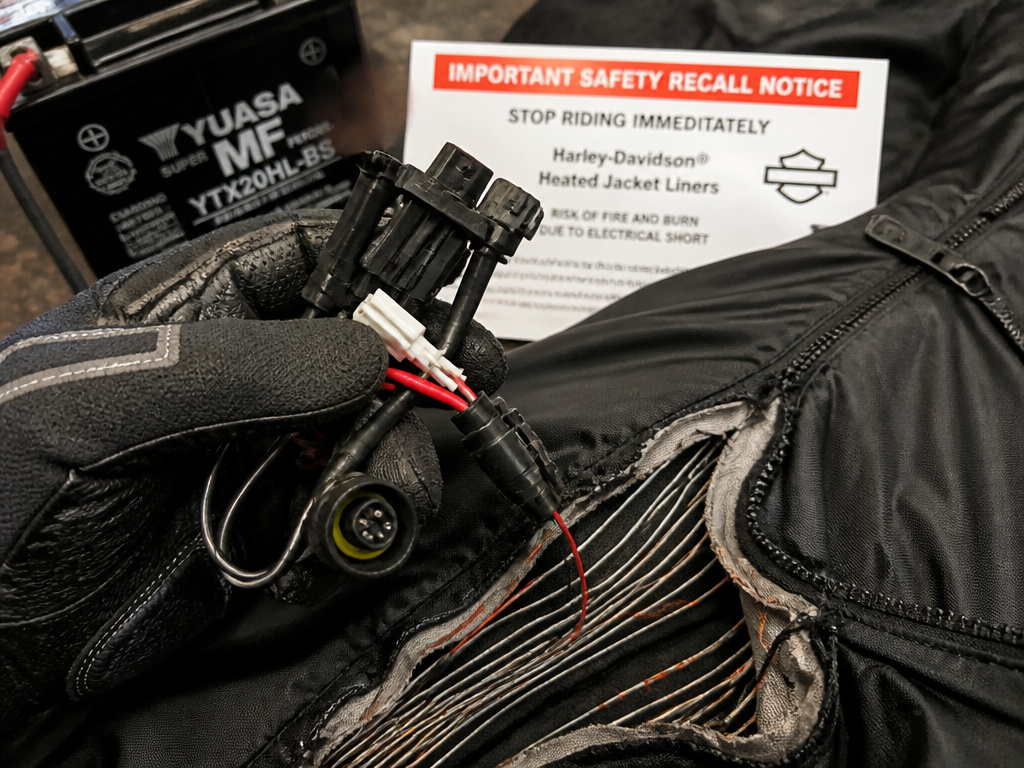
The downsides are physical and financial.
Cost. A Harley-Davidson liner is an investment. You’re paying for the heating elements, the wiring, the controller, and the brand’s warranty. It’s not a $50 fleece.
Added Weight and Bulk (Even If It’s Thin). The H-D Dual-Source Heated Jacket Liner weighs 2.3 lbs (liner only) + 0.8 lbs (battery) = 3.1 lbs total. That’s over three pounds hanging on your shoulders. You feel it after a while.
Wiring and Tethers. Even with a neat harness install, you have a wire running from your jacket to your bike. It can snag. It’s one more thing to unplug before you dismount. Battery-powered versions swap the tether for a battery pack in a pocket, which is its own kind of lump.
Electrical Complexity and Risk. As covered, you can overload your charging system. There’s also a real, documented safety risk. In 2013, the U.S. Consumer Product Safety Commission recalled specific Gerbings and Harley-Davidson liners due to a defective connector that could overheat. The official burn hazard recall documentation notes two reports of dime-sized burns and blisters on users’ backs. That’s rare, but it’s in the record.
Maintenance and Care. You can’t just toss these in a washing machine. You can’t fold them sharply for long-term storage, that can damage the heating elements. They require a specific kind of attention that a regular jacket doesn’t.
The Contradiction in the Manuals: How to Layer for Heat
Here’s a specific conflict the forums love: two major manufacturers give opposite advice on what to wear under the liner.
- Harley-Davidson’s manual states: “Do not wear the Harley-Davidson Heated Vest or Jacket directly next to the body. These items are designed to be worn with a light shirt underneath.”
- Tourmaster’s manual states: “For the effective and efficient transferring of heat… It is recommended that layering under the heated apparel be kept to a minimum. Heavy thick layers… Decrease the effectiveness.”
Harley-Davidson advises wearing a light shirt underneath for safety, while Tourmaster recommends keeping layering to a minimum for efficient heat transfer.
Both, for their own design. Harley’s warning is likely a safety and liability cushion, a thin shirt prevents direct contact if an element malfunctions. Tourmaster is prioritizing pure heat transfer efficiency. In practice, a thin, snug base layer (like a moisture-wicking shirt) splits the difference. It gives you a slight buffer and doesn’t insulate the heat away. This is where a good jacket layering guide helps, the liner is just one layer in a system.
Maintenance, Care, and the Used Market
Heating elements are fragile. They’re wires or carbon panels sewn into fabric. Treat them wrong, and they break.
Washing: Most manuals say spot clean only. Never machine wash or dry. Water and electronics don’t mix, and agitators can snap the internal wiring.
Storage: This is critical. The Tourmaster manual warns directly: “Long-term storage while crumpled or rolled can damage internal heating elements.” Fold the liner loosely, without sharp creases across the chest or back panels. Hang it if you can.
The Used Market Check: Because of the cost, used liners circulate. Here’s what to inspect before you buy:
- Plug and Connectors: Look for cracked housings, bent pins, or corrosion. This is the failure point in the recalled models.
- Flex the Fabric: Gently bend the areas over the chest and back. Listen for any faint crackling, that’s a broken wire.
- Heat Test: If possible, plug it in on a low setting. Feel for cold spots. An element section that doesn’t warm is dead.
- Check the Zipper: This is a common mechanical fail point separate from the electronics. Run it up and down several times.
A used liner with a perfect exterior can have dead heat zones. Assume nothing.
How a Liner Fits Into Your Whole Gear Strategy
A heated liner is a tool, not a solution. It works best as part of a system.
Start with the basics: a windscreen and hand protection. Handguards or fairing lowers cut windchill before you even turn on heat. Heated grips are, in my opinion, a better first investment than any heated clothing, cold hands lose feel and control faster than a cold core.
Then add the liner for your torso. If you still have cold spots, look at heated pants or insoles. The liner is the central hub for how heated gear works, but it shouldn’t be the first thing you buy.
The warranty is your final safety net. Harley-Davidson offers a limited 3-year warranty on electrical components and a 1-year warranty on non-electrical parts. That tells you where they expect problems: the electronics. Keep your receipt.
Brand comparisons for heated gear
When comparing brands, look at their specific safety and warranty history. Some models from major brands like Gerbings and Harley-Davidson have been subject to recalls due to overheating issues that caused minor burns. Check manufacturer warranties, as they can vary significantly; some offer a limited three-year warranty on electrical components and a one-year warranty on non-electrical parts. Brands also differ in their recommendations for layering. Some advise wearing a light shirt underneath for safety, while others recommend minimal layering underneath for the most efficient heat transfer. Always verify the specific model’s history and instructions.
Heated jacket liner vs vest comparison
Choosing between a liner and a vest comes down to how much core warmth you need. A full jacket liner provides heat across the chest, back, and often extends warmth into the collar, covering more surface area. A vest focuses heat on the core torso. Both types typically offer multiple temperature settings. For runtime, a vest may have a slight advantage on a battery as it powers fewer panels, but specific runtimes vary by model and setting. Consider your typical riding conditions and outer jacket insulation; a liner is better for extreme cold, while a vest offers more layering flexibility under a snug jacket.
Frequently Asked Questions
What are the disadvantages of a heated jacket?
The main drawbacks are cost, added weight (2–3+ pounds), the need to wire it to your bike’s electrical system (or manage a battery), and the risk of overloading your charging system if you combine it with other accessories. There’s also a maintenance requirement, you can’t wash it normally or store it crumpled.
What is the best heated jacket liner for motorcycles?
“Best” depends on your power source and bike. For a dedicated, wired setup, the Harley-Davidson BTC liners with their three-year electrical warranty are a solid benchmark. For portable, battery-powered use, the Tourmaster Synergy Pro-Plus line with its listed runtimes is a proven option. The real answer is the one that matches your riding style and electrical capacity.
Are heated motorcycle jackets worth it?
They are if you ride regularly in cold weather and value extended comfort; for example, the Harley-Davidson liner is designed for temperatures between 45°F and 70°F. They are not worth it if you only ride in summer, or if your bike’s electrical system can’t handle the extra 6-amp draw. For cold-weather commuters or tourers, the payoff in ride quality and season length is real.
Why aren’t heated jackets more popular?
Cost and complexity are the barriers. The upfront investment is significant, and the installation (for 12V models) deters riders who aren’t comfortable wiring. The fear of battery drain or electrical issues also holds people back. They’re popular among tourers and cold-climate riders, but remain a niche product for casual use.
The Bottom Line
A heated jacket liner is a targeted solution for a specific problem: cold-weather riding comfort. It’s not a magic blanket. Its value depends entirely on your use case.
If you ride long distances in shoulder-season temperatures and your bike can spare the electrical load, a 12V liner is a justifiable investment. Follow the OEM’s wiring and layering instructions to the letter. If your rides are short or you switch bikes often, a battery-powered model offers flexibility at the cost of runtime.
One rule most guides skip: if your bike’s charging system output is under 25 amps, think twice before adding a 6-amp liner plus any other accessories. The math doesn’t lie. Warmth is fantastic. A dead battery on a cold road is not.
The technology behind heated gear technology is straightforward. The decision to use it isn’t about the gear; it’s about your bike, your routes, and your tolerance for managing one more system on your rides. Get that right first.
