
How to Stop a Motorcycle Visor From Fogging: Step-by-Step
This post contains affiliate links. As an Amazon Associate, we earn from qualifying purchases.
To stop a motorcycle visor from fogging, you need a physical barrier, controlled airflow, or a chemical treatment. A Pinlock insert is a widely recommended permanent fix, while SHOEI promotes the use of their genuine anti-fog sheet. For immediate relief, open the visor slightly and ride at low speed, or use all vents. Never ride with a fogged visor, it cuts visibility to zero in seconds.
The gap between those methods is where riders get stuck. One is a set-and-forget part, the other is a skill you use in the moment. Mixing them wrong is how you end up pulling over in the rain, which is why knowing how to stop a motorcycle visor from fogging is key.
What follows is the breakdown: why fog happens, the gear that stops it (Pinlock, deflectors, sprays), and the on-bike moves for when it hits anyway, all central to the how to stop a motorcycle visor from fogging question. We’ll also cover the one cleaning mistake that makes every fogging problem worse.
Key Takeaways
- A Pinlock insert creates a sealed air pocket and is the only solution that works in all conditions without reapplication.
- Open the lower air intake and crack the visor slightly for emergency defogging while moving; SHOEI specifies low speed for this.
- Clean only with mild soap and water under 40°C; hotter water or solvents damage the visor’s coating and worsen fogging.
- Adjust the visor base if a gap forms; a tight seal against the window beading stops wind and moisture roll-in.
- For riders who wear glasses, a breath deflector is essential; it channels exhaled air away from both lenses.
Why Visors Fog in the First Place
Fog is condensation, not magic. Warm, moist air from your breath hits the cooler surface of the visor. The air cools, can’t hold the moisture, and deposits it as tiny droplets on the plastic.
The science is simple: temperature differential + humidity = fog. Your breath is warm and humid. A cold visor is a perfect trap for condensation.
Ventilation fights this by replacing the warm, wet air inside the helmet with cooler, drier outside air, a core principle in how to stop a motorcycle visor from fogging. If the vents are closed or blocked, you’re breathing into a sealed bag. The first symptom is a faint haze at the bottom of your sightline. Within a minute, it can spread to a complete whiteout.
That’s the safety stakes. A fogged visor isn’t an annoyance; it’s a blindfold. The SHOEI manual states it plainly: “Do not ride with a shield/visor that is fogged. This may obstruct your view and can be very dangerous.” They mean immediately dangerous, not eventually.
The Pinlock Insert: How It Works and How to Adjust It
If you fight fog more than twice a year, a Pinlock insert is your first purchase. It’s a second lens that seals against the inside of your visor with a silicone bead, creating an insulating air pocket.
The insert itself has an anti-fog coating. Because the sealed air warms to match your breath’s temperature, the main visor stays closer to the outside air temp, and the insert’s own coating handles the rest. The result is no fog on either surface.
Pinlock offers three protection levels: 30, 70, and 120XLT. The 120XLT is for racing. The 70 is available in tints. For most street riders, the Pinlock 30 is more than enough. I’ve run a clear 70 for years on backroad dawn rides where the dew point and air temp are the same, and it hasn’t fogged once.
| Pinlock Level | Best For | Key Feature |
|---|---|---|
| 30 | Most street riding | Clear, cost-effective |
| 70 | Riders wanting tint | Available in smoke, yellow, etc. |
| 120XLT | Track/racing | Maximum fog resistance |
Installing one is like a phone screen protector. Clean the visor, align the notches on the insert with the locator pins on the visor, and let it snap into place. The seal is critical.
Where this goes sideways: If you see fog creeping in from the edges, the seal has failed. Don’t just press it back. Rotate each locator pin about 45 degrees and reinstall the insert. This adjusts the tension on the silicone bead.
Not every visor is compatible. Look for two small plastic pins, usually held by a screw, on the inside edges of the visor. If they’re there, you can use a Pinlock insert. If your helmet didn’t come with a Pinlock-ready visor, you may need to buy one, check our list of best helmet visors for compatible models.
Controlling Airflow: Vents, Deflectors, and the Cracked Visor
When you don’t have a Pinlock, or when conditions overwhelm even that, airflow is your tool. This isn’t just about flipping vents open. It’s about managing the path of your breath.
First, use the helmet’s system. Premium helmets from Shoei, Arai, and others have chin bar intakes and top exhausts. Open the lower intake first, that’s where your breath pools. The SHOEI CWR-F2 manual specifically says to open the lower air intake to circulate air and remove fog.
Second, add a breath deflector. This is a simple plastic or fabric curtain that clips inside the chin bar. It redirects your exhaled air downward, away from the visor. For the 35% of riders who wear glasses, this is essential. It stops fog on both the visor and your lenses. Our breath deflector guide covers how to choose and fit one.
Third, the emergency move: crack the visor.
Here’s where sources disagree. SHOEI’s manual says to open the shield slightly and ride at low speed. Sources disagree on the best emergency technique: SHOEI advises opening the shield slightly and riding at low speed, while another technique for severe fogging is to open the visor 1-2 inches while opening all vents, accepting the wind blast.
Common mistake: Cranking the visor wide open at highway speed. The buffeting is dangerous, and it lets in a huge volume of cold air that can fog the visor even faster from the shock. Slightly open at low speed works because it creates a gentle exchange, not a torrent.
The goal is balanced airflow, not a hurricane. If you’re moving at higher speeds, a tiny crack is enough. Understanding how helmet ventilation works helps you use the vents strategically instead of guessing.
Cleaning and Maintenance: The Invisible Fog Factory

A dirty visor fogs faster. Dust, oil, and dead bugs provide nucleation points for condensation droplets to form. But cleaning it wrong causes permanent damage.
The SHOEI manual prohibits using hot water over 40℃ and recommends cleaning with a solution of mild, neutral soap and water. Rinse with pure water and dry with a soft cloth. That’s it.
Banned list:
- Hot water over 40°C
- Salt water
- Acidic or alkali detergents
- Benzine, thinner, gasoline, glass cleaner
- Any cleaner with organic solvents
These chemicals alter the visor’s plastic, degrading any anti-fog coating and creating micro-scratches that scatter light. You’ll get more fog and more glare at night. Use proper visor cleaners designed for the job.
A scratched visor is a safety defect. The manual says to stop using it immediately, clean it, or replace it. Deep scratches won’t polish out. Keep a spare clear visor, it’s cheaper than a crash.
Cleaning extends to the whole helmet. A sweaty, dirty liner holds moisture and affects internal humidity. Learn how to clean a helmet properly, liner and all.
Visor Fit and Adjustment: Stopping Leaks Before They Start
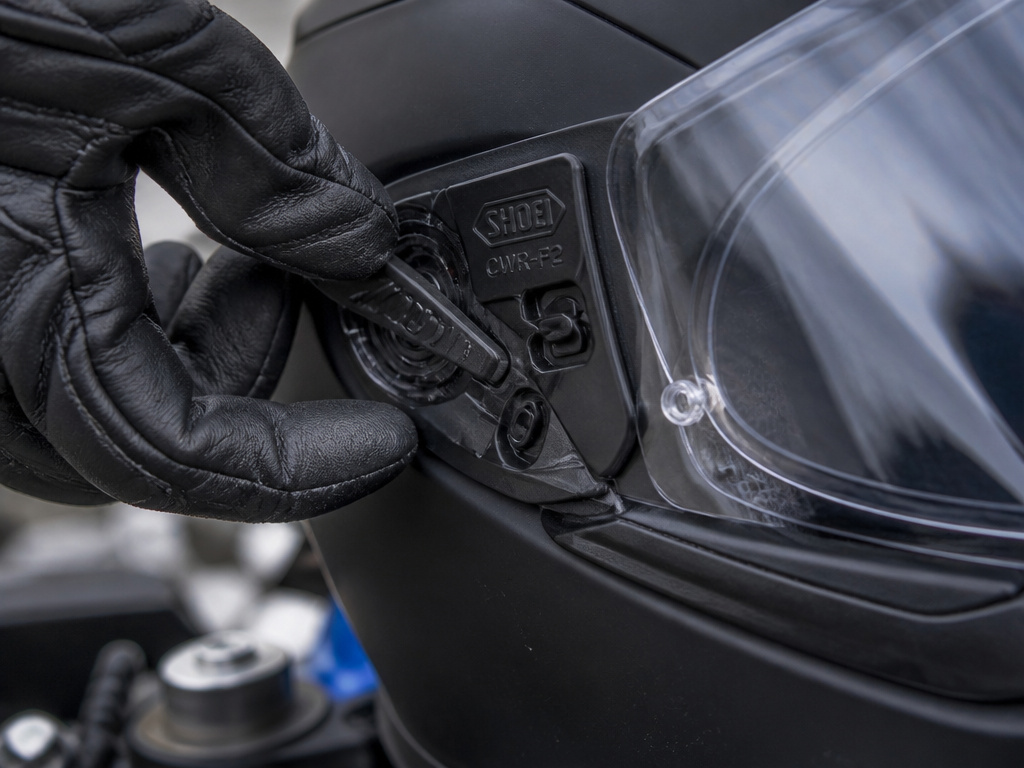
If your visor doesn’t seal tightly against the helmet’s rubber window beading, moist outside air can seep in. Worse, it creates noise and wind flutter. The fix is often a simple adjustment.
On helmets like the SHOEI CWR-F2, there are left and right adjustment levers on the shield base. Lowering these levers moves the visor backward, closing a gap.
Easy to miss: If the gap remains after using the levers, you may need to loosen the base plate screws slightly, reposition the plate, and retighten. The manual recommends tightening the screws carefully. Overtightening cracks the plastic. Overtightening cracks the plastic.
After any cleaning or part replacement, close the visor and check the seal runs evenly all around. A gap means wind and water get in. An uneven seal also strains the mechanism, leading to premature wear on the beading. Different visor types have different adjustment methods, but the principle is the same: contact should be even and firm, not crushing.
Anti-Fog Sprays and Sheets: The Temporary Fix
Sprays, gels, and anti-fog sheets are the third category. They work by applying a hydrophilic coating that causes moisture to spread into a thin, clear film instead of beading up as fog.
SHOEI mandates using only their genuine anti-fog sheet for their visors. Third-party sprays are widely available, but their performance varies wildly. Independent testing shows some brands like Salclear TT and DMist work well for several days, while others fail after one humid ride.
If you use a spray:
- Clean the visor perfectly first.
- Apply as directed, usually a thin, even coat.
- Buff gently with a microfiber cloth.
- Reapply every few days or as needed.
The drawback is maintenance. You must reapply. Rain, cleaning, and even glove wipes degrade the coating. For a permanent, no-maintenance solution, a high-quality Pinlock insert beats any spray.
Solutions for Riders Who Wear Glasses
Glasses add a second fog surface inside the same humid space. The stats are stark: nearly 90% of glasses-wearing riders cite fogging as a top safety concern.
The layered approach works here:
- Start with a breath deflector. This is the single biggest improvement.
- Treat the glasses. Use an anti-fog spray formulated for prescription lenses (not visor spray). Apply it to both sides.
- Pre-ventilate. Before riding, open all vents and let the helmet interior stabilize to the outside air for a minute. Put the helmet on and breathe normally for a moment before moving off.
- Consider gear. Some riding-specific glasses have hydrophobic coatings or better airflow designs around the frames.
It’s more work, but the alternative is riding blind. The principles of helmet ventilation are even more critical here, you’re managing climate for two lenses, not one.
Frequently Asked Questions
How do you stop your visor from steaming up immediately?
Open the lower air intake, crack the visor slightly, and reduce your speed. This creates a gentle air exchange to clear the fog. If stopped, remove the helmet, wipe the visor dry with a soft cloth, and ensure all vents are open before putting it back on.
What is the best anti-fog spray for a motorcycle visor?
Sources disagree on anti-fog solutions: SHOEI mandates using only their genuine anti-fog sheet, while independent testing of various products shows some, like Salclear TT and DMist, can be effective. However, no spray is permanent. For a set-and-forget solution, a Pinlock insert outperforms all sprays.
How to make a visor anti-fog at home?
The classic home remedy is a thin coat of dish soap or shaving cream, wiped to a clear film. It works for a few hours in mild conditions by mimicking a hydrophilic coating. It’s messy and short-lived compared to a commercial product or a Pinlock.
Why does my Pinlock insert still fog?
The seal has likely failed. Remove the insert and visor. Rotate each locator pin about 45 degrees to increase tension on the silicone bead, then reinstall. If the insert is old or scratched, its coating may be worn out, time for a new one from our list of best Pinlock inserts.
Before You Go
Fogging is a physics problem with three proven solutions: a barrier (Pinlock), airflow management (vents, deflector, cracked visor), or a chemical coating (spray). The Pinlock wins for reliability.
The one rule most riders ignore is the 40°C cleaning limit. Use hot water or the wrong cleaner, and you bake in the fog problem forever.
If you do nothing else, install a Pinlock and a breath deflector. That combo handles most conditions. For the other 5%, crack the visor a millimeter and slow down. Your eyes are the primary safety system on the bike. Keep them clear.
