
Motorcycle Helmet Ventilation Explained: How Airflow Works
This post contains affiliate links. As an Amazon Associate, we earn from qualifying purchases.
Motorcycle helmet ventilation is a forced-air system that pulls fresh air in through front intakes, channels it over your head, and exhausts hot, moist air out the rear. It does three jobs: cools your scalp, reduces face shield fogging, and cuts rider fatigue. The Arai Profile-V, for example, uses 11 total points, 5 intake and 6 exhaust, to manage this flow.
That “forced-air” bit is what most riders miss. It’s not passive breathing; it’s a pressure differential engineered into the shell. Get the sequence wrong, open exhausts but closed intakes, or vice versa, and the system stalls. You’re left with a hot, foggy helmet no matter how many vents you paid for. This is essentially motorcycle helmet ventilation explained.
What follows is a walk around the helmet for the motorcycle helmet ventilation explained. We’ll trace the air from the chin bar to the rear spoiler, name each vent by its real job (not its marketing name), and spot where the manuals disagree. By the end, you’ll know how to read any helmet’s vent layout in ten seconds and predict where it will fail on your bike.
Key Takeaways
- Helmet ventilation is a sealed, pressure-driven system; blocking any intake or exhaust port stalls the entire circuit.
- Never adjust vents while riding according to some manufacturers. Arai (TX-4/XD4), AGV Supertech R7, and ScorpionEXO XT9000 manuals explicitly warn against it, while others like Arai (Quantum-X/Signet-X) describe vent function without an explicit prohibition, and Bell Helmets gives no advice on when to adjust.
- Front lower vents have two conflicting names and functions: a “Chin Vent” for demisting (AGV) versus a “Mouth Vent” for face cooling and anti-fog (Arai).
- Replace your helmet every 5 to 7 years; Bell says 5 years, while Arai and Schuberth warranties specify 5 years from first use or 7 from manufacture, whichever comes first.
- Avoid cleaning methods that can damage the helmet; solvents, fuel, and high-pressure jets can destroy the shell’s structural integrity and void your warranty.
How Helmet Ventilation Actually Works (It’s a Loop)
Forget “holes in a shell.” Think of it as a closed-loop HVAC system shrunk to fit your head, which is the core of motorcycle helmet ventilation explained. The engine is forward motion. As you ride, air rams into intake ports at the chin, brow, and top of the helmet. This high-pressure air feeds into internal channels, often grooves carved into the EPS liner, that direct it over your scalp.
The ScorpionEXO XT9000 manual describes its system as “2 adjustable ram air intakes that force fresh air towards multiple internal channels pulling heat and humidity up and out the rear exhaust ports.” Break the loop by, say, wearing a thick neck gaiter that blocks the rear exhausts, and the airflow stops. The helmet becomes a stagnant, hot box.
A functional ventilation system is a balanced circuit: intakes pressurize the interior channels, and rear exhausts create the suction that maintains flow. Blocking either end collapses the pressure differential.
The Chin Vent vs. Mouth Vent Confusion
Here’s where the manuals disagree on naming and purpose. Look at the front of your helmet, just below the face shield. That slot or set of scoops has two different identities depending on who built your lid.
- AGV calls it a “Chin Vent.” In the Supertech R7 manual, its stated function is specifically for “de-mist action” on the shield interior. There’s no mention of cooling your face.
- Arai calls it a “Mouth Vent.” In the TX-4 manual, Arai says when the shutter is open, “air is directed to the mouth area to provide fresh air inside the helmet.” When closed, “air is then directed up along the interior surface of the face shield to help prevent fogging.”
So, is it for breathing or defogging? The answer is both, but the design priority changes by brand. An Arai Mouth Vent is a true dual-purpose system. An AGV Chin Vent is primarily an anti-fog device. This matters when you’re shopping. If you ride in humid climates and fog is your nemesis, a dedicated chin vent design might serve you better than a general-purpose mouth vent.
| Brand & Model | Vent Name | Primary Stated Function | Secondary Function |
|---|---|---|---|
| Arai TX-4/XD4 | Mouth Vent | Directs air to mouth area | Deflects air up shield to prevent fogging |
| AGV Supertech R7 | Chin Vent | De-mist action on shield | Not specified |
| Schuberth E2 | Chin Bar Vent | Visor ventilation | Separate slider for “centered air supply” |
The Other Major Vent Types: Brow, Top, and Exhaust
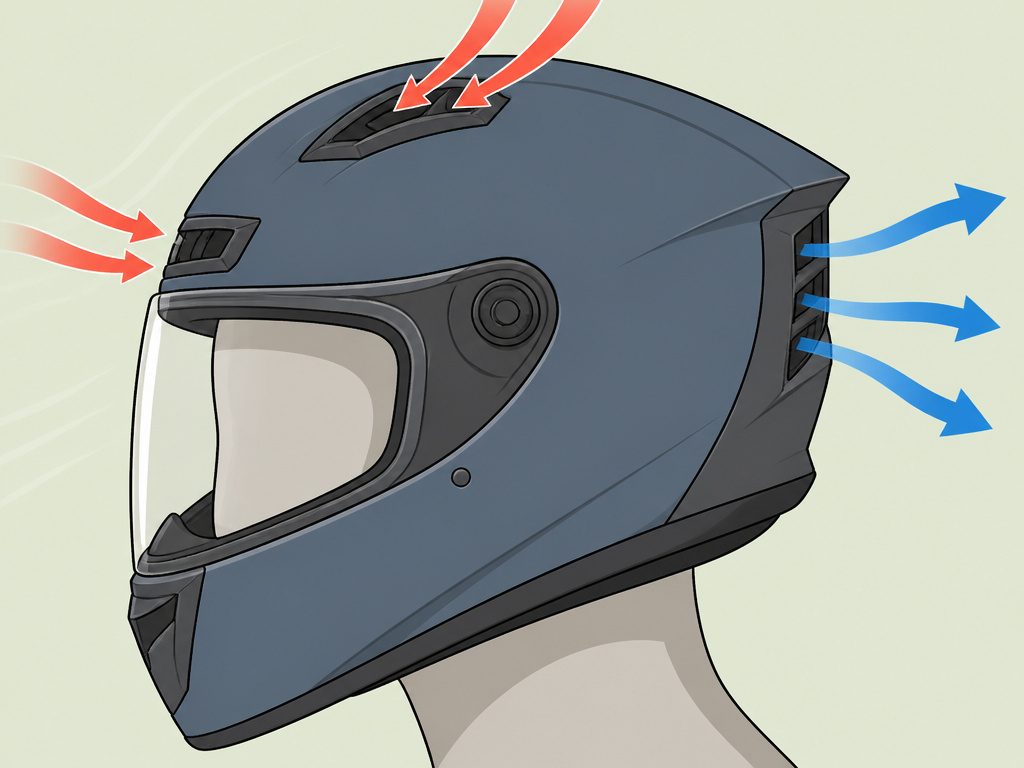
While the chin vent gets the attention, the system relies on a team of other openings.
Brow Vents sit just above your eyes. On an Arai, you operate them by “simply pulling the vent control down to open, pushing up to close.” They dump a stream of air directly onto your forehead, which is one of the body’s best spots for dumping heat. Crack these open first on a hot day.
Top Vents (or crown vents) are often on the helmet’s crown. They feed air directly to the top of your head. The Bell Star series manual notes its ventilation system “cools the interior of the helmet and helps to keep the Panovision™ shield clear.” That clarity comes from overall moisture reduction, which starts with these upper intakes.
Exhaust Vents are the unsung heroes. You’ll find them at the back, sides, and neckline. They’re not adjustable; they’re always open. Their size and placement are tuned in a wind tunnel to create that crucial low-pressure pull. If they get blocked by a backpack or a helmet bag strap, the whole system chokes.
When Should You Never Touch the Vents?
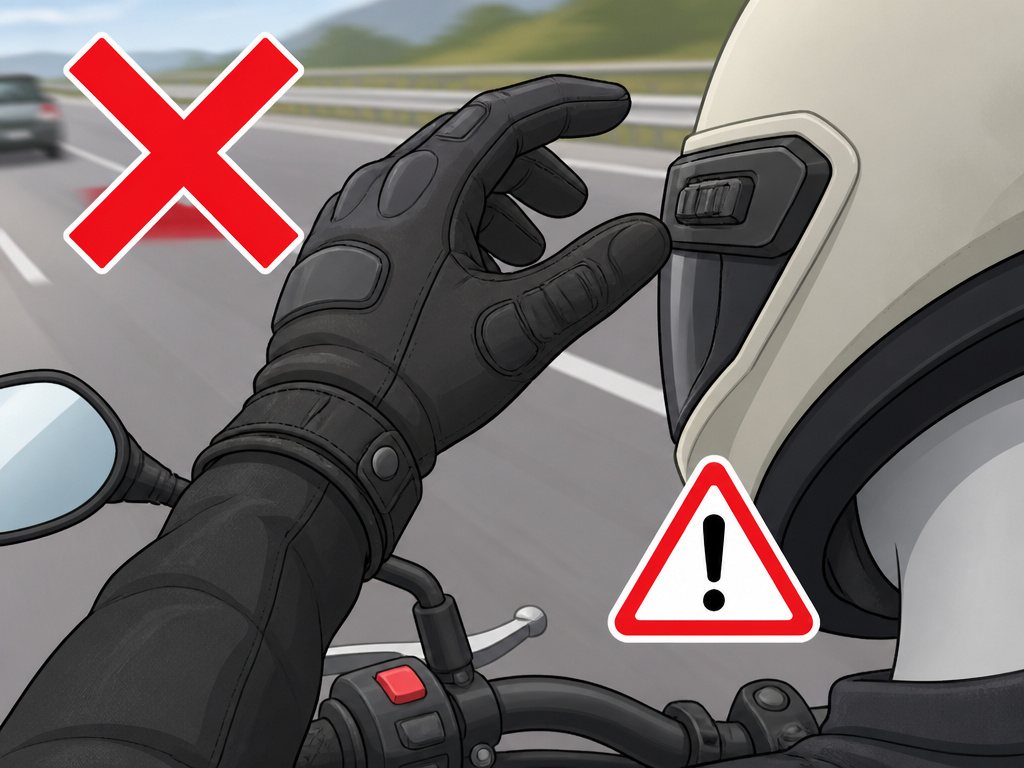
This isn’t a suggestion. It’s a direct warning printed in multiple owner’s manuals.
- Arai (TX-4/XD4): “Never attempt to adjust ventilation ducts when in motion riding your motorcycle.”
- AGV Supertech R7: “Never try to open or close the second ventilation point when riding.”
- ScorpionEXO XT9000: “DO NOT attempt to adjust while riding.”
The reason is simple, brutal physics. Taking a hand off the handlebar to feel for a small plastic slider distracts you from controlling a several-hundred-pound machine. It takes a fraction of a second. Do it during an unexpected lane change or an obstacle avoidance, and that distraction compounds. Set your vents before you roll, or pull over to adjust them.
Common mistake: Fiddling with vent sliders at speed. The consequence is immediate: divided attention. The road doesn’t wait for you to get cooler.
Ventilation’s Hidden Trade-Off: Noise and Safety
More airflow usually means more wind noise. Those intake scoops are also perfect little whistles at highway speeds. It’s a direct trade-off. A helmet like the Schuberth E2 Carbon, touted for its “outstanding aeroacoustics,” spends as much wind-tunnel time smoothing airflow to cut noise as it does maximizing intake volume.
There’s a safety trade-off, too. Every hole in the shell is a potential weak point. Arai addresses this directly, noting that all its helmets are penetration tested with a 3kg cone dropped from a 3m height, even though European standards don’t require it. Their design philosophy? “All Arai vents and ducts are designed to break off during an impact.” The vent sacrifices itself to prevent the shell from catching and twisting your neck.
So, a hyper-aggressive vent array might cool better but be noisier and theoretically slightly less robust in a very specific type of impact. Most riders will never encounter that perfect storm, but the engineering balance is always there.
Cleaning and Maintenance: What the Manuals Actually Say
You can ruin your vents and your helmet’s safety if you clean them wrong. The manuals are unanimous and specific.
- NEVER use solvents, petrol, or thinners. The Schuberth E2 Carbon manual is explicit: “Direct contact with motor fuel, thinners or solvents can destroy the structure of the inner and outer shell.”
- NEVER use high-pressure water jets. The AGV manual warns: “NEVER use high pressure water jets to remove dirt from the helmet.”
- Lubricate sparingly, if at all. The Arai Quantum-X manual has a note: “Do not use oils or waxes to lubricate vents… If you must… sparingly use the silicone lubricant supplied with your helmet.”
Store the helmet in a cool, dry place out of direct sunlight. The AGV manual adds a specific warning: don’t store gloves inside the helmet, as “chemicals from the gloves, or residue from petrol can damage the helmet’s inner lining.” That sour, chemical smell some old helmets develop? That’s often degraded lining from fuel or solvent exposure.
How Helmet Type Changes the Ventilation Game
The shape of your helmet dictates what’s possible.
A full-face helmet is an enclosed design that allows for a dedicated ventilation system. Our deep dive on the full-face helmet covers its features.
A modular or flip-up helmet has a hinge mechanism that can affect its design. The trade-offs for that versatility are detailed in our look at modular helmet pros and cons.
Open-face and half helmets have a different approach to ventilation compared to full-face helmets.
How do helmet brands differ in their vent designs?
Brands engineer their ventilation systems with distinct philosophies. For instance, the Arai TX-4/XD4 features a vent that directs air to the mouth when open and up the face shield to prevent fogging when closed. The Arai Profile-V specifies 11 total ventilation points. The Bell Helmets manual states its ventilation system is engineered to maximize airflow, which cools the interior and helps keep the shield clear. The method of operation also varies, with some vents using simple sliders or mechanisms that are pulled down to open and pushed up to close. Always consult your specific helmet’s manual to understand its unique layout and function.
Frequently Asked Questions
What is the 5 year rule for motorcycle helmets?
Manufacturers agree that helmets have a service life, but the exact number varies. Bell states “Replace your helmet at least every five years.” Arai warranties its helmets for 5 years from the date of first use, but no more than 7 years from the date of manufacture. Schuberth advises replacement “after 5 to 7 years, depending on use and care.” The rule exists because materials like the EPS liner and adhesives degrade from sweat, UV exposure, and temperature cycles, reducing impact protection.
Which motorcycle helmet has the best ventilation?
There’s no single “best,” as head shape drastically affects fit and seal, which dictates airflow. However, different models are designed with varying approaches to ventilation. For intense heat, our dedicated list of the best hot weather helmets covers various options.
How do I stop my visor from fogging?
Use your vents correctly. Second, use the front vent as intended: on an Arai, close the Mouth Vent to direct air up the shield; on an AGV, open the Chin Vent for “de-mist action.” For a full battle plan, see our guide on how to stop a motorcycle visor from fogging.
Does more ventilation mean more wind noise?
Generally, yes. Intake scoops and exhaust ports create turbulence and whistling. Some helmets are designed with a focus on reducing wind noise. If noise is a primary concern, our article on how to reduce motorcycle helmet wind noise covers sealing and accessory fixes.
Can I add more vents to my helmet?
Do not modify your helmet. The AGV manual is categorical: “NEVER modify your helmet. Do not drill or cut any part or component of your helmet.” Drilling holes weakens the shell’s composite structure, creates stress fractures, and completely voids any safety certification or warranty. If you need more airflow, you need a different helmet.
The Bottom Line
Your helmet’s ventilation is a mechanical system with one essential rule: don’t touch it while you’re moving. Everything else is a variable. Learn whether your front vent is a “chin” or “mouth” type, that tells you its primary job. Understand that airflow and noise are a package deal, and that every cleaning chemical is a threat to the plastic and glue holding your lid together.
For the majority of street riders, the best ventilation strategy is simple. Before a summer ride, open the brow and top vents to pressurize the system. Use the front vent as an anti-fog tool when needed. And always, always make sure nothing is blocking the rear exhaust ports. That balance, intake in, exhaust clear, is what turns a hot shell into a comfortable, focused ride. For more strategies on managing heat, our complete guide on how to keep cool in a motorcycle helmet has the tested tips.
