
What Is a Pinlock Insert for Motorcycle Visors? Fog Fix
This post contains affiliate links. As an Amazon Associate, we earn from qualifying purchases.
A pinlock insert for motorcycle visors is a moisture-absorbing lens that seals against the visor to trap an air pocket and stop fogging. It clips to eccentric pins in a Pinlock-ready shield. A complete seal is required; if there’s a gap, fog will form. SHOEI lists approximately 80% light transmission with a clear shield, so use it in daytime.
That air pocket separates the insert from a surface coating. The lens sits inside the shield, held by pins, and it works only when the silicone bead creates an airtight seal with the visor all the way around. If the seal is off, the system will not function correctly and fog can occur.
The rest walks through how the lens and pins work, the fit checks that decide success, the pin types, the cleaning split, and the limits that matter on a helmet.
Key Takeaways
- Check the seal in daylight. A visible gap at the silicone bead means fog will return.
- Don’t assume universal fit. A lens is coded for a specific shield shape, often through a DKS number.
- Use it during the day. SHOEI says a clear-shield Pinlock lens transmits approximately 80% light, below some standards for night use.
- Clean it gently. Pinlock says mineral water and microfiber; SHOEI says mild neutral soap and water.
What Is a Pinlock Insert for Motorcycle Visors?
The lens itself is thin, moisture absorbing, and sealed by a silicone bead. It clips between two pins inside the visor. The plain answer to what is a pinlock insert for motorcycle visors is a sealed anti-fog lens. The practical answer is a part that can fail.
A Pinlock lens uses a moisture absorbing material and a silicon seal to form an insulating air pocket between the lens and the helmet visor. The seal must make full contact around the lens and visor to create the thermal barrier. Excentric pins allow tension adjustment until the seal seats evenly.
Eccentric means the pin axis is off-center. Turning the pins changes lens tension. That matters because the seal is the whole system.
You can see the tell in natural light. A working seal has full contact between the silicone seal and the visor. A bad seal shows a gap, and the system will not function correctly.
Compared with an anti-fog spray, the insert is a physical barrier. Fit is everything.
If fog keeps returning, the next check is the seal, as explained in how to keep your visor from fogging.
How Do You Install a Pinlock Insert?
You flex the visor, drop the lens in, and hope the edge stays clear. Installation is slow because the lens is fragile. Work slowly.
Before you start: Remove the visor gently. The Pinlock lens scratches easier than the shield. Work on a soft cloth so grit doesn’t reach the lens.
Pin Orientation: Pinlock vs SHOEI
The manuals disagree on how to read the pins. Pinlock’s installation manual says arrows on the pins point outwards, while SHOEI’s manual says the projections of the eccentric pins point toward the center of the shield.
| Manual | Pin instruction | What to do |
|---|---|---|
| Pinlock installation manual | arrows point outwards | follow this for a Pinlock lens fit check |
| SHOEI user manual | projections point toward center | follow this for a SHOEI shield |
| SHOEI user manual | lens flattens the shield | mount the shield on the helmet before checking the seal |
Use the manual that matches your shield. The full steps are in the Pinlock lens installation manual and the SHOEI PINLOCK lens user manual.
If your helmet has pins but no lens, use the best Pinlock inserts list to find the correct Pinlock code for your specific SHOEI shield.
Step-by-Step Installation
- Remove the visor from the helmet. The manuals say do this first. Fitting the lens on the helmet makes it harder to flex the shield and check the seal.
- Check the pin orientation. If the pins are set for the wrong direction, the lens may sit loose and the seal won’t close.
- Peel the protective film from the lens before use. Leaving it on can keep the silicone seal from seating cleanly.
- Flex the visor and place the lens between the two pins. Don’t touch the lens surface.
- Let the shield return to its curve and check the silicone seal with natural light. If any gap remains, the system won’t function correctly.
- Reinstall the visor on the helmet. SHOEI says don’t install the lens upside down, because it can obstruct vision.
Which Pinlock Pin Do You Have?
Different pin types adjust differently. The adjustment method depends on the pin type, not the helmet brand.
Before you turn anything, confirm you have Pinlock-ready visors; pins alone don’t guarantee the right lens code.
Pin Types and Adjustment Tools
- One Component Pin: push the pins outwards, turn them with your fingers, then push them back in. Use steps of maximum 45 degrees.
- Two Component Pin: adjust with a flathead screwdriver or bank card. Use steps of maximum 45 degrees.
- Three Component Pin: turn the inside hexagon with a 5 mm hexagon tool. Use steps of maximum 45 degrees.
- Tear-off Pin: same inside hexagon adjustment with a 5 mm hexagon tool. Use steps of maximum 45 degrees.
The full adjustment steps are on the Pinlock lens adjustment support page.
Common mistake: Turning the pins in one big move. Pinlock says use maximum 45 degree steps. A sudden tension jump can prevent a full seal all around the lens and visor.
Match the pin.
What Downsides Matter on a Motorcycle Helmet?
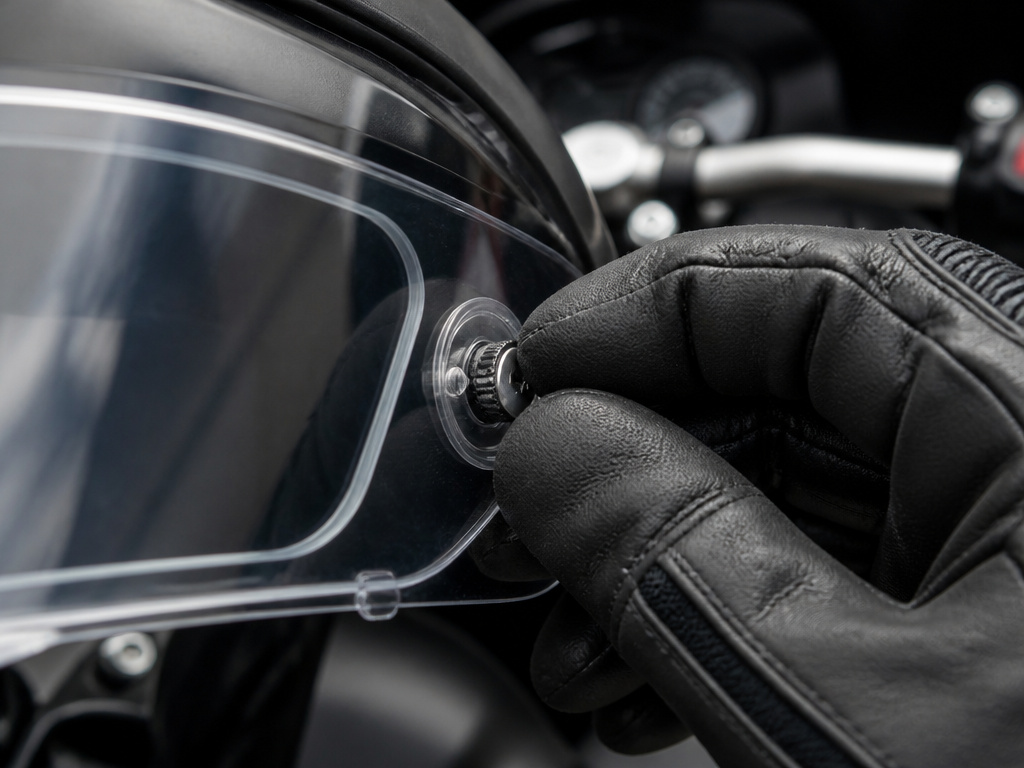
A clear lens can still be a bad lens. A Pinlock insert isn’t a universal upgrade. It has fit, light, and sightline limits.
SHOEI says daytime use only. With a clear shield, the lens transmits approximately 80% light. That value doesn’t meet US VESC-8 85% or Europe ECE R22 80% rules, so SHOEI marks it day-use only.
Don’t use a tinted Pinlock lens with a tinted shield. That’s a simple rule, and it matters at dusk, in tunnels, and in bad weather.
For CX-1, CX-1V, CJ-2, CJ-2SP, and C-49, SHOEI says the silicone seal may obstruct vision in some riding positions. With the lens installed, vision may be distorted, and reflections from headlights or street lighting may obstruct the rider.
The visor was technically fitted. Technically.
| Problem | Likely cause | Fix |
|---|---|---|
| Fog at the lens edge | silicone seal gap | remove, dry, reseat, check in natural light |
| Lens feels loose | lens shrinkage or pin tension | turn pins in 45 degree steps toward the helmet |
| Water between lens and shield | rain pressure or open shield | close the shield, remove lens, dry both |
| Silicone sticks to shield | lens left installed too long | remove the lens regularly and clean gently |
If fog still starts near the nose, check what a breath deflector is before blaming the insert. If the shield itself is deformed, a replacement may be needed; a list of best helmet visors can help you find a replacement shield that fits your helmet model.
Check the seal.
How Do You Clean and Store a Pinlock Insert?
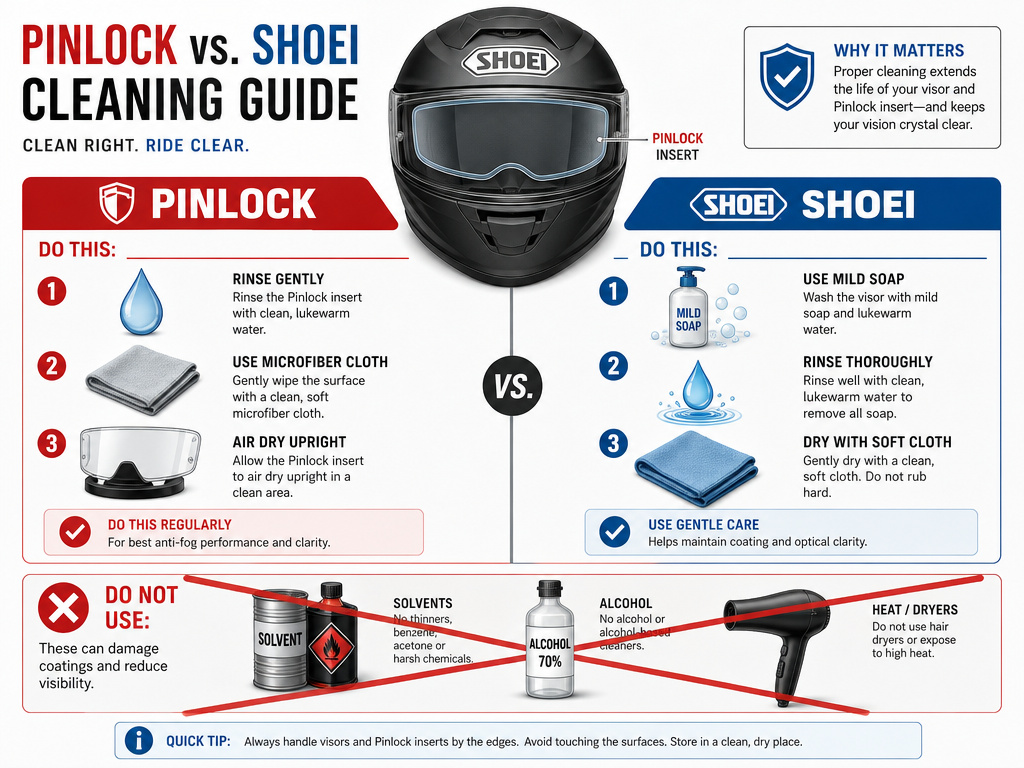
The lens scratches easier than the shield. Cleaning is where owners make the insert scratch itself.
Cleaning: Pinlock vs SHOEI
Pinlock’s support page says rinse the lens and visor with only mineral water, then use a clean, wet microfiber cloth for stains, while SHOEI’s manual says remove the lens and clean it with mild neutral soap and water.
- Pinlock: mineral water rinse, wet microfiber cloth, dry naturally in an upright position.
- SHOEI: mild neutral soap and water, rinse with clean water, wipe with a soft cloth, air dry.
- Both: don’t use benzine, thinner, gasoline, alcohol, or other organic solvents. Don’t dry with a hair dryer or fire.
If you use visor cleaners, check the label for alcohol or solvent ingredients.
Storage is another split. Pinlock says store the lens in a dark place that is free from moisture and dust, using a soft cloth or plastic bag. SHOEI’s manual gives no storage guidance.
Remove the lens regularly. SHOEI warns the silicone seal may stick to the shield if it stays installed too long.
Replace the lens if it scratches, if anti-fog performance drops, or if a correct seal can’t be obtained. The lens may shrink over time, and the lens adapter shape may deform. I keep a spare clear visor and treat a scratched insert as a defect.
Scratch it, replace it.
Pinlock performance levels explained
Pinlock lenses are made from moisture absorbing material and use a silicone seal to create an insulating air pocket. This core technology is the same across different performance levels. The lens is customized to the shape of the helmet visor and must form a complete seal to function correctly. Over time, the lens material may shrink, which can cause it to come loose and affect performance. The lens should be replaced if its anti-fog performance decreases. Always ensure the silicone seal makes full contact with the visor for any performance level to work as intended.
Frequently Asked Questions
How long does a Pinlock insert last?
There’s no fixed service life in the manuals. Replace it if it scratches, if anti-fog performance drops, or if a correct seal can’t be obtained. The lens may shrink over time, so check the seal regularly.
What is the point of a Pinlock visor?
The point is an air pocket. The moisture-absorbing lens and silicone seal create a thermal barrier between the lens and visor, which stops condensation from forming on the inside.
How much does Pinlock cost?
Can you remove and reuse a Pinlock insert?
Yes. Remove the visor, flex the shield, unhook the lens, and clean it gently. Refit it only after both sides dry. SHOEI says remove the lens regularly so the silicone seal doesn’t stick.
Are Pinlock inserts universal?
No. Each lens is designed for a specific shield shape. Pinlock uses DKS numbers to distinguish lenses, and SHOEI says each lens must match the indicated shield type.
The Bottom Line
The plain answer to what is a pinlock insert for motorcycle visors? It’s a moisture-absorbing lens that only works when the silicone seal is whole.
If edge fog appears, stop trusting the insert and check the seal. That’s the line I use now.
Buy the lens coded for your shield rather than another spray if you ride in damp mornings. Skip a tinted insert with a tinted shield, and don’t use the insert at night.
