
How to Stop Motorcycle Helmet Lift at High Speed: Fit Test
This post contains affiliate links. As an Amazon Associate, we earn from qualifying purchases.
To stop motorcycle helmet lift at high speed, you must solve three problems in order: a helmet that fits your head shape, a chin strap fastened snugly against your throat, and a riding posture that minimizes turbulence. The Bell helmet manual states the strap must be “snug under your chin and against your throat” or the helmet may eject. A Schuberth E2 or C5 Carbon is engineered for “practically no uplift,” but only if the fit is correct first.
Lift happens when air pressure under the chin bar and around the neck roll overpowers the helmet’s grip on your head. That grip comes from the cheek pads, crown liner, and the locked-down chin strap. If any one is weak, air wins. Understanding how to stop motorcycle helmet lift at high speed is therefore key.
What follows is a diagnostic path for the how to stop motorcycle helmet lift at high speed problem. Start with the fit on your head, move to the strap, then to your bike and posture. One of these is the cause.
Key Takeaways
- The chin strap must be uncomfortable to open your mouth. Per the Bell manual, fasten it snug under your chin and back against your throat, checking tension every ride.
- Your skin should move with the helmet liner. If you can shift the helmet without your skin dragging, the fit is too loose for high-speed stability.
- Replace the helmet after any impact, regardless of visible damage. This is an essential rule from Schuberth and Bell manuals; the EPS liner is a single-use safety component.
- Match your head shape to the helmet’s internal shape. An intermediate-oval head in a round-oval shell will rock side-to-side, creating lift points.
- Aerodynamics are a secondary fix. Models like the Schuberth E2 are wind-tunnel tuned for low uplift, but they cannot compensate for a poor fit or loose strap.
The 3-Step Helmet Fit Test
Forget the size chart on the website. Your head is a three-dimensional shape, not a circumference. A helmet that fits right doesn’t just feel snug, it becomes part of your head. The lift you feel is often the first sign that it isn’t.
I still do the helmet shake test. Grip the chin bar and gently rock the helmet side to side. If my skin does not move with the shell, the fit is too loose. It takes ten seconds and has saved me from a lot of bad purchases. That skin-drag is your baseline.
The Bell manual provides two essential tests. Do them in this order with the strap secured.
Step 1: The Cheek Pad Test. Fasten the chin strap so it’s snug with your mouth closed and uncomfortable to open your mouth. Grab the helmet with both hands and try to move it forward, backward, and side to side. The helmet fails if your skin doesn’t move with the liner. This checks the crown fit, the primary grip against lift.
Step 2: The Roll-Off Test. With the strap still snug, grab the helmet at the rear base and try to pull it forward over your face. Then, grab the front and try to roll it rearward off your head. If it comes off in either direction, the helmet does not fit. This tests the shell’s grip on the oval of your head, which is what wind tries to peel upward.
Step 3: The Visual Field Check. The helmet should sit low on the forehead so the top edge is visible in your upper peripheral vision. If you’re looking out the very top of the eye port, the helmet is sitting too high, raising its center of gravity and giving the wind a larger surface to catch underneath.
A helmet is a safety device designed to absorb the effects of only one impact. The helmet must be replaced after a fall, accident or any other impact. . Schuberth C5 Carbon Owner’s Manual
Where this goes sideways: buying a size up for comfort. Padding breaks in over time; a shell that rotates on day one will never get tighter. If you need relief from pressure points, swap the cheek pads, not the helmet size.
Chin Strap: The Overlooked Lock
A loose chin strap is a hinge. At speed, air forces its way into the gap between the strap and your throat, prying the helmet up and back. The strap is the final clamp that seals the bottom of the helmet against lift, not only for keeping the helmet on during a crash.
The Bell manual is blunt: “The helmet chin strap must be securely fastened and snug under your chin and against your throat or the helmet may be more likely to eject in an accident.” It also says to check tension periodically while you ride.
Here’s the deal with routing:
- D-Ring: Thread the strap through both rings, pull it tight until the strap is well back against your throat, and then secure the loose end. The strap should lay flat.
- Ratchet System: Latch the mechanism and click it tight until the same throat-snug fit is achieved. Don’t stop when it’s comfortable.
Common mistake: Wearing the strap over the point of the chin. This creates a pivot point. The strap belongs under the jaw, tight against the soft part of the throat. A chin cup can actually create a leverage point for lift. Bell explicitly says not to use one.
Once I forgot to re-tighten my chin strap after a break. About 30 minutes later I noticed it had loosened, which should never happen to someone who tests helmets for a living. Now I re-check the strap every single time I stop. Vibration and jaw movement can work it loose.
| Strap Issue | Effect at High Speed | The Fix |
|---|---|---|
| Over the chin point | Creates a pivot; helmet rocks back. | Re-route under the jaw, tight against the throat. |
| Too loose | Air inflates the neck roll, lifting the helmet. | Tighten until it’s uncomfortable to open your mouth. |
| Worn or stretched | Gradual loss of clamping force. | Inspect for fraying; replace the strap or the helmet. |
| Improper D-ring routing | Strap can slip under load. | Ensure the tail is secured and doesn’t dangle. |
Head Shape vs. Helmet Shape: The Mismatch That Causes Rocking
If your helmet passes the fit tests but still rocks in the wind, the internal shape is wrong for your skull. This is the most common fit problem riders don’t diagnose. You can have the right circumference but the wrong oval.
Helmets are built for different head shapes; a mismatch between your head shape and the helmet’s internal shape can cause instability.
| Your Head Shape | Best Helmet Shape | Brands to Look At | Lift Risk if Mismatched |
|---|---|---|---|
| Round Oval | Round Oval | HJC (many models), some Bell | High – helmet will rock front-to-back. |
| Intermediate Oval | Intermediate Oval | Shoei, Arai, Schuberth | Low – if size is correct. |
| Long Oval | Long Oval | Bell (many), AGV | High – helmet will rock side-to-side. |
How to find your shape: Get a soft tape measure. Measure your head front-to-back (forehead to occipital bump) and side-to-side (ear-to-ear over the crown). Compare the two numbers. If they’re within a half-inch, you’re likely round or intermediate. If front-to-back is over an inch longer, you’re a long oval.
A long-oval head in an intermediate shell will have pressure on the forehead and back of the head, but space at the temples. That space allows the helmet to rotate around your head’s long axis, which feels like side-to-side lift in a crosswind. The fix is finding a shell that matches your bone structure, not tightening.
Aerodynamics and Bike Setup
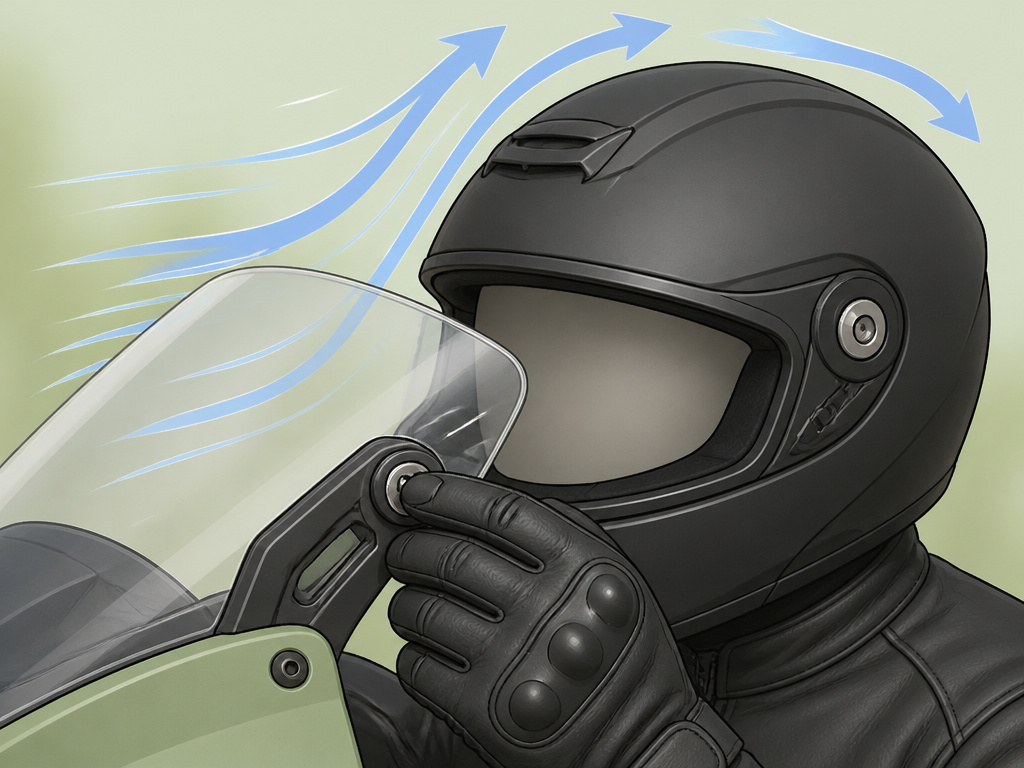
When fit and strap are ruled out, look to the air. Your helmet doesn’t ride in a vacuum; it sits in the turbulent airflow created by your bike’s windshield, fairings, and your body.
Windshield Troubleshooting:
- Too Low: Wind hits you mid-chest and flows upward, directly under your chin bar and into the helmet.
- Too High: The top edge creates buffeting, a rapid, pulsing shake that can feel like lift. This is different from steady uplift.
- Solution: Adjusting your windshield can help manage airflow around you and your helmet. Adjust height or try a windshield with a recurve (flip) at the top to push turbulence up and over.
The part nobody mentions: Your body position changes everything. Sitting bolt upright on a cruiser creates a giant wall for the wind to push against. Tucking slightly, even on a standard bike, streamlines your profile and can reduce lift.
Some helmets are simply better in the wind. The Schuberth E2 and C5 Carbon manuals note their designs produce “practically no uplift even at speed,” a claim born from wind-tunnel development. The 130R Katsura v2 is certified to the stringent ECE 22.06 standard, which includes aerodynamic stability testing. If you’ve fixed everything else and still fight lift, your helmet’s shape may be the culprit. Consider a model known for high-speed stability, like those on our list of the best helmets for wind noise.
Riding on the highway or in strong wind exaggerates any small fit flaw, making the how to stop motorcycle helmet lift at high speed question urgent. What’s manageable at 45 mph becomes dangerous at 75.
When to Replace, Not Repair
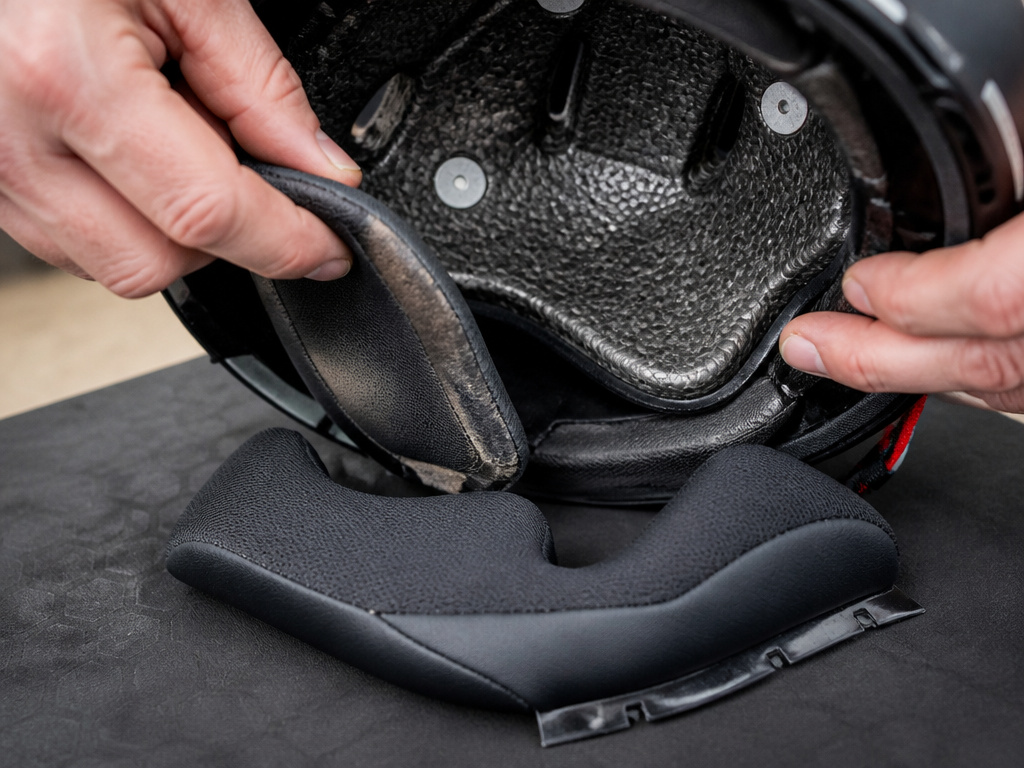
Not every lift problem has a fix you can apply. Sometimes the gear itself has failed.
Replace the helmet immediately after any impact. This is a direct command from the manuals of Schuberth, Bell, and SHOEI, not a suggestion. The expanded polystyrene (EPS) liner inside is a single-use component. It crushes to absorb energy, and even a drop onto a hard surface from handlebar height can compromise its structure without leaving a visible mark. A weakened liner loses its grip on your head.
Replace worn-out padding. Cheek and crown pads compress over time. A helmet that fit perfectly two years ago might now be loose. Most major brands sell replacement padding kits in different thicknesses. This is a cheap way to restore a proper fit and combat lift.
Sweat, UV exposure, and temperature cycles degrade materials. If your helmet is over five years old and developing lift it never had, age is a likely factor.
Before you start: Never modify the helmet shell. Drilling, cutting, or rigidly attaching anything (like a camera mount) is explicitly warned against by Bell. It can concentrate impact forces and alter aerodynamics, making lift worse or creating a safety hazard.
How to stop a half-helmet from lifting at high speed
Half-helmets are fundamentally more prone to lift because they lack the full shell coverage that helps manage airflow. With no chin bar or full rear section to anchor the design, wind can easily get underneath the front brim and try to pry it off your head. The only real countermeasures are a perfect fit and a very secure strap. The chin strap must be fastened snugly under your chin and against your throat. Check it periodically while you ride. If the helmet can shift on your head during a simple shake test, it will lift at speed. For high-speed riding, a helmet designed for minimal aerodynamic uplift from the start is a safer choice.
Frequently Asked Questions
What is the 2-2-2 rule for helmets?
Proper helmet fit should be snug; padding will break in over time, but the shell shape will not change. This rule emphasizes that padding breaks in, but shell shape does not.
What’s the difference between lift and buffeting?
Lift is a steady, upward pulling sensation, like the helmet wants to fly off your head. Buffeting is a rapid, violent shaking or pounding caused by turbulent air hitting the helmet. Lift is often a fit issue; buffeting is usually a windshield or aerodynamic issue. Our guide on how to stop helmet buffeting covers the latter in detail.
Can a helmet be too tight?
Yes, and it’s dangerous. A helmet that causes headache, numbness, or intense pressure points is the wrong shape or size. This can distract you, cause pain, and won’t “break in” properly. Pressure points are a different issue from overall snugness and may require adjusting or replacing padding.
How do I know if my helmet is too big?
Signs include being able to rotate the helmet easily on your head (failing the skin-drag test), excessive wind noise, the helmet sliding forward over your eyes when you look down, or general instability that feels like lift. We have a full diagnostic list for a helmet that’s too big.
Can a neck brace or collar help?
Wind-deflecting collar (like a fleece neck gaiter or a dedicated product) can smooth airflow around your neck and into the helmet, sometimes reducing lift. However, it’s a band-aid. If you need a collar to stop lift, your helmet fit or strap tension is not correct. It can also contribute to neck strain if it forces your head into an awkward position.
Before You Go
Start with the strap. It’s the fastest, free fix. Tighten it until it’s genuinely uncomfortable to open your jaw, and make sure it’s routed against your throat, not over the chin. Ninety percent of the “lift” complaints I hear vanish with that one adjustment.
If the strap is right and lift remains, your helmet doesn’t fit. Not “it’s the wrong size”, it’s the wrong shape for your head. No amount of padding swaps will turn an intermediate-oval shell into a long-oval one. That’s when you replace the helmet.
Finally, trust the manual over any forum advice. Manufacturers disagree on replacement intervals: Bell recommends replacement every 3–5 years, while Schuberth suggests 5 to 7 years. Your helmet is the only thing between your skull and the pavement. Fit first, features second.
