
What Is JASO MA Motorcycle Oil Rating?
This post contains affiliate links. As an Amazon Associate, we earn from qualifying purchases.
JASO MA is a performance classification for 4-stroke motorcycle engine oils, defined by the JASO T 903 standard. It certifies that an oil has specific friction properties to prevent clutch slippage in motorcycles with wet clutch systems. For a rating of MA, the oil’s three friction indices must meet the specified ranges: Dynamic Friction Index (DFI) ≥1.30 and <2.60, Static Friction Index (SFI) ≥1.45 and <2.60, and Stop Time Index (STI) ≥1.50 and <2.65.
The rating exists because motorcycle engines share oil with the gearbox and clutch, unlike cars. Car oils often contain friction modifiers for fuel economy that can cause a motorcycle’s wet clutch to slip. A key question for riders is what is JASO MA motorcycle oil rating, as it is the baseline requirement for nearly all modern street bikes and ATVs. Choosing the wrong oil is a quick path to a slipping clutch and a costly repair.
What follows is the full breakdown: the three specific tests behind the rating, the official numbers, where the sources you trust actually disagree, and the one rule that matters when you’re standing in the aisle with a bottle in your hand.
Key Takeaways
- The JASO MA rating is mandatory for wet-clutch motorcycles; using car oil or JASO MB oil risks clutch slippage.
- The standard measures three friction indices: Dynamic (DFI), Static (SFI), and Stop Time (STI), each with a minimum value the oil must meet or exceed.
- Oils are self-certified by suppliers; the JASO panel assumes no liability for performance, placing the onus on the brand you buy.
- For most riders, any JASO MA oil that meets your manual’s viscosity is correct; chasing MA2 over MA is rarely necessary for street use.
- Always prioritize the JASO specification over whether the oil is synthetic or conventional; the right friction matters more than the base stock.
What Does JASO MA Actually Measure?
The JASO T 903 standard doesn’t just check if an oil is slippery or sticky; it provides the technical answer to what is jaso ma motorcycle oil rating. It runs the oil through a specific clutch friction test (JASO T 903:2023 Annex A) and spits out three numbers. These numbers predict how the oil will behave between your clutch plates.
The JASO T 903:2023 standard defines three friction indices for classification: Dynamic Friction Index (DFI), Static Friction Index (SFI), and Stop Time Index (STI). For an oil to be classified as JASO MA, the DFI must be ≥1.30, the SFI must be ≥1.45, and the STI must be ≥1.50.
If any one of these indices falls below its respective minimum, the oil fails the MA classification. It’s a pass/fail gate for clutch safety.
The Three Friction Indices Explained
Think of these indices as a report card on how the clutch engages, holds, and releases.
Dynamic Friction Index (DFI): Clutch Feel
This measures friction during the engagement phase, when you’re letting the clutch lever out. A low DFI means the clutch slips too much during engagement, robbing power and generating heat. A very high DFI makes the clutch grab abruptly, which can stall the bike or make smooth starts difficult. The MA standard sets a floor to prevent excessive slip.
Static Friction Index (SFI): Holding Power
Once the clutch is fully engaged, the SFI measures its ability to hold under load without slipping. This is the “hill climb” or “hard acceleration” number. An oil with insufficient static friction will let the clutch slip under high torque, a condition you’ll feel as a rise in RPMs without a corresponding increase in speed. It’s destructive and happens fast.
Stop Time Index (STI): Engagement Speed
This index measures how quickly the clutch plates lock up after engagement begins. A slower stop time can contribute to a vague, mushy clutch feel and increased clutch wear during aggressive shifts. The STI minimum ensures a reasonably decisive engagement.
The Official JASO MA Specifications (And Where They Disagree)
Here’s where it gets real. The official JASO manual provides the definitive ranges. But major technical sources and manufacturers sometimes publish slightly different numbers. This isn’t a mistake, it’s a reflection of test variances and interpretation. You need to know both.
According to the primary JASO T 903:2023 document, the friction index ranges for MA classification are:
| Friction Index | JASO MA Requirement (Official) | What It Means |
|---|---|---|
| Dynamic Friction (DFI) | ≥1.30 and <2.60 | Prevents slip during clutch engagement. |
| Static Friction (SFI) | ≥1.45 and <2.60 | Ensures clutch holds under load. |
| Stop Time (STI) | ≥1.50 and <2.65 | Governs speed of clutch lock-up. |
The standard also sets strict physicochemical limits any MA oil must meet:
- Sulfated Ash: ≤1.2 mass%
- Phosphorus Content: 0.08–0.10 mass% (tightened from 0.08–0.12% in 2019)
- Evaporative Loss: ≤15 mass%
- High-Temperature High-Shear Viscosity: ≥2.9 mPa·s
These limits protect your catalytic converter, control oil consumption, and ensure the oil maintains its protective film under the shear forces of a gearbox.
Where this goes sideways: Different authorities cite different numbers. The official JASO T 903:2023 standard requires MA DFI to be ≥1.30 and <2.60, while Lubrizol, an additive industry leader, lists the MA DFI requirement as ≥1.35 and ≤2.50. Suzuki’s guide shows MA1 and MA2 sub-ranges that don’t perfectly align with the official combined MA band. This is why checking your owner’s manual is non-negotiable, it tells you which interpretation your manufacturer stands behind.
JASO MA vs. MA2 vs. MB: A Clear Comparison
The original standard had just MA and MB. In 2006, MA was split into MA1 and MA2 to give manufacturers and riders more granularity. Here’s how they stack up.
| Classification | Friction Level | Primary Use Case | Key Differentiator |
|---|---|---|---|
| JASO MA | Standard/High | All wet-clutch motorcycles & ATVs | The baseline. Must pass all three minimum indices. |
| JASO MA1 | Lower within MA | General street riding, commuting | Offers a smoother, more progressive clutch feel. |
| JASO MA2 | Higher within MA | High-performance, high-torque, racing | Provides a more direct, “grabby” engagement for positive feel under extreme load. |
| JASO MB | Low | Scooters with automatic transmissions (NOT wet clutches) | Formulated for fuel economy; will cause clutch slip in a standard motorcycle. |
The MA1/MA2 Split: What You Actually Need to Know
Suzuki’s documentation provides the clearest window into the sub-classification. It shows MA1 covering the lower part of the MA band and MA2 covering the upper part. For example, Suzuki’s documentation lists MA1 DFI as 1.30–1.85 and MA2 DFI as 1.85–2.50, which represents one manufacturer’s interpretation of the sub-classifications.
The critical detail? Labeling is at the supplier’s discretion. A brand can formulate an oil that falls squarely in the MA2 range but choose to label it simply as “JASO MA.” The standard allows suppliers flexibility in labeling. Conversely, according to some interpretations, if an oil’s results are mixed, some in MA1 range, some in MA2, it may be labeled simply as MA.
Common mistake: Believing MA2 is always “better” than MA. For a daily rider on a standard bike, an MA2 oil might feel unnecessarily abrupt. The clutch feel from an MA2 fluid in a big V-twin can be fine, but in a lightweight dirt bike, it could be too on/off for technical riding. Choose based on your bike and feel preference, not an assumed hierarchy.
Why Motorcycle Oil is Different: The Wet Clutch
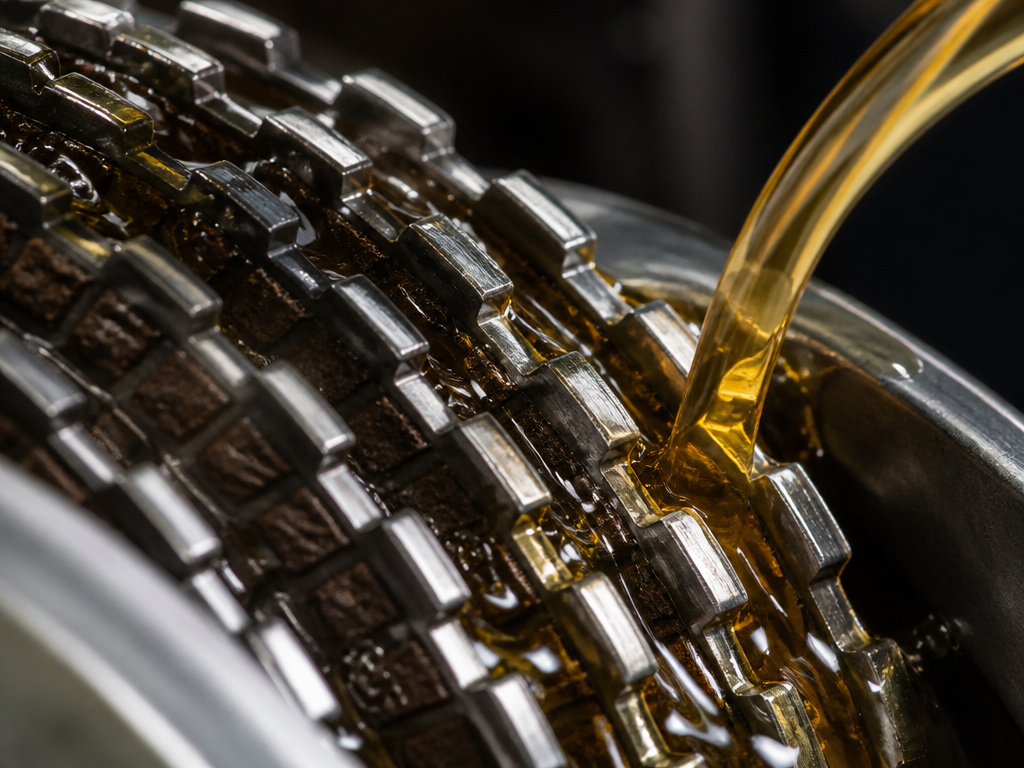
This is the core mechanical reason JASO exists. Most motorcycles use a wet clutch, the clutch pack is bathed in the same engine oil that lubricates the crankshaft and transmission.
Car oils are designed for one job: lubricating an engine. To improve fuel economy, they often contain friction modifiers that make surfaces more slippery. In a motorcycle, that slippery additive ends up between your clutch plates, preventing them from gripping properly. The result is clutch slip, which feels like revving without acceleration and creates intense heat that glazes and destroys clutch plates.
A proper motorcycle oil vs car oil is formulated without these clutch-hostile friction modifiers. The JASO MA test is the proof it won’t harm your wet clutch.
The One Test That Matters
The clutch friction test, detailed in the standard’s Annex A, is the arbiter. Manufacturers test their oil with specific friction plates and steel plates against controlled reference oils. The resulting DFI, SFI, and STI values are what get submitted for classification.
How to Choose the Right JASO Oil for Your Motorcycle

Throw out the hype. Your selection process should be methodical, not mystical.
- Read Your Owner’s Manual. This is the first and last step. It will specify the required oil viscosity (e.g., 10W-40) and the JASO classification (almost always MA or MA2). This overrides any blog, forum post, or well-meaning friend’s advice.
- Match the Viscosity First. Your manual’s viscosity grade is critical for proper flow and protection. Understanding oil viscosity grades is a separate but equally important check.
- Match the JASO Classification. If your manual says “JASO MA,” any oil with that marking is technically correct. You can use MA1 or MA2 if specified or if you’re tuning clutch feel. If it says “MA2,” do not use a plain MA oil.
- Ignore the MB Rating. Unless you ride a scooter with an automatic transmission (and your manual explicitly calls for it), MB oil has no place in your garage. Suzuki states that as of 2011, MB oil is not specified for any Suzuki motorcycle or ATV model.
Synthetic vs. Conventional?
This is a secondary concern. Once you’ve satisfied the JASO and viscosity requirements, you can choose between synthetic vs conventional oil. Synthetic generally offers better stability and longevity, but the correct friction rating is far more important than the base stock.
The Fine Print: Self-Certification and Liability
Here’s the part that changes how you should view that JASO logo on the bottle.
The JASO system is one of supplier self-declaration. A brand tests its own oil (or has it tested) and submits the data to the JASO panel for filing. The panel checks the paperwork, not the oil.
The JASO T 903 implementation manual is brutally clear: “The Panel will not assume any responsibility for quality or performance of four-cycle oils on the file.” All liability rests with the submitting supplier.
What This Means for You
The JASO MA logo is a claim, not a government-enforced guarantee. It means the brand is stating, on its own responsibility, that the oil meets the standard. This is why buying from reputable brands with a track record in motorcycling matters. A no-name oil with a JASO MA stamp might be perfectly fine, or it might be a paperwork exercise. The risk is yours.
The part nobody mentions: This self-certification model is why friction index numbers can vary between sources. Lubrizol might publish its own testing thresholds, and a manufacturer like Suzuki might interpret the ranges for its customers. The official JASO document is the rulebook, but the players can have their own playbooks.
When did JASO MA and MA2 ratings start?
The JASO MA standard for motorcycle oils was introduced to address the specific needs of wet clutch systems. In a 2006 revision of the standard, the MA grade was formally divided into two sub-classifications: MA1 and MA2. However, the standard allows oil suppliers to choose whether to label their product with the base MA classification or the more specific MA1 or MA2 designation on the container.
Frequently Asked Questions
Which oils are JASO MA approved?
There is no single public “approved” list. Brands self-certify their oils and use the JASO MA logo on qualifying containers. Reputable motorcycle-specific oils from brands like Motul, Castrol Power1, Liqui Moly, and Shell Advance are reliable sources. For specific recommendations, see our guide to the best motorcycle oil.
Is JASO MA or MA2 better?
“Better” depends on your bike and preference. MA2 oils have higher friction indices, leading to a more direct, positive clutch engagement. This can be desirable for high-performance or high-torque applications. For most street riding and commuting, a standard JASO MA or MA1 oil provides a smoother, more progressive feel and is perfectly adequate. Your owner’s manual is the final authority.
Can I use JASO MA oil in my car?
You can, but it’s not optimal and may be illegal. JASO MA oils lack the friction modifiers used in modern car oils to meet fuel economy standards. Using MA oil in a car could slightly reduce fuel efficiency. More importantly, car oils must meet API service categories (like API SP) for emission system protection; a JASO MA oil may not have the necessary chemical limits for your car’s catalytic converter. Stick to the oil specified for each vehicle.
What happens if I use the wrong oil?
Using car oil or JASO MB oil in a wet-clutch motorcycle can cause clutch slippage. You’ll notice the engine RPMs climbing without a corresponding increase in speed, especially under acceleration or load. This slip generates extreme heat, quickly glazing and destroying your clutch plates. The repair involves splitting the engine cases, a labor-intensive and expensive job. Using the correct oil for 4-strokes is a cheap insurance policy.
The Bottom Line
The JASO MA rating isn’t marketing. It’s a targeted specification that solves a specific mechanical problem: keeping your wet clutch from slipping. The system has wrinkles, self-certification, slightly conflicting numbers from trusted sources, but the central directive is solid.
Your move is simple. Open your manual, note the viscosity and JASO requirement (it’s almost certainly MA), and buy an oil that meets both. Change it on the recommended oil change intervals. The billions spent on synthetic technology matter less than getting those two specs right. Everything beyond that is tuning for feel, not ensuring function.
Trust the standard, verify with your manual, and ignore the noise. Your clutch will thank you.
