
10 Best 4 Stroke Motorcycle Oil in 2026
This post contains affiliate links. As an Amazon Associate, we earn from qualifying purchases.
The best overall 4-stroke motorcycle oil is Valvoline 4-Stroke Full Synthetic Motorcycle Oil, offering proven wet clutch protection for mainstream Japanese motorcycles. Our picks also include Motul 7100 4T for premium synthetic performance and Castrol Actevo 4T for excellent value from a synthetic blend. Choosing the correct oil safeguards your engine, transmission, and wet clutch system from wear and overheating. This guide is based on a review of specifications, manufacturer data, expert insights, and patterns in owner feedback to help you select confidently.
Top 10 4-Stroke Motorcycle Oils in the Market
Certain content that appears on this site comes from Amazon. This content is provided "as is" and is subject to change or removal at any time.
The Best 4-Stroke Motorcycle Oils, Reviewed
Valvoline 4-Stroke Full Synthetic Motorcycle Oil

What We Like
- Up to 10X better friction protection per JASO standard
- Exceptional wet clutch protection prevents slippage
- Enhanced protection against deposits and sludge
- Meets requirements for major Japanese motorcycle brands
Trade-offs
- Single-quart size requires multiple purchases for larger sumps
Reformulated with advanced additives that promise up to ten times better friction protection than the JASO benchmark, this oil is engineered to maximize horsepower and fuel efficiency while extending its service life. The full synthetic base and JASO MA-2 certification deliver exceptional wet clutch compatibility, ensuring smooth, positive shifts for riders of popular street bikes from Honda, Yamaha, Kawasaki, and Suzuki. It strikes a balanced profile for everyday riders who want comprehensive engine protection without stepping into the premium racing oil category.
Valvoline’s formulation provides up to 10 times better friction protection and up to five times better wear protection versus industry standards, which translates to strong defense for engine internals under demanding riding conditions. Its premium full synthetic base and advanced additives are engineered to maximize horsepower, acceleration, and fuel efficiency. The oil also meets or exceeds the JASO MA-2 and API SL specifications required by major brands like Honda, Yamaha, Kawasaki, and Suzuki.
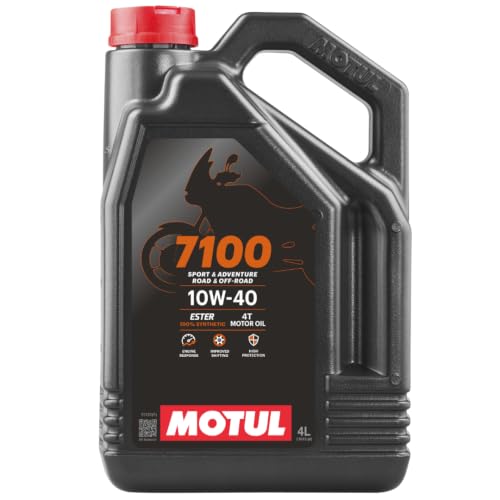
Motul 7100 4T Full Synthetic Motorcycle Oil
What We Like
- Ester technology for tenacious metal bonding
- Certified JASO MA2 for smooth wet clutch shifts
- API SP rating protects modern emissions systems
- Maintains viscosity for up to 5,000 km intervals
Trade-offs
- The 4-liter jug is heavy at 7.9 pounds to handle
- Premium ester formula is overkill for simple commuter bikes
Its 100% synthetic ester core forms a molecular bond with engine parts, creating a protective film that resists breaking down under extreme heat and shear. This makes the Motul 7100 4T a standout choice for riders who push their street, sport, or adventure bikes hard, whether that means sustained high RPMs on track days or long, loaded adventure tours. It delivers the precise friction control certified by the latest JASO MA2 standard, which translates directly to smoother, more confident gear shifts in wet-clutch applications.
Motul’s 7100 4T is certified to the latest API SP and JASO MA2 standards. This makes it fully compatible with modern emission-controlled engines and provides the precise friction needed for smooth, confident gear shifts with a wet clutch. The oil comes in a 4-liter jug, which is less convenient for riders who prefer small-quantity top-ups. Within Motul’s own lineup, this product sits just below the 300V Factory Line Racing Oil.
Castrol Power1 4T Full Synthetic Motorcycle Oil

What We Like
- Trizone tech protects engine, clutch, and gearbox
- Excellent shear stability prevents viscosity breakdown
- Formulated for extreme high-temperature performance
- Race-derived technology for maximum acceleration
Trade-offs
- Packaged in 1-quart containers, not a bulk jug
- Primarily a 10W-40 option in a multi-viscosity market
The core advantage of this oil is its Trizone technology, a formulation designed to protect the engine, wet clutch, and gearbox with a single fluid. This makes it a straightforward, comprehensive choice for riders who want to eliminate the guesswork from maintenance, especially on high-performance machines where clutch protection is critical. It’s built for demanding conditions, with excellent shear stability to maintain its protective film under hard acceleration and in both air- and water-cooled engines.
Castrol Power1 4T is formulated with Trizone technology to protect the engine, clutch, and gearbox, which means it’s designed as a single oil for the entire powertrain in a conventional motorcycle. It comes in one-quart bottles, convenient for precise topping off, though a full oil change on most bikes will require several containers. This oil exceeds the API SL and JASO MA-2 specifications, meeting key industry standards for protection and wet clutch compatibility.
Honda Pro Honda GN4 Motor Oil

What We Like
- Formulated specifically for motorcycle engine requirements.
- Enhanced shear-resistance for sustained protection.
- Maintains viscosity stability under engine stress.
- Promotes engine cleanliness for long-term performance.
Trade-offs
- Only available in a 10W-30 viscosity grade.
- A single gallon size may be less convenient for precise top-ups.
Honda selected the highest-quality base stocks and created additive packages specifically designed for the unique requirements of motorcycle engines. This means GN4 is engineered for the high-RPM operation and shared engine and transmission lubrication needs of modern bikes.
The trade-off is in specialization. This oil is purpose-built for Honda’s specifications, which is a major strength but also means riders with other brands or those seeking a different viscosity, like the 10W-40 found in Motul 7100, will need to look elsewhere. For pure Honda applications, GN4 delivers targeted protection with excellent shear-resistance and viscosity stability, handling the distinct stresses of a motorcycle powertrain reliably over the long haul.
Yamaha Yamalube Full Synthetic Engine Oil

What We Like
- Full synthetic formula for superior durability
- Excellent thermal stability under demanding conditions
- Certified for high-performance engine parts compatibility
- Engineered for both on-road and off-road protection
Trade-offs
- One-gallon jug is bulky for small top-ups
- JASO MA spec, not the newer MA2 standard
Certification to JASO MA and API SL standards ensures compatibility with modern motorcycle wet clutches and high-performance engine parts, providing reliable protection. The advanced formulation offers excellent thermal stability, maintaining protective qualities in both stop-and-go traffic and demanding off-road operation. This makes it a suitable choice for riders using a single oil across varied on-road and off-road applications.
The one-gallon container is larger than the quart bottles offered by brands like Valvoline. Its JASO MA certification differs from the JASO MA2 specification listed for products like Motul 7100 4T. For riders seeking full synthetic protection aligned with Yamaha specifications for mixed-use applications, this formulation meets those stated requirements.
Product photos
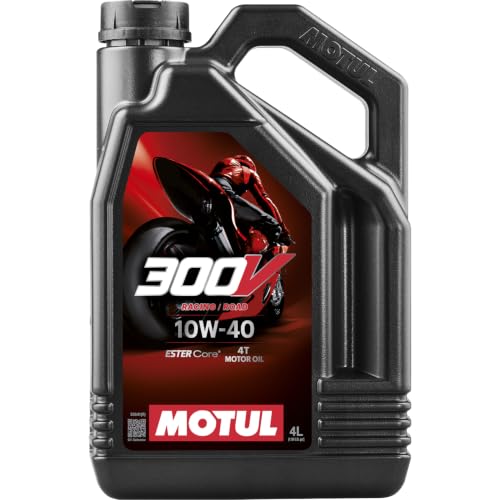
Motul 300V Factory Line Racing Oil
What We Like
- ESTER Core® reduces friction for increased power
- Provides exceptional shear stability at high RPMs
- Engineered for smooth, precise gear changes
- Protects at extreme track and street temperatures
Trade-offs
- Premium racing formula is overkill for basic commuting
- Weight of 5.3 pounds requires more storage space
Motul’s ESTER Core® Technology creates a molecular bond with engine metal, which directly translates to a noticeable reduction in internal friction and a freer-revving engine. This is the oil for riders who chase every last bit of horsepower and throttle response, whether on a track day or during a spirited canyon run. It’s a race-proven, 100% synthetic formulation that delivers the oil film strength and thermal protection modern high-performance engines demand when pushed to their limits.
This level of performance is specialized. For a high-revving sportbike that sees regular track use, the 300V Factory Line is a premier choice. However, Motul’s own 7100 4T full synthetic offers advanced ester technology in a more street-focused formulation for riders whose high-performance motorcycle lives primarily on the street. It often comes at a more accessible price point without the pure-racing pedigree.
Liqui Moly Motorbike 4T Synth Street Race Oil

What We Like
- JASO MA2 rating for wet clutch compatibility
- High shear stability for wear protection
- Approved for use with catalytic converters
- 4-liter container suits larger oil capacities
Trade-offs
- Its 5W-40 viscosity is a less common choice than 10W-40.
- The 4-liter size is bulkier than single quarts for topping off.
The JASO MA2 specification makes this oil a safe choice for motorcycles with integrated wet clutches, preventing the slippage that can happen with incorrect lubricants. Its high shear stability provides durable protection for engines under hard use, while the 5W-40 grade offers good cold-start flow and high-temperature performance. This combination is ideal for sport-oriented street riders who demand clutch safety alongside strong engine protection.
Liqui Moly’s 5W-40 oil carries the JASO MA2 approval, which means it is specifically designed to operate safely with a motorcycle’s wet clutch system. This formulation provides optimal lubrication in all operating conditions and ensures low oil consumption. Its very high shear and ageing stability offers the highest levels of wear protection for sustained performance.
Castrol Actevo 4T Synthetic Blend Motorcycle Oil

What We Like
- Trizone technology protects engine, clutch, and gearbox.
- APM molecules cling to components for enhanced lubrication.
- Provides protection before engine reaches typical wear temperature.
- Offers excellent wear protection for varied riding conditions.
Trade-offs
- Synthetic blend formulation, not a full synthetic.
- Exceeds API SG, an older specification standard.
Castrol Actevo 4T uses Trizone technology to protect the engine, clutch, and gearbox in one fill, which simplifies maintenance for riders. Its Active Protection Molecules are designed to cling to engine parts, aiming to guard against wear before the engine warms up to 51°C. This synthetic blend formulation is intended for mixed riding conditions, including long trips and stop-and-go commuting.
The trade-off for its accessible formulation is that it isn’t a full synthetic like the Motul 7100 4T or Castrol’s own Power1 line. Those oils may offer higher performance ceilings under extreme, sustained stress. For the vast majority of street riding, however, Actevo’s specific technology targeting all three critical zones and its protection during the vulnerable warm-up phase delivers confident lubrication. It represents a smart midpoint for riders who want modern oil technology without stepping into the premium synthetic tier.
Product photos
Valvoline 4-Stroke ATV UTV Motor Oil

What We Like
- Formulated for high-revving 4-stroke powersport engines.
- Cleaning agents prevent deposits under severe conditions.
- Viscosity improvers resist film breakdown for maintained performance.
- From a brand with over 150 years of heritage.
Trade-offs
- Only available in a 1-quart container, not bulk gallons.
- Formulation is powersports-specific, not a general motorcycle oil.
A 10W-40 oil engineered specifically for the sudden starts, stops, and high torque loads of ATV and UTV engines makes this a focused choice for off-road recreation. It suits riders who need an oil with cleaning agents for severe conditions and viscosity stabilizers that resist breakdown, all while providing the wet clutch protection crucial for smooth power transfer in powersport transmissions. This targeted formulation is the core reason it stands out for dedicated off-road machine use.
This Valvoline oil is formulated specifically for the severe conditions of ATV and UTV engines, protecting internal parts from the wear of sudden starts and stops. Its cleaning agents prevent deposits, and viscosity improvers resist film breakdown under stress. The formulation also provides superior wet clutch protection for smooth power transfer under high torque and loads.
Product photos
Red Line 20W50 Synthetic Motorcycle Oil

What We Like
- Ester-based formula for superior film strength and ring seal.
- Specifically designed for modern Big-Twin engines like Milwaukee-Eight.
- Friction modifiers compatible with wet-clutch systems.
Trade-offs
- Single-quart container is less convenient for high-capacity oil changes.
- Heavier 20W50 weight is not suitable for all motorcycle engines.
A 20W50 viscosity oil formulated with ester base stocks and 2200 ppm of ZDDP delivers exceptional film strength and antiwear protection, which is exactly what air-cooled Big-Twin engines demand for reliable operation. This makes it a prime choice for riders of Harley-Davidson Milwaukee-Eight, Evolution, and Twin Cam models, as the specific friction modifiers also ensure smooth clutch engagement without slippage. It’s a full-synthetic built for the heat and stress these large motors generate.
Packaging involves individual one-quart bottles. For a bike that might take four or five quarts, that’s several containers to handle and recycle compared to a gallon jug like the Honda Pro Honda GN4. While the Red Line oil is a premium, purpose-built fluid for its target engines, the multi-quart process is a minor hassle during oil change day. It’s a specialized tool that excels at its primary job for big displacement twins.
Product photos
How We Evaluated 4-Stroke Motorcycle Oils
Our evaluation started with manufacturer specifications and technical data sheets to verify each oil’s viscosity grades, additive packages, and compliance with industry standards like JASO MA2 and API SP. We then cross-referenced this with expert round-ups and technical articles discussing what makes a high-performance motorcycle engine oil.
The key criteria were a formula’s compatibility with wet clutches, its shear stability to prevent viscosity breakdown, and its suitability for specific engine types or riding styles. We also noted patterns in long-term owner feedback regarding engine smoothness and clutch feel.
This guide is based on product specifications and general research. It cannot verify performance claims under all possible riding conditions.
What To Look For In 4-Stroke Motorcycle Oils
Motorcycle oil must lubricate the engine, transmission, and wet clutch simultaneously, a job car oil isn’t designed for. The right choice balances viscosity for your climate, a formulation that protects all three zones, and the correct certifications for your bike.
Look for the JASO MA or MA2 certification for wet clutch safety, a viscosity grade matching your manual and climate, and a synthetic or blend formulation that meets your performance and budget needs.
Certification & Wet Clutch Safety
The JASO MA2 certification is critical. It confirms the oil’s friction modifiers are safe for the shared oil bath that lubricates both your engine and clutch plates. Oils without this rating can cause clutch slippage. For older bikes, the JASO MA standard is still suitable. Always check your owner’s manual for the manufacturer’s specified certification, as using the wrong oil can void warranties.
Viscosity & Climate
Viscosity, noted as a grade like 10W-40, indicates how the oil flows. The first number (10W) relates to cold-start performance; a lower number flows better in cold weather. The second number (40) indicates the oil’s thickness at operating temperature. A common multi-grade like 10W-40 works for most temperate climates, while a 20W-50 is often specified for older, air-cooled engines or hotter riding conditions. Your motorcycle’s manual is the definitive source for the correct grade.
Formulation: Synthetic vs. Conventional
Full synthetic oils offer superior protection against high-temperature breakdown and deposit formation, making them ideal for high-performance, high-stress, or extreme-temperature riding. They also typically last longer between changes. Synthetic blends and conventional oils provide reliable protection for standard commuting and moderate use at a more affordable price point. Our guide on synthetic vs conventional motorcycle oil explores these differences in detail.
- Check your oil cap or owner’s manual for the manufacturer’s recommended viscosity.
- Confirm the oil meets or exceeds the JASO standard listed in your manual.
- For severe off-road use, consider oils specifically formulated for 4-stroke dirt bikes.
- Pair your new oil with a high-quality motorcycle oil filter for complete protection.
Always prioritize the viscosity and certification your motorcycle’s manufacturer specifies.
4-Stroke Motorcycle Oils Compared
The following table compares the key specifications and features of our top picks to help you see the differences at a glance.
| Product | Viscosity Grade | Formulation / Oil Type | Container Size |
|---|---|---|---|
| Valvoline 4-Stroke Full Synthetic Motorcycle Oil | 10W-40 | Full synthetic | 1 Quart |
| Motul 7100 4T Full Synthetic Motorcycle Oil | 10W-40 | 100% synthetic ester | 4 liters |
| Castrol Power1 4T Full Synthetic Motorcycle Oil | 10W-40 | Full Synthetic | N/A |
| Honda Pro Honda GN4 Motor Oil | 10W-30 | Motorcycle-specific additive package | 1 Gallon |
| Yamaha Yamalube Full Synthetic Engine Oil | 10W-40 | Full Synthetic | 1 Gallon |
| Motul 300V Factory Line Racing Oil | 10W40 | 100% synthetic racing oil | 4 liters |
| Liqui Moly Motorbike 4T Synth Street Race Oil | 5W-40 | Fully synthetic | 4 liters |
| Castrol Actevo 4T Synthetic Blend Motorcycle Oil | 10W-40 | Synthetic Blend | N/A |
| Valvoline 4-Stroke ATV UTV Motor Oil | 10W-40 | N/A | 1 Quart |
| Red Line 20W50 Synthetic Motorcycle Oil | 20W50 | Synthetic | 1 Quart |
Frequently Asked Questions
What is the best oil for a 4-stroke motorcycle?
The best oil is the one that meets your motorcycle manufacturer’s specifications for viscosity and certification, typically JASO MA or MA2. For most riders of modern Japanese street bikes, a full synthetic 10W-40 with JASO MA2 certification, like our best overall Valvoline pick, offers excellent all-around protection for the engine, transmission, and wet clutch.
Is motorcycle oil different from car oil?
Yes. Motorcycle oil is formulated for a wet clutch system, where the engine, transmission, and clutch share the same oil sump. Car oils often contain friction modifiers that can cause a motorcycle’s clutch to slip. Motorcycle-specific oils also address the higher RPMs and shear forces found in motorcycle engines.
How often should I change my motorcycle oil?
Change intervals vary by motorcycle and use. Consult your owner’s manual for the manufacturer’s recommendation, which is often between several thousand miles for street bikes. Dirt bikes and bikes used for racing or in severe conditions require changes more frequently.
Can I use synthetic oil in an older motorcycle?
Generally, yes, if it meets the correct viscosity and certification. Modern synthetic oils provide excellent protection and can benefit older engines. However, some riders of classic bikes with certain seal materials may prefer conventional oils; checking with a specialist for your specific model is advised.
What does 10W-40 mean?
10W-40 is a multi-grade viscosity rating. The “10W” (W for winter) indicates the oil’s flow at cold temperatures, with lower numbers being better for cold starts. The “40” indicates the oil’s thickness at the engine’s normal operating temperature. This grade is a common recommendation for motorcycles in temperate climates.
The Bottom Line
For most riders on mainstream Japanese motorcycles, Valvoline 4-Stroke Full Synthetic Motorcycle Oil is the best overall choice, delivering certified wet clutch protection and enhanced anti-wear additives. If you’re on a budget, the Castrol Actevo 4T Synthetic Blend offers modern multi-zone protection, while owners of high-performance machines should consider the premium ester-based Motul 7100 4T.
Regardless of your choice, the single most important factor is matching the oil’s viscosity and JASO certification to the requirements in your motorcycle’s owner’s manual. This ensures long-term protection for your engine’s most critical components.
