
Touring Motorcycle Suit Pros and Cons: How to Choose
This post contains affiliate links. As an Amazon Associate, we earn from qualifying purchases.
A touring motorcycle suit is a one-piece or two-piece garment built for long-distance comfort, with waterproofing, extensive ventilation, and armor designed for highway miles. The pros are all-day weather protection and crash safety in a single package; the cons are bulk, limited off-bike mobility, and a price tag that reflects its complexity.
That definition covers the basics, but it misses the trade-offs that decide your purchase. A suit that’s perfect for a rainy coastal tour will bake you in desert heat. A one-piece that slides on in seconds becomes a sauna at a lunch stop. The real choice centers on matching the suit’s compromises to the miles you actually ride, which is the core of any touring motorcycle suit pros and cons list.
What follows: a breakdown grounded in owner’s manuals and long-term reviews of the touring motorcycle suit pros and cons. This section compares one-piece and two-piece suits, textile and leather materials, the climate compromise, and the practical realities of living in one for days on the road.
Key Takeaways
- A one-piece suit is simpler and faster to put on, but a two-piece suit allows you to wear the jacket alone at stops, a major comfort advantage on multi-day tours.
- Textile suits dominate touring for their versatility and integrated waterproofing, but heavy-duty leather still offers superior abrasion resistance if slide protection is your absolute priority.
- Factory waterproofing has limits: the Aerostich Classic Roadcrafter suit’s waterproof integrity is guaranteed for a minimum of an hour to an hour and a half under specific heavy rain/wind/traffic conditions, with primary leakage points at the underarm and leg zips.
- Fit in the riding position, not standing up. With the right fit, you should be able to raise your arms to a 45º angle without tightness in the crotch.
- For hot weather (80°–95°F), open all vents and consider wetting your base layer or packing pockets with ice for 45–90 minutes of evaporative cooling.
One-Piece vs. Two-Piece Suits: Which Wins for Touring?
The Aerostich owner’s manual puts it plainly: the one-piece Roadcrafter is simpler, lighter, and faster to put on. The two-piece version came later because riders asked for it. That request tells you everything.
A one-piece suit is a sealed cocoon. You step in, zip up, and go. There’s no waist gap for wind or water to find. It looks trimmer on the bike. For a daily commuter or a rider who does weekend rides, the one-piece is often the right call. You get dressed, ride, get undressed. The simplicity is the advantage.
But touring includes gas stops, lunch breaks, and walking into a motel office. A one-piece suit turns those simple acts into a production. You either sweat inside it or you take it off entirely, which means finding a place to hang a bulky, damp garment. The Aerostich manual admits this: “walking into a grocery store… Looking like a road-grimed Power Ranger… Takes real guts.”
Where this goes sideways: Choosing a one-piece for a multi-day tour without planning for off-bike time. You’ll either skip breaks or spend 10 minutes suited up and sweating at every stop.
A two-piece suit solves that. You can unzip the jacket and wear it open, or remove it entirely while keeping the pants on. The pants alone are less useful, they tend to sag without suspenders or a belt, but the jacket becomes a normal-ish piece of outerwear. This versatility is why many seasoned tourers lean toward two-piece motorcycle suits.
The compromise? Potential leakage at the waist connection and slightly more bulk from the overlapping layers. Some two-piece suits have a connecting zip that’s truly waterproof; others rely on an inner skirt. Check that detail if you ride in wet climates.
Bottom line: For pure riding efficiency, the one-piece wins. For touring reality, which includes life off the bike, the two-piece is the more practical tool.
Leather vs. Textile for Touring: The Abrasion vs. Weather Trade-Off
This is the classic gear debate. Leather is the gold standard for slide resistance. A cowhide or kangaroo leather suit will out-slide any textile. But traditional leather is hot, heavy, and rarely waterproof without an internal liner that compromises breathability.
Textile suits, made from nylon or polyester like the SPIDI 4Season’s Tenax Nylon 6.6, are the default for modern touring. They’re lighter, often include built-in waterproof membranes, and are covered in vents. They’re designed for the variable weather a tour throws at you.
The real difference lies in construction philosophy. A touring textile suit is a system. The SPIDI 4Season H2Out Suit uses a removable inner liner for waterproofing; the outer shell has massive vents (5″x5.5″ chest vents, an 8″x9″ rear vent). This is smart design. The stretch panels in the knees and elbows add mobility.
Leather suits are slowly adapting. The Aerostich Transit 3.0 uses Corium+®, a leather bonded with a waterproof, breathable membrane. It’s an attempt to give leather year-round usability. Reviewers note it breathes well for leather, but it’s still a heavier, less vented option than a modern textile.
| Material | Best For | Compromise You Accept |
|---|---|---|
| Tour-Focused Textile (e.g., SPIDI 4Season) | Multi-day trips in variable weather; riders who prioritize ventilation and dry comfort. | Less abrasion resistance than premium leather; may not survive multiple high-speed slides. |
| Modern Leather (e.g., Aerostich Transit 3.0) | Riders who want maximum slide protection but also need some weather versatility. | Less ventilation, more weight and break-in time, higher cost. |
| Traditional Racing Leather | Ultimate abrasion protection for aggressive riding. | Zero weather protection, poor heat management, terrible off-bike comfort. |
The Aerostich R-3/R-3 Light suit manual highlights a crucial data point: the suit is designed for only one major impact/abrasion. Aerostich will ‘total’ it and decline repair if the cost of repair exceeds half the replacement cost. This is honest. No garment is infinitely reusable. This applies to both leather and textile; a hard slide changes the material’s structure.
The part nobody mentions: That theoretical friction burn risk in a long textile slide? The Aerostich R-3 manual states, “In actual use no burns have ever [been reported].” Lab tests and real-world outcomes sometimes differ.
When you compare a touring motorcycle suit pros and cons, for most touring, a well-made textile suit is the rational choice. You’re trading a small slice of ultimate slide protection for massive gains in comfort, weather adaptability, and trip enjoyment. If your riding involves canyon carving or you simply want the toughest hide between you and the pavement, a modern leather suit like the Transit 3.0 bridges the gap.
The Climate Compromise: Hot vs. Cold Weather Reality
A touring suit claims to handle all temperatures. In practice, it’s a carefully managed compromise. You don’t get perfect, you get tools to shift the balance.
For Hot Weather (80°–95°F): The Aerostich Classic Roadcrafter manual is a masterclass in heat management. It’s not just “open the vents.” It’s a specific sequence:
- Lower the main zipper to mid-chest.
- Open wrist, underarm, and back vent zippers.
- Snap the leg closures to allow leg zippers to be raised to the knee.
- The back vent should always be partially open if any other vent is open, to release air pressure and prevent ballooning.
The manual goes further: in very hot conditions, wet your clothing underneath for evaporative cooling. Use a squirt bottle while riding. On all-day rides, pack pockets with crushed ice at gas stops. On all-day rides, adding crushed or cubed ice to the suit’s pockets can provide chilling effects that keep you cooler for between 45 and 90 minutes. This is practical survival advice born from long miles.
Common mistake: Opening vents without understanding airflow. If you open wrist zippers but wear gauntlet gloves, you block the intake. The manual notes that gloves without gauntlets let wind enter. It’s a system.
For Cold Weather (30°–60°F): The rule is sealing and layering. Close every zipper, vents, main, wrists. Set all hook-and-loop tabs at ankles, neck, and wrists for a draft-free seal. Dress in layers underneath: thermal underwear, fleece, an electric vest. The suit is 100% windproof; your job is to trap body heat.
The manual warns that the suit’s foam armor may stiffen in the cold. If it becomes unacceptable, you can remove the pads to create room for more insulating layers. Without armor, the suit becomes nearly one full size larger.
| Condition | Primary Goal | Key Action | Manufacturer Tip |
|---|---|---|---|
| Hot (80°–95°F) | Maximize airflow, evaporative cooling. | Open sequenced vents, use back vent as pressure release. | Wet base layer, pack pockets with ice for 45-90 min relief. |
| Cold (30°–60°F) | Seal out wind, trap body heat. | Close all zippers and seals, layer intelligently. | Remove stiffened armor to allow thicker insulating layers. |
The Dainese Mangen Absøluteshell™ Pro jacket represents another approach: its Absøluteshell™ PRO membrane is bonded directly to the fabric, aiming for weatherproofing without a separate liner. This can simplify the system but may limit venting options compared to a shell-and-liner design like the SPIDI’s.
Short version: No suit is magic. Hot weather demands active vent management and sometimes active cooling. Cold weather demands absolute sealing and smart layering. The suit gives you the zippers and seals; you provide the strategy.
Protection Levels and Safety Certifications Decoded
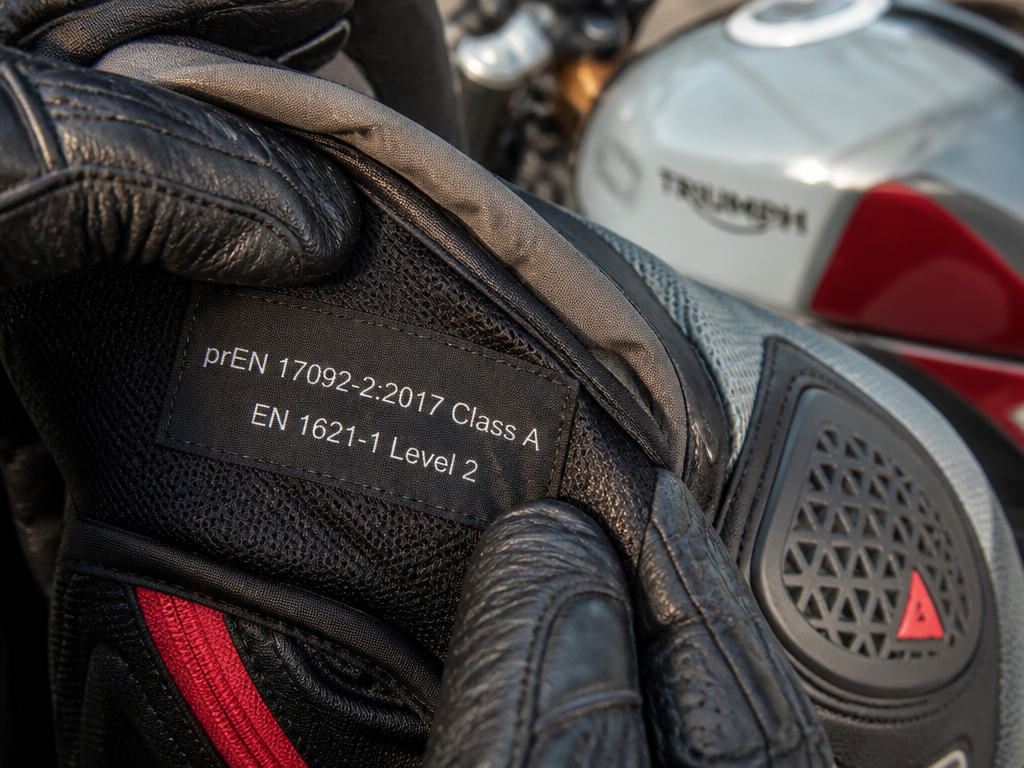
The alphabet soup on a suit’s tag. CE, EN, prEN, is your guarantee of tested performance, not marketing. Ignoring it is like ignoring a helmet’s DOT sticker.
- EN 17092: This is the European standard for motorcycle protective garments. Classes range from AAA (highest) to A (lowest). It tests abrasion resistance, seam strength, and impact protection.
- prEN 17092-2:2017 Class A: This is the specific certification held by the SPIDI Traveler 2 H2Out jacket. The “prEN” indicates it’s a provisional standard, but it’s a rigorous test.
- EN 1621.1 Level 2: This standard is for individual armor (shoulders, elbows, knees, back). Level 2 offers higher impact absorption than Level 1. The Dainese Mangen jacket includes Pro-Armor at this level on elbows and shoulders.
These certifications mean the garment or armor has been slammed into an anvil at a set force and slid across asphalt at a set speed in a lab. They are the baseline. A suit without them is a fashion jacket with pads.
Worth knowing before you start: Opening vents for cooling can shift impact pads in a crash, decreasing their effectiveness. The Aerostich manual includes this warning specifically for wrist zippers. Comfort has a safety trade-off.
The armor itself must stay in place. A proper suit fit is the first defense here. If the suit is baggy, the armor can migrate away from your knees or elbows before an impact. Fit the suit in your riding crouch. When you raise your arms to the horizontal, the body of the suit should move up about 1 1/2 inches without crotch tightness.
Higher-cost suits often include better, more extensive armor. The SPIDI 4Season H2Out Suit pricing is $1,080; adding the back protector brings the effective cost to $1,190. Factor that into your budget, a back protector isn’t optional for serious riding.
Suit Fit, Sizing, and the On/Off-Bike Practicality Gap
A touring suit should fit like durable coveralls, not a tailored shirt. The Aerostich fitting guide is clear: expect roominess in the thighs, seat, and lower trunk when standing. The suit should look and feel best when you’re sitting on the motorcycle.
Sizing between brands is not consistent. The reviewer for the SPIDI 4Season, who normally wears a Large or XL, followed the size chart and needed a 2XL for a perfect fit. This is a critical step: use each brand’s specific chart, and when possible, try before you buy.
The difference between a size Regular and Long in the same suit is about 1 3/4 inches in the torso and 1 1/4 inches in the sleeve. These small increments matter for keeping sleeves over glove cuffs and pants over boot tops at speed.
The practicality gap shows up in daily touring life. A suit is bulky. It doesn’t pack small. If you’re touring with soft luggage, the suit’s volume eats into your space. The two-piece offers a slight advantage here, you can pack the jacket and pants separately, often stuffing one into the other.
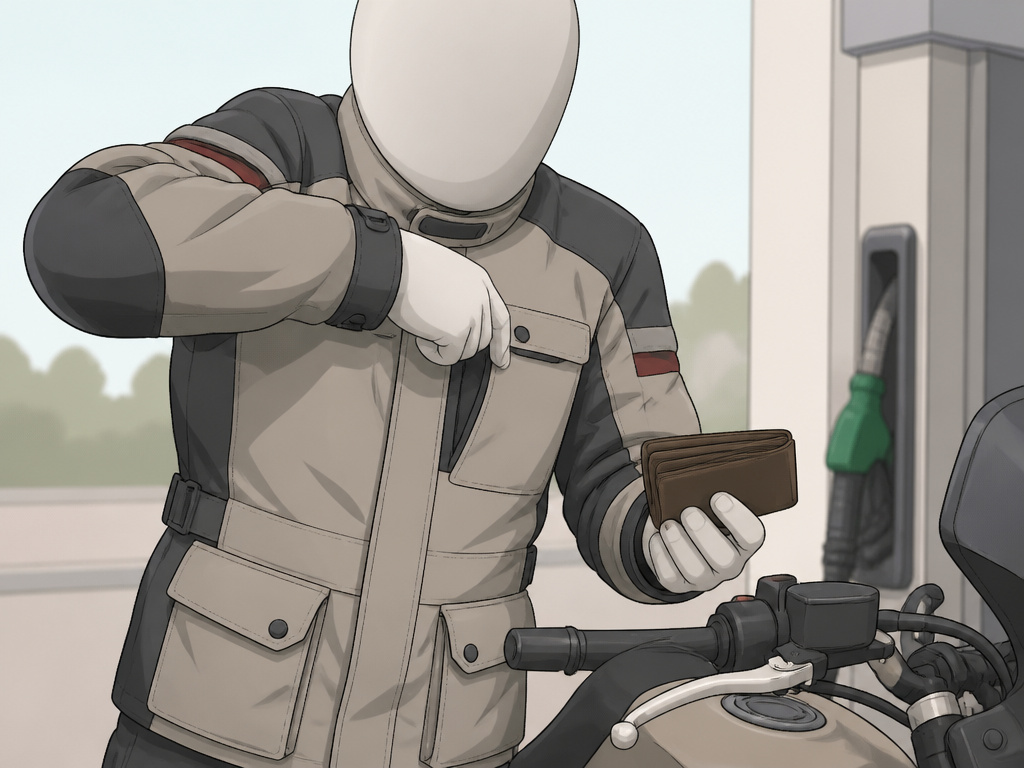
More importantly, consider your stops. Can you get in and out of the suit easily at a gas station? Does it have accessible pockets for your wallet, phone, and motel key without having to unzip the whole suit? The SPIDI 4Season has an edge case here: when its waterproof liner is installed, none of the exterior shell pockets are waterproof. Your phone goes in the liner’s single mesh pocket or a separate bag.
This is the touring suit’s hidden con: it’s a fantastic riding tool that can be a frustrating piece of clothing. The best touring jackets and suits acknowledge this by adding features like pass-through pockets, easy-access phone sleeves, and logical storage.
Durability, Maintenance, and the Long-Term Cost
Touring suits are a significant investment, with prices easily crossing the $1,000 mark. The value proposition is years of service across thousands of miles. That requires maintenance.
Waterproof zippers are a common failure point. The Aerostich guide notes their tolerances are much tighter than non-waterproof zippers. In very hot weather, the plastic waterproof material can become softer and “sticky.” They recommend occasional lubrication with DuPont Teflon Multi-Use Lubricant. Forcing a sticky zipper is a fast way to break it.
The primary leakage points on a well-sealed suit like the Classic Roadcrafter are the underarm zips (1) and leg zips (2). The suit is factory-sealed with over 30 yards of Gore-Seam tape, but zippers are moving parts. Inspect these areas after heavy rain rides.
Abrasion is the other wear factor. The suit’s material is graded. This is intelligent durability. Still, a suit is not armor plate. The Aerostich R-3’s “one major impact” policy is a reminder: this is safety gear, not a permanent shield.
When considering cost, look at the total package. A $1,080 suit that needs a $110 back protector is effectively a $1,190 suit. A suit that includes CE Level 2 armor at all major points (shoulders, elbows, knees, back) is offering more value than one that skimps. Your research into the best motorcycle suits should factor in what’s included versus what’s an extra purchase.
Long-term, a clean, dry storage environment is key. Hang the suit on a broad hanger, don’t cram it into a bag. Let it air out after a wet ride before storage. A well-cared-for textile suit can last for a decade of touring.
Packing, Luggage, and Living Out of a Touring Suit
This is the gap most reviews miss. A touring suit is lived in, and it interacts with everything else you pack.
Bulk: A one-piece or two-piece suit is voluminous. If you’re traveling by motorcycle, you likely can’t wear your entire riding kit on the plane. Packing a suit means dedicating a large portion of a duffel bag to it. Some suits pack down better than others; textiles are generally more compressible than leather.
Pocket Logistics: Your suit becomes your on-bike cargo center. But not all pockets are created equal. Are they accessible while riding? Are they secure? The SPIDI 4Season’s pocket quirk (not waterproof with liner in) is a perfect example. You need a system: wallet and phone in a secure, accessible pocket; maybe a map or snacks in another. Test this before the trip.
Layering and Packing: Since you’ll layer underneath, your base and mid-layers are also part of your packing list. Merino wool or synthetic base layers, a fleece, maybe a lightweight puffy jacket for camp, these all need to fit in your luggage alongside the suit.
The Rest Stop Drill: Efficiency matters. Can you get your wallet out, pay for gas, and stash the receipt without taking the suit off? Can you access a water bottle? The best touring suits have a logical pocket layout that minimizes fumbling. This seems minor until you’re doing it three times a day in the rain.
Easy to miss: The suit’s collar and cuffs. A stiff, high collar can chafe on a long day. Cuffs that are too bulky can interfere with your watch or glove interface.
Your suit is part of a touring ecosystem that includes your bike, your luggage, and your routine. Choose one that fits that system, not just your body.
Specific brand or product recommendations
Product details can highlight key trade-offs in touring gear. The Aerostich Classic Roadcrafter is a benchmark one-piece suit, factory-sealed for waterproofing and offering a guaranteed period of waterproof integrity in heavy conditions. Its primary leakage points are the underarm and leg zips. For hot weather, its manual details a specific ventilation procedure involving multiple zippers, though warns that opening wrist zips can compromise pad placement in a crash. In contrast, the SPIDI 4Season H2Out is a two-piece suit with a removable waterproof liner; when installed, the exterior shell pockets are not waterproof. The Dainese Mangen Absøluteshell™ Pro jacket uses a bonded membrane and is certified to EN 17092 Class AA. The Aerostich R-3/R-3 Light suit is noted as designed for only one major impact.
Frequently Asked Questions
What is the best motorcycle clothing for touring?
For most riders, a two-piece textile suit from a brand like Aerostich, SPIDI, or Dainese offers the best balance of protection, weather versatility, and off-bike practicality. Look for a suit with ample ventilation, a removable waterproof/thermal liner, and CE Level 2 armor at the shoulders, elbows, knees, and back.
Is a motorcycle suit worth it?
For any rider covering serious miles or facing variable weather, yes. A touring suit consolidates your protection (armor, abrasion resistance) and weatherproofing (rain, wind, cold) into one efficient garment. It’s more cost-effective and far more protective than buying a separate jacket, pants, rain suit, and armor system. The convenience alone justifies the cost for frequent tourers.
How should a touring motorcycle suit fit?
It should fit like roomy coveralls, not tight racing leathers. There should be no binding when you are in the riding position. You should be able to raise your arms to a 45º angle. When standing, expect some extra material in the seat and thighs. Always consult the brand’s specific size chart, as sizing is not uniform across the industry.
What is the biggest drawback of a one-piece touring suit?
Off-bike impracticality. While excellent for riding, a one-piece suit is cumbersome to wear during stops. You must either remain fully suited (and often overheated) or completely remove the bulky garment. This makes simple acts like getting lunch or checking into a motel more difficult compared to a two-piece suit where you can remove just the jacket.
Can a touring suit be truly waterproof?
Yes, but with time limits and conditions. High-quality suits use taped seams and waterproof membranes. The Aerostich Classic Roadcrafter manual guarantees waterproof integrity for 60 to 90 minutes in specific heavy rain/wind/traffic conditions. Primary leakage typically occurs at moving parts like the underarm and leg zippers. Regular maintenance of these zippers is essential to maintain performance.
The Bottom Line
A touring motorcycle suit is a tool for a specific job: eating highway miles in comfort and safety. Its pros, integrated protection, weather sealing, and convenience, are compelling. Its cons, bulk, cost, and off-bike awkwardness, are real.
The choice narrows down to your riding style. If your tours are point-to-point with minimal stops, a one-piece suit’s efficiency shines. If your touring includes exploration, frequent stops, and walking around, the modularity of a two-piece suit is worth the slight compromise in seal integrity.
One rule most guides skip: Fit overrules every feature. A $2,000 suit with poor fit is less safe and less comfortable than a $800 suit that fits you perfectly in the riding position. Before you get lost in material debates or vent counts, nail the suit fit. Everything else is a detail.
For the rider who wants one answer and tours in mixed climates: start your search with a two-piece textile suit from the established touring brands. Look at the armor, check the pocket logic, and read the manual for the heat and cold management tips. That manual, more than any marketing page, tells you how the suit was meant to be used.
