
Sport Bike vs Naked Bike: How to Choose
This post contains affiliate links. As an Amazon Associate, we earn from qualifying purchases.
The difference between a sport bike and a naked bike starts with fairings and ends with your spine. A sport bike uses full bodywork for aerodynamics and a forward-leaning riding position for track-focused control. A naked bike strips the fairings for a minimalist look and uses higher handlebars for an upright, street-focused riding position. For most riders who never see a track, a naked bike offers more usable performance and comfort.
That aerodynamic bodywork on a sport bike serves as a functional tool that changes how the bike behaves above 60 mph, directing wind over the rider and creating stability. Take it off, and you expose the mechanical heart of the machine, along with your torso to the full force of the wind.
What follows is a breakdown of the specs that matter in the sport bike vs naked bike question, the sensations you’ll actually feel on the road, and where the marketing hype diverges from daily reality. By the end, you’ll know which category fits the riding you actually do.
Key Takeaways
- Sport bikes demand a committed, forward-leaning posture that loads your wrists and core, while naked bikes offer a neutral, upright position that most find tolerable for an hour or more.
- Wind protection is the single biggest differentiator on the highway. A sport bike’s fairing manages airflow; on a naked bike, your chest becomes the fairing at speeds over 70 mph.
- Engine performance is often shared, but delivery is tuned differently. Many naked bikes use detuned or retuned versions of sport bike engines, prioritizing low-end and mid-range torque over peak top-end horsepower.
- The riding experience is more visceral on a naked bike. You see and hear more of the engine, feel more wind and road feedback, and generally feel more connected to the machine and your surroundings.
- Insurance and maintenance costs are frequently lower for naked bikes, partly due to reduced risk profiles and the lower cost of repairing cosmetic damage (no expensive fairings to replace).
The Core Differences at a Glance
Forget marketing. The choice pivots on three physical elements that you can’t change with a simple accessory: the riding triangle (your body position), the presence or absence of a fairing, and how the chassis is tuned to work with both.
A sport bike prioritizes aerodynamic efficiency and high-speed stability through full fairings and a low, forward-leaning rider triangle (clip-on handlebars, rear-set footpegs, low seat). A naked bike prioritizes rider comfort, maneuverability, and a direct connection to the machine via an upright riding position (high, wide handlebars, neutral footpegs) and minimal or no bodywork.
The table below lays out the direct consequences of these design choices. This concerns which consequences you’re willing to live with.
| Aspect | Sport Bike | Naked Bike |
|---|---|---|
| Primary Design Goal | Ultimate cornering performance & high-speed stability | Accessible street performance & rider comfort |
| Rider Posture | Aggressive forward tuck; weight on wrists, knees bent | Upright or slightly forward; neutral weight distribution |
| Wind Protection | Full fairings manage airflow over rider | Minimal to none; rider experiences full wind blast |
| Best For | Track days, spirited canyon riding, high-speed highway | Commuting, urban riding, backroad fun, shorter tours |
| Typical Ergonomics | Clip-on bars, rear-set footpegs, low seat | Wide handlebars, mid-set footpegs, often lower seat |
| Visual Focus | Sleek, aerodynamic bodywork | Exposed engine, frame, and mechanical components |
The ergonomics tell the real story. On a sport bike like the Suzuki GSX-R1000, the relationship between the 32.5-inch seat, the clip-ons, and the rear-set pegs creates a cockpit. On a naked bike like the Honda CB1000 Hornet SP, the 31.9-inch seat, wide bar, and mid-set pegs create a living room. One is for focused attack runs; the other is for hanging out.
Riding Position & Comfort: Your Wrists vs. Your Back
Ever wondered why sport bike riders are constantly shaking out their hands at stoplights? The riding position is the reason. It’s a trade-off, not a flaw.
Sport bike ergonomics are borrowed directly from the racetrack. The clip-on handlebars are low, often below the top of the triple clamp. The footpegs are set high and to the rear. This positions your body in a tuck, lowering your center of gravity and improving aerodynamics. The downside is that it places significant weight on your wrists and palms, compresses your knees, and can strain your lower back on long rides. It’s a position of control, not comfort.
Naked bike ergonomics are designed for the street. The wide, tall handlebars help you control the bike during low-speed maneuvers. The footpegs are positioned more directly beneath you. This upright posture distributes your weight evenly across your sit bones and feet, freeing your wrists and opening up your hip angle. It’s the posture you’d naturally adopt if you were sitting on a stool, and most riders can maintain it for hours.
Where this goes sideways: Buying a sport bike for a long commute because it “looks fast.” The aggressive posture becomes genuinely painful in stop-and-go traffic, and that exciting sensation fades after the first 30 minutes.
The difference is measurable. On a naked bike, you look over the instrument cluster at the road. On a sport bike, you look through it. That few inches of seat height difference, like the 33.3 inches on a Ducati Streetfighter V4 versus 32.48 inches on a GSX-R1000, belies a massive change in how your body connects to the contact points. Fit beats brochure specs every time.
Highway Riding: The Wind Test
This is the great divider. At city speeds, the wind difference is negligible. Once you hit the highway, it defines the experience.
A sport bike’s fairing is a sophisticated air-management system. It deflects wind over your helmet, around your torso, and creates a pocket of relatively still air you can tuck into. At 80 mph, you can relax your grip. The bike feels planted, stable, and less taxing to ride for distance. The Suzuki GSX-R1000 brochure explicitly links its “aerodynamic bodywork” to its performance.
A naked bike has no such shield. Your body is the fairing. At 70 mph, a steady pressure pushes against your chest. By 90 mph, you’re leaning forward into a constant, fatiguing force. Your helmet catches buffeting that can cause neck strain. It’s a more physically engaging and often exhausting way to travel long distances.
You can add an aftermarket windscreen to a naked bike, but it’s a compromise. A small “flyscreen” mainly deflects wind from your torso to your helmet, which can increase noise. A larger touring screen can help, but it often disrupts the clean, minimalist aesthetic many buyers want. It’s a band-aid, not a factory solution.
Performance & Handling: Spec Sheet vs. Street
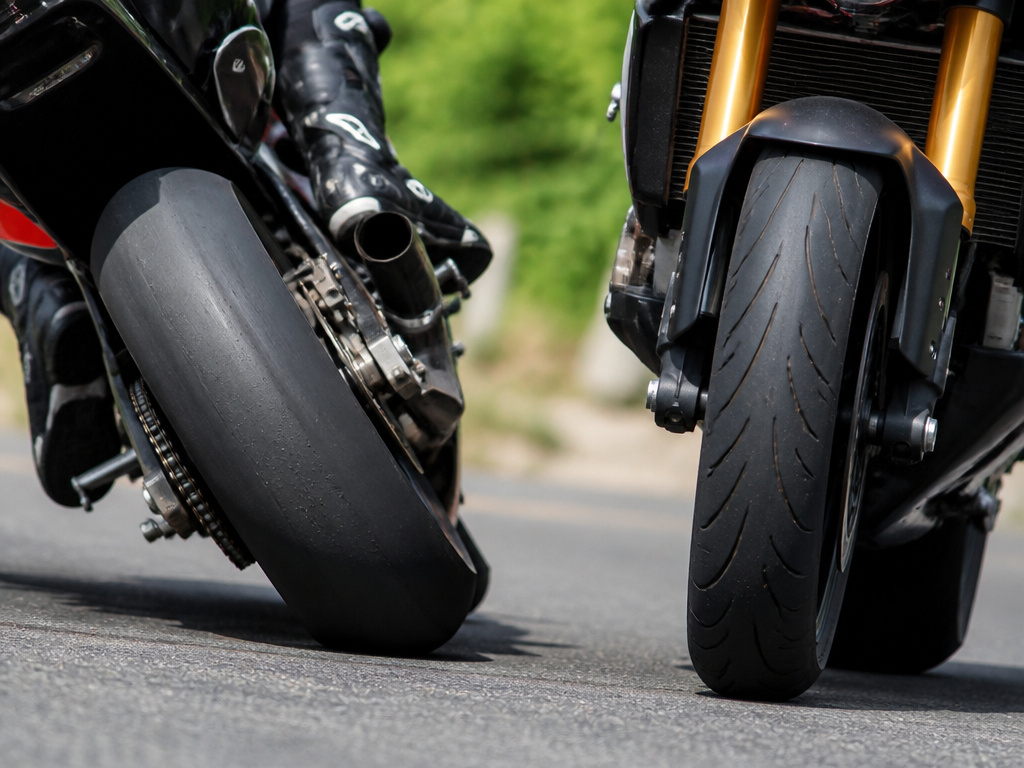
Here’s where the lines blur in confusing ways. The performance gap has narrowed dramatically. You must look past peak horsepower to see the real difference.
Engines: Shared Heritage, Different Personalities
Many naked bikes share their engine architecture with their sport bike siblings. The Honda CB1000 Hornet SP uses a 1000cc inline-four, just like the CBR1000RR. The Suzuki GSX-S1000‘s 999cc engine is, as Suzuki states, “GSX-R-based.” But the tuning diverges for the street.
Sport bike engines are tuned for peak power at high RPM. The Suzuki GSX-R1000’s 13.2:1 compression ratio and 14,500 rpm redline are hallmarks of this focus. The power delivery is often described as “explosive” in the upper rev range.
Naked bike engines are typically retuned for stronger low-end and mid-range torque. The goal is responsive, accessible power where you use it most, between 3,000 and 8,000 rpm. The Honda CB1000 Hornet SP uses a slightly lower 11.7:1 compression ratio, favoring broader usability over ultimate peak numbers. The KTM 790 Duke is marketed as producing “usable power from low RPM” for exactly this reason.
| Model | Displacement | Peak Power | Key Performance Character |
|---|---|---|---|
| Suzuki GSX-R1000 | 999.8cc inline-four | High RPM focus | Top-end “rush,” track-oriented |
| Suzuki GSX-S1000 | 999cc inline-four | Broad torque curve | Strong low/mid-range, street-focused |
| Ducati Streetfighter V4 | 1,103cc V4 | 214 hp @ 13,500 rpm (MY25) / 208 hp @ 13,000 rpm (MY24) | Brutish, high-strung streetfighter |
| KTM 1390 Super Duke R | 1,350cc V-twin | 190 hp, 145 Nm torque | Torque-hungry, immediate thrust |
Handling: Flickable vs. Planted
Sport bikes have a reputation for razor-sharp handling. Their geometry, steeper rake, shorter wheelbase, makes them quick to turn in and eager to change direction. This “flickability” is a joy on a twisting road but can feel nervous or twitchy on rough pavement.
Naked bikes often have slightly more relaxed geometry. The longer wheelbase (like the GSX-S1000’s 57.5 inches) and different weight distribution from the upright bars provide greater stability, especially in a straight line and over bumps. They can feel more planted and forgiving, trading ultimate cornering precision for everyday confidence. The fully adjustable KYB fork on the GSX-S1000 or the Showa SFF-BP fork on the CB1000 Hornet SP are calibrated for this street-biased feel.
Cost of Ownership: Purchase, Insurance, and Maintenance
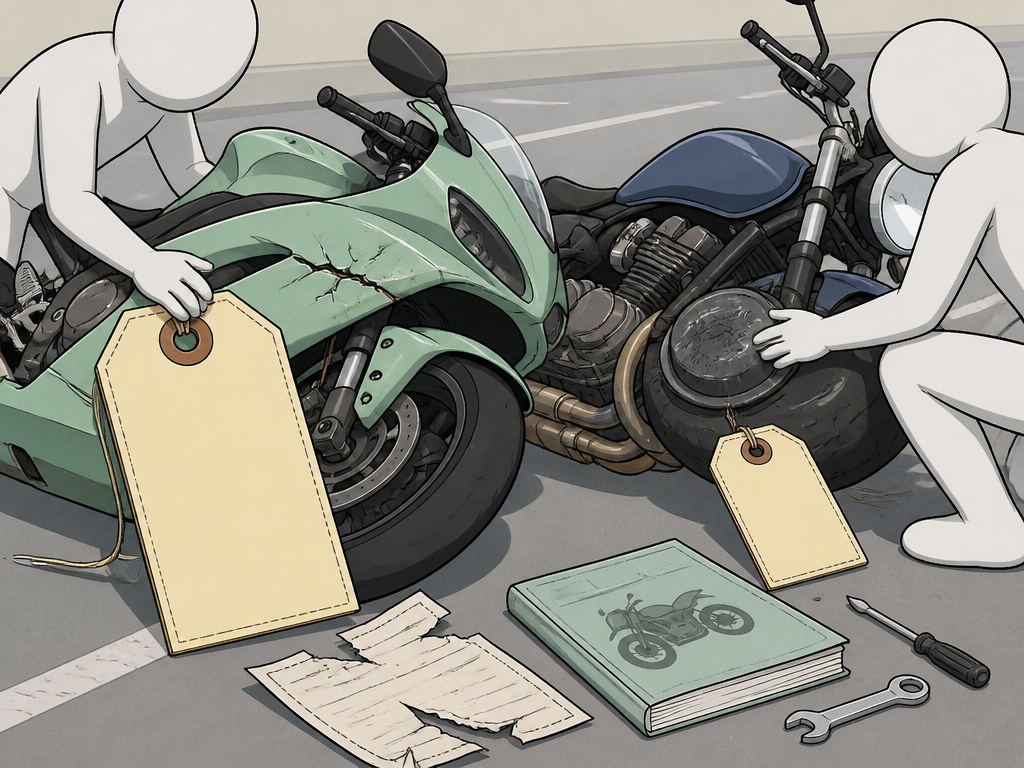
The price tag on the showroom floor is just the first check you’ll write. The long-term costs of owning different types of motorcycles vary significantly between these categories.
Initial Purchase Price
There is no universal rule, but flagship liter-class sport bikes often command a premium. A base Honda CBR1000RR starts notably higher than a Honda CB1000 Hornet SP. However, in the middleweight category, the price difference between a sport bike and a comparable naked bike can be minimal.
Insurance Costs
This is a major, frequently overlooked factor. Insurance companies rate sport bikes in a higher risk category. Their full fairings are expensive to repair or replace after a drop. Their performance profile is also statistically linked to different riding behaviors. A naked bike, especially a mid-range model, almost always costs less to insure, sometimes hundreds of dollars less per year.
Maintenance and Repairs
The mechanical components are often similar, but the bodywork changes everything. Dropping a sport bike in a parking lot can mean cracking a fairing, which is a multi-hundred dollar part before paint and labor. Dropping a naked bike might result in a scratched engine cover or bar end, which are cheaper and easier to replace.
Furthermore, the service intervals on performance-focused machines can be shorter and more intensive. Ducati notes the main Desmo Service for the Streetfighter V4 is at 24,000 km (15,000 mi), a significant but necessary investment for its high-strung Desmosedici Stradale engine. Always factor the manufacturer’s maintenance schedule into your long-term budget.
Which Bike Is Right For You?
This is a practicality check based on how you’ll actually use the bike 90% of the time.
Choose a Sport Bike If:
- Your primary goal is riding on a track or attacking mountain roads with maximum cornering performance.
- You regularly take long highway trips and value wind protection and high-speed stability.
- You are comfortable with, and even enjoy, the aggressive, committed riding position.
- You must have the iconic, fully-faired look.
- You accept the higher costs of insurance and potential cosmetic repairs.
Pair it with dedicated sport bike boots and sport motorcycle gloves designed to work with that tucked posture.
Choose a Naked Bike If:
- You ride primarily in the city, commute daily, or enjoy casual backroad exploration.
- You prioritize all-day comfort and an upright, commanding view of the road.
- You want engaging, accessible performance without the extreme top-end rush.
- You prefer the minimalist, mechanical aesthetic of an exposed engine and frame.
- You want lower insurance premiums and more affordable upkeep.
For a blend of both worlds, consider the sport touring motorcycles category, which mixes sporty performance with touring comfort and luggage options. And if you need to carry cargo, know that adding saddlebags for sport bikes is possible but more complex than on a naked or standard bike frame.
sport bike vs naked bike weight and mpg
Naked bikes often use the same powerful engines as their sport bike counterparts, but their stripped-down design can lead to a weight advantage. For example, the Ducati Streetfighter V4 has a wet weight of 191 kg without fuel. This lower weight can contribute to better fuel efficiency in real-world riding, as the engine works less to move the bike. However, the biggest factor for fuel economy is your right hand. Both categories house high-performance engines that reward aggressive riding with frequent fuel stops. For maximizing range, a gentle throttle is more effective than any design difference.
Frequently Asked Questions
Are naked bikes slower than sport bikes?
Not necessarily. While top-tier, track-focused sport bikes may have a higher peak horsepower figure, modern naked bikes are incredibly fast. The Ducati Streetfighter V4 makes 214 hp. The real difference is in power delivery and aerodynamics. A sport bike will typically have an advantage in sustained high-speed runs due to its fairing, but in real-world street acceleration, a powerful naked bike is more than a match.
Can you make a naked bike comfortable for long trips?
You can improve it, but it will never match a dedicated tourer or sport-tourer. Adding a larger windscreen is the biggest help for highway miles. A custom seat can improve comfort, and bar risers can fine-tune ergonomics. For occasional long days, it’s manageable. For cross-country touring, you’re better off with a bike designed for it from the start.
Is a naked bike a good first motorcycle?
Often, yes. The upright riding position of standard motorcycles provides better visibility, more control at low speeds, and is less intimidating than a sport bike’s aggressive tuck. The accessible power delivery of many middleweight naked bikes (like a 700cc parallel-twin) is more forgiving for a new rider than a high-revving 600cc sport bike. Their lower seat height and lighter feel can also boost confidence.
Do sport bikes get better fuel mileage?
It depends heavily on riding style and engine tuning. Aerodynamically, a sport bike is more efficient at constant highway speeds. However, sport bike engines are often tuned for performance, not economy, and their riding position encourages more spirited riding. In real-world mixed use, a comparable naked bike might achieve similar or even better mileage due to its less aggressive gearing and tuning.
Which style holds its value better?
Depreciation is complex and model-specific. Generally, iconic, high-demand sport bikes (like certain limited-edition models) can hold value exceptionally well. Mainstream naked bikes from major Japanese manufacturers tend to have strong resale due to their popularity as versatile, reliable street bikes. The condition, mileage, and service history will always matter more than the category alone.
Before You Go
The sport bike vs naked bike debate concerns which tool is right for the job you have. The sport bike is a surgical instrument, perfected for the operating theater of the racetrack. The naked bike is a versatile multi-tool, ready for the varied demands of the street.
If your riding is a weekend hobby focused on technical backroads, the sport bike’s advantages are real. If your motorcycle is a daily companion for commuting, errands, and spontaneous fun, the naked bike’s comfort and accessibility will win every time. The numbers on the spec sheet are less important than the smile on your face at the end of a ride. Choose the bike that fits the life you actually ride.
