
Sport Touring Motorcycle Pros and Cons: How to Choose
This post contains affiliate links. As an Amazon Associate, we earn from qualifying purchases.
Sport touring motorcycles blend sportbike handling and touring comfort, but they come with specific trade-offs: higher weight than sport bikes, higher purchase and maintenance costs than standards, and comfort that depends heavily on adjustable ergonomics and electronic rider aids like semi-active suspension and cornering ABS.
That blend is the whole point, but it’s also where the compromises live. You get a bike designed to do two things well, which means it won’t be the absolute best at either one. The weight keeps it planted on the highway but asks for more muscle in a parking lot. The electronics smooth out bad roads but add complexity a mechanic bills by the hour to fix. Understanding the sport touring motorcycle pros and cons is key to appreciating this balance.
What follows is a breakdown of where sport tourers shine, where they pinch, and what the owner’s manual doesn’t tell you about living with one day to day. This section details the riding experience, the real costs, and how they compare to other types.
Key Takeaways
- Sport tourers deliver real long-distance comfort via wind protection, seat design, and often semi-active suspension, but a poor aftermarket seat can ruin an 8-hour day.
- Expect ownership costs significantly higher than a comparable standard bike, driven by premium tires, complex service procedures, and insurance surcharges for performance.
- The electronic rider aids (cornering lights, wheelie control, adaptive suspension) are genuine performance and safety benefits, not marketing fluff.
- Luggage integration is essential; factory hard cases preserve handling, while strap-on soft bags can induce dangerous high-speed wobbles.
- They are poor beginner bikes; the power, weight, and cost of a mistake are all high, making a used standard or naked bike a smarter first purchase.
The Sport Touring Trade-Off: Comfort vs. Agility
Head out for a six-hour ride on a sportbike and you’ll know it in your wrists, knees, and lower back by hour three. On a dedicated touring bike, you’ll arrive fresh but might have spent the last two hours wishing the bike would change direction with less deliberation. The sport touring pitch is a bike that threads the needle.
The comfort comes from a specific set of physical parts. You need an adjustable windscreen that actually moves clean air over a helmet, not buffeting under the chin. You need handlebars that are close enough to reach without stretching but high enough to keep your spine upright. You need a seat that supports your sit bones for the long haul, not just a padded plank. When these three align, miles disappear. When one is off, every minute reminds you.
The Yamaha Tracer 9 GT’s LED cornering lights activate when the bike leans more than 7 degrees at a speed over 5 km/h. That’s not a gimmick, it’s a specific performance threshold that lights your actual path, not just the road ahead.
The agility side of the deal is about chassis geometry and weight. Sport tourers use aluminum frames derived from sportbikes, with sharp steering head angles. They carry more weight than a comparable sportbike, and it’s often carried higher up. You feel that weight when you tip into a corner, it’s a gentle push, not a flick. The payoff is stability at speed, especially with a load. The bike tracks straight in crosswinds and doesn’t get upset by expansion joints.
You trade the last 10% of sporting edge for 80% more comfort. For a rider who does weekend backroad blasts and the occasional long trip, weighing the sport touring motorcycle pros and cons is a math problem that solves itself.
Where the Money Goes: Purchase and Running Costs
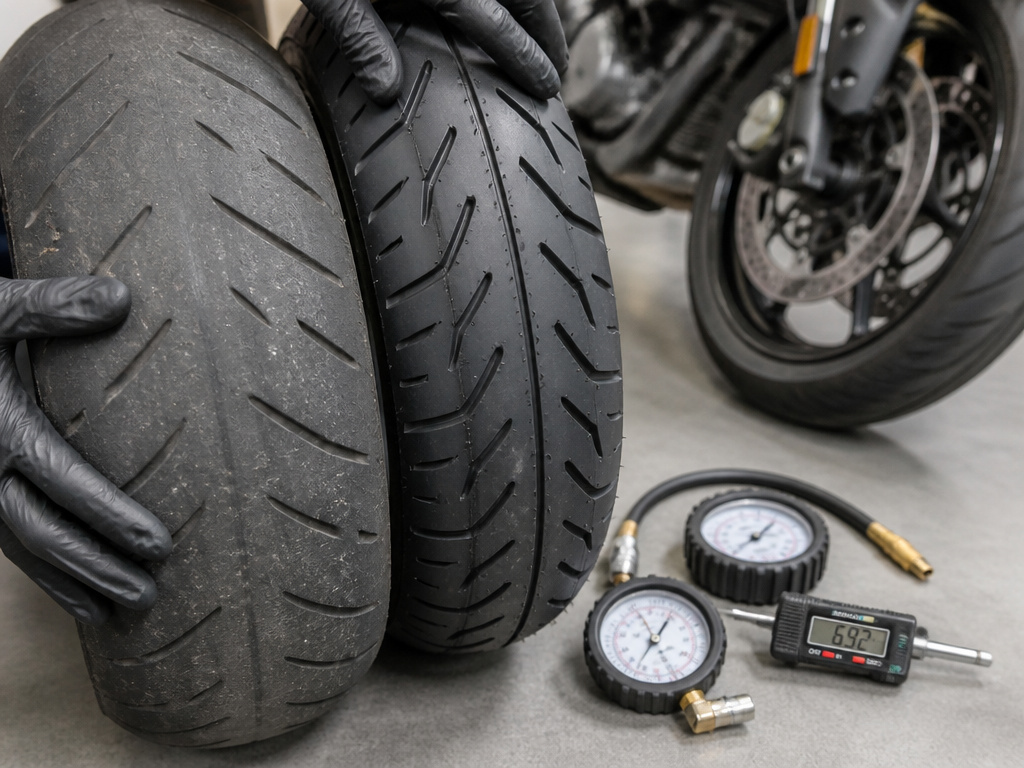
The showroom price is just the entrance fee.
First, consider the tires. These bikes demand premium rubber. A sport touring tire is a hybrid compound, designed to last for many miles while still offering grip when you lean it over on a cool morning. They cost more than standard touring tires and wear faster than harder commuter compounds. Choosing the wrong tire here, like a pure sport tire, can drastically reduce your mileage and turn a predictable bike into a nervous one. Our guide breaking down sport touring tires covers that critical choice.
Maintenance is the next cost center. The engines are high-performance, often with demanding valve adjustment intervals. The electronics add diagnostic complexity. Compare two manual excerpts: The Ducati Multistrada V4 manual strongly advises owners to refer to authorized dealers for scheduled maintenance, while the Honda Gold Wing F6B manual states “proper maintenance is the owner’s responsibility” and provides detailed procedures, illustrating a difference in brand philosophy. This isn’t just brand philosophy, it’s a direct line to your wallet. A Ducati dealer will charge more per hour than an independent shop willing to work on a Honda.
| Cost Category | Typical Impact (vs. Standard Bike) | Why It Happens |
|---|---|---|
| Insurance | Higher Premium | Classified as high-performance; expensive parts & repair. |
| Tires | Higher Cost / Shorter Life | Hybrid sport-touring compounds are premium. |
| Scheduled Service | Higher Labor Cost | Complex electronics, specialized tools required. |
| Fuel | Comparable or Slightly Higher | Efficient at steady highway speeds, thirsty when ridden hard. |
Then there’s the luggage. Factory-integrated hard cases are expensive but they’re aerodynamic and lock securely. Adding a top case for your motorcycle later is a common move, but it changes the bike’s center of gravity. The alternative, strapping on soft bags, saves money but can lead to catastrophic high-speed weave if not secured perfectly. This isn’t a place to cheap out.
The Electronic Advantage (And Its Complexity)
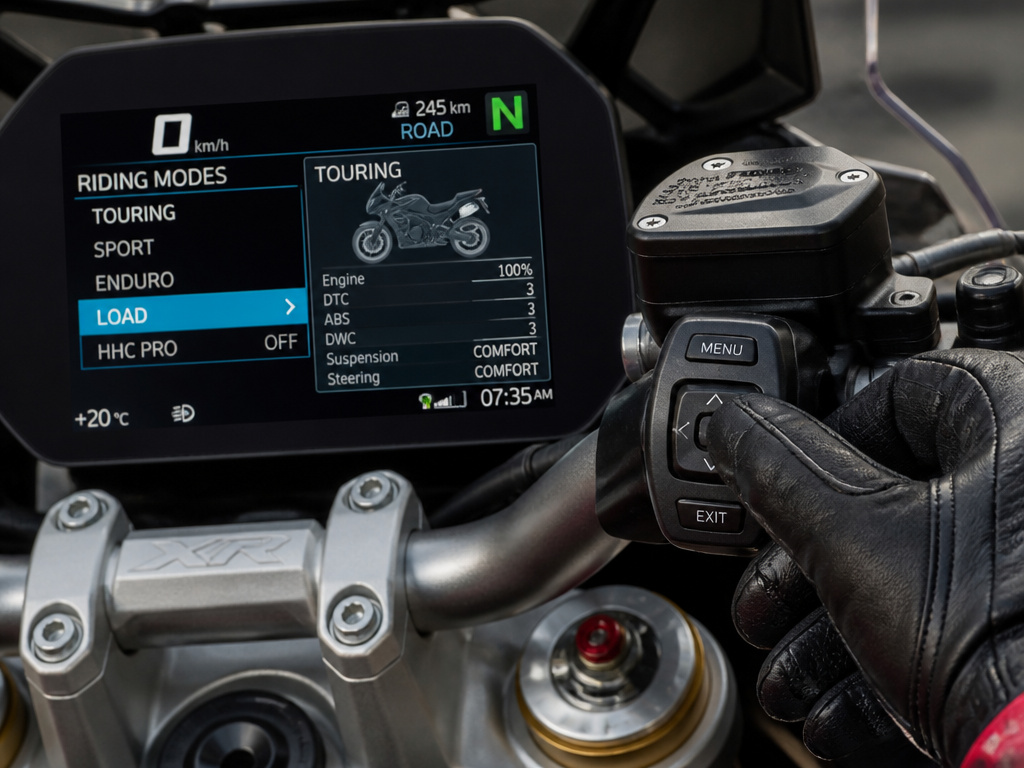
Modern sport tourers are rolling computer networks. The systems aren’t just for show; they directly alter the riding experience and safety envelope. But they also represent a layer of complexity that didn’t exist a generation ago.
Take suspension. A system like Ducati’s DSS (Skyhook System) is a dynamic damping control. It uses sensors to adjust compression and rebound in real time, aiming to keep the bike level over bumps and during acceleration or braking. The promise is a comfortable ride that doesn’t wallow in corners. The result is a remarkably composed feel on patchy backroads, but also a system that’s expensive to repair if a sensor fails.
Engine and traction management are equally sophisticated. Riding modes instantly reconfigure the bike’s personality. For example, the Ducati Multistrada V4 sets its DWC (Wheelie Control) to level 3 in TOURING mode, level 2 in SPORT, and OFF in ENDURO. ABS has cornering functions, and systems like the Suzuki GSX-S1000GT+’s cruise control only engage between 30-180 km/h while above 2,000 rpm in second gear or higher. These aren’t vague suggestions, they’re hard-coded parameters that change how the bike behaves.
Common mistake: Ignoring the “LOAD” setting. Ducati recommends changing this vehicle setup (rider only, rider with luggage, etc.) at low speed. Leaving it set wrong for your load makes the suspension either too soft and wallowy or too harsh, directly hurting comfort and handling.
The upside is a bike that can be docile in rain mode on a wet commute and a corner-carving partner on a dry weekend. The downside is dependency. When these systems work, they’re invisible. When they fault, you’re looking at a dash full of warning lights and a trip to a dealer with the right diagnostic computer.
Sport Touring vs. The Alternatives
You don’t pick a sport tourer in a vacuum. You’re choosing it over something else. Knowing where it sits in the spectrum is the only way to know if it’s right for you.
Compared to a sportbike, you gain comfort, luggage capacity, and weather protection. You lose that razor-sharp, hyper-responsive feel and the ability to enter corners with minimal effort. The sportbike is a scalpel; the sport tourer is a very sharp chef’s knife. Both cut, but one is designed for a single perfect motion, the other for all-day use.
Against a dedicated touring bike like a Gold Wing, you gain agility and a more engaging ride. You lose ultimate comfort, weather protection, and often storage capacity. A full tourer is a luxury sedan, isolating you from the road. A sport tourer is a sport sedan, you still hear the road, you still feel some bumps, and you’re more connected to the driving experience. Our article on touring motorcycles details where those pure mile-eaters excel.
The common confusion is with adventure motorcycles. Both have upright ergonomics and luggage. The core difference is intent: Adventure bikes (ADVs) are built for compromised surfaces, dirt, gravel, rough roads, with longer-travel suspension, more ground clearance, and spoked wheels. Sport tourers are built for pavement. An ADV will be taller, heavier, and less precise on smooth asphalt. A sport tourer will be lower, more planted, and handle better on twisty tarmac. If you never plan to leave pavement, the sport tourer is the more focused tool. See how the trade-offs differ in our adventure motorcycle pros and cons.
For a new rider, neither a sport tourer nor an ADV is ideal. The power and weight are too much. A used standard motorcycle in the 400-700cc range offers a far better learning platform with lower stakes and costs.
Reliability and Long-Term Ownership
Beyond the first tire change and oil service, what’s it like to live with a sport tourer for years? The answer depends heavily on the brand and how you define “reliable.”
Japanese models from Honda, Yamaha, and Suzuki have a well-earned reputation for mechanical durability. Their inline-four and parallel-twin engines are known quantities. The electronics, while complex, are typically robust. The biggest long-term costs will be consumables (tires, chains, brake pads) and the gradual degradation of plastic fairings and trim from sun and weather. Following the manual is key, for instance, the Honda CB1000GT requires engine oil meeting JASO T 903 standard MA, SAE 10W-30, and API classification SJ or higher. Straying from that spec can cause clutch or engine issues.
European brands, particularly Ducati, have made massive strides in reliability but historically command higher maintenance costs and require more meticulous dealer care. The proprietary systems are fantastic when they work, but repairs are rarely DIY affairs. The factory scheduled maintenance is not a suggestion.
If a fuse fails repeatedly, you likely have an electrical fault. Have your vehicle inspected by your dealer. Honda CB1000GT Owner’s Manual
That warning applies to any modern bike. The complexity that aids you also creates more potential failure points. A failing wheel speed sensor can disable ABS and traction control. A faulty IMU (Inertial Measurement Unit) can throw multiple systems into fault mode. This isn’t to scare you off, it’s to set the expectation that “reliable” for a computer-heavy motorcycle means “everything works as designed,” not just “the engine starts.”
The long-term ownership joy comes from the bike’s versatility. It doesn’t force you to choose between a fun day out and a practical trip. That duality, if it matches your riding mix, is worth the extra attention and cost.
Pillion and passenger comfort
Carrying a passenger on a sport touring bike requires specific preparation for their safety and comfort. Instruct your passenger to keep their hands on the rear grip or your waist and their feet on the footpegs while riding. Both you and your passenger should always wear an approved helmet, eye protection, and protective clothing. Some modern models have electronic suspension systems that can be adjusted for load, but these changes should only be made when the motorcycle is stopped or at a very low speed. A well-prepared passenger who understands how to ride along properly is key to a comfortable journey for both of you.
Frequently Asked Questions
What is the most reliable sport touring motorcycle?
Japanese brands, specifically the Yamaha Tracer 9 GT, Suzuki GSX-S1000GT+, and Honda CB1000GT, consistently top reliability surveys for their segment. Their powertrains are proven, and their electronics, while advanced, tend to have fewer gremlins than some European counterparts. Reliability also depends on rigorous maintenance; following the factory schedule for oil changes (using the correct spec, like JASO T 903 MA oil), valve checks, and system diagnostics is mandatory.
Are sport touring bikes harder to ride than cruisers?
They are different, not universally harder. Sport tourers are generally taller and heavier than cruisers, which can be challenging at slow speeds or when parking. Their riding position is more upright and engaged, which some riders prefer for control. Cruisers are lower and often heavier, with a relaxed, feet-forward position that can be comfortable but provides less control for aggressive maneuvering. The best answer is to ride both.
What is the 70/30 brake rule for motorcycles?
This is a guideline for braking force distribution. It suggests that under hard, straight-line braking, roughly 70% of the stopping power should come from the front brake and 30% from the rear. This is because weight transfers forward during braking, giving the front tire more grip. On modern sport tourers with linked or cornering ABS, the system manages this distribution for you, but understanding the principle helps you brake smoothly and effectively in all conditions.
Is a sport touring motorcycle a good beginner bike?
No. They are poor beginner bikes. They are typically powerful (100+ horsepower), heavy (500+ pounds), expensive to purchase and insure, and costly to repair after a tip-over. A new rider’s priority should be developing skills, not managing power or fear of dropping an expensive machine. A used standard or naked bike with moderate power is a far safer and more economical choice.
How does sport touring compare to adventure touring?
Sport touring is pavement-optimized: lower center of gravity, sharper handling, smoother power delivery for asphalt. Adventure touring is terrain-versatile: taller, longer-travel suspension, more ground clearance, and often spoke wheels for off-pavement capability. If your travels are 99% on paved roads, a sport tourer will be more rewarding. If you actively seek out dirt or gravel roads, an adventure bike is the tool. Many riders confuse the two because of their similar upright stance.
The Bottom Line
A sport touring motorcycle is a compromise, but it’s a deliberate and highly effective one for the right rider. It asks you to accept higher running costs and some mechanical complexity in exchange for a machine that genuinely does two things well.
If your riding is a mix of daily commuting, weekend backroad exploration, and the occasional multi-day trip, and you want one bike to cover it all, a sport tourer makes a compelling case. Just budget for the premium tires, the dealer-level maintenance, and a helmet designed for the miles. For that rider, the blend isn’t a weakness; it’s the whole point.
If your riding is heavily skewed to one extreme, like only track days or only cross-country interstate slogs, a more specialized bike (a pure sportbike or a full touring motorcycle) will serve you better. The sport tourer’s genius is in the middle, and that’s exactly where many of us actually ride.
