
How to Choose a First Motorcycle: The 7-Step Fit Check
This post contains affiliate links. As an Amazon Associate, we earn from qualifying purchases.
The fit part is essential. You can’t learn balance and control if you’re fighting a tall seat or a heavy bike that wants to tip at a stoplight. Engine size gets the headlines, but your inseam and your confidence are what actually decide whether you ride or park it. This is the core of how to choose a first motorcycle.
What follows is a seven-step checklist for how to choose a first motorcycle that ignores the showroom hype. This checklist explains how to sit on a bike correctly, how to read a spec sheet for the important numbers, and why your gear budget is part of the bike’s price. By the end, you’ll know the three questions to ask before you hand over any money.
Key Takeaways
- Fit over features. If you can’t flat-foot the bike comfortably, walk away. A low seat height and a kerb weight under 150 kg build crucial early confidence.
- Budget for gear first. A proper helmet, jacket, gloves, and boots are not optional. Factor in the cost for certified protective equipment before setting your bike budget.
- Start under 500cc. Engines in the 250cc–500cc range are forgiving and cheap to insure. They teach throttle control without overwhelming power.
- Take the course first. A basic rider course provides a bike and teaches fundamentals.
- Assume you will drop it. Your first bike is a learning tool. Choose a used, standard-style motorcycle with simple bodywork; repairs are cheaper and less heartbreaking.
The 7-Step First Bike Checklist
Forget browsing models online for now when considering how to choose a first motorcycle. Your first decision happens in a parking lot, not on a website.
Step one is a rider training course. I don’t mean eventually — I mean before you spend a dollar. The Motorcycle Safety Foundation Basic RiderCourse provides a motorcycle, teaches clutch control, braking, and low-speed maneuvers in a controlled environment. You’ll know within a weekend if riding is for you, and many insurers offer a discount for completion. It’s the single highest-return investment a new rider can make.
Before you start: A motorcycle is an unforgiving teacher. Operating one without proper instruction, protective gear, or respect for its weight and power significantly increases your risk of a crash with serious injury. Mitigation: complete a certified training course, wear an ISI or ECE-rated helmet, CE-rated armor, gloves, and boots every ride, and practice new skills in empty lots.
Step two is the sit test. When you visit a dealer or a private seller, don’t just look. Swing a leg over. With the bike upright (have someone steady it), can you place both feet flat on the ground? Your knees should be slightly bent. Can you reach the handlebars and controls without stretching or hunching? This isn’t about looking cool; it’s about having a stable, relaxed base to operate from. A bike that’s a struggle to hold up at a stop will shatter your confidence on the road.
Step three is the weight check. Look up the kerb weight. This is the bike’s ready-to-ride weight with all fluids. The Hero Xtreme 125R, for example, has a kerb weight of 136.0 kg. That’s a solid benchmark. Anything over 180 kg starts to feel very heavy when you need to paddle it backwards or catch a lean in a parking lot. Your strength matters less than the bike’s center of gravity — lower is better.
Step four is engine size. The consensus of 250cc–500cc exists for a reason. These engines have enough power for highway speeds but are forgiving of clumsy throttle inputs. They’re also cheaper to insure and register. The goal for your first 5,000 miles is to learn control, not top speed.
Step five is style and ergonomics. Your body position dictates comfort and control. Standard or “naked” bikes offer a neutral, upright seating position that’s easiest to learn on. Cruisers have low seats but forward controls that can feel awkward. Sportbikes have aggressive stances that strain the wrists and neck. For a deep dive on the most beginner-friendly category, our guide to standard motorcycle pros and cons breaks it down.
Step six is the feature scan. Anti-lock brakes (ABS) are the one modern feature worth paying a premium for as a beginner. They prevent wheel lock-up during panic braking, a common new-rider mistake. Beyond that, keep it simple. Fancy electronics and multiple riding modes are distractions you don’t need yet.
Step seven is the total cost math. The bike’s price is the entry fee. You must add tax, title, registration, insurance, and a full set of gear. Financing a bike and having nothing left for an approved helmet (ISI marked) is the classic beginner trap. Set your out-the-door bike budget after you’ve secured funds for protection.
Engine Size and Weight: The Manageability Matrix
CCs tell part of the story. Weight tells the rest. A heavy 650cc cruiser can be more manageable than a tall, top-heavy 400cc adventure bike. You need to cross-reference these specs.
| Bike Type | Typical CC Range | Typical Kerb Weight | Best For Beginner If… |
|---|---|---|---|
| Standard / Naked | 250cc – 500cc | 150 – 180 kg | You prioritize an upright, neutral riding position for control and comfort. |
| Cruiser | 300cc – 500cc | 170 – 220 kg | You want a very low seat height and are okay with heavier weight. |
| Sport | 300cc – 400cc | 160 – 175 kg | You are committed to the style but must tolerate a more aggressive, less comfortable posture. |
| Dual-Sport / Adventure | 250cc – 400cc | 140 – 160 kg | You are taller (inseam > 32″) and can handle a taller seat height for light off-road use. |
The Suzuki Address 110 manual defines its break-in period as the first 1600 km (1000 miles). This isn’t a suggestion. During this time, you should vary your speed and avoid sustained high RPMs to allow the engine’s internal parts to mate smoothly. It’s a perfect timeframe for a new rider to learn gradually. Pushing a new engine hard from day one can cause excessive heat and premature wear.
Vary your throttle. Don’t baby it, but don’t redline it. The engine needs load across the rev range to seat the piston rings properly. A gentle 20-minute commute is worse for break-in than a mixed backroad ride.
New vs. Used: The Real Math
A used bike is almost always the smarter first purchase. You’ll worry less about scratches, the depreciation hit is already taken, and you can often get more bike for your money.
The argument for new is warranty and knowing the history. The argument for used is financial reality. Be blunt: you will make mistakes. You might stall in an intersection. You might tip it over in a driveway. Doing that on a used bike you paid $3,000 for feels very different than on a new $7,000 machine.
If you go used, inspection is everything. This isn’t just a kick of the tires. You need a methodical used motorcycle inspection guide. Check for:
- Fluid leaks under the engine and forks.
- Tire condition and date codes.
- Brake lever and pedal feel (sponginess means air in the lines).
- Chain and sprocket wear (rusted, tight spots, hooked teeth).
- Frame welds for cracks or signs of repair.
Bring a friend who rides or, better yet, arrange a pre-purchase inspection at a shop. The $100 fee can save you thousands.
Gear Up First: Your Non-Negotiable Safety Budget
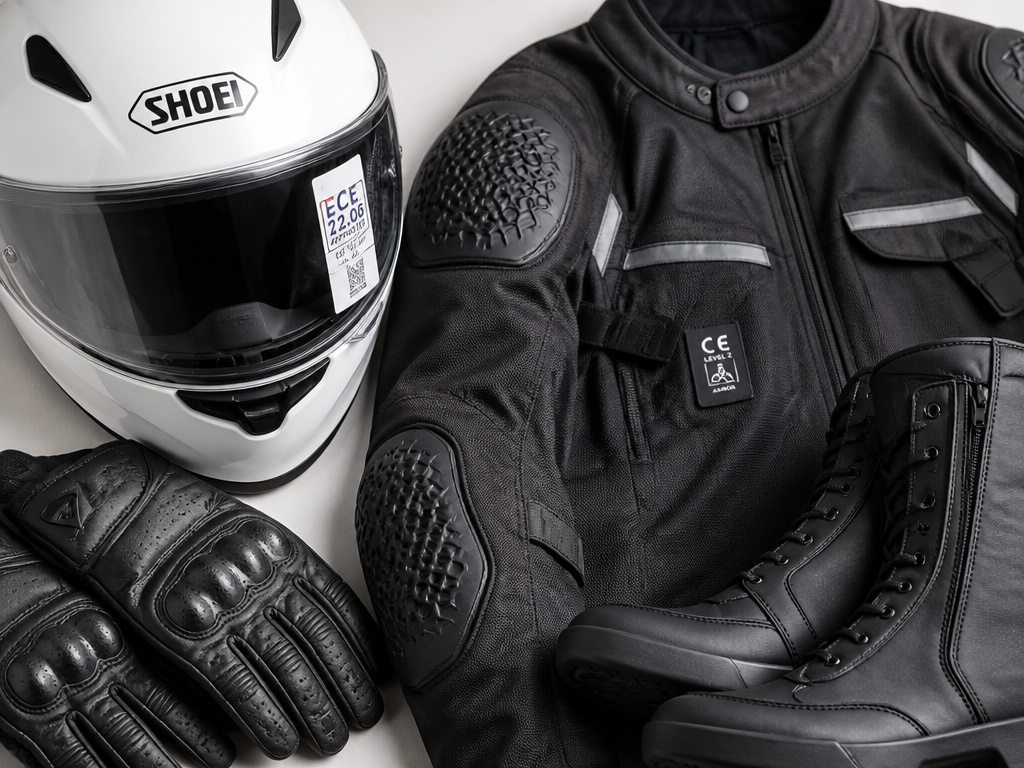
The bike gets you moving. The gear keeps you in one piece. This isn’t optional equipment, and its cost must be part of your “first bike” calculation from day one. You cannot safely learn on public roads without it.
Hero’s owner manual states it plainly: “always wear an approved helmet (ISI marked), eye protection, boots, gloves, long pants and a long sleeve shirt or jacket.” Suzuki also emphasizes wearing an approved helmet and eye protection. This is the manufacturer’s legal way of saying you are vulnerable.
Common mistake: Buying a fancy helmet that doesn’t fit. A mid-priced ECE 22.06 helmet that fits your head shape snugly is safer than a loose, top-tier model. Your helmet should fit your head shape snugly.
Your beginner gear budget should cover:
- Helmet (ECE 22.06 or equivalent): The single most important item. Full-face offers the best protection.
- Jacket with CE-rated armor: Abrasion-resistant material (textile or leather) with shoulder and elbow protectors. Back protector is a major plus.
- Gloves: Full-finger gloves with palm sliders and knuckle protection. Leather is recommended for durability.
- Boots: Over-the-ankle boots with non-slip soles and reinforced toe/heel. Not work boots, not sneakers.
- Pants: Dedicated riding pants or heavy-duty denim with armor.
Bright colors and reflective details aren’t just for visibility—they’re a direct recommendation from Hero to be more noticeable in traffic. A white or bright helmet is a smart, simple choice.
Navigating Common Beginner Fears
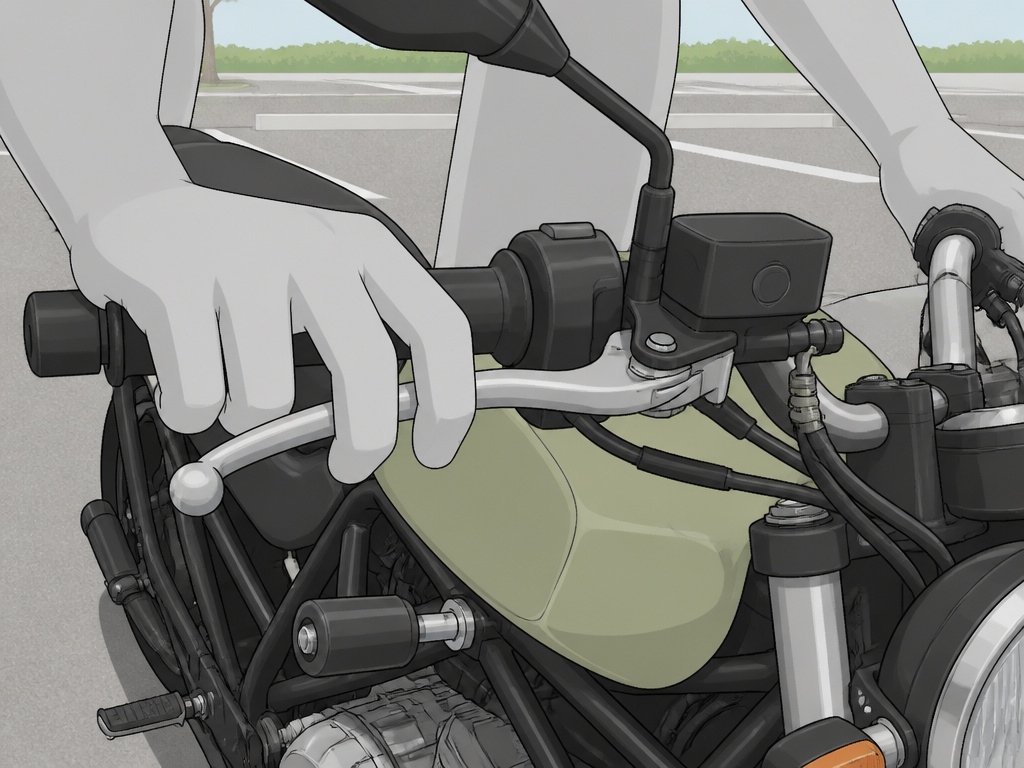
It’s normal to be nervous. The key is to have a plan for the specific things that scare you.
Fear: “I’ll drop it.” You might. Mitigation: Start with a used, lighter bike. Install frame sliders or engine guards before your first ride. Practice slow-speed maneuvers and stopping in an empty lot until the clutch friction zone is muscle memory.
Fear: “I’ll stall in traffic.” You will. Mitigation: During your training course, you’ll stall the provided bike a dozen times. It’s how you learn. When it happens on the road, take a breath, pull in the clutch, restart, and proceed. Everyone has done it.
Fear: “Other drivers won’t see me.” They often don’t. Mitigation: Ride with your headlight on, wear bright gear, and position yourself in the lane where you are most visible. Never linger in a driver’s blind spot. Assume you are invisible and ride accordingly. This is where the riding basics of lane positioning and hazard scanning become critical life skills.
These fears diminish with seat time and proper training. The rider who acknowledges them and prepares is safer than the one who is overconfident.
Insurance, Maintenance, and the Hidden Costs
The sale price is a fraction of the long-term cost. Insurance costs can vary significantly depending on the motorcycle and the rider. Get quotes before you fall in love with a specific model.
Maintenance is not optional. Motorcycles require more frequent attention than cars. The Suzuki Address 110 manual specifies using SAE 10W-40 engine oil that meets the JASO T903 standard. This spec matters because motorcycle engines use the same oil to lubricate the clutch and transmission. Using the wrong oil can cause clutch slippage.
Follow the manufacturer’s maintenance schedule in the owner’s manual. The first service is especially important. Neglecting basic chain lubrication, tire pressure checks, and brake fluid changes leads directly to breakdowns and unsafe riding conditions. Neglecting basic brake fluid changes can lead to unsafe riding conditions.
Beginner-Friendly Motorcycle Models and Brands
When researching your first bike, look for models designed with new riders in mind. These typically prioritize manageability and ease of use. For example, some manufacturers produce motorcycles with modest power outputs and light overall weight, which can make them less intimidating and easier to control at low speeds. A lighter bike is generally easier to pick up if it tips over and is less fatiguing to maneuver in parking lots. Always consult the owner’s manual for specific details on a model’s weight and other characteristics. The key is to find a motorcycle that you feel confident handling, not one that pushes the limits of your current skill.
Frequently Asked Questions
Is 600cc too much for a beginner?
For most riders, yes. A modern 600cc sportbike is a high-performance machine designed for experienced riders. The power delivery is aggressive, the riding position is demanding, and the insurance costs are prohibitive. A 600cc cruiser is more manageable but still heavy and powerful. The 250cc-500cc range remains the sweet spot for building skill safely.
What is
This extended buffer gives you vastly more time to identify hazards, react, and brake smoothly compared to the standard 2-3 second car rule. To use it, pick a stationary point the car ahead passes and count the seconds until you reach it.
The front brake provides about 70% of the stopping power due to weight transfer, while the rear provides 30%. New riders often overuse the rear brake, which can lock the wheel. Your training course will drill proper, progressive brake application.
Should I get a motorcycle or a scooter first?
It depends on your goals. Scooters are fantastic for urban commuting: automatic transmission, storage, and great fuel economy. They teach road awareness but not manual clutch control. If you ultimately want to ride motorcycles, starting on a scooter means you’ll still need to learn clutch and gear shifting later. Our motorcycle vs scooter comparison lays out the trade-offs in detail.
Before You Go
The perfect first motorcycle is the one you can afford to buy, insure, and protect yourself to ride. It fits your body, forgives your mistakes, and lets you focus on learning rather than impressing anyone.
Commit to the training course first. Let that experience inform your choice of motorcycle types. Then, buy the gear. Finally, find the bike that passes the seven-step checklist. That order is what separates a confident first season from a garage full of regret.
Your first bike isn’t your last bike. It’s your teacher. Choose the one that’s patient.
