
Boxer Motorcycle Engine Pros and Cons: How to Choose
This post contains affiliate links. As an Amazon Associate, we earn from qualifying purchases.
A boxer engine, with its cylinders lying flat and pistons punching opposite each other, has two unmatched strengths and one fundamental compromise. Its naturally perfect balance delivers near-zero vibration and a low center of gravity, which gives a motorcycle planted stability. But the engine’s width restricts lean angle and puts cylinder heads at risk in a tip-over, while horizontally-oriented gaskets can weep oil over time. For a smooth, stable road bike, the boxer is superb. For hardcore sport or technical off-road riding, its width is a deal-breaker.
That low center of gravity is the boxer’s calling card. On a big, heavy touring or adventure bike, it changes the handling, making the machine feel lighter than its scale weight. A BMW R 1250 GS is a substantial machine, but at a stoplight it tips from side to side with a light push from your thigh. A discussion of the boxer motorcycle engine pros and cons often starts with this key advantage.
This guide details that trade-off in practical terms, central to the boxer motorcycle engine pros and cons: how the smoothness feels on a six-hour ride, what the width means for cornering and parking lot maneuvers, and what ownership looks like beyond the brochure. We will also cover the specific maintenance quirks, including a major BMW service bulletin, and how the boxer compares directly to other motorcycle engine types like V-twins and inline-fours.
Key Takeaways
- The boxer’s perfect primary balance eliminates most engine vibration, making it exceptionally smooth at highway speeds.
- The engine’s wide profile creates a physical lean-angle limit and can contact the ground in hard cornering.
- Cooling the rear cylinder can be a challenge, leading manufacturers to adopt complex cooling systems.
- A documented BMW rocker arm wear issue (Service Bulletin SIB 11 06 21) has affected models like the R 1250 GS, requiring specific, chassis-number-dependent parts for repair.
- For riders who prioritize long-distance comfort and stability over aggressive cornering or off-road agility, the boxer is often the best choice.
The Physics of Balance and Why It Matters
You do not need to feel engine buzz. On a long ride, vibration is not just annoying, it’s fatiguing. Your hands, feet, and seat go numb, and your focus drops. A boxer engine, where pistons move in perfect opposition, cancels out the primary shaking forces inherent in a piston engine. The result is a mechanical calm that inline and V-twin layouts achieve only with added complexity like balancer shafts.
A horizontally opposed engine configuration inherently cancels primary reciprocating forces because the opposed pistons move in opposite directions. This eliminates the need for external balancing components, reducing mechanical complexity and weight in some designs.
That mechanical calm is not a subtle marketing point. It is a tangible difference you notice within the first mile. The handlebars stay still. The footpegs do not tingle. The seat does not transmit a constant buzz. On a BMW boxer or a similar opposed-twin, you can hold a steady 80 mph for hours and step off feeling fresh, not beaten up by your own machine. This is the boxer’s single greatest gift to the rider, and it is why the layout has endured for decades in touring and adventure motorcycles.
The Inescapable Compromise: Width and Ground Clearance
The boxer pays for its balance in width. Those two cylinders stick out from the bike’s centerline like a pair of horizontal fists. This creates two practical problems.
First, it limits maximum lean angle. In a hard corner, the cylinder head or a protruding valve cover will touch down before the footpeg feeler scrapes. For most street riding, this is not an issue. But on a twisty mountain pass or a track day, that early contact is a hard stop. You simply cannot lean a stock boxer-engine bike as far as a comparable inline-four or V-twin. Riders who chase knee-down cornering should look elsewhere.
Second, the low-slung cylinders are vulnerable. Drop the bike in a parking lot or tip over off-road, and the cylinder head takes the hit. BMWs have hefty crash bars for a reason. While this can protect the frame and radiator, it also means even a minor tip-over can result in scraped or cracked valve covers, a busted oil cooler, or bent engine mounts. The engine acts as a crash bar, which is a pro for the frame but a con for the engine’s external parts.
Is the BMW Boxer Engine Reliable?
The short answer is yes, with a notable asterisk. BMW’s boxer engines, especially the modern liquid-cooled “ShiftCam” versions, are generally robust and built for high mileage. However, they are not without known, specific failure points that shift the reliability question from a general promise to a concrete maintenance checklist.
The most significant known issue is premature rocker arm wear. In 2021, BMW Motorrad issued Service Information Bulletin SIB 11 06 21 (dated 2021-04-14), which mandated the replacement of rocker arms and any damaged camshafts across a wide range of models. The affected list includes models such as the R 1200/1250 GS, S 1000 series, G 310 series, and F 750/850 GS.
The bulletin cites premature wear of the rocker arm surfaces. In practice, this wear can lead to audible noise from the cylinder head and potential camshaft damage. Left unchecked, it can lead to accelerated camshaft wear. The fix is not a simple adjustment; it requires pulling the cylinder head and replacing the rocker arms with an updated part. Critically, the bulletin states parts must be confirmed via the Electronic Parts Catalog using the vehicle chassis number, as numbers vary by specific model and equipment.
Where this goes sideways: Ignoring a persistent ticking from a modern BMW boxer cylinder head. The rocker arm wear described in SIB 11 06 21 does not resolve itself and leads to camshaft damage, turning a valve-train repair into a much more expensive engine teardown.
Outside of this known bulletin, boxer engines are praised for longevity. Their architecture allows for massive, overbuilt components and excellent cooling when properly engineered. But the complexity of modern BMW engines means that when something does go wrong, repairs can be involved. A reliability score depends entirely on whether you are counting minor oil seeps or a four-figure cylinder head service.
Engine Cooling: Air, Oil, and the Hot Rear Cylinder
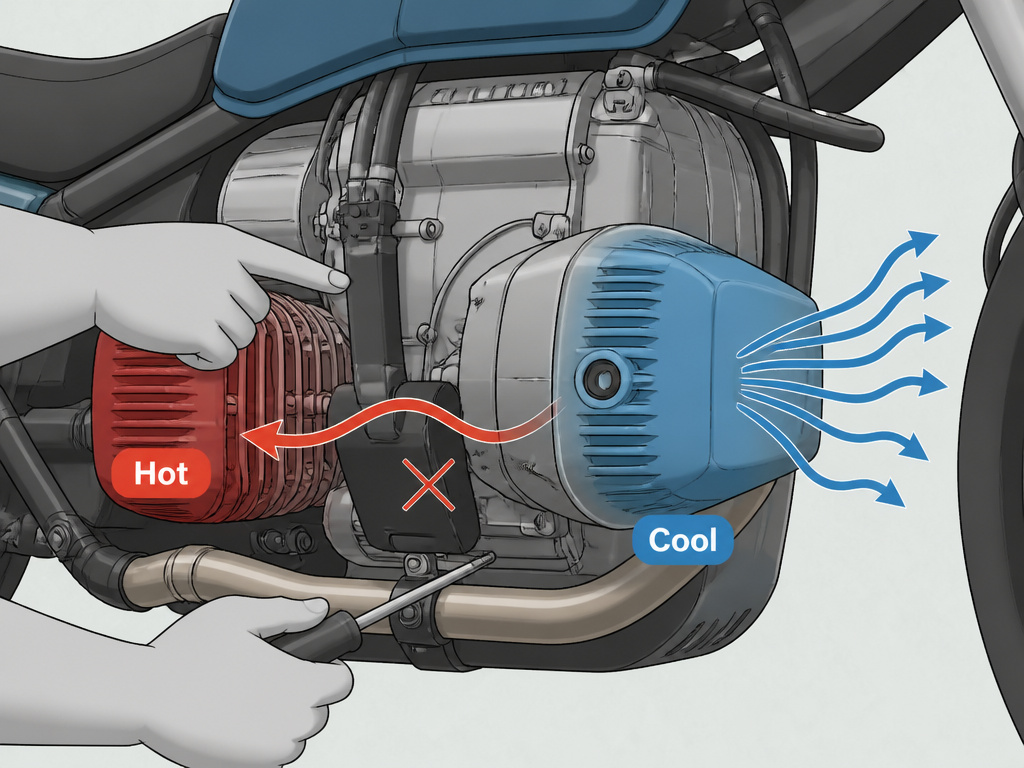
One historical con of the boxer layout is cooling the rear cylinder. In a pure air-cooled design, the front cylinder blocks airflow to the rear, causing it to run hotter. This temperature disparity can lead to uneven wear and higher oil temperatures.
Manufacturers have tackled this in different ways. BMW evolved from pure air-cooling (“Airheads”) to air/oil cooling (“Oilheads”) and finally to full liquid cooling on current models. Subaru, whose automotive boxer engines face the same challenge, uses a liquid cooling system. For simpler, small-displacement boxers like the Bajaj Boxer BM 150, air-cooling is sufficient for their duty cycle.
The takeaway is that cooling is a solved problem on modern boxers, but it often comes at the cost of added complexity, more plumbing, more pumps, more potential failure points, compared to a simple air-cooled V-twin. When comparing air-cooled vs liquid-cooled systems, know that a boxer often needs the more complex solution to perform optimally.
The Maintenance Angle: Easy Access, Leaking Gaskets
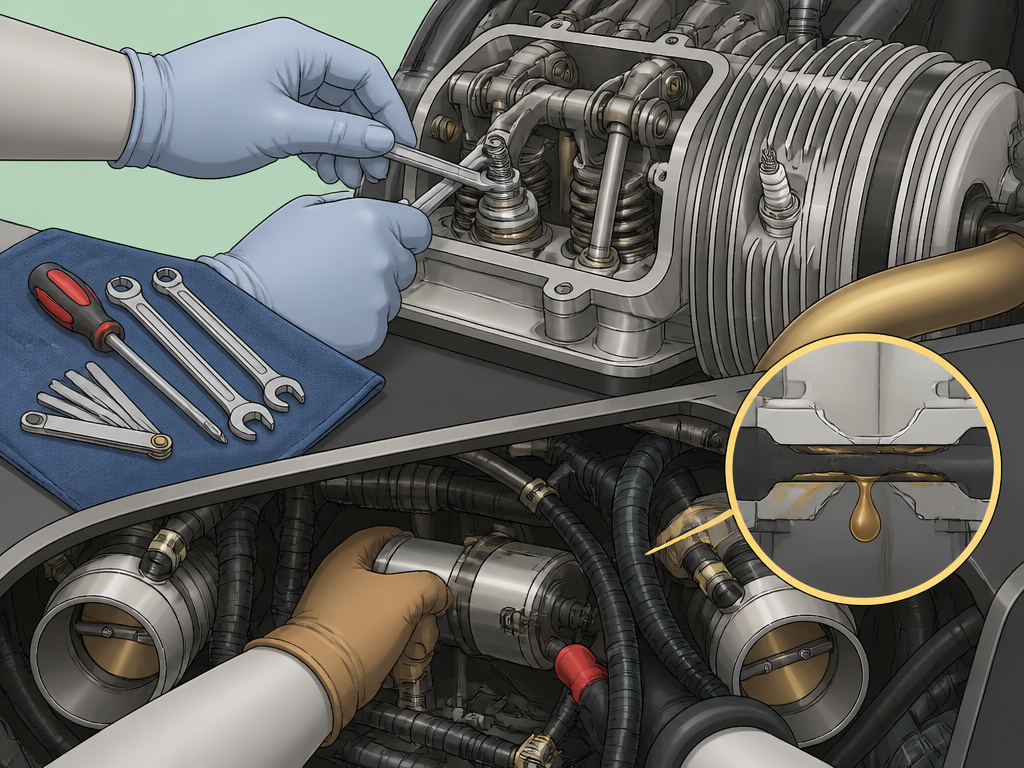
There is a common claim that boxer engines are easier to work on. This is a half-truth.
The Pro: Valve adjustments are famously simple on engines like the BMW air-cooled boxer. With the cylinder heads sticking out in the breeze, you can often remove the valve cover without lifting the tank or removing major components. This is a genuine advantage for routine maintenance.
The Con: Everything else can be a bear. The engine’ wide placement means wiring harnesses, throttle bodies, and intake tubes are often crammed into tight central spaces. Replacing a starter motor or a clutch on a BMW boxer can be a full-day affair requiring the removal of the transmission and swingarm. The horizontal orientation of the cylinder heads can also contribute to gasket seepage over time. Weeping gaskets and minor oil seepage can occur over very high mileage.
| Maintenance Task | Boxer Engine Characteristic | Consequence for Owner |
|---|---|---|
| Valve Clearance Check | Excellent, direct access | Low cost, can be a DIY job |
| Major Engine Service (e.g., clutch) | Poor, engine is structural | High labor cost at a shop |
| Cylinder Head / Gasket Work | Gaskets in a horizontal plane | Potential for oil seepage over time |
| Oil Changes | Typically straightforward | Routine maintenance is simple |
How It Compares to Other Engine Layouts
The boxer’s character is best defined by what it is not. It is not a high-revving screamer, nor is it a lazy, grunting tractor. It lives in a middle ground of smooth, linear torque.
Boxer vs. Inline-Four: An inline-four engine thrives on revs, building power in a rising curve that rewards aggressive riding. The boxer delivers its torque much lower and flatter. The inline-four will feel faster on paper and on a racetrack. The boxer will feel more usable and less frantic in everyday riding, with far less vibration.
Boxer vs. V-Twin: A V-twin, especially a 90-degree Ducati, also has good inherent balance but a very different personality. It is often more visceral and punchy, with a distinct exhaust pulse. The boxer feels more refined and mechanical, with its power delivery smoothed out by the opposing pistons. For long-distance comfort, the boxer’s vibration advantage is significant.
Boxer vs. Triple: A triple-cylinder engine splits the difference, offering smoothness close to an inline-four with a torque-rich character closer to a twin. It is narrower than a boxer and revs more freely, making it a compelling alternative for riders who want character without the width.
Boxer vs. Single/Twin: Against a single or twin cylinder engine, the boxer is in a different league of complexity and smoothness. It is a refined, premium choice compared to the simpler, often more visceral thump of a single or parallel-twin.
The Verdict: Who Should Buy a Boxer-Engined Motorcycle?
The boxer engine is a specialist. It is not the best all-around engine configuration, but for its specific mission, nothing else comes close.
Buy a boxer if: You prioritize comfort over absolute cornering limits. Your riding consists of long days on highways, backroads, and two-track adventures where stability is king. You value mechanical smoothness and a sense of planted confidence. You are willing to accept the maintenance quirks and potential repair costs of a complex, premium motorcycle.
Look elsewhere if: Your dream ride involves dragging knee on weekend canyon runs. You are a technical off-road rider who needs maximum ground clearance and narrow bodywork. You want the simplest, cheapest-to-maintain mechanical package possible. The classic 2-stroke vs 4-stroke debate is more relevant to your dirt-focused world than the boxer’s nuances.
Is a boxer engine good for shaft drive?
A boxer engine’s layout is mechanically ideal for a shaft drive system. The crankshaft runs along the bike’s centerline, providing a direct, straight path to the transmission and then to the final drive unit. This natural alignment eliminates the need for complex angles or bevel gears to redirect power, which are often required on other engine types. The result is a clean, efficient transfer of power to the rear wheel with minimal energy loss. This inherent compatibility is a key reason why many manufacturers pair boxer engines with shaft drives, offering riders a low-maintenance, durable drivetrain that matches the engine’s long-distance character.
Frequently Asked Questions
What are the downsides of a boxer engine?
The two main downsides are physical width and cooling complexity. The engine’s width limits lean angle and makes the bike vulnerable in a tip-over. Cooling the rear cylinder effectively often requires complex liquid-cooling systems, adding weight and potential failure points compared to simpler air-cooled designs.
Is the boxer engine a reliable engine?
Generally, yes, especially in modern, liquid-cooled iterations from BMW. They are built for high mileage. However, they have known failure points, like the BMW rocker arm wear issue documented in service bulletin SIB 11 06 21. Reliability comes with the caveat that repairs can be expensive due to the engine’s integrated design and system complexity.
Is a boxer engine better than an inline 4?
It is not objectively better; it serves a different purpose. An inline-four is better for high-revving performance and narrow packaging. A boxer is better for low-vibration comfort, low-center-of-gravity stability, and low-end torque. Choose based on your riding style: sport riding favors the inline-four; touring favors the boxer.
Is the BMW boxer motorcycle engine reliable?
The BMW boxer has a strong reputation for longevity, but its reliability is punctuated by specific, known issues like the rocker arm wear bulletin. Properly maintained, it can run for well over 100,000 miles. However, its complexity means that when repairs are needed, they are often costly and labor-intensive compared to simpler engine layouts.
The Bottom Line
The boxer engine asks a simple question: how much do you value smoothness? If the answer is “a lot,” and you are willing to trade some cornering clearance and deal with potential oil seepage, the trade-off is worth it. The sensation of a perfectly balanced engine at speed is a luxury that, once experienced, is hard to give up.
For everyone else, the canyon carvers, the tight-trail adventurers, the budget-conscious commuters, the boxer’s compromises are too significant. Its width is a constant physical limitation, and its engineering solutions to problems like cooling add cost and complexity. In those cases, a V-twin, triple, or inline-four will likely serve you better.
The boxer is not for every rider or every bike. But for the rider who spends more time covering continental distances than attacking apexes, it remains one of motorcycling’s most compelling mechanical signatures. Just keep an ear out for any unusual ticking from the cylinder heads.
