
Triple Cylinder Motorcycle Engine Pros and Cons
This post contains affiliate links. As an Amazon Associate, we earn from qualifying purchases.
A triple cylinder motorcycle engine splits the difference between a twin’s low-end shove and an inline-four’s top-end rush, delivering a broad, accessible torque curve that’s often smoother than both. It’s a character engine, not a numbers engine, and its real-world feel often beats its paper specs.
That character comes from a specific mechanical reality. The crankshaft throws are spaced 120 degrees apart, which gives you three power pulses per revolution. A twin fires every 180 degrees, an inline-four every 90. That extra pulse over a twin fills in the midrange, and having one fewer than a four avoids the high-strung, peaky feeling. The result is an engine that pulls willingly from low revs but still revs freely to a satisfying top end, a jack-of-all-trades that’s genuinely master of many. Understanding the triple cylinder motorcycle engine pros and cons explains this balanced character.
What follows is a breakdown of the triple cylinder motorcycle engine pros and cons, where that character shines, where it can sting, and what the ownership experience is really like. We’ll look at power delivery, vibration, sound, size, and the maintenance specifics that shop manuals don’t always advertise up front.
Key Takeaways
- Triples excel in the mid-range torque zone, filling the hole a twin leaves and avoiding the need to rev like a four.
- Vibration is present but managed; you feel a hum, not a buzz, thanks to the 120° firing order and modern counterbalancers.
- Repair access is often worse than a twin; many designs require pulling the engine for head work, adding hours to a valve job.
- The first service interval isn’t universal; some modern Euro 5 Triumphs require initial service at 600 miles, not the traditional 500.
- For most riders seeking a versatile, engaging street bike, a triple’s character often beats a twin or four on paper.
The Power and Torque Sweet Spot (vs Twins & Fours)
When comparing a triple cylinder motorcycle engine’s pros and cons, the key advantage is where the power is delivered, not peak horsepower. A parallel-twin often has a lumpy midrange, it builds, dips, then builds again. An inline-four makes all its power upstairs, leaving the bottom end feeling anemic unless you’re racing. The triple’s three-cylinder, 120-degree crankshaft design delivers a power pulse every 120 degrees of rotation. This fills the twin’s midrange dip without requiring the ultra-high revs of a four.
The 120° crankshaft firing order produces three evenly spaced power pulses per revolution. At 5,000 RPM, that’s 15,000 power pulses per minute, filling the torque curve more uniformly than a twin’s two pulses or a four’s four.
You feel this in the saddle. Crack the throttle at 4,000 RPM on a modern triple like the Triumph Street Triple RS, and it pulls with a linear, urgent shove that doesn’t require a downshift. Compare the specs: the 765cc Street Triple RS engine (78 x 53.38 mm bore/stroke, 12.65:1 compression) is tuned for a fat midrange. The 1050cc Speed Triple engine has a bore x stroke of 79 x 71.4 mm and a compression ratio of 12.0:1. You ride the torque, not the tachometer.
Where this goes sideways: Chasing peak horsepower numbers on a dyno chart. A triple will rarely win a top-end battle against a comparable inline-four. If your goal is maximum track-day bragging rights for the lowest lap time, a built four-cylinder might still be the tool. The triple’s game is street usability.
Vibration & Smoothness: The Controlled Hum
All internal combustion engines vibrate. The trick is managing where those vibrations land in the RPM range and how they’re transmitted to the rider. A twin often has a pronounced vibration zone, a buzzy sweet spot between 4,000 and 6,000 RPM where the mirrors blur. An inline-four can be glass-smooth until a high-frequency buzz sets in near redline.
The triple has a different signature. The 120-degree crank helps cancel out some primary vibrations, but secondary vibrations can still come through. The result is often a deep, mechanical hum felt through the seat and pegs, not a tingling in the bars. It’s character, not discomfort. Modern triples use balance shafts to tame this further, making them surprisingly smooth for a “character” engine.
Ride one for an hour. Your hands won’t go numb like they might on an unfiltered twin, but you’ll be more physically connected to the machine than on a silky four. That connection is a big part of the appeal, you feel like you’re riding an engine, not a software simulation.
Sound & Exhaust Note: The Distinctive Warble
This is subjective, but it matters. A parallel-twin barks. A V-twin rumbles. An inline-four screams. A triple sings a unique three-cylinder warble, a burbling, off-beat exhaust note that’s instantly recognizable. It’s less raw than a twin, less frantic than a four. The uneven firing order (1-2-3) creates an exhaust pulse that sounds busy and mechanical, especially on deceleration.
Aftermarket exhausts amplify this character. A well-tuned pipe on a triple doesn’t just make it louder; it accentuates the warble, turning it into a melodic crackle on overrun. It’s an aural fingerprint that many riders grow to love, setting their bike apart in a crowd of more common engine layouts.
Physical Size, Packaging & Cost Considerations
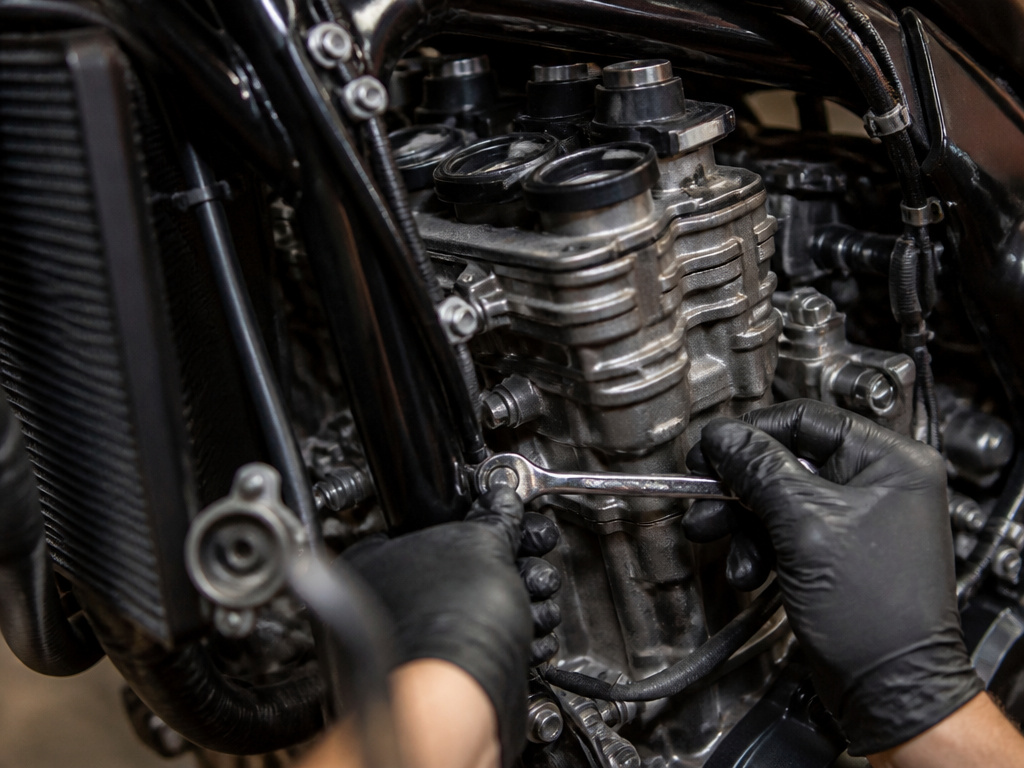
Here the triple faces a genuine compromise. It’s longer than a twin and often taller than an inline-four, thanks to that extra cylinder sitting side-by-side. This can complicate chassis design. Engineers have to package a longer engine in a frame that still wants to be short and nimble. You’ll see this in the sculpted fuel tanks and tight bodywork on bikes like the Street Triple.
On the workshop floor, that length can mean less accessible space. Triumph service information states: “Removal of the cylinder head is not possible with the engine in the frame.” That’s a concrete, hours-added difference versus many twins where head work is a simple top-end job. The Triumph Rocket III, with its massive longitudinal 2294cc triple, is its own exercise in packaging a huge engine into a manageable chassis.
Cost and complexity sit between twins and fours. You have three of everything, cylinders, pistons, injectors, headers, so it’s more complex than a twin. But it’s one fewer than a four, which can simplify the intake and exhaust plumbing. Triples often cost a bit more than comparable twins, trading on their unique character.
Lifespan, Reliability & Real-World Ownership

Forget the myth that more cylinders mean less reliability. Engine lifespan depends far more on manufacturing quality, maintenance, and how it’s ridden than on the cylinder count. Modern triples from major manufacturers are built to last with proper care.
The reliability question is better framed as “what fails?” For triples, the issues aren’t usually the bottom end. The long crankshaft is robust. Watch points are often peripheral: throttle body synchronization across three bodies is more critical than on a twin, and can cause lumpy idle if neglected. Valve adjustment intervals are similar to other high-performance four-valve engines, but as noted, the job can be more labor-intensive if the head must come off.
Common mistake: Following generic service intervals blindly. The Triumph Scheduled Maintenance Check Sheet states maintenance intervals are based on whichever milestone (distance or time) comes first. However, another Triumph source states that motorcycles travelling less than 6,000 miles/10,000 km per year must be maintained annually, and those travelling approximately that distance must have annual and mileage items done together. Weather and riding conditions also alter the schedule.
There’s also a documented split on first service intervals. While most Triumph manuals specify a first service interval of 500 miles/800 km/1 month, a 2023 NHTSA technical service bulletin for certain Euro 5 models sets the first service at 600 miles/1,000 km and 6 months. Know which applies to your bike.
Triple vs Twin vs Inline-4: The Decision Table
| Characteristic | Triple (3-Cylinder) | Twin (2-Cylinder) | Inline-4 (4-Cylinder) |
|---|---|---|---|
| Torque Delivery | Broad, strong mid-range | Strong low-end, often a mid-range dip | Peak high-RPM, weak low-end |
| Vibration Character | Medium-frequency hum | Low-frequency pulse, often a buzzy zone | High-frequency buzz at high RPM |
| Sound Signature | Distinctive warble/ burble | Thumpy bark or deep rumble | Smooth, high-pitched scream |
| Mechanical Complexity | Moderate (3 of everything) | Simple (2 of everything) | High (4 of everything) |
| Typical Repair Access | Often poor (head may require engine removal) | Usually good | Usually good |
| Best For… | Riders wanting engaging, versatile street performance | New riders, torque lovers, classic feel | Track enthusiasts, top-end power seekers |
This table aims to match an engine’s inherent traits to your riding style, rather than declaring a winner. The triple is the compromise that works shockingly well.
Maintenance Specifics & Owner Quirks
Ownership brings a few predictable chores. We can get specifics from the factory books.
Valve Checks: On the Triumph 765 and 1050 triples, valve clearance checks are a standard maintenance item. The job isn’t technically complex, but access is the issue. As the manual states, head removal requires pulling the engine. This turns a 3-hour job on some twins into a 6-hour job. Factor that into your long-term maintenance budget.
Fluids & Filters: You have three cylinders, but you only need one oil filter. The Triumph Speed Triple 1050 holds 3.50 litres of oil on a dry fill and 2.8 litres of coolant, figures right from its service manual. The cooling system, however, is critical. The manual warns that using hard water causes scale buildup, reducing efficiency and risking overheating.
Sensors & Electronics: Modern triples are packed with sensors. An NHTSA technical service bulletin highlights a quirk on some Euro 5 models: if the crankshaft position isn’t properly adapted, it stores a code (DTC P0315) that can’t be cleared without performing the adaptation. This serves as a rare but specific example of the electronic complexity layered onto modern mechanical engines.
Tires and Break-in: A universal tip from Triumph owner’s handbooks applies to all bikes but is worth repeating: after mounting new tires, ride cautiously for about 100 miles (160 km) to get used to the new handling. Check pressures after 24 hours. And never use tire sealant with TPMS sensors, it clogs and ruins them.
The Bottom Line
Should you buy a triple? It depends on what you’re optimizing for.
If you want the simplest, cheapest bike to wrench on, get a single or a twin. If you want the absolute highest peak horsepower for track work, an inline-four still has an edge. But if you want a motorcycle that feels alive, linear, and uniquely engaging every time you twist the throttle on a backroad, the triple cylinder engine is a brilliant solution.
Its pros aren’t just theory. The wide torque band makes you faster with less effort. The vibration connects you without fatiguing you. The sound puts a grin on your face. The cons, like tighter service access, are real, but they’re the price of admission for that character.
For the rider who uses their bike on the street, a triple often makes more sense than the engines it sits between. The numbers might not dominate a spec sheet, but the experience dominates the ride. And that’s what you’re actually buying.
Triple Cylinder Fuel Efficiency
A triple’s efficiency is shaped by its design and how you run it. The engine’s balance of power pulses can allow for smooth, moderate throttle operation. However, efficiency is heavily affected by fuel type. Using oxygenated fuels may adversely affect starting and fuel consumption. If you experience difficulties, running the motorcycle on normal unleaded gasoline is recommended. Always follow the manufacturer’s guidance on approved fuels and lubricants to maintain optimal engine performance and efficiency.
Triple Engine Historical Context
The defining mechanical character of the triple comes from its crankshaft. Historical examples, like Kawasaki triples, had crank throws set 120 degrees apart. This geometry makes the cylinders fire evenly, producing three power pulses per revolution. At 5,000 rpm, such an engine produces 15,000 power pulses per minute. This even firing order is the core trait that gives triples their unique blend of smoothness and character, setting them apart from twins and fours. It’s a solution aimed at filling the midrange gap, a focus that has driven the configuration for decades.
Frequently Asked Questions
What is the typical lifespan of a three-cylinder engine?
There’s no inherent lifespan disadvantage. With proper maintenance, following the manufacturer’s severe service guidelines if you ride hard, changing oil with approved lubricants, and keeping the cooling system clean, a modern triple from a major brand can easily exceed 100,000 miles. Reliability hinges on build quality and upkeep, not the number of cylinders.
What are the main disadvantages of a 3-cylinder engine?
The two tangible downsides are physical size and repair access. The engine is longer, which can complicate chassis design and centralize mass. More critically, on many models, cylinder head removal for valve work requires pulling the entire engine block, significantly increasing maintenance time and cost compared to more accessible designs.
Should I buy a 3-cylinder or 4-cylinder motorcycle?
Choose a triple if you prioritize real-world street riding. Its torque-rich midrange makes it more flexible and fun at legal speeds. Choose an inline-four if your priority is top-end horsepower for track days or you love the sensation of building to a high-RPM scream. The triple is generally the more versatile, rider-friendly street engine.
Are triple-cylinder engines smooth?
Smoother than a twin, but not as seamless as a well-balanced inline-four. You feel a deep, mechanical hum, a product of the 120-degree crankshaft and firing order. It’s a pleasant vibration that communicates the engine’s work without causing fatigue, falling into a category often called “characterful smoothness.”
What motorcycle brands are known for triples?
Triumph is the modern standard-bearer, with triples powering most of its lineup from the Street Triple to the Rocket III. Kawasaki has a legendary history with two-stroke triples and currently offers the Z900 inline-four, though its classic triples are beloved. MV Agusta also uses high-performance triples in its premium sportbikes. For more on other layouts, see our guide to motorcycle engine types.
