
What Is a Cafe Racer Motorcycle: Buying vs. Building Guide
This post contains affiliate links. As an Amazon Associate, we earn from qualifying purchases.
A cafe racer is a lightweight, minimalist motorcycle built or modified for speed and agility over short distances. Originating in 1950s Britain, the style is defined by specific ergonomic modifications: low clip-on handlebars, rear-set footpegs, a solo seat aligned with the fuel tank, and often a small front fairing. This creates an aggressive, forward-leaning riding position focused on handling, not comfort, for quick rides between urban cafes, which is precisely what is a cafe racer motorcycle.
That definition covers the look, but the riding experience is what makes it real. The forward-tilted position puts your weight over the front wheel. On a twisty backroad, that means precise steering and a planted feel. In city traffic, it means your wrists and back will remind you this wasn’t designed for commuting.
What follows is a breakdown of the style, from its rock-and-roll roots to the modern bikes you can buy off the showroom floor, answering the core what is a cafe racer motorcycle question. This section explains the key design features, compares cafe racers to scramblers and bobbers, and lists what you should know before you buy or build one.
Key Takeaways
- The cafe racer style originated in post-war Britain, where young riders modified affordable bikes for quick rides between cafes like London’s Ace Cafe.
- Authentic cafe racer ergonomics require clip-on handlebars and rear-set footpegs—aesthetics alone don’t change the riding position.
- Modern manufacturers like Kawasaki and Ducati now produce factory cafe racers, blending retro style with modern performance technology.
- Compared to a scrambler motorcycle, a cafe racer is built purely for paved road performance, with lower suspension and less ground clearance.
- Building a cafe racer from a donor bike is a popular project, but prioritizing looks over function often leads to an unrideable machine.
The Essential Cafe Racer Design Recipe
Forget the leather jacket and the rockabilly soundtrack for a minute. What makes a motorcycle a cafe racer is a specific set of physical changes, each with a mechanical purpose. It’s not a paint job.
The core modifications are clip-on handlebars and rear-set footpegs. Clip-ons mount directly to the fork tubes, dropping your hands low and forward. Rear-set pegs move your feet back and up. Together, they pivot your entire body forward, tucking you in behind a small fairing or the instrument cluster. Your weight shifts toward the front wheel, which increases steering precision and feedback. The riding position is aggressive, similar to a sport bike vs naked bike, but often on a chassis not originally designed for it.
The visual hallmarks follow from that posture. A solo seat, often with a rear hump, aligns with the fuel tank to create a continuous, flat “top line” from headlight to tail. This isn’t just for looks—it’s the aerodynamic profile a rider tucks into. Excess bodywork is stripped, fenders are trimmed or removed, and the battery and electronics are hidden to expose the frame and engine. The goal is visual lightness and mechanical honesty.
Where this goes sideways: Swapping only the handlebars for lower ones without moving the footpegs. This creates a cramped, awkward riding triangle that strains your back and limits control. A true cafe racer conversion requires changing both contact points.
A Short, Loud History: From Ace Cafe to Worldwide Phenomenon
The cafe racer was born from necessity and rebellion in post-war Britain. As the economy improved in the late 1950s, cars became the new family transport, flooding the market with cheap, second-hand motorcycles. Young people, known as “ton-up boys,” snapped up these retired military bikes and basic standards.
Their playground was the new network of ring roads around London. Their goal was the “ton”—100 mph. Their hangouts were transport cafes like the legendary Ace Cafe on the North Circular. The unofficial sport was racing from one cafe to the next, ordering a coffee, and racing back before the single on the jukebox finished playing. The motorcycle was a tool for speed, status, and a specific kind of social rebellion, far removed from the touring or utilitarian bikes of their parents’ generation.
These riders modified what they could afford. They lowered handlebars, removed excess weight, and tuned engines for more power. The style was raw, functional, and deeply personal. This grassroots, DIY ethos is the soul of the cafe racer, a story well-documented in the Wikipedia entry on café racers. It stands in contrast to the factory-made retro helmet and gear sold today; the original was built, not bought.
Cafe Racer vs. Scrambler vs. Bobber: A Spotter’s Guide
On a surface level, when you compare a what is a cafe racer motorcycle to other customs, they can look similar. But cafe racers, scramblers, and bobbers were built for completely different jobs. Knowing the difference saves you from buying the wrong bike.
| Style | Primary Purpose | Key Visual Cues | Riding Position | Terrain |
|---|---|---|---|---|
| Cafe Racer | Speed & handling on pavement | Clip-on bars, rear-set pegs, humped solo seat, small fairing | Aggressive, forward-lean | Pavement only |
| Scrambler | Light off-road/on-road versatility | High-mount exhaust, longer-travel suspension, knobby tires, crossbar handlebars | Upright, neutral | Dirt trails & pavement |
| Bobber | Minimalist cruising style | Stripped-down body, often a hardtail frame, solo “bobbed” fender, ape-hanger bars | Relaxed, feet-forward | Pavement only |
A scrambler motorcycle is the cafe racer’s adventurous cousin, built to handle unpaved paths. A bobber vs chopper comparison reveals the bobber is about stripping a cruiser down to its bare essentials for a low, minimalist look. The cafe racer is the sport bike of the vintage world. If you see a bike with knobby tires and a high exhaust, it’s a scrambler, not a cafe racer. If it has a raked-out front end and a stretched frame, you’re looking at a chopper.
Modern Factory Cafe Racers: Buying the Look (and Performance)
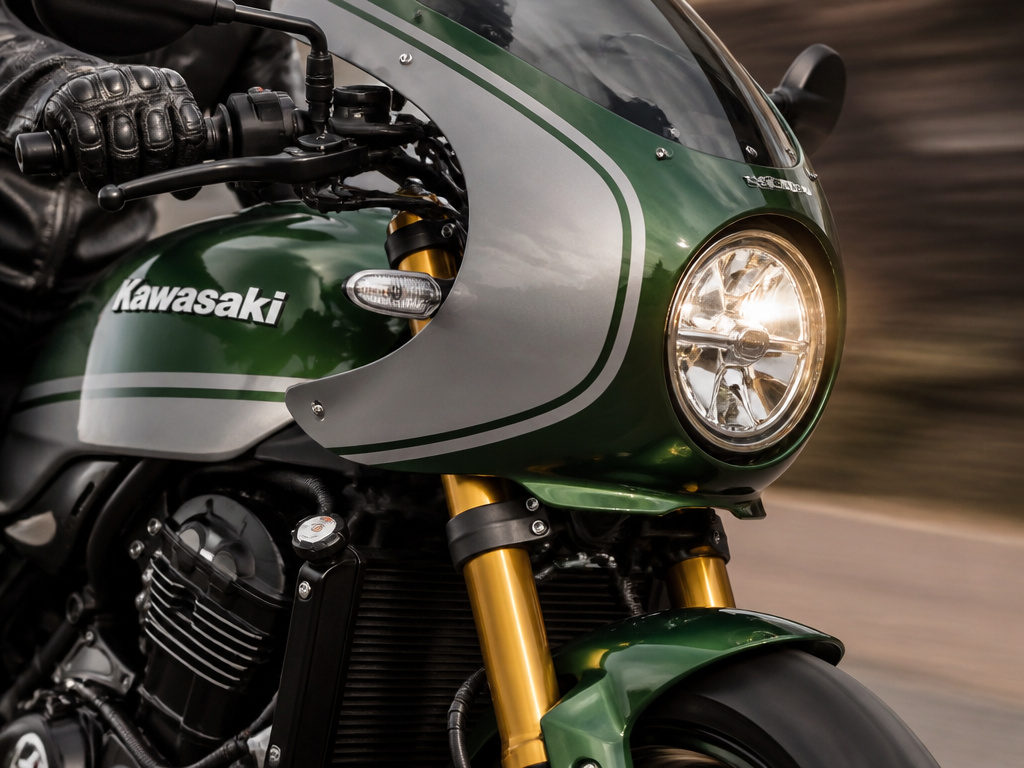
By the mid-1970s, manufacturers like Benelli and BMW took notice and produced the first factory “cafe” variants, which Wikipedia notes were often cosmetic. However, modern offerings like the Kawasaki Z900RS CAFE are full-performance machines. Major brands like Triumph, Ducati, and Kawasaki now have dedicated models that blend the iconic style with modern engineering.
The 2018 Kawasaki Z900RS CAFE is a prime example. Built in limited quantities, it wasn’t just a styling exercise. It features a 948cc liquid-cooled, DOHC, 16-valve inline four-cylinder engine, 41 mm inverted front forks, an assist and slipper clutch, and Kawasaki TRaction Control (KTRC). The classic front fairing, stepped seat, and black low-rise handlebars are authentic, but the performance is thoroughly modern. It demonstrates how far the engineering design principles of café racers have evolved from backyard modifications.
Other notable factory models include the Triumph Thruxton R, the Ducati SportClassic (2006-2009), and the Ducati Scrambler 800 Cafe Racer. This last model’s owner’s manual provides a stark reality check: it states the bike is “designed for on-road use, may be used occasionally on dirt trail,” and that heavy off-road use can lead to loss of control. Even a factory-built “cafe racer” has limits its vintage inspiration would have ignored.
What It’s Actually Like to Ride One
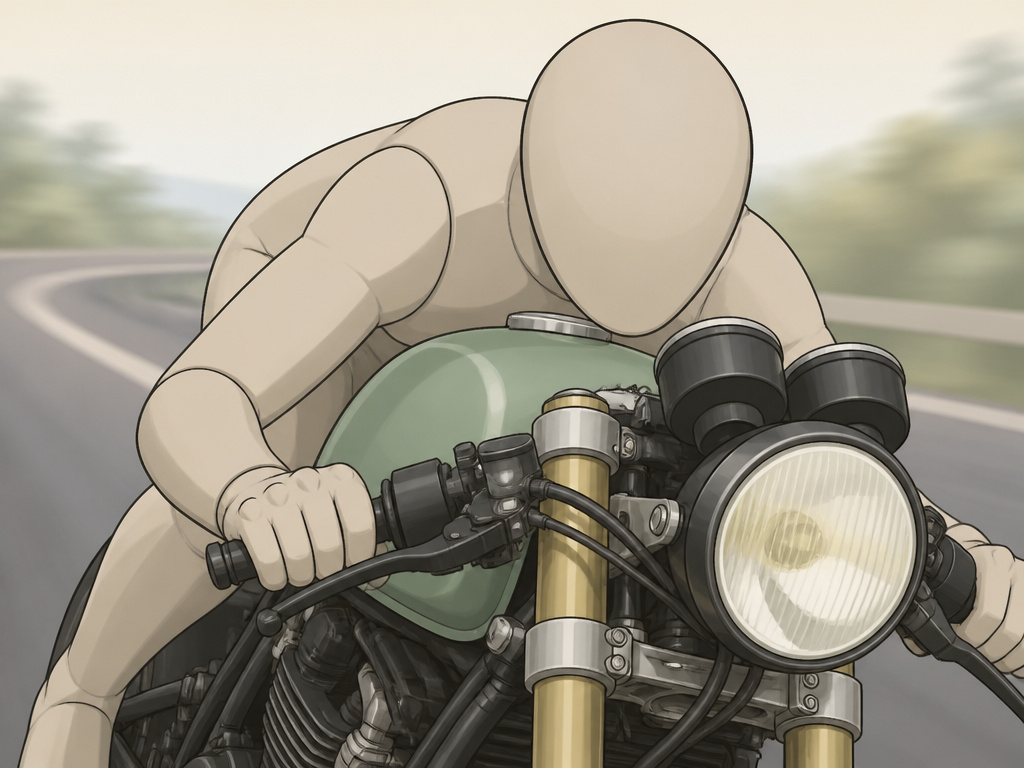
The riding experience is the ultimate test. You don’t so much sit on a cafe racer as wear it. The posture is committed. On a smooth, winding road, the connection to the front wheel is electric. You feel every pavement seam, and direction changes happen with a thought.
The trade-off is constant engagement. There’s no slouching. Your core muscles are working, your wrists bear weight, and your neck is craned upward. After a while, most riders start looking for an excuse to stop. This isn’t a flaw; it’s by design. The bike was made for short, spirited bursts, not all-day tours. The wind blast at highway speeds is significant without a large fairing, and the suspension is typically tuned for responsiveness, not plushness.
Compare this to a standard naked bike with a neutral riding position. The standard is relaxed, versatile, and forgiving. The cafe racer is focused, thrilling, and demanding. One is a daily driver; the other is a weekend weapon. Knowing which experience you’re after is the first step in choosing any motorcycle, a point we emphasize in our guide to types of motorcycles.
Should You Buy or Build a Cafe Racer?
This is the big question. You have two paths: buy a modern factory model or build one from a donor bike. Your choice depends on your tolerance for hassle versus your budget.
Buying new (or used) from a manufacturer like Kawasaki or Triumph gets you a finished, reliable motorcycle with a warranty. It will start every time, handle predictably, and have modern safety features like ABS. You’re paying a premium for that turn-key experience, and some purists argue it lacks the soul of a true custom build.
Building your own requires a thorough understanding of motorcycle mechanics. The most popular donor bikes are Japanese standards from the 1970s and 80s, like the Honda CB series or the Yamaha XS650. They’re simple, plentiful, and have huge aftermarket support. However, the romantic idea of a cheap, quick project is a trap.
Common mistake: Starting a build by buying custom parts before you have a running, riding donor bike. Always get the base motorcycle mechanically sound first. A beautiful seat is useless on a frame that won’t hold an engine.
A proper build requires welding, fabrication, wiring, and a clear plan. It’s easy to spend more on custom parts than a new bike costs, and it’s very easy to build a machine that looks fantastic in photos but is miserable or unsafe to ride. If you’re not already comfortable with a full motorcycle teardown, start by helping a friend with their project or taking a mechanics course. The learning is the real reward.
What are some iconic hybrid cafe racer models?
The true spirit of the original cafe racer was found in hybrids built by enthusiasts, not factories. Riders in the post-war era would take affordable, often second-hand motorcycles and modify them, sometimes mixing parts from different brands to create something unique and personal. These bikes were the heart of the subculture, used for quick rides between popular cafes. While major manufacturers now produce ready-to-ride cafe racers, the most iconic builds from the style’s birth were these one-off creations, born from a desire for individuality and performance on a budget.
Frequently Asked Questions
What’s the difference between a cafe racer and a scrambler?
Cafe racer is optimized for speed and handling on paved roads, with low handlebars and a forward-leaning position. A scrambler is a dual-purpose bike built for light off-road use, with higher ground clearance, longer-travel suspension, and an upright riding position. Think of a cafe racer as a road racer, and a scrambler as a trail explorer. For a deeper dive, see our article on the scrambler vs cafe racer distinctions.
Why is it called a cafe racer?
The name comes from the 1950s/60s British subculture where riders would race between transport cafes, like London’s Ace Cafe. The motorcycles used for these quick, competitive rides became known as “cafe racers.”
Are cafe racers uncomfortable to ride?
Yes, by modern standards. The aggressive riding position with low handlebars and rear-set footpegs places stress on the rider’s wrists, back, and neck. They were designed for short, spirited rides, not long-distance touring. Comfort was sacrificed for improved handling and aerodynamics.
What are the best donor bikes for a cafe racer project?
The most common and recommended donor bikes are Japanese standards from the 1970s and 80s. The Yamaha XS650 is also a fantastic choice for its simple parallel-twin engine. These bikes are mechanically straightforward, parts are plentiful, and their steel frames are easy to modify.
Can a cafe racer be a good first motorcycle?
Generally, no. The aggressive riding position requires more core strength and experience to manage safely, especially at low speeds. The often heavily modified nature of custom builds can introduce reliability and handling quirks. A new rider is better served by a standard, unmodified motorcycle to learn basic skills without fighting the bike’s ergonomics.
The Bottom Line
A cafe racer is more than a style; it’s a motorcycle built for a specific, thrilling experience. It connects you directly to a post-war DIY spirit and rewards skill with razor-sharp handling.
If you’re considering one, be honest about how you’ll use it. For curated weekend rides on good roads, nothing matches the feel. For daily commuting or two-up touring, look at a standard motorcycle or a naked bike. And if you’re tempted to build, master the mechanicals before you worry about the aesthetics. A real cafe racer works as well as it looks.
