
How to Stay Alert on a Motorcycle: Step-by-Step Guide
This post contains affiliate links. As an Amazon Associate, we earn from qualifying purchases.
Staying alert on a motorcycle requires a three-part system: managing your physical state, maintaining mental focus, and executing a precise pre-ride check. The most common failure is pushing through the first wave of fatigue, which the Mississippi Motorcycle Operator Manual links directly to crashes among riders with less than five months of experience.
That link between early fatigue and inexperience isn’t a coincidence. It’s a pattern. New riders burn through their mental fuel tank faster because everything, shifting, scanning, balancing, is still a conscious effort. The manual’s data point that more than half of all crashes involve riders with less than five months on their motorcycle turns alertness from a nice-to-have into a core survival skill, which is why understanding how to stay alert on a motorcycle is so critical. It’s not just about feeling tired; it’s about the window for error slamming shut before you notice.
This guide explains the physical, mental, and mechanical aspects of staying alert on a motorcycle. It explains the hydration and break schedules that work, the visual scanning technique of looking well ahead to keep you ahead of trouble, and why your bike’s own owner’s manual contains a more critical checklist than any generic guide you’ll find online.
Key Takeaways
- More than half of all motorcycle crashes involve riders with less than five months of experience, making proactive alertness management essential for new riders.
- Follow the practice of scanning the road well ahead to identify hazards and plan escape routes, a core component of defensive riding.
- Hydrate before you feel thirsty and schedule a break every 90-120 minutes; dehydration and fatigue are cumulative and directly degrade reaction time.
- Never mix riding with impairment. The Washington State manual explicitly states you increase risk significantly when riding angry, ill, or tired, and this extends to any medication or alcohol.
- Use your motorcycle’s official owner’s manual pre-ride checklist, not a generic one; missing a model-specific item like a sidestand switch can cause an immediate, alertness-shattering failure.
The Physical Layer: Fuel, Water, and Rest
Your brain runs on glucose, water, and oxygen. Deplete any one, and your ability to process risk plummets. This isn’t theoretical. The dull headache that starts behind your eyes after two hours in the sun is your system begging for water, not just being uncomfortable.
Where this goes sideways: Relying on energy drinks for alertness. The sugar crash and subsequent dehydration often leave you more fatigued than before, right when you need peak awareness for navigating complex traffic.
Start with hydration, but start early. The goal is to hydrate before you feel thirsty. Once thirst hits, you’re already in a deficit. A hydration bladder can be more effective than a bottle because it makes drinking easier, helping you stay hydrated. Pair it with electrolytes on hot days; sweating out salt without replacing it can lead to cramping and brain fog.
Schedule regular breaks to get off the bike, walk around, and stretch. Walk around, stretch your hips and back, places where stiffness builds and siphons your focus. This is a primary strategy for avoiding fatigue on long hauls. A five-minute power nap can reset your system if you’re genuinely drowsy, but if you need one, you’ve already pushed too far.
Your gear is part of this system. Being too hot or too cold is a massive distraction. Wear appropriate protective gear for the conditions to stay comfortable and alert. Heated grips can help keep your hands warm in cold weather, which is important for maintaining control. The Washington State guide advises dressing for the conditions to stay comfortable and alert. Separately, the Yamaha R7 manual warns to wear gloves when using grip warmers and to not use them in warm weather.
| Physical Factor | Why It Matters | The Fix |
|---|---|---|
| Dehydration | Slows cognitive function, causes headache | Drink water regularly to stay hydrated. |
| Low Blood Sugar | Leads to irritability, poor decision-making | Eat regularly to maintain energy levels. |
| Muscle Stiffness | Pain becomes a distraction, reduces control | Stop regularly to stretch and move around. |
| Temperature Extremes | Body uses energy to thermoregulate, leaving less for focus | Layer intelligently: wicking base, insulating mid, weatherproof outer |
The Mental Layer: Scanning, Strategy, and Monotony
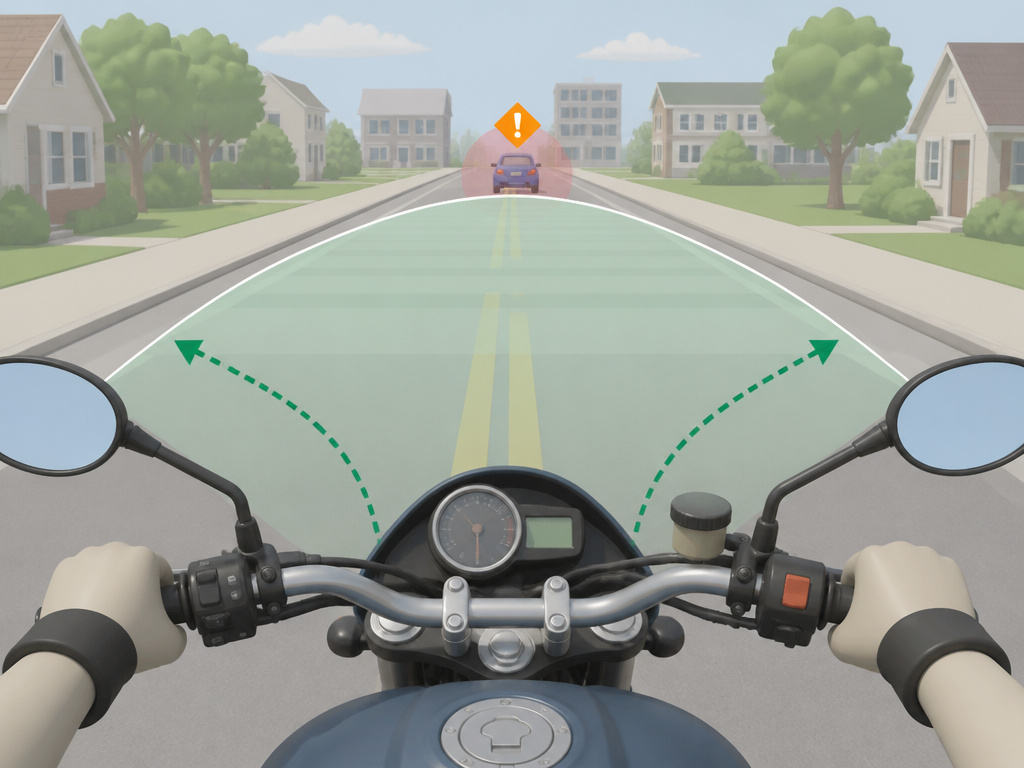
Mental fatigue is sneakier than physical tiredness. It’s the fading attention on a straight highway, the missed turn signal because you were thinking about your destination. Combat it with structured techniques that force your brain to engage.
The single most effective tool is the 12-second rule. Aim your vision 12 seconds down the road, about a city block at 30 mph. This visual lead-time allows you to identify hazards (a car about to pull out, debris) and plan your escape path before you’re in reactive mode. It’s the foundation of proactive defensive riding. The Mississippi manual reinforces this by advising riders to “look well ahead” during maximum braking to maintain a straight line.
Scan 12 seconds ahead, identify two potential escape paths, and adjust your lane position to keep them open. This turns passive looking into active seeing.
On boring, straight roads, monotony is the enemy. Your brain seeks stimulation. Give it a job. Count vehicles of a certain color. Practice smooth, gradual lane changes within your lane. Mentally narrate your ride: “Car in left lane pacing, SUV right mirror not adjusted, gravel shoulder ahead.” This active commentary keeps the processing gears turning and is a core vision technique for safety.
Passengers add a unique mental load. A sleepy pillion leaning at the wrong time can upset your balance. Talk to them before the ride about the need to stay alert, move with you, and tap your shoulder if they need a break. Their comfort directly impacts your ability to focus.
Finally, manage your emotional and mental state before you start. The Washington State Motorcycle Operator Manual is blunt: “You increase your risk significantly when you ride while you are angry, ill, or tired.” This is a state-approved, mandatory warning. If you’re upset or sick, the bike stays parked. This same principle extends to medications; always check labels for drowsiness warnings. Riding impaired isn’t just about alcohol.
The 12-Second Rule and Lane Positioning
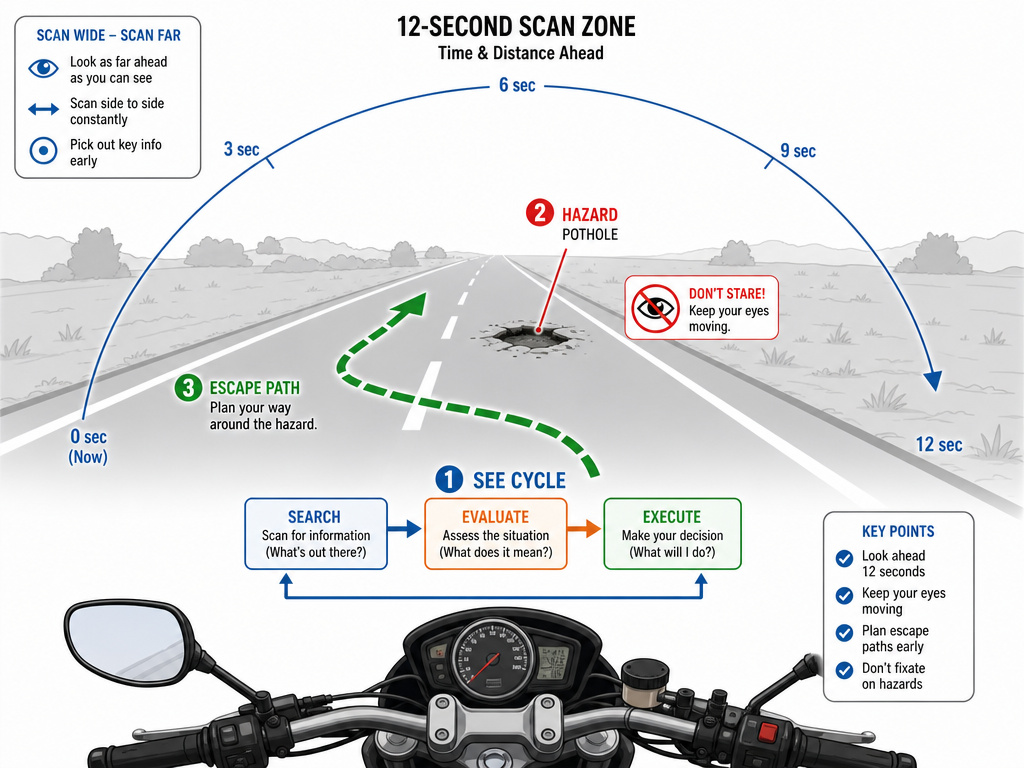
This technique is so critical it deserves its own breakdown. The 12-second rule isn’t just about seeing farther; it’s about creating time to execute the SEE strategy (Search, Evaluate, Execute) promoted in safety manuals.
Your default lane position should maximize your 12-second sightline and your visibility to others. Choose a lane position that maximizes your ability to see and be seen. The Mississippi manual suggests starting at the outside of a curve to increase your line of sight if no traffic is present.
This constant scanning and positioning is how you avoid target fixation. Your eyes lead your bike. If you stare at a pothole, you’ll hit it. The 12-second rule trains you to look through the hazard to your planned path of escape.
The Mechanical Layer: The Pre-Ride Check That Actually Works
A surprising mechanical failure is one of the fastest ways to shatter your focus. A vague sense that “something doesn’t feel right” will consume your attention. The solution is a thorough pre-ride inspection, but most riders use a generic one. Here’s the gap: your bike’s owner’s manual has a better, model-specific list.
But compare it to the pre-ride list from the Ducati Hypermotard 950 owner’s manual. It doesn’t just say “check fluids.” It specifies:
- FUEL LEVEL IN THE TANK
- ENGINE OIL LEVEL Check oil level in the sump through the sight glass.
- BRAKE AND CLUTCH FLUID Check liquid level in the corresponding reservoirs.
- CONTROLS Work the brake, clutch, throttle and gear change controls… And check for proper operation.
That’s actionable. You look at a specific component (the sight glass) for a specific fluid. This takes the guesswork out and builds confidence, which is a form of mental preparedness. Missing a model-specific item, like a failing sidestand switch the manual says to check, could let the bike stall when you put it in gear, a heart-stopping moment that destroys calm.
Common mistake: Using only a generic checklist. The Ducati manual also mandates that maintenance be done per Ducati procedures to keep the warranty valid, a high-stakes edge case a generic guide never mentions.
Your pre-ride is also the time to manage distractions. The Yamaha YZF690 (R7) manual explicitly warns about its smart features: “Never take your hands off the handlebars while riding. Keep volume levels low enough to maintain awareness of your surroundings.” Set your Bluetooth, GPS, and playlist before you move. If you use a communicator, keep conversation minimal. The goal is to eliminate the need to fiddle with anything while in motion.
Managing Risk: When to Call It
Alertness is about knowing your limits and respecting them. The statistics are clear on when risk is highest. The official data point is your best guide.
The most dangerous period is your first few months. The Mississippi Motorcycle Operator Manual states crashes are more likely among beginning riders, especially in the first months. More than half of all crashes involve riders with less than five months of experience on their motorcycle. This isn’t to scare you; it’s to make you vigilant. In this phase, every ride is a training ride. Keep them short, keep them in daylight, and absolutely do not push through fatigue.
Borrowing or lending a bike amplifies this risk. The same manual advises: “If you borrow a motorcycle, get familiar with it in a controlled area.” An unfamiliar bike adds mental load, where are the controls, how does the clutch engage, where is the horn? All these micro-questions drain the attention you need for the road. The same goes for riding in traffic for the first time; it’s a high-demand environment that requires all your focus.
Finally, know the absolute “no-go” conditions. The Washington State manual’s warning about riding angry, ill, or tired is a bright line. So is any amount of alcohol or drowsy-inducing medication. Your margin for error on a motorcycle is measured in inches and milliseconds. Impairment, in any form, zeroes that margin out. If you’re struggling with nerves, that’s a different issue with its own techniques to manage riding anxiety, but it still needs to be addressed before you ride.
How to take effective breaks and power naps on a long ride
Your risk increases significantly when you ride while tired. The only real cure for fatigue is to stop riding. Plan your route with regular rest stops before you feel exhausted. Find a safe, legal place to pull over completely away from traffic. A short power nap can restore alertness, but it must be done safely. Never attempt to sleep on the side of the road or while straddling your bike. A proper break involves getting off the motorcycle, moving around, and hydrating. Listen to your body; if you are fighting to stay awake, you are already too impaired to ride safely.
Using caffeine to stay alert on a motorcycle
Caffeine is a common stimulant, but it is not a substitute for rest in the broader strategy of how to stay alert on a motorcycle. It can provide a temporary boost in alertness, but this effect fades and can lead to a crash in energy later. Relying on caffeine to push through fatigue increases your risk. The manual states you increase your risk significantly when you ride while tired. If you use caffeine, do so early in your ride and in moderation. More importantly, pair it with adequate hydration and proper nutrition. Understand that caffeine masks the symptoms of fatigue; it does not remove the underlying need for sleep. The safest strategy is to stop riding before you become dependent on stimulants.
Using music and conversation to stay mentally sharp
Mental stimulation can help maintain focus, but it must not compromise your awareness. Long-term exposure to wind and road noise can cause permanent hearing damage, so hearing protection is crucial. In Washington State, the use of in-ear hearing protection (ear plugs) is legal, but in-ear speakers (ear buds) are not. If you listen to music, keep the volume low enough to maintain awareness of your surroundings. Never take your hands off the handlebars to adjust a device. Conversations, whether with a passenger or via an intercom, should be brief and not distracting. Your primary mental task is scanning the road and managing the motorcycle, so any additional stimulation should support, not hinder, that focus.
Frequently Asked Questions
What is the 12 second rule for motorcycles?
The 12-second rule is a visual scanning technique where you consciously look 12 seconds ahead of your current position on the road. This distance (about a city block at 30 mph) gives you enough time to identify potential hazards like stopped vehicles, debris, or erratic drivers, and to plan and execute an avoidance maneuver calmly, rather than reacting in panic.
How to stay more alert while driving?
The core principles are the same for cars and motorcycles: manage hydration and nutrition, take scheduled breaks every 90-120 minutes, and use active scanning techniques like the 12-second rule. For motorcyclists, the stakes are higher due to exposure, making gear choice for comfort and the elimination of in-ride distractions (like phone fiddling) even more critical.
What does 2 fingers down mean for bikers?
The “two fingers down” gesture, often pointed toward the ground by a rider’s left hand, is a common greeting among motorcyclists. It’s a simplified, safer version of a wave that originated from the practice of dirt bikers pointing two fingers down to indicate “keep both wheels on the ground.” It’s a sign of camaraderie, not a direct alertness technique.
Are there alarms for motorcycles?
Yes, there are motion-sensitive disc brake locks and full motorcycle alarms with sirens and pager systems. However, no device can replace situational awareness and proper security habits (locking steering, using a cover, parking in well-lit areas). Relying on an alarm to wake you if your bike is tampered with is a last line of defense, not a primary strategy.
The Bottom Line
Staying alert isn’t about willpower. It’s about systems. You need the physical system of fuel and scheduled breaks, the mental system of the 12-second scan and active commentary, and the mechanical system of a model-specific pre-ride check. The official Washington State motorcycle manual and your bike’s own owner’s manual aren’t suggestions; they are the compiled data on where things go wrong.
If you take one thing, make it this: hydrate on a schedule and scan 12 seconds ahead. Those two habits address the most common physical and mental failures riders face. Everything else, the gear, the tech, the advanced techniques, builds on that foundation. Your first job is to give your brain the resources and the time it needs to keep you safe.
