
How to Get Into Motorcycle Racing: Step-by-Step
This post contains affiliate links. As an Amazon Associate, we earn from qualifying purchases.
You get into motorcycle racing by joining a sanctioned racing club, completing their required training or evaluation, obtaining a competition license, and entering an amateur event. The exact path, road racing, motocross, or endurance, depends on your chosen discipline, but every route starts with a club membership and a license.
Forget the idea of just showing up with a fast bike. Sanctioning bodies like the AMA, AFM, and NEMRR have rulebooks thicker than a tire catalog, and they govern everything from the oil filter on your bike to the color of the number plate on your back. The process isn’t a mystery, but it is a checklist; a first step is to learn how to get into motorcycle racing. A missed item, like a recalled K&N oil filter or an unsigned minor waiver, is a one-way ticket to the parking lot.
What follows is the real sequence: picking a discipline, finding your local club, navigating the license maze, prepping your bike to pass tech, and walking through your first race weekend. We’ll use the actual 2026 rulebooks to show where the requirements agree and, more importantly, where they don’t.
Key Takeaways
- Your first step is always joining a local racing club (like AFM, NEMRR, or OMRRA) or a national sanctioning body like the AMA. You cannot race without this membership.
- Age limits are not universal. The AMA says 12 for bikes above 86cc, 14 for above 250cc, and 17 for twins. NEMRR’s regular license starts at 16, but they have a petition process for 12-15 year olds. Check your specific series.
- License lapse rules vary wildly. An AFM Expert can sit out for five years; an NEMRR Expert must re-qualify after three. An AMA MotoAmerica rider loses their classification after three years of not qualifying.
- Start with your street bike in a novice group. Dedicated track bikes and performance mods come later, after you learn the lines and the flags. Worn street tires or old brake fluid will fail you faster than a lack of horsepower.
- Technical inspection is pass/fail. Rules like OMRRA’s 8-oz oil catch tank or the ban on specific recalled K&N filters are mandatory. Your bike must meet the spec in the club’s rulebook, not just look race-ready.
Choose Your Racing Discipline First
This decision shapes everything, the bike you need, the gear you buy, the club you join, and the license you apply for. The three broad lanes are road racing, off-road/closed course, and dirt track. Each has a distinct culture, cost structure, and entry point.
Road racing happens on paved circuits. You’ll need a street-legal motorcycle that can pass a rigorous technical inspection. The learning curve is steep, and the initial costs are higher due to track fees, tire wear, and required safety gear. This is where organizations like the AFM (California), NEMRR (Northeast), and OMRRA (Pacific Northwest) operate.
Off-road and closed-course racing includes motocross, hare scrambles, and Grand Prix cross-country (like the NGPC series). For some off-road series like NGPC, the FAQ says “Just show up!” for amateur classes with no prerequisite school mentioned, but road racing clubs like AFM require completing an approved school. The vibe is more informal, but the physical demand is immense.
Dirt track or flat track racing is a uniquely American discipline, often on oval dirt courses. It requires a specialized motorcycle but can be one of the most affordable ways to go wheel-to-wheel. The AMA sanctions national championship events in this category.
Your choice on how to get into motorcycle racing should align with the riding you already enjoy. If you live for canyon carving, look at road racing. If you have a dirt bike and enjoy trails, an off-road series is your logical start. Trying to force yourself into a discipline because it looks cool is a fast way to burn cash and motivation.
How Do I Get a Racing License?
This is the core bureaucratic hurdle of how to get into motorcycle racing. A competition license is your permission slip from a sanctioning body to participate in their events. It is not a driver’s license; it’s a certification that you (and your bike) meet their safety and competency standards. The process has three universal pillars: membership, proof of competency, and application.
First, you must join the club or sanctioning body. All riders in AMA-sanctioned competition are required to be AMA members or have an AMA-issued event pass. This is required. Regional clubs like NEMRR echo this: “All racers and entrants in NEMRR events must have a current NEMRR road race license or a license accepted and approved by NEMRR.” Your first dollars go to this membership fee.
Second, prove you can ride safely in a group at speed. The AFM is explicit: “A New Rider… Must complete an AFM-approved New Racer School (NRS) before competing.” For track day veterans, some clubs may accept proof of a certain number of track days in lieu of a school, but you must verify this with the club’s license committee.
Third, submit your application, often with a medical form. For minors, the paperwork intensifies. AFM rules require riders 16-17 to have a signature from one parent, while riders 15 and under need signatures from both parents, a resume, and recommendation letters.
Common mistake: Assuming a license from one club automatically works in another. While some have reciprocity (like AFM accepting licenses from WMRRA or OMRRA), it’s a case-by-case approval. NEMRR states they may “reclassify your license status… Based on demonstrated level of experience and race results.” Always contact the new club’s licensing director first.
The timeline matters. The AMA recommends processing a MotoAmerica license 10 days before the first event. For club racing, apply as soon as the season’s licensing opens to secure your preferred rider number.
Navigating Age and Lapse Rules
Here is where the rulebooks diverge, and assuming one rule applies everywhere will stop you cold. You must look up your specific series.
| Rule | AMA (National) | NEMRR (Club) | AFM (Club) | MotoAmerica (Pro/National) |
|---|---|---|---|---|
| Min. Age (General) | 12 for >86cc, 14 for >250cc, 17 for twins | 16 for regular license | 16 (petition for <16) | 16 for Supersport (max age 55) |
| Min. Age (Exceptions) | Sidecar drivers/passengers: 16 | 12-15 with special approval, limited classes | See “petition” process | Talent Cup champions at 16 get 2 extra years |
| Expert Lapse Period | Not specified for club racing | 3+ years must re-qualify | 5+ years must retake school | 3 years not qualifying may lose classification |
| Novice Lapse Period | Not specified | Non-Expert: 5+ years re-qualify | 2 seasons out must retake school | N/A |
These aren’t suggestions. If you were an NEMRR Expert in 2020 and come back in 2024, you are re-qualifying. If you take an AFM school but don’t license with them within one year, that school certificate expires. The rulebooks are precise, and the officials have seen every excuse. Your prior experience matters, but the clock matters more.
Find and Join Your Local Racing Club
The club is your gateway, your rulebook, and your community. National bodies like the AMA sanction events, but you’ll interact daily with the regional club that runs your local track. They organize the race weekends, conduct tech inspection, and assign your grid position.
Start with a web search for “[your region] motorcycle road racing club” or “[your state] motocross association.” Major road racing clubs include:
- AFM (Association of Fonzalies Motorsport) – Northern California
- NEMRR (New England Motorcycle Road Racing) – Northeast U.S.
- OMRRA (Oregon Motorcycle Road Racing Association) – Pacific Northwest
- WMRRA (Washington Motorcycle Road Racing Association) – Pacific Northwest
For off-road, look into district organizations like AMA District 37 (California) or series like the NGPC (Grand Prix Cross Country). Attend a race weekend as a spectator first. Walk through the paddock, listen to the announcements, and get a feel for the atmosphere. Introduce yourself. Racers are typically eager to talk about their sport, and this intel is gold, you’ll learn which inspectors are sticklers, which classes are best for beginners, and the unspoken rules of the paddock.
Your club membership fee is your ticket into this ecosystem. It also usually includes insurance coverage for the event, which is why you can’t bypass it. When you’re ready, you’ll submit your license application through them.
Prepare Your Bike and Gear
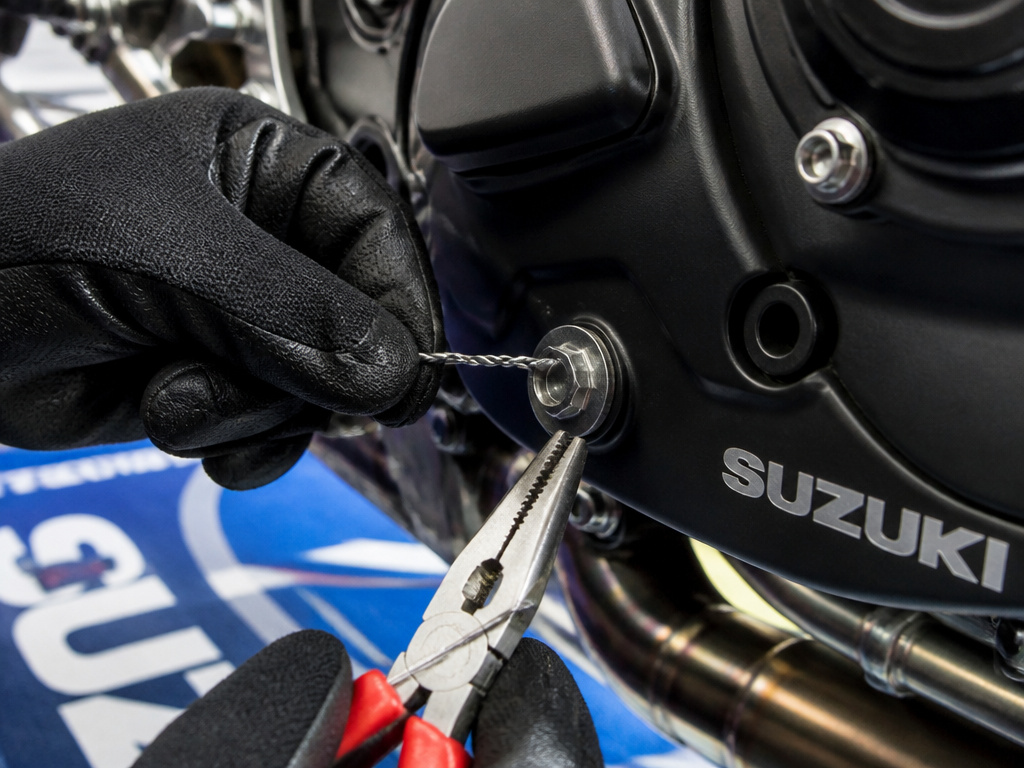
Your motorcycle must pass a technical inspection (tech) before you are allowed on track. This inspection is not about your bike’s speed; it’s about its safety and compliance with the club’s rulebook. A bone-stock modern sportbike in good condition will likely pass. A modified bike without the right documentation might not.
Here’s a pre-tech checklist derived from actual 2026 rulebooks:
- Safety-Wire Critical Bolts: Drain plugs, oil filter, oil filler cap, and brake caliper bolts must be safety-wired or secured with silicone sealant (like RTV). This prevents vibration from loosening them.
- Tires: Above a minimum wear indicator (usually 50% tread remaining for novice groups). No cords showing. Tires must be above a minimum wear indicator and free of cords.
- Brakes: Pads must have significant material left. Brake fluid should be fresh and not discolored. Brake lines should be free of cracks or leaks.
- Fluids: No leaks of any kind. All fluid caps secure.
- Bodywork: All fairings must be securely mounted. Tape over glass headlights and turn signals (remove bulbs entirely is better). Remove or tape over mirrors.
- Numbers: Temporary numbers must be applied to both sides of the bike, large enough to be seen from the scoring tower.
Now, the specific rules that catch people. The OMRRA rulebook specifies a minimum 8 oz. Capacity for oil catch tanks on four-stroke engines (Rule G-9). It also explicitly bans spin-on oil filters subject to manufacturer recall, naming “K&N 204 and 204C” from the period “March 1, 2016 – September 30, 2016” (Rule G-11). These are pass/fail criteria, not guidelines.
For your gear, the requirements are equally strict. You need a one- or two-piece leather suit (textile may be allowed in novice groups), full-coverage racing helmets (ECE 22.06 or Snell M2020/SA2020), racing boots that cover your ankles, and racing gloves with palm sliders. A back protector is almost always mandatory. This essential gear is your primary investment. Don’t cheap out on a helmet or gloves.
The part nobody mentions: Tech inspection happens in the morning, often in a crowded, noisy paddock. If you fail, you have to fix the issue and get back in line. Show up with your bike 100% ready the night before. The inspector’s job is to say “no,” and a messy bike with loose fairings invites a more thorough, and slower, look.
Your First Race Weekend
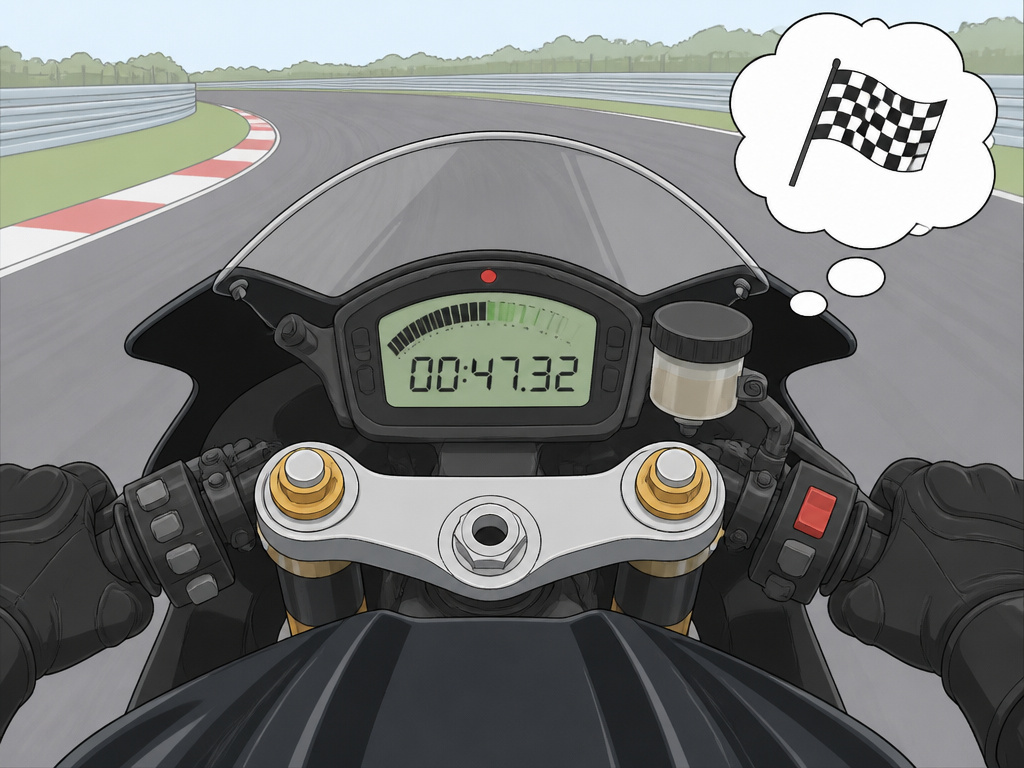
We will go through the timeline. We’ll use a club road racing weekend as the template, but the flow is similar for off-road.
Friday Evening / Saturday Morning: Arrival and Registration
Get to the track early. Find registration, present your license and membership card, and sign the waivers. You’ll receive a tech inspection form and a schedule. Then, find a spot in the paddock to unload. For a first track day or race, simplicity is key.
Saturday Morning: Tech Inspection and Riders’ Meeting
Take your bike and tech form to the inspection line. Have your helmet, suit, and gloves with you, they might be checked too. After you pass (you will, because you prepared), attend the mandatory riders’ meeting. They will review the day’s schedule, flag procedures, and any track-specific issues. Missing this meeting can ground you for the day.
Saturday: Practice and Qualifying
You will have opportunities to practice and qualify before your race. Later, you’ll have a qualifying session. Your performance in qualifying determines your starting position for the race. Don’t try to set a record here. Focus on being smooth, hitting your braking markers, and learning the proper racing line.
Sunday: Race Day
The schedule is similar, but the atmosphere changes. There’s a tension in the paddock. Your race length will depend on the class and club, with some enduros covering a course three or more miles long for two or more laps. The NGPC series runs 45-minute races, while their Pro race is a minimum of 90 minutes and Youth races are 30 minutes. Your goal for your first race is simple: start, finish, and don’t crash. Bring the bike home in one piece.
Where this goes sideways: New riders often fixate on the rider in front of them, copying their every move. This is how you miss a flag or out-brake yourself. Your job is to ride your own ride, hit your own markers, and be predictable. Passing will come later.
From Novice to Expert: Understanding Progression
You don’t stay a novice forever. The clubs have clear, if sometimes byzantine, paths for advancement. Understanding this upfront sets realistic expectations.
In the AFM, a Novice is defined as a rider with less than five completed road races who has not won a class championship. To voluntarily advance to Expert for the next season, a Novice must complete races over six unique race weekends. Alternatively, finishing in the top three of a Novice class year-end points can trigger an automatic advancement.
The NEMRR and other clubs use a “bump” system based on race results. Consistently finishing near the front of the Novice pack will earn you a “bump” to the Expert group, often mid-season. There’s no hiding once you’re fast enough.
The point is that the system is designed to move you along. You can’t sandbag in Novice forever. This protects the true novices and ensures competitive racing in each group. Your focus should be on learning, not on clinging to a classification. The skills you build by working with a coach and focusing on bike preparation will advance you faster than any horsepower increase.
What forms and releases do I need to fill out?
Before you can get on track, you’ll need to handle the paperwork. Every sanctioning body requires membership or a specific event pass. For AMA-sanctioned events, that means being an AMA member or having their pass. Organizations like NEMRR or MotoAmerica require their own current competition license. If you’re using a license from another federation, you’ll likely need to provide official start permission. Always apply well in advance; some bodies recommend submitting license applications days before your first event. Minors will have extra steps, often requiring parental signatures and sometimes additional documentation like a resume. Read the specific rulebook for your club to get the exact list.
Frequently Asked Questions
What is the best age to start motorcycle racing?
There is no single “best” age, but there are legal minimums that vary by series. Minimum age for licensing varies: NEMRR sets a floor at 16 for a regular license (with a petition for 12-15), while AMA rules for other disciplines allow riders as young as 12 for motorcycles above 86cc. The AMA’s general rule for motocross and off-road is 12 years old for motorcycles above 86cc. Many champions started in their teens, but plenty of successful club racers begin in their 30s or 40s. The best age is when you have the commitment, resources, and physical fitness to do it safely.
Can I use my street bike for racing?
Absolutely, and you should for your first season. Modern sportbikes are incredibly capable straight from the showroom. You will need to prepare your motorcycle for tech inspection (safety-wiring, taping lights, etc.), but you do not need a dedicated track bike at the start. Using your street bike keeps initial costs down and lets you focus on riding skill, not machine tuning. You’ll know when you’ve outgrown it.
How much does it cost to start motorcycle racing?
It’s a significant investment, but you can stage it. Your first-year, out-of-pocket costs will be dominated by safety gear (suit, helmet, boots, gloves: $2000-$4000), club membership and license fees ($200-$500), and race entry fees ($200-$400 per weekend). Tire and brake wear will be higher than on the street. You can reduce costs by volunteering at events, buying used gear from a trusted source, and focusing on seat time rather than performance parts. Starting motorcycle racing requires a significant investment in safety gear, membership, license, and entry fees.
Do I need to win to get sponsored?
No. In fact, winning at the club level rarely attracts cash sponsorships. What attracts support, often in the form of product discounts (contingency), is being a visible, professional, and promotable representative of a brand. Clean, well-prepared bikes and gear, active engagement on social media, and a positive attitude in the paddock matter more than a trophy. Sponsorship is a business relationship. You need to show how supporting you provides value to the company.
Is it too dangerous?
Motorcycle racing is an inherently risky activity, which is why the rulebooks and tech inspections are so detailed. The danger is managed, not eliminated. Clubs mandate top-tier safety gear, regulate machine preparation, and use flagging systems and control riders to manage on-track behavior. Compared to reckless street riding, a controlled racing environment can be statistically safer when measuring risk per mile. The key is respecting the environment, your own limits, and the rules designed to protect everyone.
Before You Go
The rulebooks have the final word. Before you spend a dollar on anything, download the current AFM official competition rulebook or the rulebook for your target club. Read the sections on licensing, technical requirements, and race procedures. The specific numbers, lapse periods, age limits, and oil tank capacities are the code you must crack to get through registration.
Your first goal is a finish, not a podium. Start with a school, get your license, and complete a race weekend without incident. The speed, the results, and the specialized equipment all come after that. The racing community is small and remembers who shows up prepared and who shows up as a problem. Be the former. Take the checklist seriously, and you’ll find the gate is open.
