
What Is a Motorcycle Track Day: Your First-Time Guide
This post contains affiliate links. As an Amazon Associate, we earn from qualifying purchases.
A motorcycle track day is a non-competitive, structured event where riders use a closed racetrack to develop skills in a controlled environment. An organizer rents the circuit, groups riders by experience level, and provides a schedule of sessions, technical inspections, and safety briefings. You ride your own bike, follow strict passing rules, and focus on learning, not racing.
The control is the whole point. On the street, you manage traffic, road hazards, and legal limits. The track strips those variables away. You work on braking points, body position, and line choice without a minivan waiting to turn left in front of you. This is the core of what is a motorcycle track day.
What follows is the map for your first day: the real schedule from major organizers, the gear that actually passes inspection, the unspoken rules that keep everyone safe, and the one logistical mistake that ruins an otherwise perfect day.
Key Takeaways
- A track day is structured learning, not a race; organizations like N2 Track Days and OPP Track Days enforce strict group rules and passing etiquette to maintain safety.
- Expect a very early start; gates or registration typically open between 6:30 AM and 7:30 AM, with the first track session starting by 9:00 AM at the latest.
- Tech inspection is mandatory and happens before you ride; failing for worn tires, loose parts, or inadequate gear means you sit out until it’s fixed.
- Group placement dictates the rules; novice/relaxed groups often prohibit passing on the inside of corners, while advanced groups allow it anywhere with a safe buffer.
- Your street bike is fine for a first day; beyond taping lights and mirrors, focus on fresh brake fluid and tire tread depth over performance mods.
The Core Concept & Typical Day Structure
Forget the open-road mentality. A track day’s value is in its constraints. An organizer, like N2 Track Days or TrackDay.com, leases the facility and acts as the governing body. They set the schedule, hire the corner workers and ambulance crew, and employ Control Riders (CRs), experienced riders who coach and enforce the rules. You buy a spot, and in return, you get a predictable, repeatable environment to dissect your riding, which is the essence of what is a motorcycle track day.
A typical motorcycle track day follows a strict schedule: early morning registration and technical inspection, a mandatory riders’ meeting, and then a rotation of 20-minute track sessions divided by skill group.
The timeline isn’t a suggestion. It’s the framework that keeps hundreds of riders and their machines moving safely. Sources show some variation, so always confirm with your specific organizer.
| Event Phase | Typical Start Time | What Happens | Source Examples |
|---|---|---|---|
| Sources disagree on start times: Hallett Motor Racing Circuit (Summer Hours) opens gates at 6:30 AM, N2 Track Days registration opens at 7:00 AM, and TrackDay.com check-in usually begins at 7:30 AM. | |||
| Technical Inspection | After Registration | Bike and gear are checked for safety compliance. Must pass before riding. | Universal across all organizers. |
| Sources disagree on meeting times: Hallett Motor Racing Circuit (Summer Hours) holds the rider meeting at 7:30 AM, OPP Trackdays starts at 8:15 AM, and Hallett (Spring/Winter Hours) holds it at 8:30 AM. | |||
| First Track Session | 8:00 AM – 9:00 AM | Advanced or novice group takes to the track for first 20-minute session. | Hallett (Summer): 8:00 AM; Trackdays.co.uk: 9:00 AM |
The session rotation is the day’s rhythm. After the first group goes out, the others follow in order. A full day with N2 Track Days typically offers about seven to nine 20-minute sessions. At Hallett Motor Racing Circuit, their premium MC-VIP day offers six 20-minute sessions with only five bikes per group to minimize traffic, while N2 Track Days typically offers about seven to nine sessions. You’ll get more track time than you can physically handle on a first day.
Gear, Bike, and Mindset: What You Actually Need
You can’t show up in jeans and a hoodie. The required gear is non-negotiable because the asphalt doesn’t care if you’re a beginner. Tech inspection will check each piece.
The Gear Shortlist:
- Helmet: Full-face, in good condition, with a valid Snell, ECE 22.06, or FIM rating. No cracks, no loose padding.
- Suit: One-piece or two-piece leather or abrasion-resistant textile suits that zip together completely. No street textiles unless specifically approved.
- Gloves & Boots: Full-finger leather gloves and boots that cover the ankle. Street riding boots often pass, but dedicated track boots offer better protection.
Your bike needs attention, but not a full race rebuild. The goal is to prove it’s mechanically sound and won’t dump fluids on the track.
Pre-Track Bike Check:
- Tires: Tread depth above the wear bars. No cords showing. Pressure will be adjusted at the track, so arrive with them slightly overinflated.
- Brakes: Pads with plenty of material. Brake fluid flushed within the last year, old fluid boils under track use and turns your lever to mush.
- Fasteners: Everything tight. Levers, footpegs, axle nuts, caliper bolts. Safety-wiring oil drain/fill plugs and filters is required only for advanced groups at most orgs.
- Tape Over: Headlights, tail lights, turn signals, and mirrors. Use painter’s tape so it removes cleanly.
The right mindset matters more than horsepower. You are there to learn, not to prove anything. The fastest rider is the one who gets to drive home with a tired smile and a bike in one piece. Understanding what is a motorcycle track day means knowing a dedicated track bike is a great goal, but your street bike is the perfect tool for a first day; preparing for your first track day involves minimal bike prep.
Skill Groups and the Rules That Bind Them
You will be placed in a group. This isn’t about ego; it’s about managing speed differentials and keeping the day safe for everyone. The names vary, but the tiers are consistent.
| Group Name (Org) | Who It’s For | Key Passing Rule | Note |
|---|---|---|---|
| Novice (N2) / Relaxed (OPP) | First-timers, newer riders. | Straightaways only. No passing on the inside of corners. | Follow-the-leader sighting laps common. |
| Intermediate | Advanced street riders, some track experience. | Straightaways & outside of corners. Inside passes only in braking zones, not mid-corner. | The “I know what I’m doing but I’m still learning” group. |
| Advanced | Very experienced track riders, licensed racers. | Anywhere on track with a minimum six-foot buffer. | Expect fast, predictable riders. Not for beginners. |
Where this goes sideways: Trying to “move up” a group on your first day because you’re fast on the street. Track speed is about consistency, line, and etiquette, not outright bravery. You’ll learn more in novice and be a hazard in intermediate.
These track day groups exist so you ride with people of similar pace and predictability. OPP Track Days requires a minimum six-foot buffer between motorcycles during passing. That space is your margin for error. Closing it is the quickest way to get black-flagged.
The most critical rules are for passing. In many novice groups, such as OPP Track Days’ Relaxed Group, passing on the inside of corners is prohibited, so you must wait for a straight. However, specific passing rules vary by organizer. These rules relax as you move up, but the responsibility is always on the passer to make it safe.
Costs, Logistics, and the Unspoken Checklist
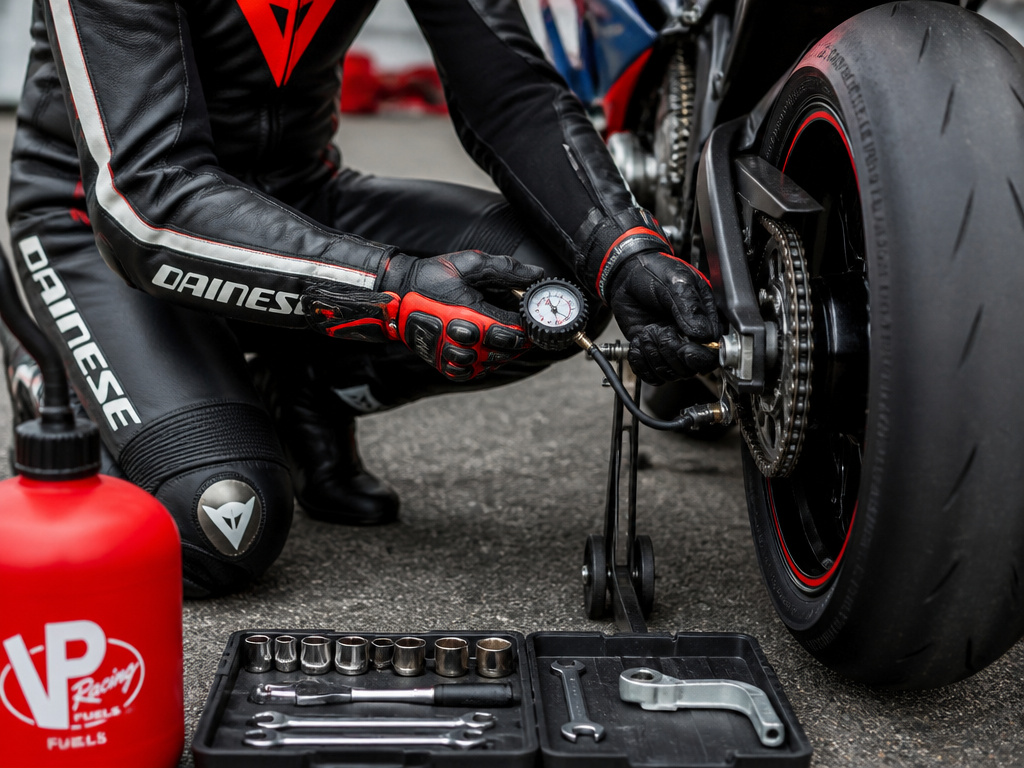
The track fee is just the entry ticket. The real cost of a track day is the sum of the fee, consumables (tires, brakes, fuel), and any gear you need to buy or rent. Here’s how it breaks down.
The Financial Breakdown:
- Track Fee: This varies wildly. Hallett Motor Racing Circuit lists $210–$275 per day, with discounts for early registration. Premium experiences like their MC-VIP day are $325.
- Tires & Brakes: A day can significantly reduce a rear tire’s life. Fresh brake pads are a must.
- Fuel: You’ll burn a full tank, maybe more. Bring extra gas cans.
- Gear: If you need to rent a suit, factor that in. Hallett’s partner, SBS, requires at least one week’s notice, preferably two.
Beyond your bike and gear, your pit area is your base camp. Showing up without supplies turns a fun day into a grind.
The Packing List Everyone Forgets:
- Tools: Basic set, tire pressure gauge, stand for your bike.
- Fuel: Enough for the day, in approved containers.
- Food & Water: More water than you think.
- Comfort: Folding chair, canopy for shade, a cooler.
- Spares: Lever, footpeg, shift rod, the small stuff that breaks in a tip-over.
Logistics matter. If your preparing your bike is perfect but you’re dehydrated and sunstroked by noon, your day is over. Pack like you’re going camping, because you are.
First-Timer Specifics and Edge Cases
Most organizations slot first-timers into the novice group. You’ll get extra attention, classroom talks, and follow-the-leader laps. But one circuit has a different rule that catches people off guard.
Hallett Motor Racing Circuit requires all first-time participants to complete their Hallett Advanced Rider Training (HART) program before joining a standard lapping day. It’s a mandatory introductory course, not an optional add-on. If you show up expecting to just ride, you’ll be turned away. This is a notable exception to the norm.
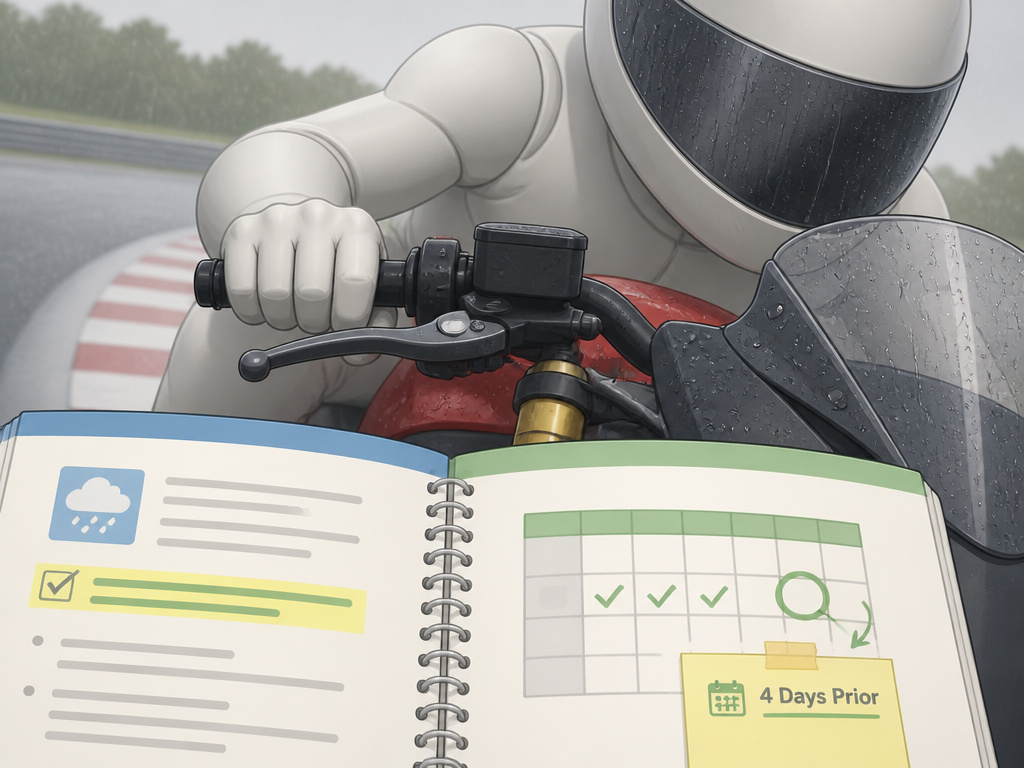
Another edge case is weather. Most events run rain or shine. OPP Track Days explicitly states this, noting that wet track riding teaches smoothness. If the organizer cancels due to extreme conditions, policies vary. Hallett credits 100% of your fee to a future event if they cancel.
For the truly curious, programs like Hallett’s MC-VIP offer a boutique experience with fewer riders on track. These have their own rules, like a “go/no-go” call made four days before the event based on weather and bookings. It’s for experienced riders chasing maximum track time, not beginners.
What do the flags mean at a track day?
Corner workers use colored flags to communicate vital information. A waving yellow flag signals a hazard on or near the track, like a stopped bike or debris. You must not pass from the point the flag is displayed until you are clearly past the hazard. A stationary red flag means the session is stopped immediately; safely slow down and return to the pits. A blue flag with a diagonal yellow stripe is a courtesy signal, indicating a faster rider is approaching and may wish to pass. You are not required to yield your line, but maintaining a predictable pace helps them execute a safe pass according to the group’s rules.
Frequently Asked Questions
Are motorcycle track days worth it?
Absolutely, but not for the reasons you might think. The value isn’t in going fast, it’s in learning control. You’ll understand your bike’s brakes, tires, and suspension in a way street riding never reveals. That knowledge makes you a safer, smoother rider everywhere. The cost is significant, but the skill payoff is real.
How much does it cost to do a track day on a motorcycle?
The track fee itself varies; for example, Hallett Motor Racing Circuit lists prices from $210 to $325 per day depending on the group and program. The total cost, including fresh tires, brake pads, fuel, food, and any gear rentals or purchases, can easily double that. Budget significantly more than the track fee to cover consumables like tires and fuel, as well as any necessary gear.
What does it mean when a biker gives you two fingers down?
That’s a common, friendly wave between motorcyclists on the road. On the track, however, you keep both hands on the bars. Track communication is done with track day flags waved by corner workers: yellow for hazard, red for stop, blue for a faster rider behind you.
Why can’t you pass a biker wearing a patch?
This question seems to mix street rider culture with track rules. On the track, passing is governed strictly by your skill group’s rules, not by what a rider is wearing. In some novice groups, you cannot pass in corners at all. The patch is irrelevant; the rulebook is what matters.
Can I use my street bike?
Yes, and you should for your first several days. The preparation is minimal: tape lights, check tire tread and brake fluid, and ensure nothing is loose. The goal is to learn, not to set lap records. A dedicated track bike is a later step, not a prerequisite.
Before You Go
A track day demystifies performance riding. It trades the chaos of the street for the clarity of a controlled lab. You learn what your bike, and you, are actually capable of.
The single most important preparation has nothing to do with your motorcycle. It’s studying the specific rulebook for your chosen organizer. Whether it’s the N2 Track Days format or the OPP Trackdays passing buffer, knowing the rules is how you stay safe and avoid being that guy.
Start by finding a local organization with a strong reputation for novice instruction. Book the novice group, prep your street bike, and pack your patience along with your tools. Your first lap will be terrifying. Your last lap will feel too soon. Everything in between is where you become a better rider.
