
Motorcycle Rally Guide for First Timers: Step-by-Step
This post contains affiliate links. As an Amazon Associate, we earn from qualifying purchases.
A first-time motorcycle rally guide covers three pillars: preparing your bike to avoid a four-figure breakdown, packing for weather extremes and long days, and mastering the logistics of crowds, camping, and group riding etiquette. The goal is to walk away with stories about the ride, not the repair.
That four-figure breakdown number isn’t a scare tactic. It’s the documented consequence of skipping a pre-trip inspection, according to the Motorcycle Rider News Survival Guide. A simple mechanical problem can quickly turn into a four-figure vacation expense, which is why the Motorcycle Rider News Survival Guide is essential for first timers.
We’ll walk through the machine check that matters, the gear that actually gets used, and how to move through a sea of bikes without losing your group or your cool.
Key Takeaways
- A pre-trip inspection at home is almost always cheaper than a repair during rally week. The Motorcycle Rider News guide calls it the single biggest money saver.
- Roadside assistance plans are not equal. The cheapest plan often becomes the most expensive after your first tow, ask about motorcycle-trained towers, mileage limits, and trip interruption coverage.
- Hydration is a strategy, not an afterthought. Pack a hydration bladder or multiple water bottles; energy crashes in summer heat are predictable and preventable.
- Your helmet’s fit and certification matter more than its graphics. While the Legendary Sturgis Buffalo Chip notes helmets are not required for adults in South Dakota, the BMW MOA tips imply a strong recommendation for helmet use and maintenance.
- Volunteer for one shift. At organized rallies like the BMW MOA event, volunteering is the fastest way to understand the layout, meet people, and contribute.
The Pre-Ride Machine Check That Saves Thousands
The lever started creeping toward the bar on my third track session. The problem was brake fluid the color of weak tea, fluid I’d meant to change for months. A flush with fresh DOT 4 fixed it for the price of a tank of gas. That lesson translates directly to rally prep: address the small stuff now, because the big stuff happens when you’re 500 miles from home.
The Motorcycle Rider News Survival Guide puts it bluntly: a pre-trip inspection at home is almost always less expensive than a repair during Rally Week, a core principle in any motorcycle rally guide for first timers. They note a simple mechanical problem can quickly turn into a four-figure vacation expense.
Before you start: You are checking for failure points under stress. A loose chain snaps; low brake fluid boils; a tire with 3/32nds of tread will be cord by day three. Assume the bike will be worked harder than your daily commute.
Your checklist starts with the AMSOIL Blog basics: tires (inflation and tread depth), chain or belt condition, brakes, lights, and fluids. This isn’t a casual glance. For tires, know the wear bars are the legal minimum, not the rally minimum. Ensure you have ample tread depth remaining. Check brake pads with a flashlight, and replace them if they are worn thin. Old brake fluid absorbs moisture and lowers the boiling point, which feels like a fading lever on a long, hot mountain descent.
Fluids are the easiest win. The AMSOIL Blog recommends checking fluids as part of a pre-ride inspection. Coolant should be flushed per your manual’s interval, not just topped off.
Finally, test your electrics. Charge your battery and check that all lights, especially brake lights and turn signals, are bright and functional. You will be riding in dense packs where communication is visual. A dead brake light invites a rear-end collision.
The short version: Inspect, don’t assume. A service at home is almost always less expensive than a repair during Rally Week.
Packing Strategy: Gear for the Ride, Not the Brochure
Packing for a rally is an exercise in controlled contradiction. You need to prepare for blazing sun, torrential rain, and chilly nights, all without overloading your bike. The common mistake is packing for the “idea” of the rally, the sunny group photo, and forgetting the reality of a chilly ride home at dusk.
Start with the non-negotiables: your riding gear. This is not the place to break in new boots or test a thin summer jacket. Wear your known, trusted kit. As the BMW MOA tips imply, if your helmet’s liner is caked with salt from past summers, it’s time for a deep clean or a replacement. A dirty, compacted liner loses its ability to absorb impact.
Your clothing strategy is layering. A moisture-wicking base layer, an insulating mid-layer, and a versatile waterproof outer shell will cover most conditions. I stopped wearing cotton anything underneath years ago. That thick hoodie soaks up sweat and leaves you chilled the moment you stop moving. A technical base layer solves it.
| Layer | Function | If You Skip It |
|---|---|---|
| Base Layer | Wicks sweat, manages temperature | You stay damp, get chilled faster at stops |
| Insulating Mid-Layer | Traps warmth (fleece, light down) | You’re cold on early morning or high-elevation rides |
| Weather Outer Shell | Blocks wind and rain (Gore-Tex or equivalent) | You get soaked, hypothermia risk increases |
| Rain Suit (Packable) | Ultimate waterproof backup | Your expensive riding jacket gets saturated in a downpour |
For tools, think repair, not rebuild. A tire plug kit is essential, but as the BMW MOA guide wisely notes, you must practice using it on an old tire at home. Include a compact air gauge, a multi-tool, a few zip-ties, duct tape wrapped around a pen, and the specific tools needed to adjust your chain or clutch cable. A small first-aid kit and a power bank for your phone are also essential.
Where this goes sideways: Packing a giant tool roll “just in case.” It adds weight, shifts your bike’s balance, and you’ll likely never use half of it. Pack for the two most likely failures: a flat tire and a loose fastener.
Navigating the Rally Grounds and Daily Flow
Your first sight of rally grounds, a sprawling city of tents, bikes, and vendor stalls, is overwhelming. The instinct is to park and wander aimlessly. Don’t. Rally Delay Syndrome is real, as the BMW MOA notes, and you’ll miss half the events.
If you’re camping, logistics come first. The BMW MOA guide states volunteers can arrive early to secure prime campsites. If you’re not volunteering, arrive as early as the rules allow. Also note: the same guide mentions there is no designated quiet area. If you need silence to sleep, pack quality earplugs and scout a spot away from the main paths and generator zones.
Once camp is set, do a dedicated reconnaissance lap. Find the key locations: the information/registration booth, first aid tent, food vendors, seminar areas, demo ride departure points, and the beer garden. Knowing where things are saves you hours of frustrated searching later.
The daily rhythm of a large rally has a predictable choke point: lunch. The BMW MOA guide offers a pro tip: grab lunch at 11:30 am or 1 pm to avoid the longest lines. Music typically starts every night around 7 pm. Grand prizes are often given away between acts on Thursday, Friday, and Saturday. If you want a seat, get to the stage area early.
| Time of Day | Typical Rally Activity | Smart First-Timer Move |
|---|---|---|
| Morning (7-10 AM) | Camp breaks down, bikes warm up, rides depart. | Attend a seminar, secure demo ride slots, or hit the vendor area before crowds peak. |
| Mid-Day (10 AM-2 PM) | Peak vendor traffic, demo ride lines, lunch rush. | Eat at 11:30 AM or 1 PM. Plan a short scenic ride to escape the crowds. |
| Afternoon (2-6 PM) | Group rides return, bike shows, informal gatherings. | Wash your bike, socialize at camp, or explore seminars. |
| Evening (6 PM+) | Concerts begin, dinner lines form, nightlife starts. | Have a dinner plan (eat early or late). Secure your spot at the concert stage by 6:30 PM. |
For navigating the packed vendor area and Main Street cruises, walking is often faster than riding. Park your bike in a designated area and explore on foot. Your group ride etiquette still applies in pedestrian crowds, be aware, be polite, and don’t block pathways.
Group Riding and Communication in a Crowd
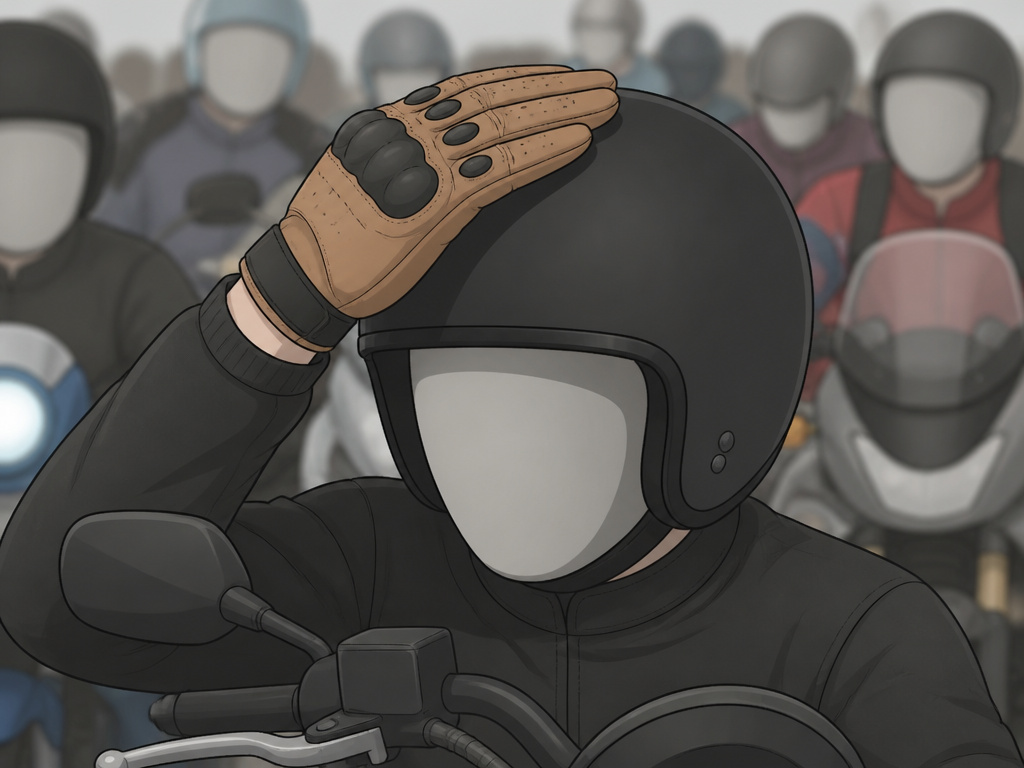
Riding to and within a rally is often a group activity, but the dynamics change in heavy traffic. The standard staggered formation can fall apart when lanes are packed and cars are unpredictable. The key is flexibility and clear communication.
A mandatory pre-ride briefing is more critical here than on a backroad blast. It should cover the route into the rally, the designated parking area, and a firm regroup point if the group gets separated. Hand signals are your primary communication tool when engine noise and wind drown out intercoms.
Here are the rally-specific hand signals every rider in your group should know:
- Point to ground (left/right): Indicates road hazard (gravel, pothole, debris).
- Two fingers down in a “V”: The “peace sign” pointed down is a common biker greeting to oncoming riders.
- Flat hand patting top of helmet: Warning for police ahead.
- Tapping top of your helmet: “I’m using my intercom.”
- Fist opened and closed: “Slow down” or “I need to stop.”
Common mistake: Relying solely on Bluetooth intercoms in dense rally traffic. Networks get clogged, batteries die, and the noise floor is too high. Hand signals and a clear plan are your reliable backup.
The roles of ride leader and sweep rider are crucial. The leader sets a pace everyone can comfortably maintain, this is not the time for heroics. The sweep, ideally a competent and equipped rider, stays at the back to assist anyone who falls behind or has a mechanical issue. They are the group’s safety net.
Money, Safety, and the Unpredictable
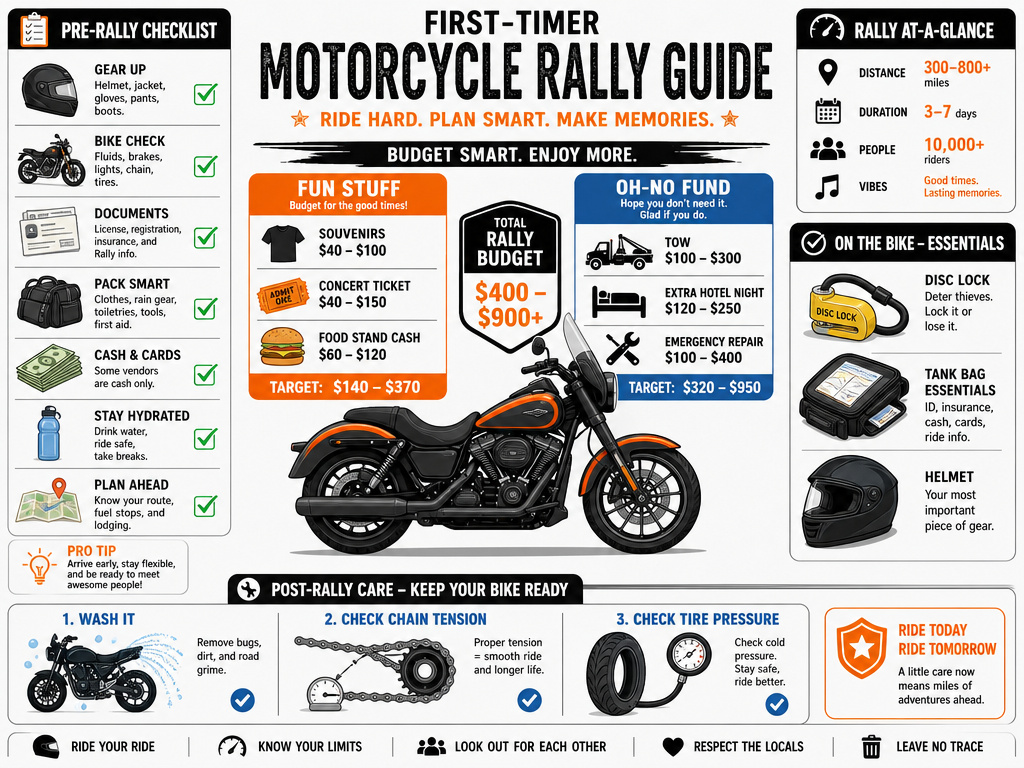
Your budget needs two columns: the fun stuff and the “oh-no” fund. The Motorcycle Rider News Survival Guide stresses budgeting for the unexpected: a breakdown, a tow, an extra hotel night. Souvenirs and concert tickets are line items, but the four-figure emergency repair is what wrecks a trip.
Carry cash. While most vendors take cards, small food stands, tip jars, and parking attendants often operate on cash only. ATMs on-site will have long lines and high fees. Get cash before you arrive.
Safety extends beyond your gear. Be hyper-aware of your surroundings, especially after dark. Keep your bike locked (a simple disc lock is a deterrent) and your valuables secured. Have a copy of your driver’s license, insurance card, and roadside assistance information on your phone, and a physical copy in your tank bag.
The part nobody mentions: Post-rally bike maintenance. Your bike has ingested a week’s worth of dust, bugs, and potential moisture. Give it a proper wash and check chain tension, fluid levels, and tire pressure before your next big ride. It’s the difference between a machine ready for the next adventure and one silently corroding in the garage.
Finally, know the local laws. As the Legendary Sturgis Buffalo Chip notes, motorcycle helmets are not required for adults in South Dakota, but that’s a legal minimum, not a safety recommendation. Other states on your route may have strict helmet laws. Research them beforehand. The same goes for noise ordinances and parking rules; rally towns have low tolerance for burnouts or blocking intersections.
What should I carry on my bike for a rally?
Your pre-ride check is the most important tool. Before you leave, inspect your tires, brakes, lights, and all fluids. Look over your chain or belt for proper condition. A simple mechanical problem fixed at home is far less expensive than a roadside repair during the rally. Pack healthy snacks and plenty of water to stay hydrated on the road. Consider your roadside assistance plan carefully; the cheapest option can become costly after your first tow. The goal is to handle minor issues yourself and avoid a major vacation expense.
When is the best time to go to the Sturgis rally?
The 86th Sturgis Motorcycle Rally runs August 7–16, 2026. The biggest crowds arrive from Tuesday through Friday of rally week. If you want the peak scene, aim for that Tuesday. If you’re riding in from far away, plan to arrive the Wednesday or Thursday before the official kickoff to beat the traffic on the interstate. Hotels put you in Deadwood, Spearfish, or Rapid City with real beds and A/C, but you’ll ride 20–45 minutes to reach Sturgis each day.
Frequently Asked Questions
What is the 12 second rule on a motorcycle?
What does 2 fingers down mean for bikers?
Do I need special insurance for a motorcycle rally?
You should review your policy before you go. Call your agent and ask specific questions from the Motorcycle Rider News checklist: Do you have accessory or custom parts coverage? What does your roadside assistance actually cover, does it use motorcycle-trained towers, and what’s the tow distance limit? The cheapest roadside assistance plan often becomes the most expensive after your first tow.
How do I avoid the biggest crowds at a rally like Sturgis?
According to the Sturgisgo.com guide, the biggest crowds hit Tuesday through Friday of rally week. For lighter crowds, aim for the opening Monday or the final weekend. If you’re riding in from far away, arrive the Wednesday or Thursday before the official kickoff to beat the interstate traffic.
The Bottom Line
A rally is a test of your preparation, not just your riding. The difference between a story about an unforgettable concert and one about a stranded bike on I-90 comes down to a checklist you run in your driveway.
If you take one thing, let it be this: inspect your bike with the mindset that a failure will happen at the worst possible moment. That changes a casual glance into a meaningful check. Pack for the miserable hour, not just the perfect day. And when you’re there, slow down. Walk the vendor rows, talk to the rider next to you at a stoplight, and volunteer for a shift. The mechanics are what get you there, but the moments are what you bring home.
For more on planning a big trip, our road trip planning guide breaks down routing and daily mileage. And if you’re considering staying on-site, our motorcycle camping guide covers how to pack a bike for a multi-day outdoor stay.
