
How to Organize a Motorcycle Charity Ride: Step-by-Step
This post contains affiliate links. As an Amazon Associate, we earn from qualifying purchases.
To organize a motorcycle charity ride, you need a legal structure for the money, event liability insurance, signed waivers, a clear route under 70 miles, and a team to handle stops and safety. The ride itself is secondary to the paperwork that protects you, your volunteers, and the charity. Miss the legal steps and you risk lawsuits or turning donations into taxable income.
That paperwork gap is where new organizers fail. They pick a great route and a worthy cause, then get blindsided by a venue demanding to be added to the insurance policy or a tax rule about depositing funds. The ride is the fun part. The months before are about building a shield against everything that can go wrong, which is why the core of how to organize a motorcycle charity ride is found in this administrative groundwork.
What follows: the essential legal and insurance steps, how to pick a ride format that fits your crowd, the volunteer roles that make it run, and the one post-ride task that decides if you do it again next year.
Key Takeaways
- Never deposit ride funds into a club’s bank account. Per the H.O.G. Handbook, this converts charitable donations into taxable chapter income. Use a Letter of Agreement with the 501(c)(3) charity to handle all money.
- Carry a $1 million liability policy and be ready to add your start point venue (like a dealership) as an additional insured. Some venues require it.
- A charity poker run needs five stops with at least two volunteers each, and the first card is drawn at the first stop, not the start location.
- Limit the ride to 3 hours and 30-70 miles, as recommended by the H.O.G. Chapter Handbook. This keeps the day manageable for volunteers and riders.
- Your sweep rider is your on-road safety net. This person, equipped to help with breakdowns, is more critical than a loud intercom system for group safety.
The Legal & Insurance Foundation You Can’t Skip
This is the part everyone wants to skip. Don’t.
If you’re serious about raising money, make the charity legit. That means partnering with an existing organization that has IRS 501(c)(3) status. This allows donors to deduct their registration fee, even if it’s just $10. It also means the charity handles the tax reporting for all donations. Your job is to get them the money cleanly.
Where this goes sideways: Depositing ride proceeds into your motorcycle club’s account. According to the H.O.G. Chapter handbook, this converts charitable donations into taxable chapter income. The prescribed fix is a Letter of Agreement that makes the 501(c)(3) charity financially responsible from the start.
A signed waiver is your next layer of essential protection. It should list the rider and passenger’s name, license plate number, and verify the rider has a motorcycle endorsement and insurance. This document acknowledges the inherent risks of riding. You need one from every participant.
Then there’s insurance. You need a separate event liability policy. A common benchmark is a $1 million liability insurance policy per event. Your start/finish line venue, like a dealership, may ask to be added to this policy as an additional insured. Some ask, some don’t. Have the certificate ready.
| Document | What It Does | Consequence If Missing |
|---|---|---|
| 501(c)(3) Partnership | Allows tax-deductible donations; charity handles tax liability. | Donations aren’t deductible; your club could owe taxes on the funds. |
| Participant Waiver | Transfers inherent risk of riding to the participant. | Opens you up to personal liability if a rider is injured. |
| Event Liability Insurance | Covers claims of property damage or bodily injury during the event. | You are personally financially responsible for accidents at your event. |
| Venue Agreement | Grants permission to use the location; may require insurance proof. | You could be shut down on event morning or face trespassing charges. |
What Type of Ride Are You Running?
The format sets the tone and complexity. A simple group ride to a destination is easiest. A poker run adds fun and fundraising but needs more logistics.
A poker run is not a race. It’s a ride with five stops where participants draw a playing card at each. The best (and sometimes worst) hand at the end wins a prize. The NCCC poker run manual is a goldmine for this, noting you need at least two volunteers at every stop to manage the card draw.
Sources disagree on the perfect length. The H.O.G. Chapter handbook is strict: a charity ride should be between 30 and 70 miles and take no more than three hours. The NCCC manual suggests at least 50 miles. The RevZilla article offers no prescribed mileage, instead recommending route-planning apps and general considerations. For a first-time event, lean toward the shorter, simpler end. A 70-mile route with five stops requires significant planning.
The ride should be a highlight, not an endurance test. A three-hour cap respects everyone’s time, riders, volunteers, and the venue staff waiting at the finish.
Your choice when planning how to organize a motorcycle charity ride dictates your volunteer count. A simple point-to-point ride needs a leader, a sweep, and registration help. A poker run needs those plus five stop teams. Be realistic about who you can recruit.
Building Your Crew and Assigning Roles
You cannot do this alone. Volunteers burn out on long shifts. The H.O.G. Handbook advises keeping work shifts reasonable, about two to three hours.
Start with these core roles:
- Event Lead: The single point of contact. They handle the charity, insurance, and major vendor contracts.
- Route Coordinator: They scout and document the route, noting rest stops, fuel, and hazards. This person should pre-ride the route the week before.
- Registration Lead: Manages waivers, collects fees, and hands out route sheets. They need a team for event morning.
- Safety Lead / Road Captain: This person runs the pre-ride briefing. They explain hand signals, the staggered riding formation, and regroup points. They also appoint the leader and sweep and explain the riding formation.
- Sweep Rider: Perhaps the most underrated role. Your sweep rider is your on-road safety net. This person, equipped to help with breakdowns, is critical for group safety. They must be mechanically savvy and carry basic tools.
- Stop Captains (for poker runs): Each of your five stops needs a captain and a volunteer. Their job is to hand out cards, manage a small line, and keep the stop tidy.
Write down responsibilities for each role. A volunteer holding a one-page “day-of” sheet is ten times more effective than one trying to remember verbal instructions.
Route Planning and Day-Of Logistics
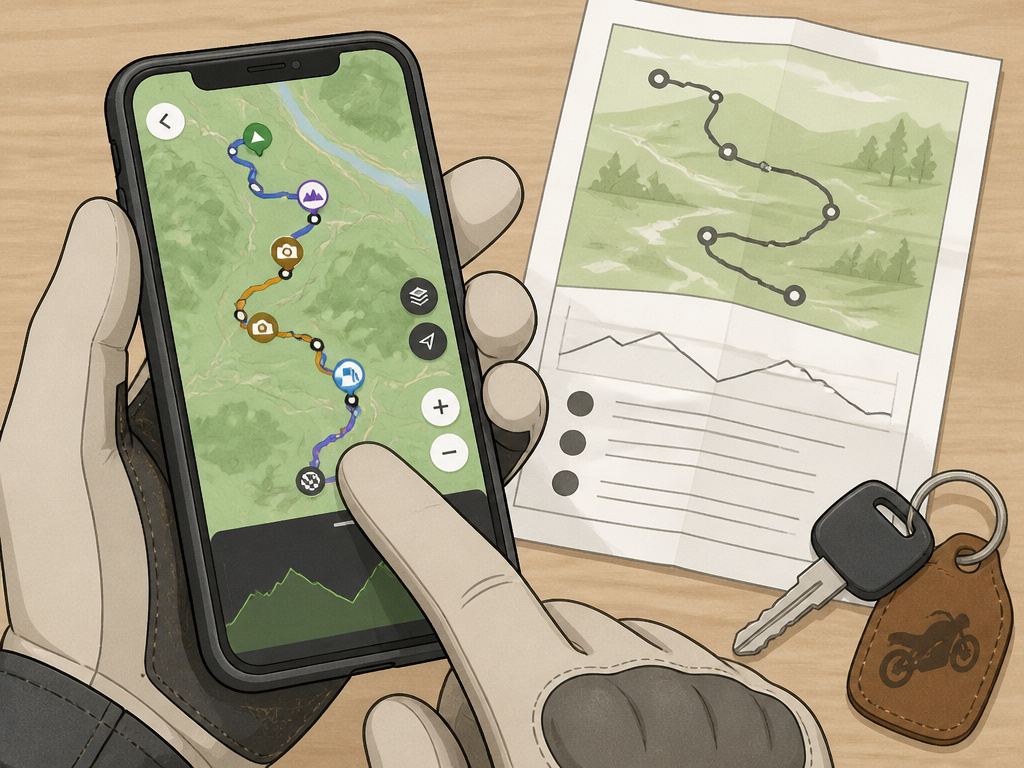
Now for the ride itself. Your route must be safe, scenic, and simple to follow. Use an app like REVER or Calimoto to plan and share the route digitally. But always, always, pre-ride it on a motorcycle. A car won’t show you the gravel in that decreasing-radius turn.
The NCCC poker run manual suggests starting and ending at the same place for simplicity, a dealership, a VFW hall, a park with a large lot. Get written permission.
Here is a sample timeline for a poker run event day:
- 8:00 AM – Volunteer Briefing: Gather all stop captains and key crew. Review assignments, hand out supplies (cards, tablecloths, signs).
- 8:30 AM – Registration Opens: Riders sign waivers, pay entry, get route sheet and scorecard.
- 9:45 AM – Pre-Ride Briefing: The Safety Lead addresses all riders. Covers hand signals, group ride etiquette, and emergency procedures.
- 10:00 AM – First Bike Out (Kick Stands Up): Riders leave in a staggered formation.
- 1:00 PM – First Bikes Return to Finish: Food, music, and prize judging begin.
- 2:30 PM – Prizes Awarded & Thank-Yous: Recognize winners, thank sponsors, volunteers, and the charity.
Contingency plan: What if it rains? Decide now if you have a rain date or if it’s rain-or-shine. Your registration page must state the policy. Have a plan for indoor space at the finish line.
The Pre-Ride Briefing: Your Safety Net
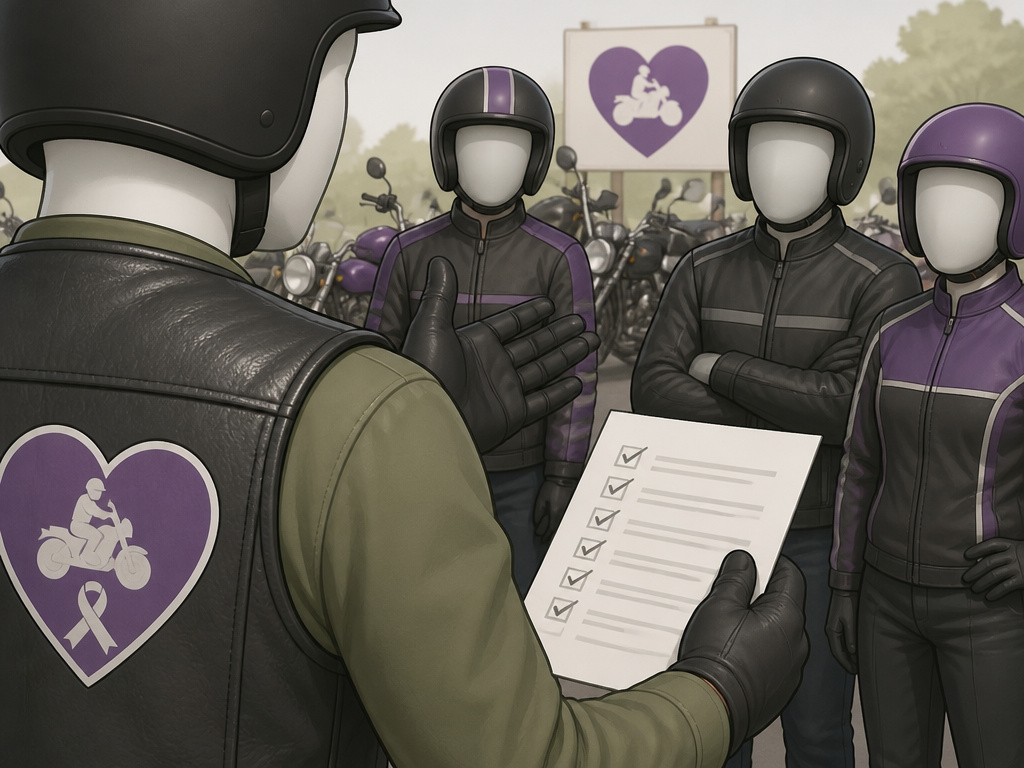
The minutes before riders leave are your last chance to prevent chaos. A good pre-ride briefing is non-negotiable. It sets the rules and the tone.
The Safety Lead should cover these points, clearly and concisely:
- Ride Format: “This is a poker run, not a race. We have five stops. Your first card is at Stop 1, not here.”
- Formation: “We’ll ride in a staggered formation. Don’t tailgate. If you need to pass, do so safely and one at a time.”
- Hand Signals: Review key motorcycle hand signals for hazards, turns, and speed adjustments.
- Regroup Plan: “If we get separated, we will regroup at [specific location]. The sweep will not leave you.”
- Sweep Rider: Introduce your sweep rider and their bike. “If you have a problem, the sweep will stop with you. The group will not wait at a stop light.”
- The Out: “This is a voluntary ride. You are responsible for your own safety, bike, and obeying traffic laws.”
This briefing transfers responsibility to the riders. It’s the core of good group ride etiquette.
Money, Sponsors, and Post-Event Follow-Up
Transparency with money builds trust for next year. From the beginning, all funds should flow to the 501(c)(3) charity. Use a platform like Eventbrite or DoJiggy for registration to keep clean records. For cash donations, have two volunteers count and log it together.
Sponsors offset costs. Local shops might donate prizes or gift cards. A dealership might provide the venue. In return, list them prominently on your event page and thank them publicly at the finish line party.
Common mistake: Treating the finish line as the end. The real work for building a recurring event starts after the last bike leaves.
Within 48 hours, send a thank-you email to all participants. Share a few great photos, announce the total funds raised, and thank volunteers and sponsors by name. This report goes to the charity, your club, and your sponsors. It proves you delivered.
Then, hold a short debrief with your core team. What went well? What broke? Did any stop run out of cards? Was the route too complex? Write these notes down. They are the blueprint for a smoother event next year.
How to Get Sponsors for a Charity Ride
Approach local businesses that align with the motorcycle community, like dealerships, gear shops, or restaurants. Be ready to explain what you offer in return, such as their name on event materials or recognition at the finish line venue. A key point for potential host venues, like a dealership, is insurance. They may request to be added as an additional insured party on your event’s liability policy. Having a clear plan for rider turnout and charity legitimacy makes your pitch stronger.
Choosing a Start and Finish Line Venue
Your start and finish location sets the tone. It needs ample parking for a large group of motorcycles and space for registration and post-ride gatherings. The start and end place can be the same or different. A single venue simplifies logistics, while a different finish line can make the route more interesting. Ensure the venue understands the event’s scale and your insurance needs. A venue with facilities for riders can accommodate your group before and after the ride.
Frequently Asked Questions
What’s the easiest type of charity ride for a first-time organizer?
Simple group ride to a destination restaurant or park. You avoid the logistics of multiple stops. Focus on nailing the legalities, waiver, insurance, charity partnership, and a single, safe route. You can add a raffle or 50/50 draw at the endpoint to raise extra funds.
How far in advance should I start planning?
Sources disagree. The NCCC poker run manual recommends ample planning time and advises against a rushed timeline. A simple group ride might be possible with less planning time. The longer timeline is for securing sponsors, permits, and insurance, not just planning the route.
Can anyone participate in a charity ride?
It depends on your insurance. According to the H.O.G. Chapter handbook, for a chapter’s charity ride to be automatically covered by their insurance, it must NOT be open to the general public. It should be for chapter members and their guests. If you open it to the public, you’ll need to secure a separate event policy, which is more complex and costly.
What should I include on the participant waiver?
At minimum: rider and passenger full name, motorcycle license plate number, a statement that the rider has a valid motorcycle endorsement and insurance, and a clear waiver of liability for the organizers and venue. Have a lawyer review your waiver. It’s a cheap insurance policy for your insurance policy.
How do I choose a charity to support?
Pick a 501(c)(3) organization with a mission that resonates with your riding community. Local causes often see better turnout. Contact them early. A 501(c)(3) charity will provide a Letter of Agreement and may even help with promotion to their donor base.
The Bottom Line
Organizing a charity ride is about managing risk first and riding second. Lock down the 501(c)(3) partnership, the insurance, and the waivers before you even map the route. For your first time, choose a simple format and a route under 70 miles. Your sweep rider and a clear pre-ride briefing will handle more safety issues than any intercom system.
The goal when you master how to organize a motorcycle charity ride isn’t just a successful day, it’s building an event that can run again next year. That happens with transparent finances, grateful follow-ups, and honest debriefs. Get the paperwork right, treat your volunteers well, and the riding community will show up. They always do.
