
What Does the Motorcycle Wave Mean: The Unspoken Rules
This post contains affiliate links. As an Amazon Associate, we earn from qualifying purchases.
The motorcycle wave is a quick, low gesture, usually a two-finger peace sign pointed down or an open palm, made by riders as they pass each other. It’s a non-verbal sign of respect, solidarity, and shared experience on the road, not a formal salute or a mandatory rule. You wave left-handed because your right hand is on the throttle.
Think of it as a nod between people who understand the same unspoken risks. It says “I see you” and “ride safe” in one motion. That’s the core of it.
The rest is just figuring out the when, the how, and the why someone might not wave back. What follows breaks down the gesture’s murky history, the practical how-to, and the few real rules that keep it from being a distraction.
Key Takeaways
- The wave is a left-handed gesture of respect and awareness between riders.
- Its supposed origin with Harley-Davidson is mostly folklore; the real reason is practical camaraderie.
- The common two-finger wave means “keep two wheels down” or “ride safe.”
- Don’t wave if it compromises control, in a corner, in heavy traffic, or when your hand is busy.
- Wave etiquette changes in countries that drive on the left; the gesture often switches to the right hand.
What Is the Basic Meaning of the Motorcycle Wave?
It’s not a secret handshake. It’s not a club membership test. The wave is a simple acknowledgment between two people sharing a specific, vulnerable space.
You’re both out in the open, dealing with the same blind spots, the same road debris, the same drivers who might not see you. The wave is a micro-second of recognition. It says, “I know what you’re dealing with out here.” In that sense, it’s less a greeting and more a tiny pact of mutual awareness. The solidarity is real, even if you’ll never meet the other rider.
The motorcycle wave is a social gesture of camaraderie and shared risk, performed almost exclusively with the left hand while passing an oncoming rider. It has no standardized form in any official riding manual or safety guideline.
This matters because new riders often overthink the what does the motorcycle wave mean question. They worry about doing it wrong or missing their cue. Relax. A wave missed is not an insult delivered. The gesture only works when it’s effortless and safe. If you’re white-knuckling a new bike on a winding road, your job is to ride, not to greet every passing motorcycle.
The Origin Story (And Why It’s Mostly Wrong)
Every article repeats the Harley-Davidson story. Early Harley riders, the tale goes, would give a low wave to oncoming riders to identify fellow Harley owners. If the other rider was on a rival Indian motorcycle, they’d get no wave back. It’s a great origin myth, tribal, exclusive, and perfectly suited for bar stories.
Here’s the honest take. That story is almost certainly folklore. No primary source, no Harley-Davidson archive, no period manual documents this as a company policy or a widespread practice. It’s a post-hoc explanation that sounds better than the boring truth.
The boring truth to what does the motorcycle wave mean is more practical. Motorcycles have always been a minority on the road. Riders have always been more exposed to danger than car drivers. A simple gesture between them makes psychological sense. It’s a way to build a bit of community in an otherwise solitary activity. The left hand was free because the right was on the throttle and the front brake. The wave stayed low so it didn’t look like you were signaling a turn or waving erratically.
The myth persists because it’s a straightforward story. It’s simply human nature.
How to Wave: The Common Gestures
You’ll see a few standard moves. None are wrong if the intent is clear.
- The Two-Finger Wave (Peace Sign Down). This is the most common. Riders extend the index and middle finger of their left hand in a “V,” usually pointed down toward the road or the engine. The meaning is “keep two wheels down” or “keep the rubber side down.” It’s concise and unmistakable.
- The Open Palm Wave. A simple, low wave with the whole hand. It’s friendly and unambiguous, often used by riders in full touring gear or on cruisers. It’s the wave you’d give a neighbor.
- The Nod. When your hands are busy, clutching, braking, adjusting a mirror, a slight downward tilt of the helmet works. It’s the most subtle acknowledgment. In some countries where you ride on the left, the nod is the primary greeting because the right hand (now the outside hand) is the busy one.
- The Leg Dangle. On long, straight highways, some touring riders will briefly dangle their left leg off the peg. It’s a stretch and a wave combined, usually reserved for empty roads.
Where this goes sideways: Trying a fancy wave you’ve never practiced while leaned over in a corner. The bike gets unsettled, your line widens, and the greeting turns into a panic. Keep it simple until the motion is muscle memory.
The best wave, when you consider what does the motorcycle wave mean, is the one you can do without thinking. For most, that’s the two-finger down.
When NOT to Wave (The Safety Exceptions)
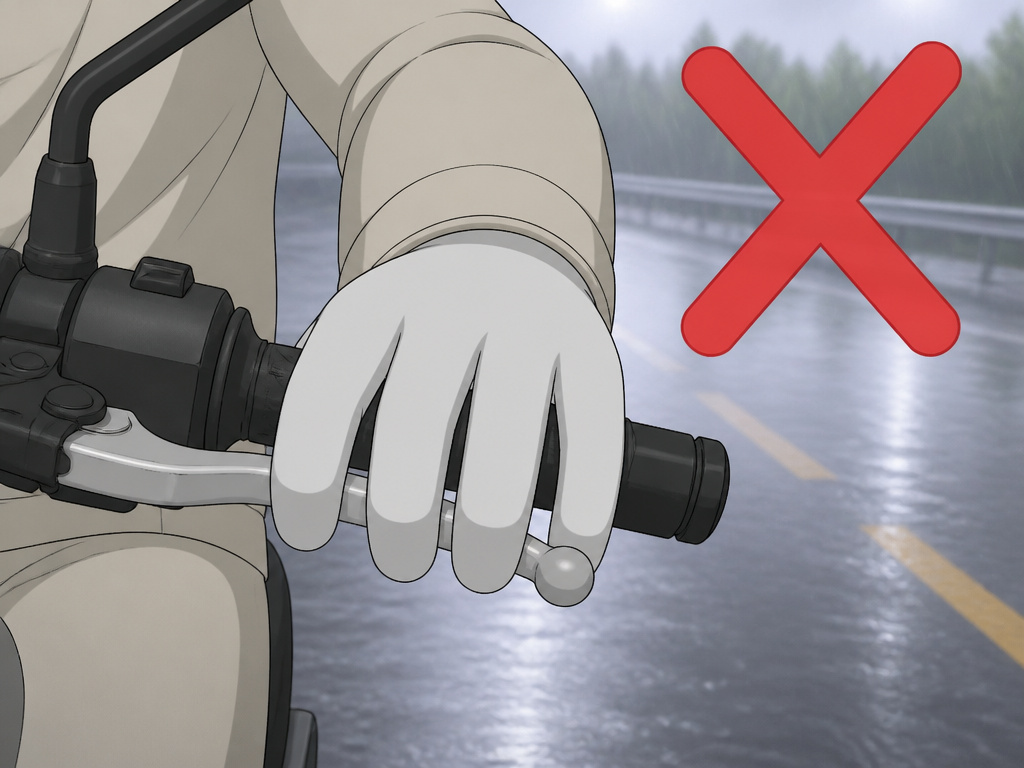
This is the most important part. The wave is optional the second it conflicts with control.
- Mid-Corner. Your focus and lean angle are critical. Adding a wave shifts your weight and can upset the bike. The other rider will understand.
- In Heavy Traffic or Complex Situations. If you’re splitting lanes, navigating a busy intersection, or dealing with erratic drivers, both hands should be on the bars and your eyes on threats.
- When Your Left Hand is Busy. Clutching for a shift, signaling for a turn, or adjusting your clutch lever, all valid reasons to skip it.
- In Low-Traction Conditions. Rain, gravel, sand, or painted road lines. Any maneuver that isn’t essential to keeping the bike upright is a risk.
- At Night or in Low Visibility. The other rider might not see it. A quick headlight flash (one quick toggle from low to high beam) is a safer, more visible alternative that serves the same “I see you” purpose.
A wave not returned isn’t a snub. It’s almost always because the other rider is in one of these situations. Assuming otherwise is how you start inventing drama where none exists.
The Two-Finger Wave and Other Symbolism
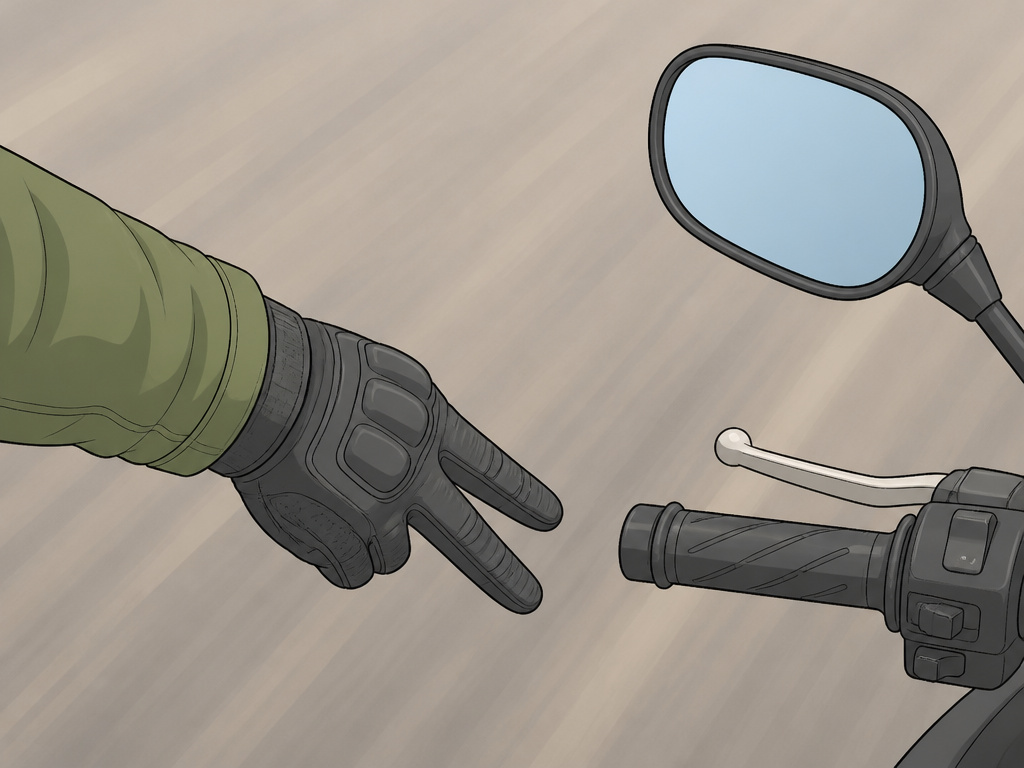
Why two fingers? The “keep two wheels down” meaning is the straightforward one. It’s a wish for safety. Before modern safety gear, a crash often meant a bike sliding on its side, the “rubber side down” part failing. The gesture is a hope against that.
You might also hear it called the “peace sign.” That’s not wrong, but the pointed-down orientation changes the context. It’s peace between riders, not a protest.
Other symbols exist but are rarer. A pointed finger toward the road can mean “hazard ahead.” A tapping motion on top of the helmet is a nearly universal warning for police ahead. It’s crucial to distinguish these urgent hand signals from the casual wave. One is social; the other is a safety broadcast. Mixing them up, waving when you mean to warn, defeats the purpose.
For a full breakdown of these critical safety signals, see our guide on motorcycle hand signals.
Regional and Cultural Differences
The wave isn’t global law. It changes with the side of the road you drive on.
In the UK, Australia, Japan, and other left-hand-drive countries, the throttle and front brake are on the right handlebar. The rider’s right hand is the busy one. Therefore, the wave often switches to the left hand, or riders default to the helmet nod. An American tourist waving left-handed at a UK rider might just confuse them.
There are also subculture quirks. Some Harley purists historically didn’t wave to riders on Japanese sportbikes, and some sportbike riders might not wave to scooter riders. This is fading fast. Most riders today wave to anything on two motorized wheels. The “us vs. Them” mindset is outdated and misses the point of shared risk. The guy on the maxi-scooter is just as exposed as you are.
The etiquette for riding in a group has its own formal signals, but the passing wave remains a solo rider’s tradition.
What If You Don’t Get a Wave Back?
Don’t take it personally. Seriously.
The reasons are almost always practical, not personal. They didn’t see you. They were in a corner. They were clutching. They were fighting a crosswind. They were lost in thought. Inventing a story where they’re a snob on a fancy bike is a waste of mental energy you should spend scanning the road.
The only time a consistent lack of waves might mean something is in a tight-knit local motorcycle club with its own strict internal rules. But on the open road, between strangers, no wave is just no wave.
The Wave in the Age of Technology
Do riders still wave? Mostly, yes. But the tradition is subtly changing.
Bluetooth communicators let riders talk within their group, which can make them less focused on outsiders. Riders buried in navigation prompts or music might be slower to notice an oncoming bike. But the gesture is persistent. It’s a physical habit that feels good.
Some riders use a quick headlight flash instead, especially at dawn or dusk. It’s effective. The important thing is the acknowledgment, not the specific method.
The wave will survive as long as riding feels like a shared endeavor. It’s a human moment in a mechanical activity.
Frequently Asked Questions
What does the two-finger motorcycle wave mean?
It’s a wish for safety, meaning “keep two wheels down” or “keep the rubber side down.” It’s the most common form of the wave, given with the left hand, index and middle finger extended in a V pointed toward the road.
Do you wave to scooter riders?
Most riders do. The modern etiquette is to wave to anyone on two motorized wheels sharing the same risks. The distinction is arbitrary and fading.
Why do bikers wave at each other?
It’s a sign of solidarity, respect, and mutual awareness of the unique dangers of riding a motorcycle. It’s a quick way to acknowledge a shared experience.
What does it mean when a biker taps his helmet?
This is a critical warning signal, not a casual wave. Tapping the top of your helmet universally warns other riders of police ahead or a speed trap. It’s an urgent safety message.
Is the motorcycle wave an official hand signal?
No. It is a purely social tradition. Official motorcycle hand signals for turning, stopping, or hazard warnings are different and are meant for communication within a group.
Do you wave in countries that drive on the left?
Often, no. Since the throttle and front brake are on the right handlebar, the rider’s right hand is busy. The wave may switch to the right hand, or riders may simply nod. Don’t be surprised if your left-handed wave isn’t returned.
The Bottom Line
The wave is a nice tradition, but it’s not the point of riding. The point is riding.
If you can give a safe, casual two-finger down wave to an oncoming rider, do it. It’s a feeling of camaraderie. If you can’t because you’re busy controlling your bike, don’t. The other rider isn’t keeping score. The whole system works because it’s low-pressure.
One rule that transcends all the folklore: if your wave ever makes your bike wobble, you’re doing it wrong. Control first, camaraderie second. That’s the real respect, for your own ride. Everything else is just a gesture.
