
Types of Motorcycle Pants
This post contains affiliate links. As an Amazon Associate, we earn from qualifying purchases.
Motorcycle pants are divided into three primary categories by material: leather, textile, and protective denim (riding jeans). Your choice hinges on matching the material’s abrasion resistance and the garment’s CE certification class (AAA, AA, or A) to your riding speed, environment, and the physical risks you’re most likely to face. The newer EN 17092 series (2020) sets these classes, replacing older standards like the French NF EN 13595 protocol which had reduced requirements.
That certification label is the only objective measure you get. It’s not a marketing grade. EN 17092-3:2020 Class AA, for example, means the pants met a specific set of laboratory tests for seam strength, abrasion resistance, and impact protector retention, tests defined by an international standard. Without it, you’re trusting a brand’s word against asphalt.
What follows is a breakdown of the three material families, the protection classes that govern them, and the riding styles each serves best among the types of motorcycle pants. By the end, you’ll be able to read a product’s spec sheet and know whether it fits the roads you ride.
Key Takeaways
- Match the CE class to your riding risk. For highway speeds or sport riding, look for Class AA or AAA certification (EN 17092-3:2020 or EN 17092-2:2020). Class A is the minimum and may be insufficient for higher-speed impacts.
- Leather is the abrasion gold standard, but modern textiles like 1000D ballistic nylon and laminates like Duratex™ offer comparable slide protection with better weather versatility.
- Check armor placement on the bike. Knee pads that sit perfectly when standing can slide low when seated, exposing your knee joint. Adjustable armor is essential.
- “Riding jeans” are a spectrum. True certified jeans use a Kevlar® or Dyneema® lining (like 250 g/m² Kevlar® 60/40) in impact zones. Fashion jeans with a thin lining offer little real protection.
- Fit dictates function. Pants that bind at the hip or thigh will fight you in a tuck or when standing on pegs, draining focus and comfort long before a crash ever happens.
The EN 17092 Protection Classes (AAA, AA, A) Explained
Forget marketing terms like “premium protection.” The European standard EN 17092, published in 2020, gives you three measurable tiers: AAA, AA, and A. These classes define the level of abrasion and impact protection a garment must provide based on standardized laboratory tests. The older French Protocol, NF EN 13595, had reduced requirements for abrasion, cut, and tear resistance for non-professional riders. EN 17092 replaced that patchwork with a unified system.
EN 17092-2:2020 (Class AAA): “Class AAA garments offer protection from impact and abrasion, using materials and construction that meet higher requirements than for garments covered by parts 3 and 4 of this standard series.” These are typically one- or two-piece race suits. The standard notes they “may have limited ergonomic, weight and thermal penalties for some riding activities.” EN 17092-3:2020 (Class AA): “Class AA garments offer protection from impact and abrasion, using materials and construction that meet higher requirements than for garments covered by part 4 of this standard series and lower requirements than for garments covered by part 2.” The standard states these garments “generally offer protection against the risks of the greatest diversity of riding activities, and they may have lower ergonomic and weight penalties than Class AAA garments.” Most high-quality touring, adventure, and urban pants target this class. Class A (EN 17092-4): This is the baseline level. It provides the minimum acceptable abrasion resistance defined by the standard.
The class is printed on the garment’s CE label. If it doesn’t say “EN 17092” and a class, it’s either certified to an older standard or not certified at all. A product like the SPIDI Moto Leggings is listed as “prEN 17092: 2017 class A certified” and marketed for “spring/summer usage, on every type of bike.” That’s a manufacturer’s choice. However, the guide for manufacturers and standard descriptions note that Class A is the lowest abrasion resistance level in EN 17092, which may be insufficient for higher-speed or higher-risk riding where Class AA or AAA is advised.
| Protection Class | Standard | Intended Use & Examples | Key Differentiator |
|---|---|---|---|
| AAA (Highest) | EN 17092-2:2020 | Track days, high-speed sport riding. One/two-piece race suits. | Highest abrasion resistance and seam strength requirements. |
| AA (Medium-High) | EN 17092-3:2020 | Touring, adventure, sport-touring, urban commuting. (e.g., Dainese Super Adventure pants) | Balance of protection and comfort for diverse riding. |
| A (Baseline) | EN 17092-4 | Low-speed urban, casual riding. Some lightweight or fashion-oriented gear. | Meets minimum requirements for abrasion resistance. |
The Material Matrix: Leather, Textile, and Denim
This is where the physical trade-offs live among the types of motorcycle pants. Each material family has a different feel, weight, and maintenance routine. Your climate and riding style pick the winner.
Leather Pants: The Abrasion Benchmark
Cowhide leather, especially full-grain, is the best material for sliding across pavement. It’s dense, tough, and has a high melting point. That’s why you see it on every racetrack. The SPIDI Vent Pro Leather Pants, certified to EN 17092-3:2020 Class AA, are made of bovine leather, mesh, and polyamide. Leather’s downside is weather management. It’s hot in summer, cold in winter, and offers zero innate waterproofing. Perforation helps, and laminated leathers exist, but you’re often adding a separate rain layer.
Common mistake: Buying sport-cut leather pants for an upright adventure bike. The aggressive pre-curve for a sportbike tuck will bind horribly when you’re standing on pegs. Fit for your riding position, not the material’s reputation.
Textile Pants: The Versatile Workhorse
“Textile” is a huge category. It encompasses everything from thin mesh to rugged, multi-layer laminates. The best ones, like the Adventure-spec Mongolia ITB Pant 2.0 (CE AA), use 1000D ballistic nylon in abrasion zones. These fabrics can approach leather’s slide resistance while integrating waterproof membranes (like D-Dry®), thermal liners, and massive vents. The Dainese Tempest 4 D-Dry pants (EN 17092 Class A) feature a waterproof/breathable D-Dry® membrane, a removable thermal layer, and zipper vents on the thighs.
Modularity is the modern textile’s superpower. The Dainese Super Adventure Absøluteshell™ Pants take this further with a removable Absøluteshell™ membrane you can wear over the pants for rain or inside as a thermal layer. That’s a specific answer to variable off-road conditions.
Riding Jeans & Denim: The Stealth Option
These aim to look normal while offering real protection. The key is the hidden lining. A certified pair, like the jeans covered by Certificate 2777/13547-03/E07-01, uses a Kevlar® 60/40, 250 g/m² lining in impact areas over a Denim Stretch 1223 (98% Cotton, 2% Lycra) main body. They achieve EN 17092-3:2020 Class AA. The denim outer is just the shell; the aramid fiber lining does the slide work.
Where this goes sideways: Buying “riding jeans” that only have a thin, basic polyester lining. That’s fashion armor. It might survive a low-speed tip-over but will shred in a real slide. Check for the lining material and weight spec on the certification.
How Riding Style Dictates Your Choice
You don’t wear running shoes to hike a mountain. The same logic applies here. Your motorcycle’s ergonomics and your typical mileage point to a specific pant type.
Sport / Race Riding: You’re in a tuck, at high speeds, on pavement. Leather pants, preferably as part of a two-piece suit with a zipped connection, are the default. Look for Class AAA or AA. The fit must be snug to hold armor in place; expect a sport-cut pre-curve.
Adventure / Dual-Sport: You mix pavement and dirt, sit and stand. Textile pants with robust abrasion panels (like 500D-1000D Cordura) and ample ventilation win. Features like in-the-boot (ITB) cuffs and adjustable armor are critical. The Adventure-spec Mongolia ITB Pant 2.0 is built for this.
Touring: Mile-eating comfort and all-weather capability are king. Textile pants with full waterproofing, a removable thermal liner, and less aggressive fit are ideal. The Dainese Tempest 4 D-Dry pants, with their adjustable hip/ankle panels and jacket attachment zip, are a touring blueprint.
Urban / Commuting: Balancing protection with a “normal clothes” look for the office. This is the domain of well-certified riding jeans (true Class AA) or slim-fit textile overpants. The priority is abrasion resistance for pavement slides at city speeds and discreet armor.
Critical Features Beyond the Tag
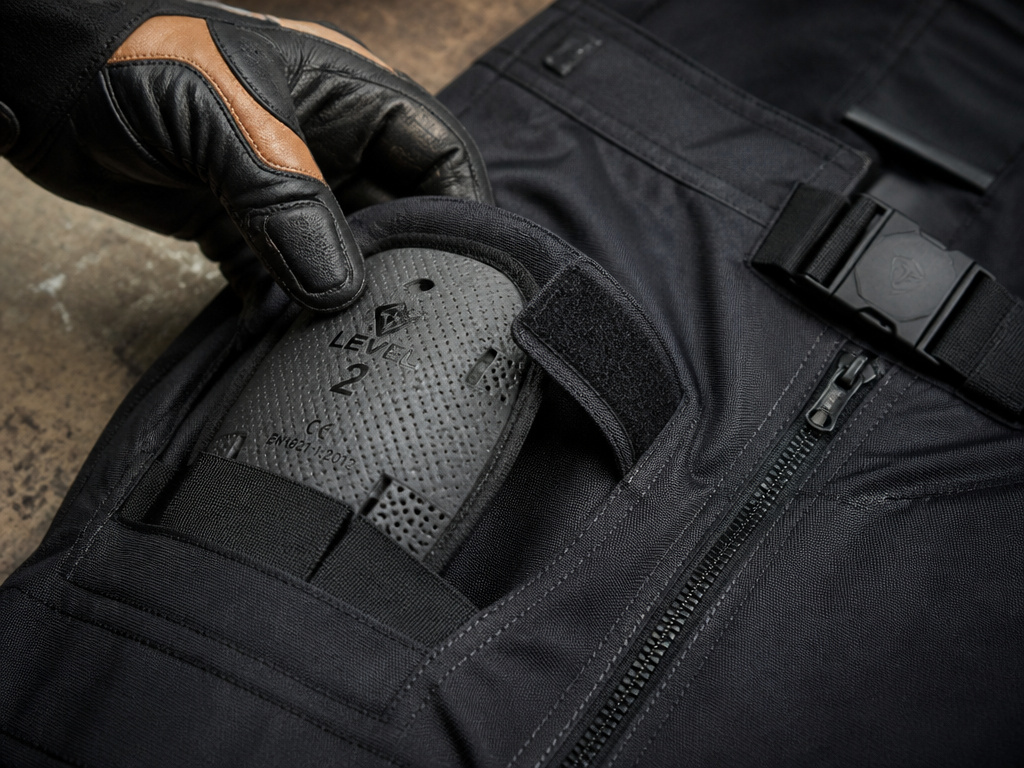
The material and class are the foundation. These details are what make a pair of pants great, or render them useless.
Armor: Removable vs. Fixed, and Level Matters. Knee and hip protectors are rated under EN 1621.1. Level 2 offers higher impact absorption than Level 1. Removable armor allows you to wash the pants and upgrade the pads. More important is adjustability. Can you shift the knee armor up/down to align with your knee cap when seated? The Dainese Super Adventure pants have height-adjustable knee protectors. If the armor slips low, it’s guarding your shin, not your joint.
Ventilation and Weatherproofing. Mesh panels dump heat but offer minimal abrasion resistance. Look for pants that place mesh in non-impact zones. True waterproofing comes from a bonded membrane (e.g., GORE-TEX®). A “waterproof lining” is just a removable internal raincoat that traps vapor and cooks you.
Zippers and Closures. This seems minor until a failure in a crash. It also warns to avoid large buckles or those with a high profile at the waist due to the risk of them being forced into the body during an impact.
Fit and Sizing: The Garage Test. Sizing charts are a starting point. The real test happens on your bike. Put the pants on and sit in your riding position. Do the knee armor cups sit centered on your kneecap? Does the waistband pinch or gap? Can you freely operate the foot controls? Motorcycle pants shouldn’t restrict movement but must be snug enough that armor doesn’t migrate. This is why our guide to motorcycle pants sizing emphasizes a dynamic fit check.
Overpants and Chaps: The Supplemental Categories
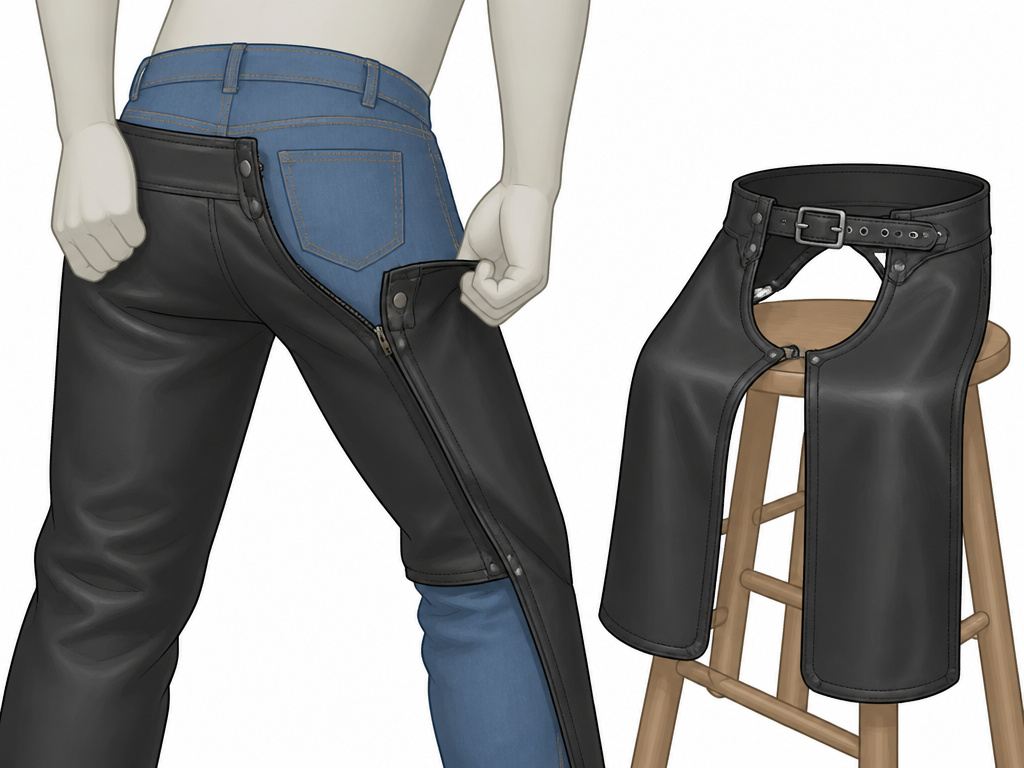
These aren’t primary riding pants, but they serve specific niches.
Overpants are designed to pull on over your regular clothes. They’re a popular choice for commuters or travelers who don’t want to change at their destination. The protection varies wildly, some are fully certified textile pants, others are thin shells. The main compromise is bulk and sometimes a less secure fit, which can affect armor placement. You can explore the advantages and drawbacks of motorcycle overpants in our dedicated analysis.
Chaps cover only the front of your legs. They offer minimal to no impact protection (no integrated armor) and are intended primarily for abrasion resistance and wind/weather protection. They are not a substitute for proper riding pants in any meaningful crash scenario.
The Limitations: What Gear Can’t Do
It’s crucial to understand what you’re buying. No protective garment can offer complete protection against all injuries. As the warning in the Leatt® Pant ADV documentation states, PPE is “not designed or intended to protect a wearer against serious bodily injuries caused by hard collisions or crashes.”
The standards are designed to reduce the severity of soft-tissue injuries, abrasions (“road rash”), cuts, and bruising, from a typical slide and impact. They are not force fields. High-energy impacts, crushing, or extreme torsion can cause trauma regardless of your gear. This is the honest boundary of the technology you’re relying on.
Are Motorcycle Chaps Protective?
Motorcycle chaps are designed as an over-layer worn atop regular pants, covering only the front of the legs and leaving the seat and back exposed, and they are not a standalone protective garment category under modern certification standards like EN 17092. Because they are open in the back and lack a full, integrated structure, they cannot meet the general requirements for protective clothing, which mandate full coverage of impact zones and secure closure systems. For effective abrasion and impact protection, a full pant that meets a recognized class like AA or A is necessary. Chaps may offer some additional wind or debris protection but should not be relied upon for crash safety.
Frequently Asked Questions
What are the different types of motorcycle pants?
The core types are defined by material: leather, textile (which includes mesh, full textile, and laminated fabrics), and protective denim (riding jeans). They are further categorized by their European CE protection class (AAA, AA, A under EN 17092) and by riding style (sport, touring, adventure, urban).
What are the best pants to wear while riding a motorcycle?
The “best” pants are the ones that are CE-certified to a class (AA or AAA) appropriate for your riding speed, made from an abrasion-resistant material (leather or high-denier textile) in the impact zones, and that fit you correctly on your motorcycle so the armor stays in place. For most street riders, a Class AA textile pant or a certified riding jean offers the best balance.
What is the 12 second rule on a motorcycle?
The “12-second rule” is a visual lead-time and following-distance strategy, not related to gear. It advises scanning the road ahead for at least 12 seconds of travel time to identify hazards early. This has no direct bearing on choosing pants, but it highlights the mindset of proactive risk management that also applies to selecting proper protective equipment.
Are leather pants better than textile?
For pure, uncomplicated abrasion resistance in a slide, yes, traditional leather is superior. For all-weather versatility, convenience, and often better ventilation, modern high-spec textiles are better. The gap has narrowed significantly, with fabrics like 1000D ballistic nylon and advanced laminates offering slide times close to leather. The choice is now about your riding conditions and feature needs, not a simple hierarchy.
Can you wear regular jeans under motorcycle overpants?
You can, but it’s not ideal. Regular jeans are bulky and can create wrinkles that pressure points and affect the fit of the overpants and their armor. For the best protection and comfort, wear slim-fitting base layers or technical riding underwear under your motorcycle overpants.
The Bottom Line
Stop looking at motorcycle pants as clothing. Start looking at them as wearable, crash-tested equipment with a spec sheet. The single most important line on that sheet is the EN 17092 Class AA or AAA certification. Everything else, leather vs. Textile, touring vs. Adventure fit, is a refinement within that protected envelope.
If you ride on pavement at speeds above 45 mph, Class AA should be your floor. Try before you buy, and that try must include sitting on your bike. Armor that shifts is armor that fails. Finally, remember that even the best gear has limits. It’s there to give you a fighting chance in the statistically likely crash scenarios, not to make you invincible. Choose accordingly.
