
Motorcycle Overpants Pros and Cons: How to Choose
This post contains affiliate links. As an Amazon Associate, we earn from qualifying purchases.
Motorcycle overpants are textile pants designed to be worn over your regular clothes, offering abrasion protection, weatherproofing, and armor pockets for commuters and tourers who want gear that’s easy to put on and take off. They trade some abrasion performance and precise fit for significant convenience, making them a practical choice for daily riding and travel, but not a substitute for dedicated, close-fitting leather or textile riding pants in high-risk scenarios.
That “easy on, easy off” promise is what sells them. You pull them on over your work pants, zip up the legs, and ride to the office. The compromise exists in the space between your leg and the armor inside the pant; the same air pocket that provides cooling allows the knee protector to slip down if it isn’t secured well. The whole category hinges on managing that compromise, which is central to any discussion of motorcycle overpants pros and cons.
What follows: a breakdown of where overpants genuinely protect you, where they fall short, the specific materials and safety certifications that matter, and how to pick a pair that won’t leave you with armor around your shin when you need it on your knee.
Key Takeaways
- Overpants provide real abrasion protection, but Aerostich notes that while low-speed crashes usually only scuff the fabric, as speeds exceed 30–40 MPH, repairs may be required.
- The EN 17092-3:2020 Class AA certification is the baseline safety standard for most overpants; Class AAA (suits) offers higher protection, while Class A is for lighter garments.
- Synthetic fabrics like Cordura melt at about 450°F from exhaust contact or slide friction; wearing regular pants underneath is a stated manufacturer recommendation for thermal insulation.
- For true waterproof performance, plan to reapply a spray-on DWR treatment every year or two, using about half a can, as the factory coating wears off with washing and use.
- Size for your bulkiest intended layer (winter pants or jeans), not your summer shorts; a fit over your winter pants or jeans prevents the armor from migrating and keeps the zippers from straining.
The Core Pros and Cons at a Glance
Overpants aren’t a perfect solution. They solve one problem (convenience) while introducing a few others (fit, bulk, armor security). Your riding style decides which column matters more in the motorcycle overpants pros and cons analysis.
| Advantage | Why It Matters | The Catch / Limitation |
|---|---|---|
| Convenience & Speed | Full-length side zips let you pull them on over work clothes or jeans in under a minute. Ideal for commuting. | The loose fit required for this creates air gaps that can compromise armor placement and wind protection. |
| Weather Versatility | Many include removable thermal liners and waterproof membranes, handling rain and cold without a full gear change. | Waterproofness degrades. The Aerostich manual notes that after long use, about half a can of spray-on DWR every year or two is needed to maintain beading. |
| Protection Over Street Clothes | Provides a layer of abrasion-resistant fabric (e.g., Cordura, polyester ripstop) and pockets for CE armor where your jeans have none. | Abrasion protection has a speed threshold. Aerostich states its Cordura fabric usually only scuffs under 30–40 MPH; above that, repairs may be needed. |
| Cost vs. Dedicated Pants | Often cheaper than a full set of leather or high-end textile riding pants, while adding protection to your existing wardrobe. | You may still need a good pair of riding jeans or pants for when you’re not wearing the overpants, so total gear cost can add up. |
| Ventilation & Heat Management | The baggy fit allows for air circulation, and many models have vent zips. Can be cooler than tight-fitting pants in summer. | In extreme heat (above 98°F with high humidity), the micro-climate inside can become miserable, as the Aerostich manual frankly admits. |
Where this goes sideways: Choosing overpants for their armor without checking how that armor attaches. Pads held only by hook-and-loop can shift down your leg when you sit on the bike, leaving your knee unprotected. Look for models with internal straps or sleeves that anchor the armor in place.
What “Protection” Actually Means in an Overpant
The word gets used loosely. For overpants, protection breaks into three pieces: abrasion resistance, impact absorption, and the coverage area. Most brands nail one or two; few ace all three.
Abrasion resistance comes from the outer shell fabric. The gold standard is Cordura nylon laminate, like the HT500 Denier Cordura TLTex in Aerostich pants. This isn’t fashion leather. It’s a technical fabric tested for slide resistance. The SPIDI Traveler 3 Evo uses high-strength Poliester 1000 coupled to double-layer ripstop nylon in the knee area. These materials outperform denim by a wide margin.
But they have limits. The Aerostich A.D.1 manual is uniquely specific: low-speed crashes usually only scuff the fabric, but as speeds exceed 30–40 MPH, repairs may be required. No other manual I’ve read gives a number. That’s a data point, not a guarantee, it tells you the fabric’s design intent. For high-speed slides, dedicated leather pants or a racing suit (EN 17092-2 Class AAA) are the tools for the job.
Impact protection depends on the armor and, critically, where it stays during a crash. Most overpants include pockets for CE-certified knee (and sometimes hip) protectors. The Leatt ADV 5.5 pant‘s knee armor, for example, was tested to transmit below 20kN of force from a 50 Joule impact, meeting EN 1621-1 Level 1. That’s good. But if the pocket is a simple sleeve and you sized the pant to fit over thick jeans, the pad can settle an inch too low when you’re seated. Your kneecap is then unprotected.
The technical reality: Synthetic fabrics like Cordura generate significant heat during a long slide. The Aerostich manual warns there is a “theoretical possibility” the fabric may melt or cause burns, which is why it explicitly advises wearing regular pants underneath for thermal insulation. A filter doesn’t just stop working; it can become a source of contamination.
The coverage area is the third leg. Overpants, by design, cover from waist to ankle. That’s a pro. The con is that the fit is rarely tailored. The armor pockets are placed for an “average” leg, which might not match yours. Compare that to a custom-fit leather riding pant, where the knee armor is sewn into a pre-curved position.
Decoding the Safety Certifications: EN 17092 Explained
You’ll see “CE Certified” and “EN 17092” on tags. These aren’t marketing fluff. They’re regulated performance tiers, and the class matters more than the checkmark.
The European standard EN 17092 grades motorcycle garments from AAA (highest) to A (lowest). Overpants most commonly achieve Class AA (EN 17092-3:2020). This standard is for garments designed to be worn over other clothing, exactly what we’re talking about. The SPIDI Traveler 3 Evo and the Leatt ADV 5.5 both carry this Class AA certification.
Class AAA (EN 17092 2) is for one- or two-piece suits with higher abrasion and seam strength requirements. Class A (EN 17092 4) is for lighter, more casual garments. If a product page just says “CE Certified” or “Class A,” ask for the specific standard. A Dainese page might list “EN 17092 Class A,” which is a different, lower level of performance than the AA-rated overpants.
| Certification Class | Intended Use | Typical Garments | Overpant Relevance |
|---|---|---|---|
| EN 17092-2: Class AAA | Highest protection for impact & abrasion | One-piece & two-piece racing suits | Not typical. Overpants rarely meet this higher bar. |
| EN 17092-3: Class AA | Protection for garments worn over clothes | Textile overpants, touring pants | The target standard for most overpants. |
| EN 17092-4: Class A | Lower protection, lighter materials | Casual riding jeans, lightweight textiles | Some overpants may hit this, but AA is better. |
This isn’t academic. A Class AA garment has been tested in Zone 1 (high-risk areas like knees, hips, seat) with stricter abrasion and tear requirements than Class A. When you’re comparing the best motorcycle overpants, the certification is your first filter.
The Weather Trade-Off: Waterproof vs. Breathable vs. Ventilated
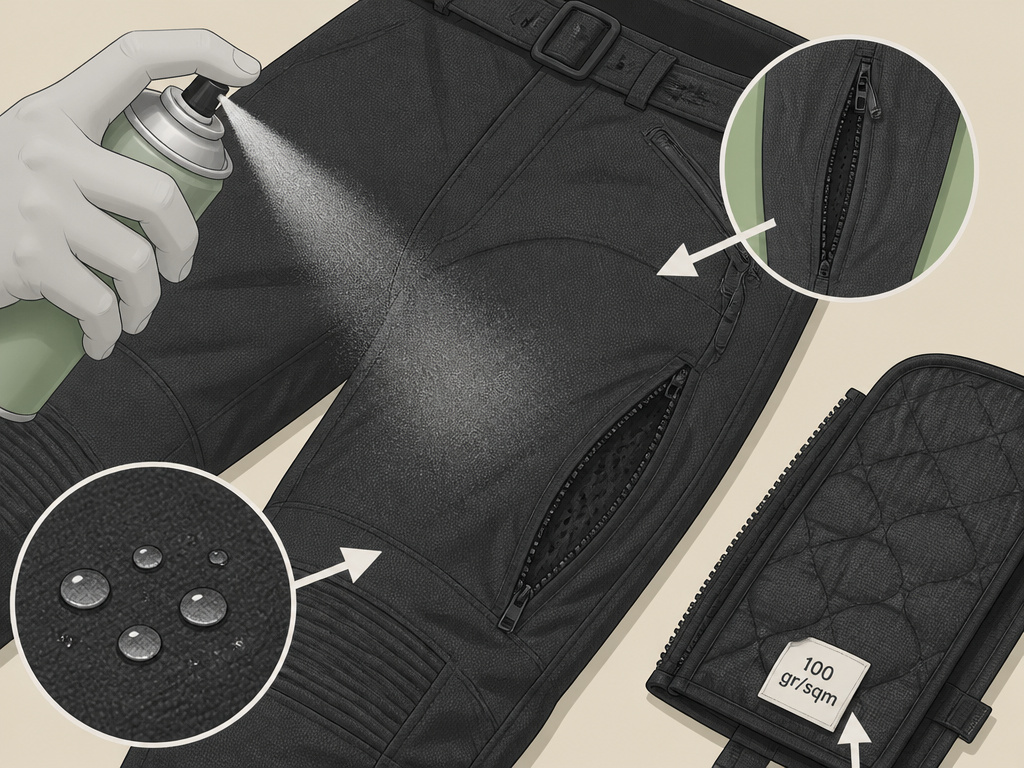
Overpants promise to handle rain and heat. It’s a triangle where you can only ever pick two corners.
Waterproofness usually comes from a laminated membrane (like H2Out® or D-Dry) or a coated fabric. It works until it doesn’t. The factory-applied Durable Water Repellent (DWR) finish on the outer fabric causes water to bead up. After repeated washing and use, that beading stops. The Aerostich solution is practical: For most riders, about half a can of a spray-on waterproofing product, applied every year or two, will prevent water saturation. This is maintenance, not a flaw.
Breathability is the membrane’s ability to let sweat vapor out. In hot, humid conditions (think 98°F and 100% humidity), the physics work against you. The Aerostich manual states bluntly: “you might be miserable.” The climate outside the pants must be less hot and humid than the micro-climate inside for the moisture transfer to work. For drier heat, the baggy fit of overpants can actually be cooler than skintight summer riding pants.
Ventilation is about moving air. Many overpants have zippered vents on the thighs. These help, but the loose fit itself is the primary vent. Cold weather performance depends on the removable liner. The SPIDI Traveler 3 Evo includes a thermal detachable liner (100 gr/sqm). The key is to not size the shell so tight that the liner compresses and loses its insulating loft.
For pure rain, a dedicated motorcycle rain suit pulled over your gear is more reliably waterproof.
How to Size Them Right (Over Layers)
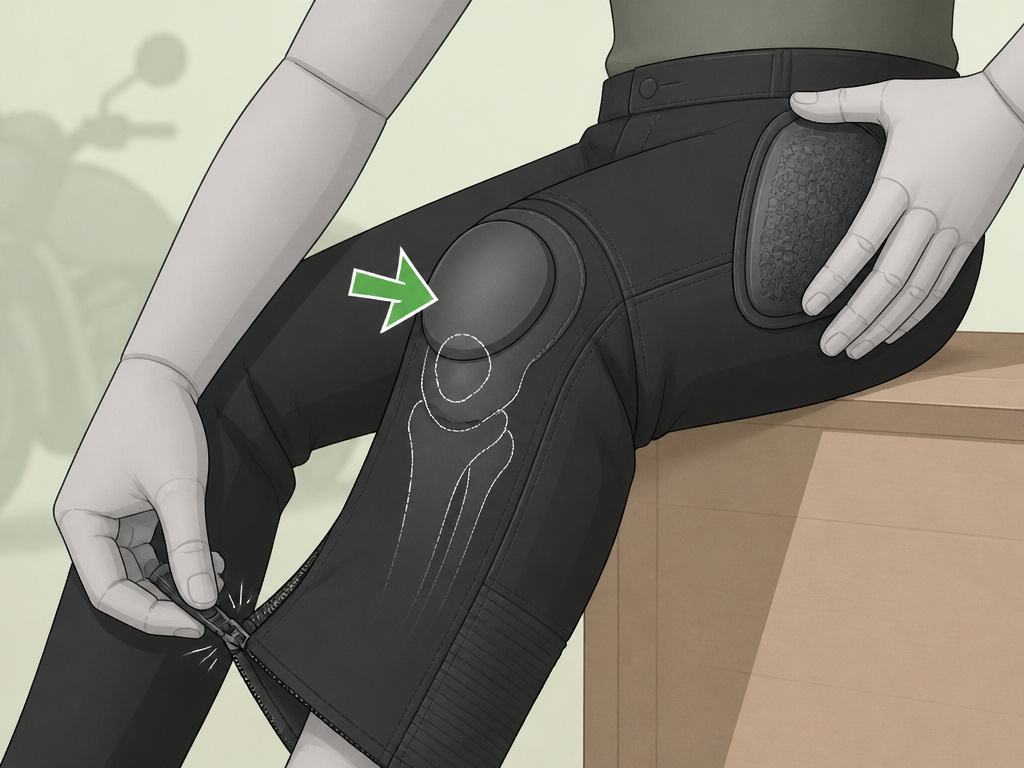
Sizing is the single biggest point of failure. Get it wrong, and every advantage vanishes. You’re not buying pants that fit your body. You’re buying a shell that must fit your body plus your clothes.
Manufacturers know this. Aerostich A.D.1 pants are offered in even waist sizes 30″ thru 46″ and are intended for use in cold weather (20°–65°F), which implies layering. The Leatt ADV 5.5 Pant size S, for example, has a hip measurement of 92-96 cm and an inseam of 79 cm. Your job is to try them on with the thickest pants you’ll wear underneath, likely your winter jeans or thermal leggings.
Check three things in a seated riding position:
- Knee Armor Placement: Sit on a chair or bike. The hard cap of the knee protector should center directly on your kneecap. If it slides toward your shin, the pants are too long or too loose.
- Hip Armor Placement: Feel for the hip pads. They should sit on the bony points of your hips, not slide down to your thighs.
- Zipper Strain: The main zipper and especially the ankle zips should close without pulling or distortion. If the fabric is taut, you’ve sized too small.
Length is critical. Many brands offer regular and long versions. A “long” size adds length to the inseam, not just the waist. If you’re between sizes, go up. A little extra fabric is better than armor that’s out of position. This is why understanding the types of motorcycle pants helps, overpants have a different sizing philosophy than close-fitting leathers or riding jeans.
Overpants vs. The Alternatives
Overpants exist in a spectrum of leg protection. In the motorcycle overpants pros and cons debate, they’re not the best at anything, but they’re good enough at several things for the right rider.
Vs. Motorcycle Chaps: Chaps protect only the front of your legs and lack any impact armor. Overpants provide full coverage and armor pockets. Chaps are cheaper and cooler, but offer dramatically less protection.
Vs. Dedicated Riding Pants (Textile or Leather): A pair of textile riding pants or leather pants fits snugly, securing armor precisely and often offering superior abrasion resistance. They are less convenient for daily over-clothes use. For long trips, many riders prefer touring pants that are still protective but may have features like connecting zippers to jackets.
Vs. Riding Jeans with Armor: Modern riding jeans with Kevlar and CE armor are more discreet and comfortable off the bike. However, they lack the weatherproofing and often the hip protection of overpants. It’s a trade of convenience for discrete style.
The choice matrix looks like this:
- Choose Overpants if: You commute daily over work clothes, need one garment for variable weather, and prioritize quick on/off.
- Choose Dedicated Riding Pants if: You ride for pleasure, want maximum armor security and abrasion protection, and don’t mind changing.
- Choose Riding Jeans if: You ride in fair weather, value a discreet look at your destination, and accept less weather and hip protection.
Care, Maintenance, and the “Total Loss” Rule
These are durable goods, not disposables. How you care for them directly affects their lifespan and performance.
Washing is the first step. The Aerostich Darien manual instructs: Wash on a warm permanent press cycle (105°F/40°C) using a small amount of liquid detergent. Run a second rinse cycle with no soap. Never use powder detergent, fabric softener, or bleach. After washing, tumble dry the garment for 20 minutes to reactivate the DWR treatment. This heat-setting is crucial for restoring water beading.
Waterproofing renewal is not optional. As noted, the spray-on DWR treatment needs reapplication every year or two. It’s a 15-minute task that keeps you dry.
Repairs are expected. These are tools, not jewels. Scuffs and small tears can often be patched. Aerostich offers a clear “total loss” rule for its repair service: If repair costs exceed half the pants replacement value, the pants are ‘totalled’, and will not be repaired. This gives you a concrete financial threshold. For other brands, a local upholstery or sail repair shop can often handle patches with matching fabric.
Storage is simple. Hang them in a cool, dry place out of direct sunlight. Don’t leave them crumpled in a bag, as this can permanently crease the waterproof laminate.
Frequently Asked Questions
Are motorcycle overpants good?
Yes, for their intended use. They are good for riders who need to wear regular clothes at their destination and want a single, relatively quick layer of abrasion protection, weatherproofing, and impact armor. They are not as protective as a dedicated, close-fitting suit or riding pant for high-performance or high-risk riding.
What are the best overpants for motorcycle riding?
The “best” depends on your primary need. For all-around touring with great weather protection, look at the SPIDI Traveler 3 Evo H2Out. For abrasion resistance using HT500 Denier Cordura TLTex laminate, the Aerostich A.D.1 is one option. The Leatt ADV 5.5 pant is CE AA certified. Our detailed best overpants review breaks down top models.
Can you wear overpants in hot weather?
You can, with managed expectations. The loose fit allows air circulation, making them cooler than tight leather pants. However, in extreme heat and humidity, any pant can become uncomfortable. The Aerostich manual notes at +98°F and 100% humidity, you might be miserable. Look for models with large vent zips and consider wearing moisture-wicking base layers. For very hot climates, dedicated mesh riding pants will be cooler.
How should motorcycle overpants fit?
They should fit comfortably over the bulkiest clothing layer you intend to wear underneath, without being so baggy that the armor shifts significantly when you sit in a riding position. The knee armor must remain centered on your kneecap when seated. The waist should close without gaping, and the ankle zippers should fasten without strain.
Are overpants waterproof?
Most are either waterproof from a built-in membrane or can be treated to be highly water-resistant. True waterproofness requires fully taped seams and a waterproof zipper cover, features found on models like the SPIDI Traveler 3 Evo. Water resistance degrades over time and requires periodic re-treatment with a DWR spray.
Before You Go
Overpants are a compromise tool. They excel at convenience and good-enough protection for the vast majority of street riding miles. The 30–40 MPH abrasion threshold from Aerostich isn’t a license to ride recklessly; it’s a data point that defines the tool’s design envelope.
If you buy a pair, spend your fitting time in a seated position. Armor placement is everything. And budget for a can of DWR spray, it’s as much a part of the kit as the pants themselves. For the commuter or traveler who won’t change into dedicated gear, a well-chosen overpant is a smart, practical layer between you and the road. For everyone else, the types of motorcycle pants spectrum has a better, more specialized option.
