
Motorcycle Riding Tips for Older Riders: Key Takeaways
This post contains affiliate links. As an Amazon Associate, we earn from qualifying purchases.
Motorcycle riding for older riders requires matching three things: your bike’s ergonomics, your physical limits, and your riding strategy to the reality of age-related changes. The goal isn’t to stop riding, but to ride smarter by adjusting for diminished night vision, slower reaction times, and reduced strength. Riders over 40 account for more than half of all motorcycle fatalities, which makes these adjustments a matter of safety, not just comfort.
That statistic from the Topcats.org newsletter changes the conversation. It moves the topic from generic “be careful” advice to a specific, evidence-backed need for a different approach, highlighting the importance of motorcycle riding tips for older riders. The changes begin subtly, a need for more light to see, a stiffness that wasn’t there last season, a moment of hesitation where instinct used to live.
What follows breaks down the essential adaptations central to the motorcycle riding tips for older riders: how vision and reaction time dictate your following distance, which bike modifications give you back control, and the medical and licensing realities you must plan for. This isn’t about giving up the ride. It’s about securing it for the long haul.
Key Takeaways
- According to the Topcats.org newsletter, riders over 40 account for more than half of all motorcycle fatalities, making age-specific strategies critical.
- After age 55, reaction time to a hazard can be three to four times slower; you must increase following distance and scan further ahead.
- The NSW government in Australia mandates an annual medical and a biennial riding test for older riders, a preview of potential future regulations elsewhere.
- More than 75% of drivers over 65 use medications that can impair riding; review yours with a doctor annually.
- A proper Motorcycle Safety Foundation (MSF) course is the single best skill refresh, regardless of your decades of experience.
The Vision & Reaction Time Gap
Your eyes and your reflexes are not what they were at 25. This isn’t an insult; it’s a mechanical fact you must build around. The Motorcycle Safety Foundation notes visual clarity typically starts diminishing between ages 40 and 50. By 60, visual acuity declines modestly, and an older person needs four times more light than a younger person to see clearly at night.
That directly changes when and where you should ride.
The average older person requires four times more light than a younger person to see clearly at night. This turns a well-lit suburban street into a potential hazard zone after sunset.
Depth perception and peripheral vision also fade. Your eyes take longer to adjust from near to far objects, and reading street signs becomes more difficult. This creates input overload, too much information arriving too fast for your brain to process smoothly. The consequence is missing a turn, misjudging a car’s speed, or failing to see a hazard in your periphery.
Then there’s reaction time. The MSF data is blunt: reacting to a hazard may take twice as long for a rider in middle age (40 to 54). After 55 or so, it can take three or four times longer. If you used to need two seconds to stop, you now might need six or eight. Your old following distance is now a collision course.
To compensate for slower reaction times, you should significantly increase your following distance and scan further ahead than you used to. This gives your slower-processing brain the time it needs to see, evaluate, and execute a smooth response. If you can’t see 12 seconds ahead, slow down until you can.
Adapting Your Bike & Your Body
The motorcycle you bought at 50 might not fit you at 65. Muscle mass drops 6-10% per decade starting at age 30 without strength training. That makes a heavy touring bike a liability in a parking lot. Flexibility decreases, making it harder to look over your shoulder for a lane change.
Your bike should work for you, not against you. The MSF recommends specific modifications as part of motorcycle riding tips for older riders: choose a motorcycle with large dials and brightly illuminated gauges for night riding. Install larger mirrors to compensate for reduced neck mobility. Consider a lower seat or reduced suspension pre-load to get both feet flat on the ground at a stop. Adding auxiliary lights isn’t just for style; it’s to meet your eyes’ increased need for illumination.
| Modification | Age-Related Issue It Addresses | Real-World Benefit |
|---|---|---|
| Lower Seat / Reduced Suspension | Reduced leg strength, balance concerns | Flat-foot stability at stops, prevents drops |
| Larger Mirrors | Reduced neck flexibility, limited shoulder check | Maintains rearward awareness without strain |
| Auxiliary Lights | Diminished night vision (needs 4x more light) | Illuminates road edges and signs earlier |
| Heated Grips / Seat | Reduced circulation, cold sensitivity | Maintains hand flexibility and core comfort |
| Lighter Bike or Trike Conversion | Loss of muscle mass (6-10% per decade) | Manageable weight for parking, prevents fatigue |
Physical fitness is no longer optional. A consistent regimen that enhances core strength, flexibility, and grip endurance pays off directly on the bike. Simple rider exercises focused on your back, neck, and forearms can drastically improve your comfort and control. This isn’t about gym aesthetics; it’s about being able to maneuver your bike at low speed without straining.
Where this goes sideways: Assuming your old riding posture is still fine. A slouched position that you tolerated for years now compresses nerves faster, leading to hand numbness and back pain within an hour.
Your gear needs an audit, too. Protective equipment is more critical because healing takes longer. A well-fitted, certified helmet is your best investment. Look for jackets and pants with integrated armor at the shoulders, elbows, back, and knees. The armor should stay in place during a slide, thin, shifting foam is a false economy.
The Medical & Licensing Reality
Riding past a certain age involves formal checkpoints that don’t exist for younger riders. Ignoring them can cost you your license. In New South Wales, Australia, the government requires an annual medical and a biennial riding test for older riders under its licensing scheme, with specific requirements starting at age 80. At 85, keeping an unrestricted license requires passing a Motorcycle Operator Skills Test every two years.
This isn’t just a foreign curiosity. It’s a logical policy response to the statistics, and it previews the kind of scrutiny that may become more common. This is why proactive health management is part of being a responsible rider.
Your annual medical checkup is a riding prep task. Be explicit with your doctor: you operate a motorcycle and need to understand how any condition or medication affects your alertness, balance, and reaction time. The data is stark: more than 75% of drivers age 65 or older use one or more medications.
Over-the-counter sleep aids, prescription painkillers, and even some blood pressure medications can cause drowsiness or dizziness. The MSF and the Mississippi Motorcycle Operator Manual explicitly warn that both prescription and non-prescription medications can cause impairment. This is a direct, documented risk you must manage.
| Common Medication Type | Potential Impairment | Riding-Specific Risk |
|---|---|---|
| Antihistamines (Allergy/Cold) | Drowsiness, slowed reaction time | Delayed braking, missed hazard cues |
| Opioid Pain Relievers | Drowsiness, dizziness, confusion | Poor balance at stops, impaired judgment |
| Muscle Relaxants | Drowsiness, muscle weakness | Reduced control input strength, slower reactions |
| Anti-Anxiety / Sleep Aids | Drowsiness, “hangover” effect | Decreased alertness, inability to focus for long periods |
| Some Blood Pressure Meds | Dizziness, lightheadedness | Risk of faintness when coming to a stop |
The financial side matters, too. Completing an MSF course can qualify you for an insurance discount, directly offsetting the cost. The AARP Driver Safety Program, an 8-hour course costing $10, is another recognized way to refresh road strategy and potentially lower insurance costs.
Sharpening Your Mental Strategy
Your decades of experience are an asset, but they can also breed complacency. You must now consciously override automatic habits that assume a younger body’s capabilities. Defensive riding becomes your default setting.
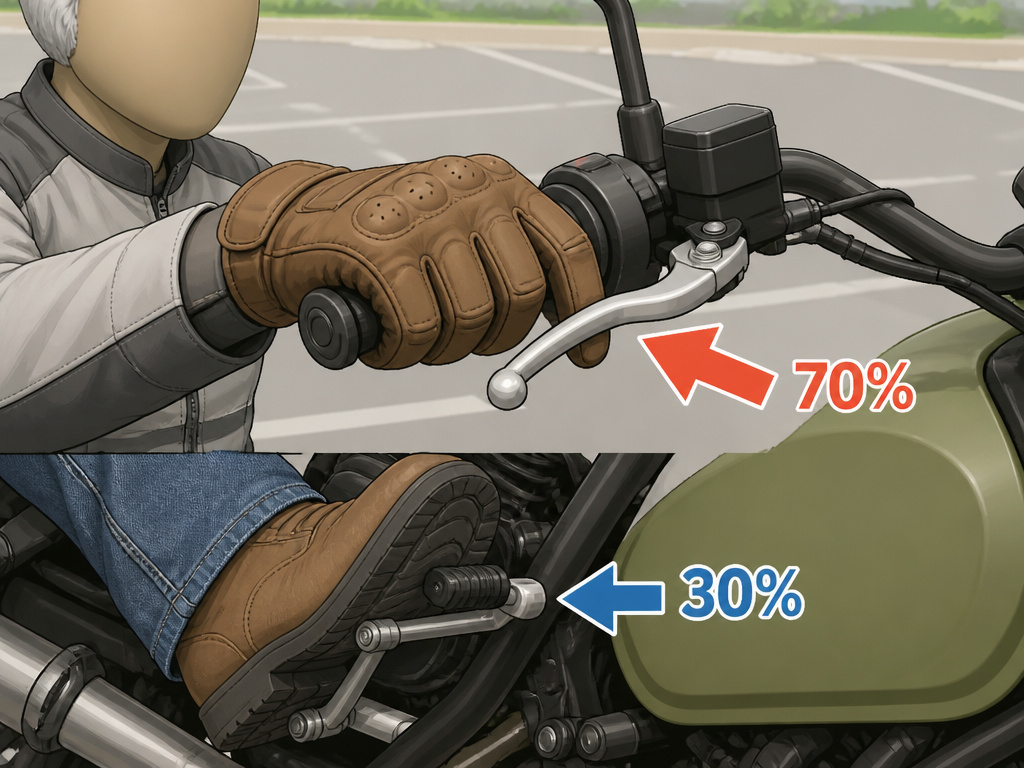
Practicing controlled braking is a perfect example of a technique that maximizes your bike’s physics while compensating for potential skill fade. Under heavy braking, about 70% of your stopping power comes from the front brake and 30% from the rear. Practicing this split in a parking lot rebuilds the muscle memory for controlled, non-skidding stops, which is vital as your reaction time slows.
Mental fatigue is a bigger threat than most riders admit. It creeps in after about an hour, dulling your observation skills precisely when you need them most. Strategies for staying alert are essential. Plan your rides with regular breaks to dismount and walk. Hydrate with water, not sugary drinks or excessive caffeine, which leads to energy crashes. Use a hydration pack to sip regularly without stopping.
Easy to miss: The first sign of fatigue isn’t yawning. It’s missing your intended turn-off, or failing to notice the speedometer has crept up. That’s your cue to stop, not push through.
Riding anxiety can also resurface as you become more aware of your vulnerabilities. This is normal. Managing it involves controlled exposure, practice new techniques in empty lots, take a shorter, familiar route to rebuild confidence, and consider an advanced riding course. The goal is to replace vague worry with specific, practiced skills.
Finally, know your personal sunset clause. There may come a time when a large, two-wheel motorcycle is no longer the right tool. The MSF itself suggests considering a smaller motorcycle, scooter, or three-wheel motorcycle as a next step. This isn’t defeat; it’s a strategic adaptation to keep you in the wind safely. Trying a trike or a maxi-scooter at a dealer demo day costs nothing but could open up another decade of riding.
How should older riders warm up before a ride?
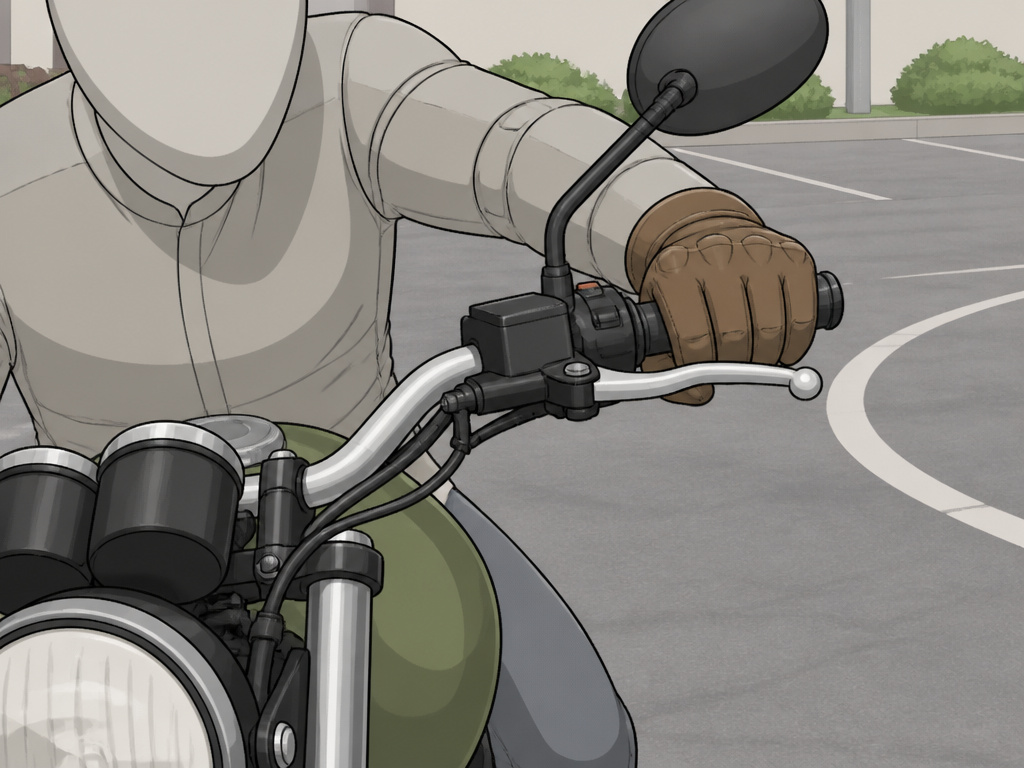
More than half of all crashes involve riders with less than five months of experience on their motorcycle. For older riders, this shows the need for regular, low-pressure practice to maintain skills. Reacting to a hazard may take twice as long for a rider in middle age, and up to three or four times longer after age 55. A warm-up ride is essential. Start in a familiar, low-traffic area like an empty parking lot. Practice basic maneuvers: slow-speed turns, controlled stops, and swerves. This re-acclimates your muscles and reflexes before you enter more demanding traffic. Treat every return to riding after a break as if you are getting familiar with an unfamiliar motorcycle, checking controls and your own readiness.
Frequently Asked Questions
What is the 12 second rule for motorcycle riders?
It’s an extended visual lead time. Instead of scanning just 4-6 seconds ahead, you actively scan the road 12 seconds in front of your bike. This compensates for the slower visual processing and increased reaction time that comes with age, giving you more time to identify and react to hazards smoothly.
Is 72 too old to ride a motorcycle?
There is no legal upper age limit for riding a motorcycle in the United States. The real question is one of fitness and capability. A 72-year-old in good health who manages medications, gets annual vision/medical checks, rides an appropriate bike, and practices their skills can ride safely. The NSW government’s licensing system for older riders shows that regular assessments, not an arbitrary age, are the key.
What is the 70/30 brake rule for motorcycles?
It’s a guideline for optimal braking force distribution. During a firm, controlled stop, approximately 70% of the braking power should come from the front brake and 30% from the rear. This ratio uses the bike’s forward weight transfer for maximum stopping power without locking either wheel. It’s a technique that requires practice but significantly shortens stopping distance.
What does 2 fingers down mean for bikers?
This is a common hand signal used between riders in a group. It typically means “double file” or “pair up,” indicating riders should move from a single-file to a staggered formation (or sometimes the reverse). It’s a communication tool for group riding etiquette and safety. Always confirm signal meanings with your group before a ride.
Before You Go
One rule cuts through all the others: if you notice a change in your everyday life, struggling to read a menu, feeling stiffer in the morning, taking longer to parallel park your car, your riding is affected. That’s your cue to act, not to hope it goes away.
Schedule the eye exam. Talk to your doctor about your medications. Book that MSF refresher course you’ve been putting off. These aren’t concessions to age; they are the tools that let you keep riding on your own terms.
The data doesn’t lie. Riders over 40 are the most vulnerable group on the road. Your greatest asset now is your willingness to adapt. Choose the bike that fits, wear the gear that protects, and ride the strategy that gives you time. The open road is still yours. Claim it smartly.
