
Motorcycle Helmet Balaclava Pros and Cons: Is It Worth It?
This post contains affiliate links. As an Amazon Associate, we earn from qualifying purchases.
Wearing a balaclava under a motorcycle helmet adds a thin layer that manages sweat, provides warmth, and extends your helmet liner’s life. The cons are real: a thick or slippery balaclava can change your helmet’s fit, cause dangerous rotation during an impact, and even affect insurance claims. The choice hinges on matching the material’s thickness and grip to your helmet’s existing fit.
That thickness number isn’t a guess. A thin lycra balaclava adds roughly 1 to 2 mm around your skull, while a fleece winter version adds closer to 4 mm. On a helmet that’s already snug, that extra 2 mm is the difference between comfort and a headache at mile thirty. This concerns the physical space inside your helmet’s safety system, which is a key consideration when weighing motorcycle helmet balaclava pros and cons.
What follows is a breakdown of the motorcycle helmet balaclava pros and cons you can count on and the cons that can cost you. We’ll walk through material specs, a mandatory fit test, and the legal fine print that most riding guides skip.
Key Takeaways
- A balaclava absorbs sweat before it reaches the helmet liner, extending the usable life of the helmet liner.
- Test fit with your balaclava on. Shake your head side-to-side; if the helmet moves more than usual, the layer is too thick or slippery and compromises safety.
- Material thickness dictates fit. A lycra balaclava adds 1–2 mm; a fleece adds ~4 mm. Never buy a larger helmet just to fit a thick balaclava.
- In some regions like France, wearing a balaclava under a fastened helmet is a legal exception to face-concealment laws, but you must remove it when dismounted.
- Merino wool can absorb 30–35% of its weight in moisture without feeling wet, making it a superior choice for managing sweat and temperature over synthetics in many conditions.
The Hygiene and Comfort Payoff (The Real Pros)
We’ll begin by explaining why this piece of cloth is worth considering. The benefits are mechanical.
A balaclava’s primary job is to act as a sacrificial layer. It sits between your skin and your helmet’s expensive, absorbent comfort liners. Sweat, oils, and makeup get caught in the balaclava’s fabric first. This means you’re washing a $20 balaclava after a long, hot ride instead of attempting to deep-clean a helmet’s intricate, glued-in padding. One source notes this habit alone can extend the usable life of a helmet liner by a season or two. The liner breaks down from salt and moisture, not miles.
It also minimizes direct friction between your skin and the helmet’s interior, preventing chafing on those all-day rides.
A thin balaclava keeps the helmet in place without altering its behavior in the event of a shock. The fabric should conform to the skull without creating folds. . Accro Stitch, on the safety principle of a proper fit
But these pros assume one thing: the balaclava disappears under the helmet. When it doesn’t, the cons take over.
The 2–4 mm Thickness That Changes Everything
This is the single most overlooked spec. You don’t feel a balaclava in your hand; you feel it compressed between your skull and your helmet’s EPS foam.
A thin lycra balaclava adds roughly 1 to 2 mm of material around your skull. A fleece winter balaclava adds closer to 4 mm. Measure that against your helmet’s fit. The initial pressure might ease as the fleece flattens, but you’ve just altered the entire interface the helmet’s safety system was designed for.
The risk isn’t just discomfort. A thick layer creates a buffer zone. In an impact, the helmet needs to grip your head to manage energy transfer. A compressible, slippery layer can allow the helmet to rotate on the head before the inner foam fully engages.
| Balaclava Type | Approx. Added Thickness | Best For | Primary Risk |
|---|---|---|---|
| Lycra / Thin Synthetic | 1–2 mm | Summer riding, sweat management, hygiene | Minimal if fit is correct |
| Merino Wool | 2–3 mm | Variable climates, moisture-wicking | Can be too warm for high summer |
| Fleece / Thermal | ~4 mm | Sub-freezing winter riding | Alters helmet fit significantly; potential rotation risk |
| Waterproof Membrane (e.g., SPIDI H2OUT®) | 2–3 mm (plus membrane) | Wet, cold, windy conditions | Less breathable; can trap heat |
The solution is to choose a thin layer that doesn’t change the fit of a correctly sized helmet. For winter, consider layering a thin balaclava with a neck gaiter for core warmth, rather than one bulky piece.
The Non-Negotiable Fit Test (And a Safety Conflict)
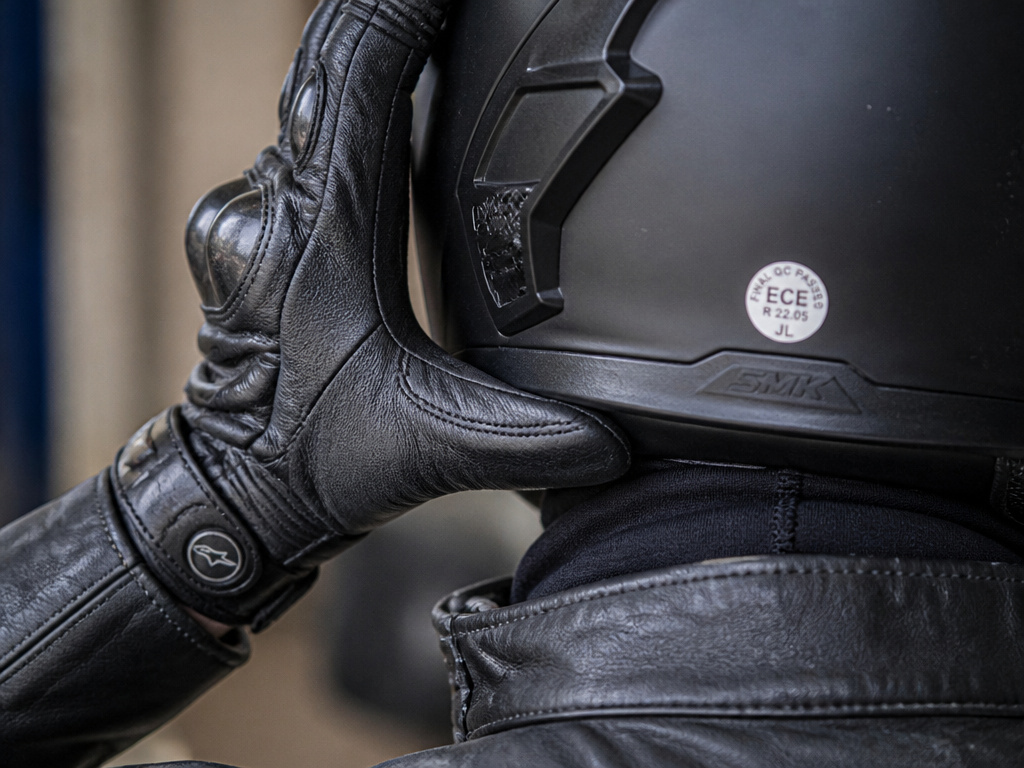
You must test your helmet with the balaclava you plan to use. This isn’t a suggestion; it’s the step that separates a useful accessory from a safety hazard.
Here is the conflict the manuals don’t resolve: Most OEM helmet fit guides (like those from HJC or Suomy) assume a direct head-to-liner interface. They don’t mention testing with layers. However, fit experts and retailers like Cyril Helmets, citing broader guidance such as from the NHTSA, insist any layer changes fit and friction and must be included in the test, while OEM helmet fit procedures often assume a direct head-to-liner interface.
Trust the stricter standard. Your helmet’s safety certification is void if it doesn’t fit correctly, and the balaclava is part of that equation.
The Full Fit Check Procedure:
- Assemble your full riding kit. Put on the exact balaclava, your riding glasses, and zip up your jacket collar.
- Don the helmet and fasten the strap. It should be snug under your chin.
- The shake test. Grab the helmet with both hands and try to rotate it left and right on your head. Now shake your head side-to-side vigorously. If the helmet moves more than it does without the balaclava, the fabric is too thick or too smooth. This is the fail point.
- Check for pressure and folds. Run your fingers between the balaclava and the helmet liner, especially at the forehead and temples. You should not feel bunched material or hard folds.
- Test the full range of motion. Look over your shoulders. Nod your head. If you wear a modular helmet, test the chin bar mechanism both up and down to ensure the balaclava doesn’t interfere.
Where this goes sideways: Skipping the shake test. A balaclava that feels “fine” while standing still can allow dangerous helmet movement at speed or during an impact, a fact often cited in post-accident insurance assessments.
If your helmet passes this test, the balaclava is likely safe to use. If it fails, you need a different balaclava, not a different helmet.
Material Showdown: Lycra, Merino, Fleece, and Membranes
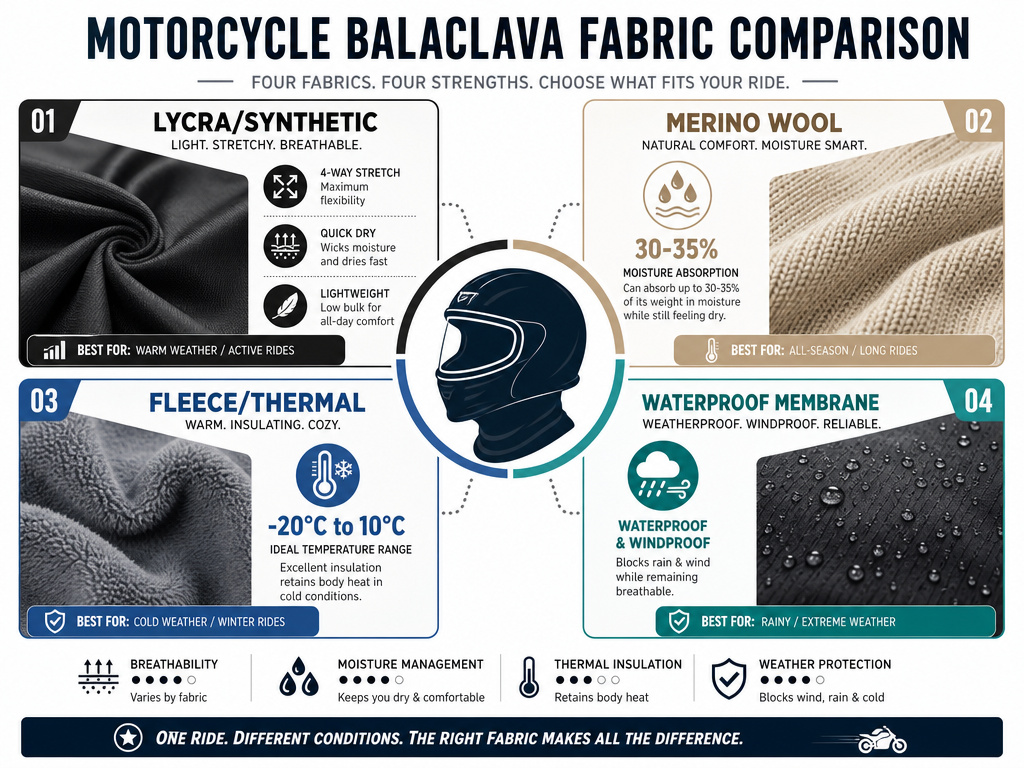
Not all fabrics are equal. Your choice determines the balaclava’s performance, and each has a clear best-use case.
- Lycra/Thin Synthetics: This is your default for three-season riding. It’s about sweat management and hygiene, not warmth. The stretch ensures a close, non-bulky fit. It’s the safest choice for preserving your helmet’s original fit.
- Merino Wool: A performance standout. Merino wool can absorb up to 30–35% of its weight in moisture without feeling wet. This means it wicks sweat powerfully while still providing insulating warmth when damp. It’s naturally odor-resistant and is ideal for riders in variable conditions or who run hot and cold. It’s often thicker than lycra but manages moisture so well it can feel drier.
- Fleece/Thermal: Pure insulation for deep cold. As established, it’s thick (~4 mm). Only use this if your helmet has confirmed room for it after a fit test. Brands like Dainese engineer specific products here, like their Thermo Balaclava rated for -20°C to 10°C.
- Waterproof Membranes: For the “waterproof and windproof” claim, look for a named membrane like SPIDI’s H2OUT®, which features an integrated waterproof and windproof H2OUT® membrane. This technology is a microporous layer designed to block wind and rain while allowing some breathability. The trade-off is that it can trap more heat and moisture inside than a purely breathable fabric. Care is specific: the SPIDI H2OUT® Balaclava calls for hand wash at <40°C, drip dry, and iron at a max of 110°C.
The right choice is often two balaclavas: a thin synthetic for most of the year, and a merino or thermal model for winter. This is why dedicated best balaclavas guides exist, to match these technical specs to real riding.
The Legal and Insurance Fine Print
The motorcycle helmet balaclava pros and cons extend beyond comfort and physics into law and liability, particularly in Europe.
In France, legal analysis indicates that wearing a balaclava under a fastened helmet is a legitimate exception to laws prohibiting identity concealment. The legitimacy ends the moment you dismount. Keeping the balaclava on at a gas station or café can be penalized. The rule is simple: remove it as soon as you are no longer in a riding situation.
The insurance implication is more severe. After an accident, an adjuster’s report may note the presence of a balaclava. If their technical assessment concludes that a thick or poorly fitted balaclava caused abnormal helmet rotation during the impact, it can be considered an aggravating factor. The balaclava transforms from a comfort item into documented evidence of a compromised safety system.
This clarifies the main point: a balaclava is an accessory, not protective equipment. It doesn’t replace the safety function of your full face helmet or approved armor. Its job is strictly hygiene and climate management.
Care and Feeding: Making a Balaclava Last
Proper care is simple but essential.
- Wash it frequently. After every long ride or every few short ones. Salt from sweat degrades fibers and breeds bacteria.
- Use cool water and mild detergent. Hand washing is best, especially for technical fabrics like merino or waterproof membranes. The SPIDI care label explicitly states hand wash at less than 40°C.
- Never wring or tumble dry high heat. Air dry flat or drip dry. High heat destroys elasticity and can melt synthetic fibers or waterproof membranes.
- Store it clean and dry. Don’t stuff a damp balaclava into a pocket of your riding bag. Let it breathe.
It means you always have a fresh one ready, removing the temptation to wear a damp, salty one on back-to-back days.
What are some good balaclava options?
Different riding conditions call for different balaclava features. For winter riding, a fleece balaclava adds significant insulation, while a thin lycra version is suitable for warmer weather or as a base layer. Some technical balaclavas feature integrated waterproof and windproof membranes for wet conditions. Natural fibers like merino wool are valued for their ability to manage moisture effectively. When selecting a product, look for a thin, stretchy, and non-slip fabric, such as microfiber or technical material, to ensure it doesn’t compromise your helmet’s fit or safety. Always test the balaclava with your specific helmet, especially if it’s a modular model, to check for any interference with the mechanism or excess material that could cause folds.
Frequently Asked Questions
Should I wear a balaclava with my motorcycle helmet?
Yes, if you want to manage sweat, add a layer of warmth, or protect your helmet’s liner, and if it passes the fit test. No, if it makes your helmet loose, creates pressure points, or is made from a bulky, non-stretchy material like standard cotton.
Why do motorcycle riders wear balaclavas?
Riders wear them for three main reasons: hygiene (to absorb sweat and keep the helmet liner clean), comfort (to add warmth in winter or reduce skin friction), and sometimes for a slight reduction in wind noise around the neck. Some also use them as a clean barrier when sharing or demoing helmets.
Does a balaclava affect helmet safety?
It can, in two opposite ways. A thin, well-fitted balaclava has no negative effect and may slightly reduce abrasion on the neck in a slide. A thick, slippery balaclava can compromise safety by allowing the helmet to rotate on the head during an impact, which is a documented risk factor in accident investigations.
What is the best material for a motorcycle balaclava?
For most riders, a thin, stretchy synthetic like lycra or a merino wool blend. Lycra is best for pure fit and sweat-wicking in warm weather. Merino wool is superior for its ability to manage moisture and odor across a wider temperature range. Avoid cotton, it holds moisture and dries slowly.
Can I wear a balaclava with a modular helmet?
Yes, but you must test it thoroughly. Put the balaclava on, then operate the modular chin bar multiple times, both raising and lowering it, to ensure no fabric gets caught in the mechanism. Also check that the balaclava’s material around the chin doesn’t inhibit the latch from closing securely.
Before You Go
The balaclava decision concerns which one to choose, and how you wear it. The pros, hygiene, comfort, liner protection, are real and valuable. The cons, fit alteration, rotation risk, legal hiccups, are entirely avoidable with the right piece and a five-minute fit test.
If you take one action after reading this, make it the shake test. Put on your helmet with your current balaclava, fasten the strap, and shake your head violently side-to-side. Feel that movement? That’s the variable you’re trying to eliminate. The goal is a layer so thin and grippy that your helmet behaves exactly as it did without it.
For winter needs, don’t automatically reach for the thickest fleece. Often, a combination of a thin balaclava and one of the best neck gaiters provides more adaptable warmth without sacrificing the critical helmet-head interface. Fit first, features second. That rule applies here more than almost anywhere else in your gear bag.
