
Motorcycle Anti Theft Tips: The Layered Defense That Works
This post contains affiliate links. As an Amazon Associate, we earn from qualifying purchases.
Motorcycle anti theft tips center on a three-layer framework: deter the casual thief with visible locks, delay the determined one with hardened physical security, and track the stolen bike with a hidden GPS device. The goal is to make your bike a harder, riskier target than the one parked next to it.
That framework turns a list of motorcycle anti theft tips into a strategy. Most riders know the basic moves, lock the ignition, use a disc lock. The difference between a checklist and a defense is understanding what each layer actually defends against, and where it fails if you skip the next one.
What follows is the sourced, manufacturer-recommended version of that motorcycle anti theft tips strategy. We’ll break down how built-in systems like Honda H.I.S.S. Work, the exact steps for using a U-lock from the Harley-Davidson service manual, and how to use parking and covers to your advantage.
Key Takeaways
- Build security in three layers: deterrence (cover, steering lock), delay (hardened U-lock or chain), and tracking (hidden GPS).
- Always use the steering lock and remove the key. Honda’s manual states this is the first step, as a bike that isn’t locked can be wheeled away in seconds.
- For physical locks, create a snug fit with the frame or wheel to deny thieves a mechanical advantage, as specified in Kryptonite’s installation guide.
- Register qualifying Kryptonite locks for their Anti-Theft Protection Offer (ATPO) within 30 days; it can reimburse you up to a specific monetary amount if the lock is defeated.
- Park in well-lit, varied locations and use a generic, non-branded cover to break your routine and hide your bike’s identity from scouts.
The 3-Layer Security Framework
Security isn’t a single product. It’s a system with jobs. The first layer is deterrence, making a thief look elsewhere. The second is delay, slowing them down so much they give up or get caught. The third is recovery, finding the bike after a theft happens. Skip a layer, and you’re betting everything on the remaining ones.
A motorcycle security framework functions on three sequential principles: deterrence, delay, and recovery. Deterrence uses visible measures like steering locks and covers to discourage initial interest. Delay employs hardened physical barriers like disc locks and chains to increase the time and noise required for theft. Recovery relies on concealed tracking devices to locate the motorcycle if the first two layers are breached.
This isn’t abstract. The Chinese national standard GB 17353-2024 for motorcycle anti-theft devices classifies locks by their protective capability, essentially rating them on how well they perform the “delay” function. Your goal is to have a device in each category working for you.
Deterrence is about psychology. A thief cruising a parking lot is looking for the easiest score. A bike with a cover on it is an unknown. Is there a lock under there? What model is it? That moment of doubt is often enough for them to move on. A cover also hides attractive models from scouts who case neighborhoods for specific bikes.
Delay is about physics. This is where a U-lock or chain that creates a snug fit earns its keep. The Kryptonite manual for the Harley-Davidson accessory U-lock is explicit: “Create a snug fit with frame and or wheels so that there is little room in U-lock for thieves’ tools to gain a mechanical advantage.” A loose lock is a vulnerable lock. The right tool in the right space can defeat it quickly. A tight one might require an angle grinder, which is loud, bright, and time-consuming.
Recovery is about electronics. If the bike disappears, a hidden GPS tracker becomes your only hope. It’s the layer you hope never to use, but without it, a stolen bike is almost always gone for good. This layer doesn’t prevent theft; it mitigates the loss.
Start With What Your Bike Already Has
Before you spend a cent, use the security built into your motorcycle. Every owner’s manual has a section on this, and most riders barely skim it.
Honda’s advice is blunt: “Always lock the handlebar and remove the key when leaving the vehicle unattended.” Their manual adds that “use of an anti-theft device is recommended.” This is step zero. A bike that isn’t locked can be lifted or wheeled away in the time it takes you to buy a coffee. The steering lock is a simple, effective deterrent against casual roll-aways.
For bikes with electronic immobilizers, that protection works automatically but has visible tells. The Honda Ignition Security System (H.I.S.S.), for example, announces its presence. “For the first 24 hours that the bike is parked, a red LED lamp flashes every 2 seconds to indicate the anti-theft device is in operation.” That flashing light is a direct message to a thief: this bike has an immobilizer. It’s a powerful deterrent because defeating it requires replacing the ECU and key cylinder, a costly, technical hurdle.
Common mistake: Relying solely on the factory immobilizer. While systems like H.I.S.S. Or the Ducati Immobilizer are excellent, a professional thief with a truck bypasses them by lifting the entire bike. The immobilizer stops the engine from starting; it doesn’t stop the bike from being taken.
The Ducati Immobilizer system shows how these systems work. It “prevents the engine from starting when a programmed key is not detected.” The system reads a chip in the key via an antenna. The codes are stored in multiple control units (Instrument panel, Engine, etc.). This complexity is the point. It’s not a simple switch a thief can hotwire. It’s a networked electronic gate.
Your first layer is free: lock the steering, take the key, and understand the system you already own. That alone filters out the laziest opportunistic thefts.
Using Physical Locks: The Delay Layer
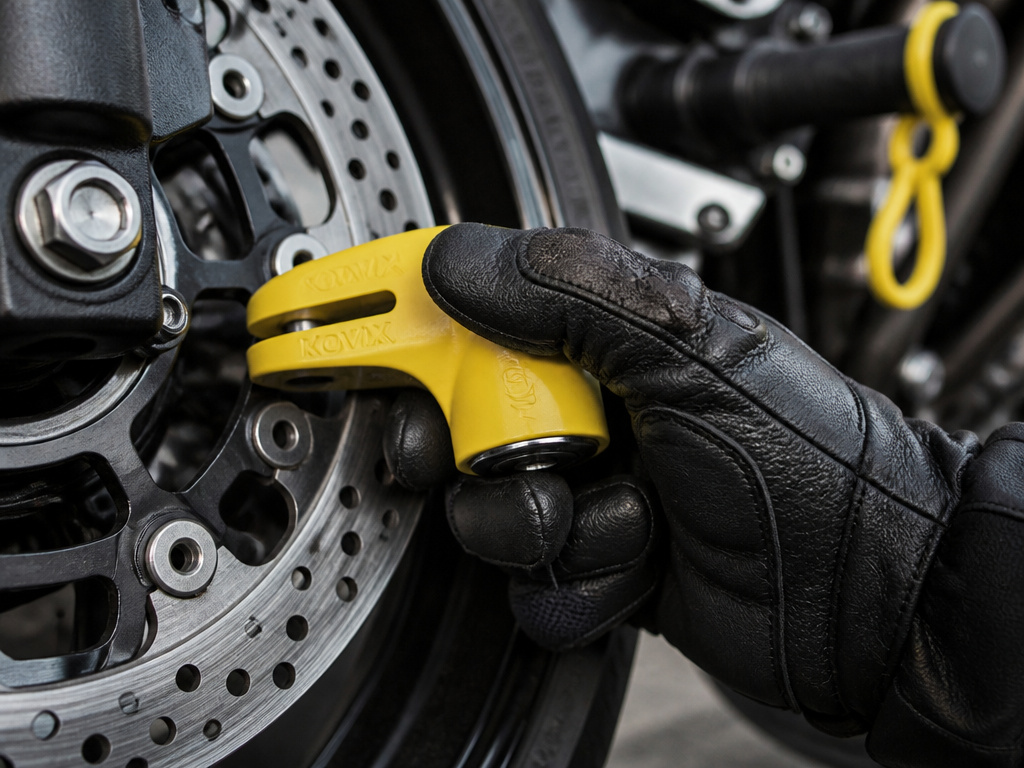
This is the workhorse layer. A physical lock is a tangible obstacle. Its job is to be so time-consuming and noisy to defeat that a thief abandons the attempt or risks detection.
Disc Locks and U-Locks are the most common. The installation matters as much as the lock’s quality. According to the Harley-Davidson/Kryptonite service bulletin, you should “position lock keeping it raised off the ground with key mechanism facing downwards to prevent thieves from attempting to gain a mechanical advantage or crush lock.” A lock resting on the ground is a lever’s dream. Hang it free.
If a U-lock won’t fit through your front brake disc, the manual has a direct fix: “install it through rear rotor or rear sprocket.” The goal is to lock the wheel to something solid, preventing rotation. Always use the reminder cord. “After installing U-lock, place loop end of reminder cord over handlebar grip.” This isn’t just for convenience; it’s a safety check to prevent you from trying to ride off with the lock still on.
Chains offer more flexibility but need a robust anchor point. Locking your bike to a street sign is pointless if the thief can unbolt the sign or lift the bike over it. Lock your bike to a cemented-in-place object. The chain should be as short as possible to limit slack, and the lock should be a high-quality padlock, not the chain’s built-in one if it’s weak.
| Lock Type | Best For | Key Installation Tip |
|---|---|---|
| Disc Lock | Quick errands, adding to other locks | Pass through brake disc rotor hole, use reminder cord |
| U-Lock | Securing wheel to frame or solid object | Keep lock elevated, keyway facing down |
| Chain Lock | Securing to fixed, immovable objects | Use minimal slack, protect lock from ground |
Maintenance keeps locks working. The Kryptonite guide is clear: “Lubricate lock several times a year… Always use a lubricant that has a silicone, graphite or Teflon base.” It also warns: “Do not use WD-40®. WD-40 is a solvent, not a lubricant and will remove lubricant in cylinder.” A frozen lock is useless when you need to leave in a hurry.
For lighted keys, the battery spec is specific: “two 1.5v lithium batteries (AG10, 389, 189, LR1130 or LR54).” Keep spares. A dead light is a minor annoyance; a lock that won’t open because the mechanism is gummed up is a major problem.
Alarms, Trackers, and Electronic Security
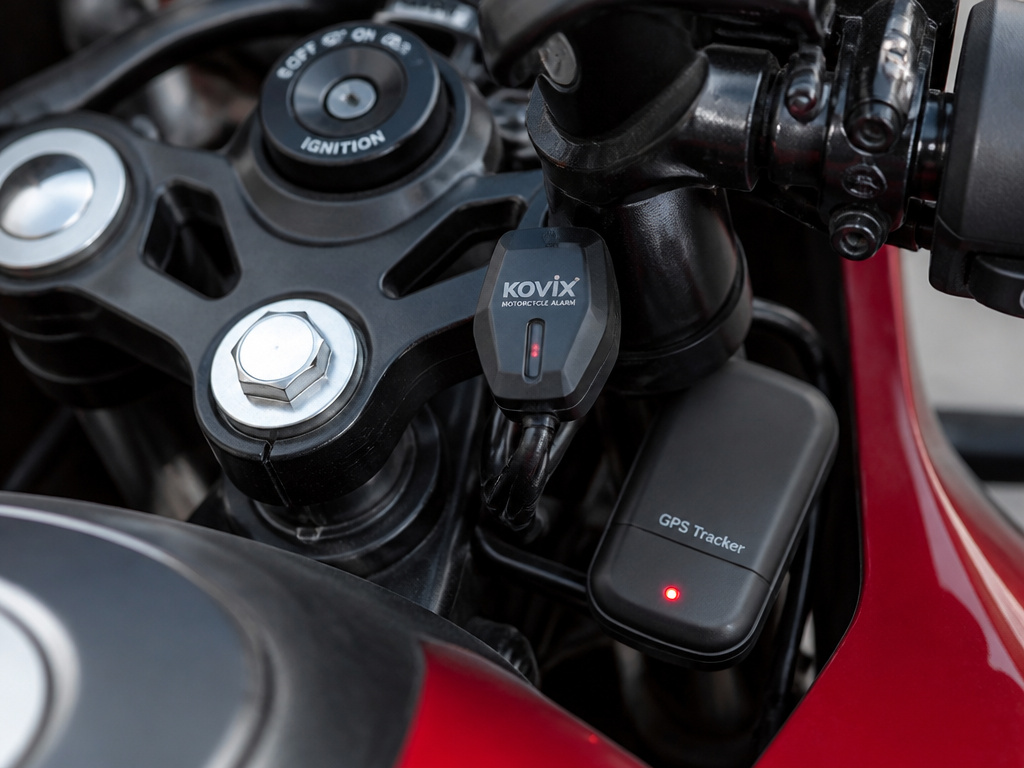
This layer adds noise and recovery potential. It’s what turns a slow theft into a noisy, risky one.
Alarms are a mixed bag. A cheap, overly sensitive alarm that goes off for every passing cat trains neighbors to ignore it. A quality, inertia-based alarm that triggers on tilt or impact is a legitimate deterrent. The siren draws immediate attention. For apartment or garage parking, a discrete, battery-powered alarm can be a middle ground. For a deep dive on features, our guide how alarms work breaks down the options.
GPS Trackers are the ultimate recovery tool. They won’t stop the theft, but they can lead you and the police right to the bike, often before it’s stripped. The best ones have long battery life, motion alerts, and geofencing. The investment is not just in the device, but often in a monthly subscription. Weigh the cost against your bike’s value and your peace of mind. Reviewing the GPS tracker pros and cons is worth doing before you buy.
The Anti-Theft Protection Offer (ATPO) is a unique hybrid. For certain Kryptonite locks, if you register the lock within 30 days of purchase, the company offers reimbursement “up to a specific monetary amount” if your bike is stolen through the lock being broken or opened. Registration fees “range from $9.99 for a one year period to $29.99 for a five year period.” For Kryptonite’s High & Ultimate security products, the first year of ATPO registration is free. This isn’t insurance, but it’s a significant financial backstop that makes buying a high-end lock a more calculated decision. Remember: “Cables and accessories are NOT covered under this Offer.”
Strategic Parking and Habit Security
Your location and routine are part of your security system. A bike locked with a $300 chain in a dark, isolated alley is more vulnerable than a bike with a simple disc lock under a bright light in front of a cafe.
The Kryptonite manual lists these as cardinal rules: “Lock motorcycle in well lit areas.” and “Do not lock motorcycle in the same area all the time.” Predictability is a thief’s best friend. If you park in the same dim corner of a lot every day at 5 PM, you’re making yourself a predictable target.
The 12-Second Rule is a common security concept. It posits that a thief will typically abandon a theft attempt if they cannot secure the asset within about 12 seconds. Your goal with parking and locks is to push that time envelope. A visible disc lock adds seconds. A hidden chain adds more. Parking with the lock side against a wall adds even more. You’re building a timeline that exceeds their risk tolerance.
Where this goes sideways: Parking in your apartment lot without a cover. You see it every day, so it feels safe. A thief scouting the area sees a clean, consistent target and learns your schedule. A generic cover breaks that visual identification.
When you have to store a motorcycle outside, a cover is essential. It protects from weather, but for theft, its job is to make the bike anonymous. A cover branded with “Harley-Davidson” or “YZF-R1” is an advertisement. A plain, grey or black cover hides what’s valuable underneath. For long-term outdoor security, combining a cover with a ground anchor and chain is the gold standard, a method detailed in our article on how to secure a motorcycle at home.
What To Do Before and After a Theft
Preparation is what you do now. Reaction is what you do after the worst happens.
Before: Document your bike. Take clear photos of the VIN, license plate, and any unique modifications or scratches. Keep a file with the bill of sale, registration, and insurance info. This isn’t just for theft; it’s for any insurance claim. Ensure your insurance coverage is adequate and you understand the deductible. This type of full coverage is what pays for theft.
After: Act immediately. Call the police to file a report. You’ll need the make, model, year, color, VIN, and license plate number, all the info in your prepared file. Then call your insurance company. If you have a GPS tracker, alert the police to its live location data; do not attempt recovery yourself. The police report number is required for any insurance claim or warranty claim like Kryptonite’s ATPO.
How to secure a motorcycle on a trailer
Use a high-quality locking device designed for motorcycles. The lock should create a snug fit around the motorcycle’s frame or wheels and the trailer’s anchor point, leaving little room for thieves’ tools to gain a mechanical advantage. Position the lock so it is raised off the ground with the key mechanism facing downwards to prevent attempts to gain a mechanical advantage or crush it. Always lock the handlebar and remove the key. Keep the motorcycle locked at all times when it is unattended on the trailer, and do not leave it unguarded without being secured.
How to protect VIN and license plate from tampering
While the fact sheet does not provide specific methods for protecting the VIN or license plate, practical guidance is to make tampering as difficult and noticeable as possible. Consider using specialized, one-way security screws or fasteners that require unique tools to remove. Regularly inspect your VIN plate and license plate mounting for signs of scratching, prying, or loose fasteners. Park in well-lit areas and vary your parking locations. These steps add a layer of deterrence and delay, making your bike a less appealing target for thieves who might attempt to disguise a stolen vehicle.
Common motorcycle theft methods like lifting and electronic tampering
Thieves use physical and electronic methods. Lifting involves quickly moving the entire bike into a van or onto another vehicle. Electronic tampering targets the ignition system. Modern factory systems like Honda H.I.S.S. Use a flashing LED to indicate operation and Ducati’s Immobilizer prevents starting unless a programmed key with a correct transponder chip is detected by an antenna. These systems store electronic codes in separate control units. The standard approach is layering security: use a physical lock like a U-lock through a brake disc or sprocket to thwart lifting, and rely on the factory immobilizer as a first electronic defense.
Frequently Asked Questions
What is the single best motorcycle theft deterrent?
There isn’t one. The best deterrent is a layered approach that combines a visible physical lock (like a disc lock), a hidden tracking device (GPS), and strategic parking. This covers deterrence, delay, and recovery. A determined thief can beat any single device, but beating multiple layers quickly and quietly is far less likely.
What is the 12 second rule for motorcycles?
The “12-second rule” is a security principle stating that a typical thief will abandon a theft attempt if they cannot secure the target within approximately 12 seconds. Your security measures aim to exceed this timeline. A steering lock might take 2 seconds to break. A disc lock might add 30 seconds with bolt cutters. A chain locked to an anchor could require an angle grinder and several minutes of loud work. Each layer pushes you past that critical threshold.
Are built-in immobilizers enough?
No. Immobilizers like Honda H.I.S.S. or the Ducati Immobilizer are excellent at preventing hot-wiring and ride-away theft. However, they do not prevent the bike from being physically lifted into a truck or van. A professional theft operation will bypass the immobilizer entirely by removing the bike. Always use a physical lock as well.
How does Kryptonite’s Anti-Theft Protection work?
Kryptonite’s Anti-Theft Protection Offer (ATPO) is a conditional reimbursement program. If you purchase an eligible lock (certain U-locks, chains, disc locks) and register it online within 30 days, you may be reimbursed up to a set amount if your bike is stolen due to the lock being broken or picked. Registration has a fee (from $9.99 to $29.99 depending on term and lock tier). It is not insurance, but it provides a financial backstop directly tied to the lock’s failure.
Is a motorcycle cover a good theft deterrent?
Yes, as a deterrent, not a barrier. A cover hides your bike’s make, model, and condition from thieves who are scouting. It introduces uncertainty, they don’t know what’s underneath or if it’s locked. For best effect, use a plain, non-branded cover and combine it with other security layers like a lock. A cover alone won’t stop a determined thief.
Before You Go
Security is a habit, not a purchase. The most expensive lock in the world is useless if you leave the key in the ignition. Start with the free, built-in tools: lock the steering, remove the key, and park smart. Then add a visible physical lock to handle the opportunistic threat.
The goal isn’t to make your bike impossible to steal, that’s not realistic. The goal is to make it the hardest, loudest, and riskiest target on the block. That’s how you keep it yours. For specific product comparisons, our reviews of the best motorcycle anti-theft devices and best motorcycle security locks can help you choose.
