
How to Store a Motorcycle Outside: The 7-Step Checklist
This post contains affiliate links. As an Amazon Associate, we earn from qualifying purchases.
Store a motorcycle outside by following a factory-specific prep checklist: remove and maintain the battery monthly, inflate tires to a storage-only pressure of 43 psi, fill the tank with treated fuel, clean and protect metal surfaces, and use a breathable, fitted cover. The single biggest mistake is covering a wet bike, which traps moisture and guarantees rust.
Forget the generic advice. The real difference between a bike that rolls out ready in spring and one with a seized caliper or a dead fuel pump comes down to matching your prep to the environment it will actually sit in. A key part of this is knowing how to store a motorcycle outside. Coastal salt spray, constant damp, and daily temperature swings break the standard rules.
What follows is the factory-level playbook for how to store a motorcycle outside, drawn from dealer storage bulletins and OEM manuals. We will go through the seven essential prep steps, settle the debate on starting the engine, and give you a clear plan for managing a cover when the weather won’t cooperate.
Key Takeaways
- Remove and maintain the battery, store it between 32 and 90°F and charge it fully once a month per Indian Motorcycle’s guidelines.
- Inflate tires to 43 psi for storage (a dealer spec from the NHTSA) to prevent flat spots; this is higher than your riding pressure.
- Never cover a wet motorcycle. Honda’s manual explicitly says to remove the cover after rain to let the bike dry, or you seal in corrosion.
- Choose a dry, well-ventilated spot on a firm, flat surface, and never store near open flames or heat sources as warned by Polaris.
- Use a fuel stabilizer in a full tank and run the engine to circulate it, but know that some manufacturers advise against periodic starting.
The 7-Step Factory Prep Checklist
This is not a casual wipe-down. Long-term outdoor storage is a preservation project. The goal of how to store a motorcycle outside is to defend against three enemies: moisture, fuel degradation, and electrical drain.
Follow these steps in order.
Before you start: You are working with gasoline, a battery, and potentially corrosive chemicals. Work in a well-ventilated area, away from sparks or open flames. Wear gloves and eye protection. Have a fire extinguisher within reach.
- Give it a Final Wash and Wax. Start with a completely clean bike. Honda’s procedure is explicit: wash the motorcycle and wax all painted surfaces (except matte finishes). This layer of wax is a physical barrier against moisture and contaminants. For chrome pieces, coat them with a rust-inhibiting oil. Dirt holds moisture against the metal; a clean bike gives corrosion nowhere to start.
- Stabilize the Fuel System. Fill the tank to 95% capacity with fresh fuel, then add a fuel stabilizer like Sea Foam according to the bottle’s instructions. Run the engine to circulate the treated fuel through the entire system, including the carburetor or fuel injectors. A full tank prevents internal rust from condensation. This step is universal across every credible guide.
- Remove and Prepare the Battery. Disconnect and remove the battery. Indian Motorcycle’s guide details the cleaning: scrub the terminals with a wire brush, wash posts and cable ends with a baking soda solution (1 part soda to 16 parts water), rinse, dry, and apply a thin film of dielectric grease. Store the battery in a dry place between 32 and 90°F and put it on a battery maintainer. Charge it fully once a month.
- Address the Tires. This is where the dealer spec differs from common advice. For long-term storage, the NHTSA bulletin for dealers specifies inflating tires to 43 psi. This is a storage-only pressure, significantly higher than your street pressure, to maximize resistance to flat-spotting.
- Lube the Chain and Pivots. Apply a heavy coat of chain lube to the drive chain. Also, lubricate any control cables, the clutch and brake lever pivots, and the side stand pivot. This displaces moisture and prevents seizing.
- Block the Bike, Don’t Use the Stand. For the storage period, you want weight off the tires and suspension settled. Polaris/Indian manuals say to block the frame to take weight off the wheels. Honda advises using a maintenance or center stand and placing a block so both tires are off the ground. Sources disagree on the best method: Polaris/Indian advises blocking the frame to take weight off the wheels, while Honda recommends using a stand to get both tires off the ground.
- Perform a Final Moisture Check. Before covering, ensure every nook is dry, under the seat, inside the fuel cap rim, around the brake reservoirs. Any trapped water will become a problem.
Choosing and Using a Cover
The cover is your bike’s primary shield, but the wrong one is worse than none at all. A plastic tarp will trap evaporating moisture against the bike, creating a perfect rust incubator.
You need a cover made from a durable, breathable material designed specifically for outdoor storage. The Polaris manual states this explicitly to prevent moisture buildup and oxidation. Look for a fitted cover with vent panels made from a durable, breathable material designed for outdoor storage.
Where this goes sideways: Putting a cover on a damp motorcycle. Honda’s owner’s manual has a direct instruction: “After rain, remove the body cover and allow the motorcycle to dry.” If you get caught in a shower, you must either let the bike air dry completely before covering it or accept that the cover will trap that moisture. There is no workaround.
For maximum protection in harsh climates, consider additional shelter. It adds a layer of defense against wind-driven rain and UV degradation.
| Cover Type | Best For | Key Risk |
|---|---|---|
| Breathable Outdoor Cover | All-season outdoor storage; sheds moisture vapor. | Can still trap moisture if placed over a wet bike. |
| Waterproof Plastic Tarp | Short-term rain protection during a ride. | Traps condensation; guarantees rust in long-term storage. |
| Indoor Dust Cover | Clean, climate-controlled garages. | Lacks UV and water resistance; fails outdoors. |
Security is part of the cover equation. A loose cover is an invitation. Use the cover’s built-in tie-downs or a cable lock through the bottom hem to deter casual theft.
The Engine-Starting Debate: Factory vs. Folk Wisdom
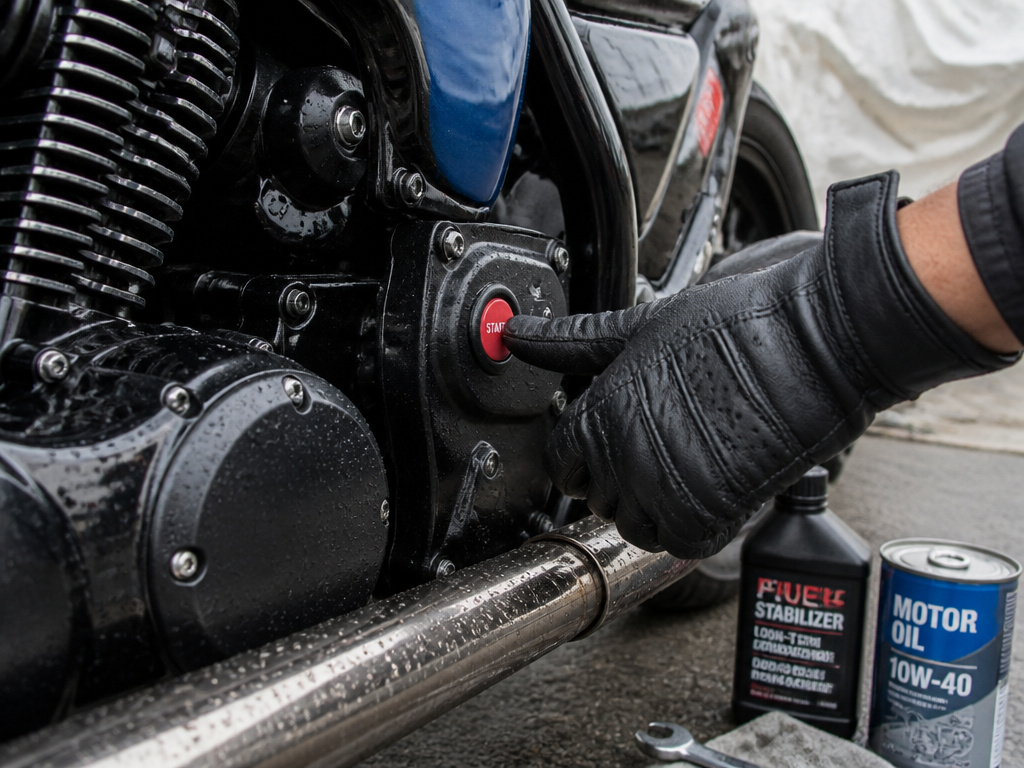
Here is the clearest conflict in motorcycle storage advice. Most forum posts and older guides will tell you to start the bike every few weeks. Two major factory sources directly contradict this.
The NHTSA long-term vehicle storage guidelines, a dealer-level bulletin, states: “If the vehicle is stored over an extended period of time, starting and running the engine… Periodically will ensure smooth running operation.” It recommends starting and operating the engine at less than 1,500 rpm for 15 minutes or longer, then raising engine speed above 3,000 rpm 10 times.
However, the Polaris/Indian owner’s manual contains a firm notice: “Starting the motorcycle periodically during storage is NOT recommended. Water vapor is a by-product of the combustion process, and corrosion may result unless the engine is operated long enough to bring the oil and exhaust system to normal operating temperature.”
The part nobody mentions: A short, 5-minute idle never gets the oil hot enough to boil off accumulated water vapor in the crankcase. This practice often introduces more moisture than it removes, especially in a humid climate.
So who is right? For outdoor storage, manufacturers disagree: the NHTSA TSB recommends periodic starting, while Polaris/Indian explicitly advises against it. If you cannot commit to a long, full-heat operation, following the Polaris/Indian advice to not start the engine may be safer. Your pre-storage oil change and fuel stabilizer are doing the protective work.
Managing Moisture and Rust in Hostile Environments
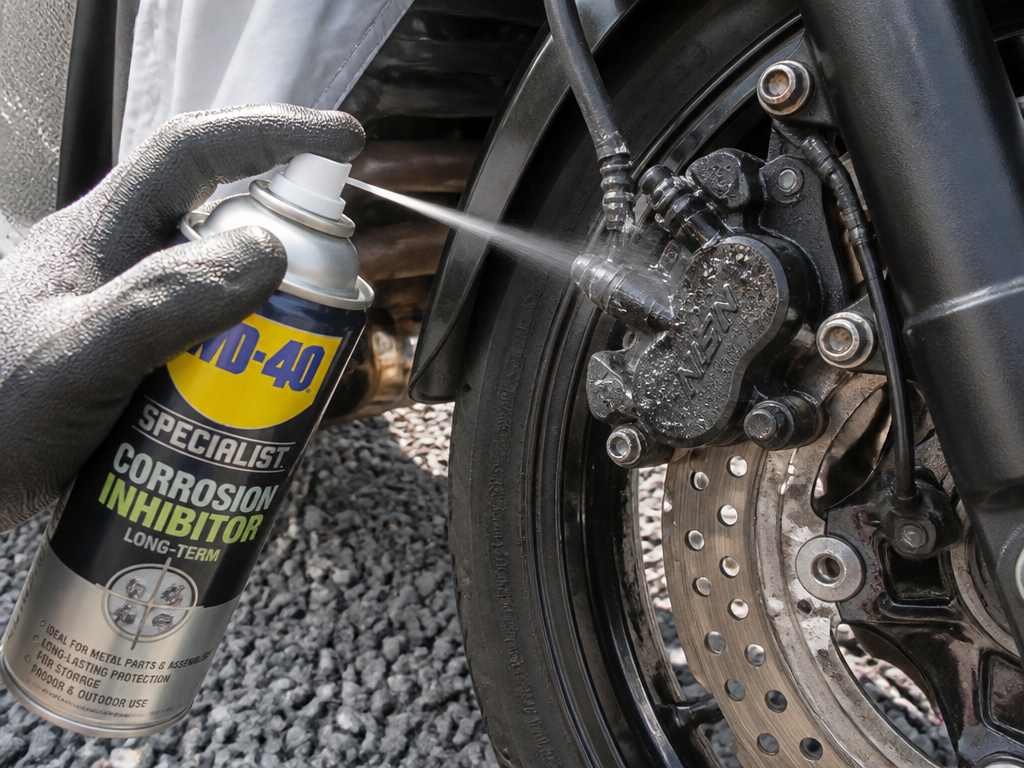
Outdoor storage means your bike is exposed to the elements. Two environments need special attention: coastal areas with salt air, and regions with constant dampness or rain.
The NHTSA bulletin specifically calls out these risks: “If the vehicles in your storage area are exposed to a sea breeze and/or significant precipitation, corrosion with rust in some parts may occur.” Their recommendation is monthly inspections for rust.
For these climates, your prep must be aggressive: * Apply a Corrosion Inhibitor: After your final wash and dry, apply a corrosion inhibitor to all exposed metal.
- Gravel is Your Friend: If your storage surface is dirt or grass, the NHTSA advises spreading gravel to minimize mud and dust splash. This keeps the undercarriage drier.
- Increase Inspection Frequency: Increase inspection frequency for rust and moisture. Pay close attention to brake discs, calipers, and chrome.
Your cover needs to be exceptionally breathable here. In perpetually wet climates, the best practice might be to forgo a cover on dry, windy days to allow maximum airflow, only covering when rain is forecast.
The Brake System and Tire Flat-Spot Prevention
Brakes and tires are the two systems that degrade silently but catastrophically when stationary.
Brake Rotor Rust is inevitable on cast iron discs. Light, uniform surface rust is not a problem, it will scrub off in your first few stops. The NHTSA provides a precise de-rusting procedure if needed: perform 5 stops from 60 mph, 10 from 40 mph, 20 from 30 mph, or 30 stops from 20 mph. For storage, their main rule is to not engage the parking brake. It can fuse to the rotor.
Tire Flat-Spotting happens when the bike’s weight rests on one section of tire for months. The 43 psi storage pressure is your first defense. Your second is moving the bike slightly every 6-8 weeks. The NHTSA mandates moving vehicles at least this often in dealer lots. Move the bike slightly to shift the contact patch.
Security and Pest Control for Outdoor Storage
An exposed motorcycle is a target. Deterrence is about layers.
- A Heavy-Duty Chain and Lock: Thread a heavy-duty chain through the frame and around a fixed, immovable object. The frame is better than a wheel, which can be removed.
- A Disc Lock with an Alarm: A loud, motion-sensitive disc lock on the front rotor is a brilliant deterrent. A loud, motion-sensitive disc lock alarm draws immediate attention.
- Cover and Cable: As mentioned, lock the cover to the bike itself. A thief looking for a quick grab will move on.
- Lighting: If possible, park in a well-lit area or use a motion-activated security light.
Pests are the other threat. Mice and rodents will nest in airboxes, exhausts, and seat foam, chewing wiring harnesses for nesting material. To keep mice out, use natural deterrents like peppermint oil-soaked cotton balls in strategic spots, or place commercial rodent repellent packets around and on the bike (not inside engine areas). Avoid mothballs, as the fumes can damage plastics and paint.
Alternative Shelter Options
When a garage isn’t available, your goal is to create a stable, dry environment. A well-ventilated shed or a purpose-built motorcycle tent can shield the bike from direct rain and sun. If using a storage unit, ensure the floor is firm and flat. For an unpaved outdoor storage area, spreading gravel can minimize mud and dust. Avoid any shelter near open flames, pilot lights, sparks, or electric motors. The location should also be away from radiators or other heat sources. Always use a durable, breathable cover under any shelter to add an extra layer of protection and manage condensation.
Fluid Maintenance
Proper fluid care before storage prevents internal corrosion and component damage. Start by washing and waxing all painted surfaces as a barrier. Coat chrome pieces with a rust-inhibiting oil to protect them. For lubrication, apply a thin film of dielectric grease to battery posts and cable connectors after cleaning them. While the fact sheet provides no specific guidance on changing engine oil or coolant before storage, a general best practice is to ensure all fluids are at their proper levels and are clean. This prevents acidic by-products or moisture in old fluids from damaging the engine’s internal parts during the dormant period.
Frequently Asked Questions
What is the best way to store a motorcycle outside?
The best way is a methodical, seven-step factory prep: clean and wax the bike, stabilize a full fuel tank, remove and maintain the battery off-site, inflate tires to 43 psi, lubricate the chain and cables, block the bike to unload the suspension, and cover it only when completely dry with a breathable, fitted cover designed for outdoor use.
Should I start my motorcycle during storage?
Manufacturers disagree. Polaris/Indian explicitly recommends against it, as short runs introduce corrosive moisture without fully heating the engine. The NHTSA dealer bulletin recommends periodic starting. The safest approach for outdoor storage is to not start it unless you can take it for a 30-minute ride to fully heat all components, which is often impractical.
How long can a motorcycle sit unused outside?
Motorcycle can sit for an extended period outside if properly prepared, but it requires active maintenance. You must check tire pressure and battery charge regularly, inspect for rust, and move the bike to prevent tire flat spots. Without this maintenance, significant degradation can begin.
What do I do if my only option is a grass or dirt spot?
The NHTSA bulletin for dealer storage lots states: “If your off-site storage lot is NOT paved, spread gravel to minimize mud and dust.” Lay down a thick layer of gravel to create a stable, drier base. This reduces moisture wicking up into the bike and prevents the stand from sinking.
The Bottom Line
Outdoor storage is a battle against the environment, not a passive act. The factory specs give you the weapons: 43 psi in the tires, a 32–90°F range for the battery, and a firm “do not cover when wet” rule.
If you take away one thing, let it be this: a breathable cover and a battery tender are essential investments that cost less than a single repair bill. Everything else, the fuel stabilizer, the rust inhibitor, the chain lube, supports those two pillars.
Forget starting the engine every few weeks. That well-meaning habit often does more harm than good. Trust your prep, follow the monthly checklists, and your bike will defend itself until you are ready to ride again.
