
How to Secure a Motorcycle at Home: Step-by-Step Security
This post contains affiliate links. As an Amazon Associate, we earn from qualifying purchases.
To secure a motorcycle at home, lock it through the frame to a permanent ground anchor with a heavy chain, add a disc lock on the front wheel, cover it, and park in a locked garage if possible. The goal is to create layers of time-consuming obstacles that make your bike a harder target than the one next to it.
That description is the destination. The path there is built on specific hardware, placement, and a few manufacturer warnings most riders skip. Harley-Davidson and Polaris both explicitly warn against storing a motorcycle with gasoline in the tank within the home or garage where open flames, pilot lights, sparks or electric motors are present. A key part of how to secure a motorcycle at home is heeding these warnings. Ignoring that turns a security plan into a fire hazard before a thief even shows up.
What follows breaks down the hardware, the setup, and the tactics for how to secure a motorcycle at home in private garages, driveways, and tricky shared spaces. The last section is the decision tree: what to buy first if your budget is tight.
Key Takeaways
- Anchor a heavy chain through the frame to a certified ground anchor, this is the single most effective physical layer.
- A Sold Secure-rated disc lock is a essential quick deterrent, but always use a reminder cable to avoid riding off with it attached.
- For storage longer than 60 days (as noted by Polaris), follow OEM prep steps: stabilize fuel, maintain the battery, and use a breathable canvas cover, not plastic.
- In an apartment complex, combine a cover, a loud disc lock alarm, and a heavy chain secured to a fixed post or your vehicle’s tow hitch.
The Layered Security Approach (The “Onion” Method)
Security isn’t about one unbreakable lock. It’s about stacking enough different types of obstacles that a thief runs out of time, makes too much noise, or simply picks an easier target. Think of it like an onion: a thief has to peel through layer after layer.
The first layer is deterrence and visibility. A cover makes the bike anonymous. A disc lock is a visible “keep away” sign. Parking under a motion-activated light or in a well-trafficked area adds natural surveillance.
Common mistake: Relying solely on the bike’s steering lock. A sharp kick to the handlebars snaps most of them. It’s an immobilizer, not a security device.
The second layer is physical immobilization. This is where a heavy chain and ground anchor live. The goal is to physically tether the bike to an immovable object. According to Yamaha’s owner’s manual, when securing a bike for transport, a similar principle, you should attach tie-downs to “solid parts of the motorcycle, such as the frame or upper front fork triple clamp.” The same logic applies for chains: go around the frame, not just a wheel.
The third layer is detection and alert. This includes alarms that scream when the bike is jostled and GPS trackers that ping its location. These don’t stop the initial theft but increase the chance of recovery and create risk for the thief.
The final layer is documentation and insurance. Take photos of your security setup, keep receipts for high-value locks, and ensure your insurance policy is current and understands the measures you’ve taken. Some insurers offer discounts for certified security devices.
| Security Layer | Example Devices | What It Stops | Time Added for Thief |
|---|---|---|---|
| Deterrence | Cover, disc lock, parking in sight | Opportunistic “snatch-and-grab” | 30 seconds – 2 minutes |
| Immobilization | Heavy chain (16mm+), ground anchor, heavy-duty U-lock | Bolt-cutter and pry-bar attacks | 5 – 15+ minutes (with angle grinder) |
| Detection | Alarm with tilt sensor, GPS tracker | Quiet removal and long-term hiding | Creates recovery chance; may trigger abort |
| Administrative | Insurance photos, VIN etching, policy with agreed value | Total loss after theft | N/A (mitigates financial loss) |
Essential Hardware: What Actually Works
When learning how to secure a motorcycle at home, you need tools that are rated for the job. In the security world, that means Sold Secure ratings. This independent UK organization tests locks against real-world attack methods for set periods (Bronze, Silver, Gold, Diamond). A Gold-rated lock has survived at least 5 minutes of attack with a range of tools.
Disc Locks & U-Locks
These are your first physical barrier. A disc lock clamps onto your front brake rotor, preventing the wheel from turning.
- Get one with an alarm. The 120-decibel scream is a phenomenal deterrent in a quiet garage or apartment parking. The noise alone often makes a thief move on.
- Use the reminder cable. I’ve nearly ridden off with a disc lock on, twice. The thin, bright cable loops from the lock to your handlebar, making it impossible to ignore. A thief’s patience is one thing; your own forgetfulness is a guaranteed way to damage your bike.
- Placement matters. Put it on the front disc, inboard of the caliper if possible. This makes it harder for a thief to pry the lock open with a bar.
Chains & Ground Anchors
This is the backbone of your security. A chain is only as strong as its weakest link, which includes the lock and what you’re attaching it to.
- Chain Specs: Use a heavy, hardened steel chain. It should be too heavy to carry comfortably, that’s the point. Keep it off the ground when locked to prevent using the concrete as a cutting anvil.
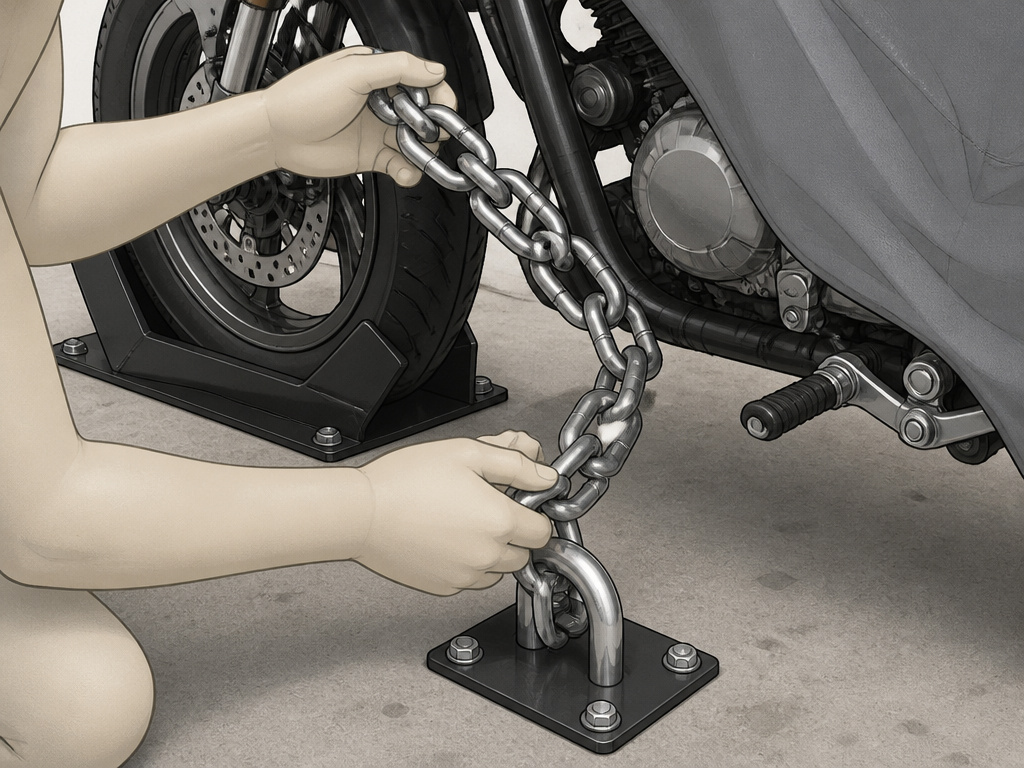
- The Anchor Point: You must secure the bike to something that can’t be moved. A ground anchor concreted into your garage floor is ideal. The anchor itself needs to be a high-quality, certified product. If you’re attaching to a metal post or beam, ensure it’s structurally part of the building and not just bolted to drywall.
- Locking the Chain: Use a hardened steel shrouded padlock (like a round disc lock) or a massive U-lock. The lock should be of a similar security rating to the chain.
Alarms & GPS Trackers
These are your early-warning and recovery systems.
- Standalone Alarms: A simple, battery-powered unit with a tilt/motion sensor that you hide under the seat. It’s low-cost and very loud. The downside is false alarms from wind or curious cats, which can lead to neighbors, and you, ignoring it.
- GPS Trackers: GPS tracking devices can be useful for recovery. They send an alert to your phone the moment the bike moves. However, they are passive. A thief doesn’t know it’s there, so it doesn’t deter the initial theft. And they’re only useful if powered. Mine sat dead for a month before I noticed, a very expensive lesson in maintenance. Check the battery monthly.
Securing Different Storage Locations
The “where” changes the “how.” A private, detached garage needs a different plan than a shared carport.
In a Private Garage
You have the most control here. This is where you deploy the full arsenal.
- Anchor the bike. Install a ground anchor in the concrete floor, centered where the bike parks. Chain the frame to it.
- Secure the garage itself. A weak garage door or a simple padlock on a man-door is the easiest entry point. Reinforce the garage door track with a padlock or clamp that prevents it from being lifted open. Replace any hollow-core side doors with solid metal or wood, and use a deadbolt.
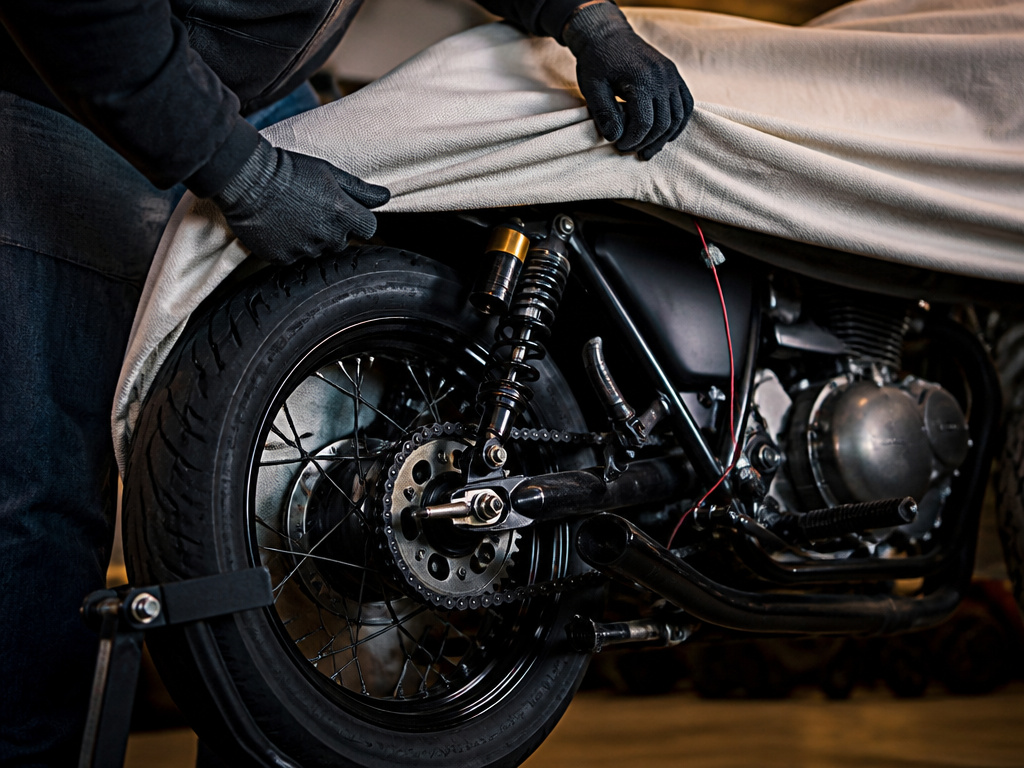
- Use a cover. Even inside, a cover adds a step and hides what you have. Harley-Davidson’s manual specifies using “a material such as light canvas that breathes. Plastic materials that do not breathe promote condensation and corrosion.” This is crucial for long-term storage.
- Consider a wheel chock. A wheel chock holds the bike upright, making it stable and easier to chain. It also prevents it from being rolled away easily.
On a Driveway or in a Yard
Visibility is your enemy and your ally. The bike is exposed, but so is the thief.
- Anchor to a permanent structure. Chain the bike to a buried ground anchor or a stout, cemented-in lamp post. Do not use a wooden porch post or a thin metal fence post.
- Maximize lighting and visibility. Park under a motion-activated security light. The sudden illumination draws attention. If possible, park in view of a house window.
- Use multiple locks. Combine a heavy chain with a alarmed disc lock. The goal is to require multiple different tools to defeat the security.
- Cover it. A generic, non-branded cover is best. Don’t advertise what’s underneath.
Securing a Motorcycle in an Apartment or Shared Space
This is the toughest scenario. You often can’t drill into concrete or install permanent anchors.
- Secure to your own vehicle. If you have a car parked next to it, loop a heavy chain through the bike’s frame and around the car’s tow hitch or axle. This turns your car into a massive, immovable anchor.
- Use a heavy-duty post lock. If there are fixed, stout metal posts (like for a carport), a chain around one can work. Inspect it first, ensure it’s truly fixed and not just set in a shallow concrete base.
- Use noise and attention to your advantage. An alarmed disc lock is your best friend here. The noise in an enclosed parking garage or lot is deafening and alarming to other residents.
- Talk to your landlord or HOA. Get written permission for any security measures you install, like a ground anchor. Some may be willing to install a communal anchor point for residents.
- Never rely on shared garage door security. Assume anyone has access. Your security must be self-contained on the bike.
Long-Term Storage Security
If you’re parking the bike for the winter or longer, security blends with preservation. Polaris defines long-term storage as more than 60 days of non-operation.
Before you start: You’ll be handling fuel stabilizer and possibly a battery tender. Work in a well-ventilated area, away from any ignition sources. Both Harley-Davidson and Polaris manuals contain explicit warnings against storing a motorcycle with fuel in the tank in a home or garage near open flames, pilot lights, sparks, or electric motors.
- Fuel System: Fill the tank to prevent condensation. Add a fuel stabilizer and run the engine to circulate it. Harley-Davidson approves fuels with up to 10% ethanol (E10) but explicitly warns against E85 or racing fuel containing methanol.
- Battery: This is where OEM advice diverges. Manufacturers offer different advice for battery handling during storage: Honda recommends removing the battery to prevent discharge, or disconnecting the negative terminal if left in place. Harley-Davidson’s procedure for models with a security system differs, depending on whether the system is armed or disarmed.
- Positioning: Place the bike on a maintenance stand to get both tires off the ground, as Honda recommends. This prevents flat spots. If you don’t have a stand, roll the bike forward a few inches every couple of weeks.
- Final Prep: Wash and wax the bike. Coat chrome with a rust inhibitor. Apply the breathable canvas cover Harley-Davidson specifies. A plastic tarp will trap moisture and cause corrosion.
Low-Budget vs. High-Budget Security Plans
You don’t need to spend thousands to be effective. Here’s how to prioritize.
Under $200: The Essentials-Only Plan
- Priority 1: An alarmed disc lock.
- Priority 2: A thick, hardened chain and a padlock. Secure it to the heaviest, most permanent object available.
- Tactic: Always use a cover. Park in the most visible, well-lit spot possible. This plan targets the opportunistic thief.
$200 – $600: The Serious Owner’s Plan
- Add: A high-security chain and a matching padlock.
- Add: A ground anchor and install it properly into concrete.
- Add: A basic battery-powered alarm with a tilt sensor.
- Tactic: You now have a layered physical defense. The bike is a significantly harder target requiring power tools.
$600+: The Maximum Deterrence Plan
- Add: A hidden GPS tracker with a cellular subscription.
- Add: A high-end alarmed disc lock.
- Add: Reinforcement for your garage door and solid core door with deadbolt.
- Tactic: Full-spectrum defense. Theft is now a high-risk, high-noise endeavor with a strong chance of recovery.
Bottom line: Start with the best disc lock and chain you can afford. The ground anchor is the single most effective upgrade after that.
Frequently Asked Questions
How do I stop my motorcycle from being stolen?
Stop it by making theft take too long, be too loud, and carry too much risk. Combine a heavy chain through the frame to a ground anchor, an alarmed disc lock, a cover, and a well-lit location. No single device is perfect; layers are key.
What is the 12 second rule for motorcycles?
Your goal is to extend that time to several minutes through locks and anchors, at which point most thieves will abandon the attempt.
What is the best way to secure my motorcycle?
The best single way is to physically tether it to an immovable object with a Sold Secure Gold-rated chain and lock, passed through the bike’s frame. This provides the highest baseline of physical security that all other layers (alarms, covers) supplement.
What motorcycle is most likely to be stolen?
However, any bike can be stolen if it’s an easy target. Modern adventure bikes and expensive touring models are also prized. Your security should be based on risk, not your bike’s model.
Before You Go
One rule cuts through all the gear advice: security only works if you use it, every single time. The quick trip to the store is not exempt. That’s when habits break and bikes disappear.
If your budget forces a choice, buy the thickest chain and lock you can first, even if you have to loop it around a steel support beam for now. Then save for the ground anchor. A visible, serious chain is a powerful psychological deterrent on its own. Everything else, the alarm, the cover, the tracker, makes that primary barrier even more effective.
Fair warning: ignore the manufacturer’s storage cautions about fuel and sparks at your own peril. A secured bike that becomes a fire hazard isn’t a win. Start with the OEM manual, then build your layers outward from there.
