
How to Prevent Arm Pump on a Motorcycle: Step-by-Step
This post contains affiliate links. As an Amazon Associate, we earn from qualifying purchases.
To prevent arm pump on a motorcycle, you must address three things in order: bike setup, riding technique, and cardiovascular fitness. Most riders grip at 70–80% strength but only need 20%. Set your suspension softer, stand up to absorb impacts with your legs, and train your body to efficiently move blood. Surgery is a last-resort option that costs thousands per arm.
The 70–80% vs 20% grip number is the whole game. It comes from coaching analysis at The Moto Academy, and it explains why your forearms light up within minutes. You are not weak. You are working against yourself, clamping down on bars that are fighting back through a poorly tuned suspension. Understanding this principle is key to how to prevent arm pump on a motorcycle.
What follows is a breakdown of where that tension comes from and how to systematically drain it, which is the core of how to prevent arm pump on a motorcycle. We will walk through bike adjustments that take five minutes, the body-position shift that stops arm pump within weeks, and the cardio truth that underpins both. By the end, you will have a clear path, technique first, fitness second, surgery only if the first two fail.
Key Takeaways
- Grip the bars at 20% strength, not 70–80%. This single change reduces forearm load more than any supplement or exercise.
- Set your bike up first: back out compression/rebound clickers for a softer ride and lubricate clutch/brake levers to reduce required pull force.
- Stand up over rough terrain. When you sit, your arms act as the suspension; standing allows your legs and hips to absorb impacts.
- Improve cardiovascular fitness, it helps your body remove trapped blood from forearms, addressing the root circulatory issue.
- Sources disagree on strength training: Better Dirt Bike Riding says some light weight lifting can reduce symptoms but to avoid exercises that build muscle volume, while Xtreme MotoX says building muscle won’t help and may make it worse.
The .080 vs .095 Grip Pressure Rule That Changes Everything
You do not have a strength problem. You have an efficiency problem. The data point that reframes everything is this: most riders grip the handlebars at 70–80% strength when they only need about 20%.
That gap is where arm pump lives. At 80%, your forearm muscles are in a state of near-maximum contraction. They demand huge blood flow but also squeeze the veins that should be carrying blood out. The result is a hydraulic lock, pressure builds, pain follows, and control vanishes. At 20%, there is enough tension for control but enough slack for circulation. Your hands become steering inputs, not clamps.
This mechanical explanation shows why symptoms can hit within 3–5 minutes of riding hard and fade within 10–15 minutes of stopping, a key insight for how to prevent arm pump on a motorcycle. The pump is acute, a direct feedback loop of grip force and circulatory backup. Loosen your hands, and the loop breaks.
A rider gripping at 80% strength restricts venous return in the forearm, creating a hydraulic lock that manifests as pain and swelling within minutes. Reducing grip force to 20% maintains control while permitting necessary blood flow, breaking the cycle of chronic exertional compartment syndrome (CECS).
The fix is a drill, not a decision. Pick a short, familiar section of trail or track. Your only goal for the next lap is to consciously unweight your hands. Feel the pegs through your boots. Let the bike move beneath you. If your knuckles are white, you have failed the lap. This will feel terrifyingly loose at first. Your brain will scream that you are about to lose control. That is the habit you are breaking. Control comes from your core and legs, not your fists.
Bike Setup: The First Thing You Should Do
Before you change your body, change the machine. A bike that fights you is a bike that guarantees pump. The goal is to make every control input require minimal effort.
Start with the suspension. A stiff setup transmits every rock and root directly into your arms. Back out the compression and rebound clickers a few clicks from your current setting. Softer suspension absorbs more impact, which means less vibration travels up the bars. You want the bike to feel plush, not planted. This one adjustment can significantly reduce the need to death-grip.
Next, go through your controls. A sticky clutch or brake lever adds pounds of unnecessary pull force every time you use it.
| Control | Check | Goal |
|---|---|---|
| Clutch Lever & Cable | Lubricate thoroughly | Effortless single-finger pull |
| Front Brake Lever | Oil the pivot point | Smooth, consistent pressure with minimal force |
| Brake Caliper | Ensure it slides freely | No drag or resistance |
That last point is critical. If your brake caliper is dragging even slightly, you are constantly fighting the bike to maintain speed. That resistance translates directly into forearm tension. A clean, well-lubricated control suite is the foundation of riding fatigue management.
Finally, look at your ergonomics. Are you reaching too far for the bars? Are the levers angled so your wrists are straight? Test different lever positions and handlebar heights. Even a small adjustment in bar placement can shift weight off your palms and onto your core. This adjustment is about redirecting load away from the muscles that fail first.
Your Body Is the Suspension (Or the Problem)
Arm pump is a body-position problem that shows up in the forearms. That is the thesis from coaches who work with pro riders. When you sit down over chop, whoops, or ruts, your upper body locks. Your arms become the only suspension you have, and they fatigue in minutes.
Where this goes sideways: Sitting through rough sections. Your arms become the primary suspension, absorbing impacts they are not designed to handle. Forearm muscles fatigue and pump within a single moto.
Stand up. Let your legs and hips absorb the hits. Standing up is for any terrain that would bounce you around in the seat. Standing turns your lower body, the largest muscle group you have, into a dynamic shock absorber. It also changes your relationship with the bars. You steer with pressure on the pegs and slight leans of the body; your hands become guides, not anchors.
This ties directly to your riding posture. Are you holding yourself on the bike with your arms? If you can lift your hands off the bars at speed without pitching backward, your core is doing the work. If you lurch forward, your arms are carrying your body weight. That is a massive, constant load. Grip strength is for control, not support. Strengthen your core off the bike so you can stop using your arms as a crutch on it.
Cardio vs. Technique vs. Setup: What Actually Works?
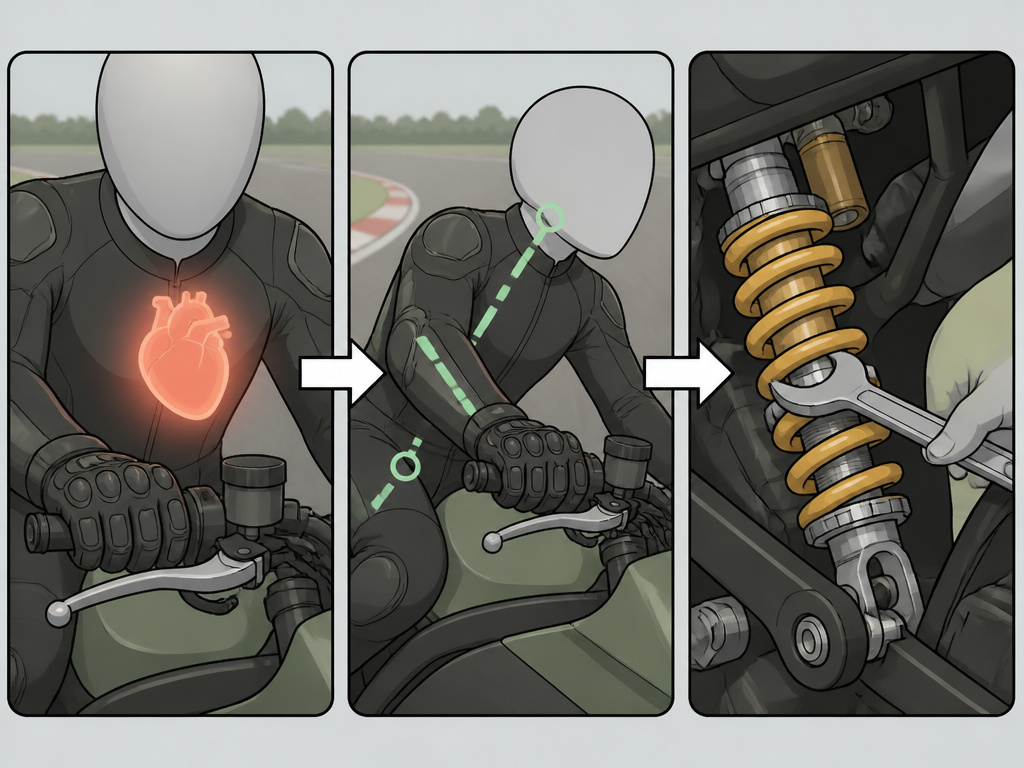
Sources disagree on the primary cause. One says cardiovascular fitness is the most important factor. Another says it is a body-position problem. A third prioritizes bike setup. They are all correct, but they address different points in the system.
Think of it as a chain: Fitness → Technique → Setup. Your cardiovascular system determines how efficiently your body can deliver and remove blood from working muscles. Good technique ensures those muscles are not overworking. Proper setup minimizes the work required in the first place. Weakness in any link breaks the chain.
| Focus Area | What It Fixes | Time to See Results | Best For |
|---|---|---|---|
| Cardiovascular Fitness | Blood flow efficiency, recovery between efforts | Weeks of consistent training | Riders who fade late in motos, have high resting heart rates |
| Riding Technique | Grip pressure, body position, impact absorption | A few focused riding sessions | Riders who pump up quickly |
| Bike Setup | Input force, vibration transmission, ergonomic load | Immediate after adjustment | Every rider, as a foundational step |
Improving your cardio helps your body clear metabolic waste from muscles faster. It is the long-term solution for avoiding fatigue on long rides. Technique is the quickest lever to pull for acute relief. Setup is the prerequisite that makes both possible. You need all three, but you should attack them in the order above: fix the bike, fix your position, then build your engine.
What Not to Do: Myths That Make It Worse
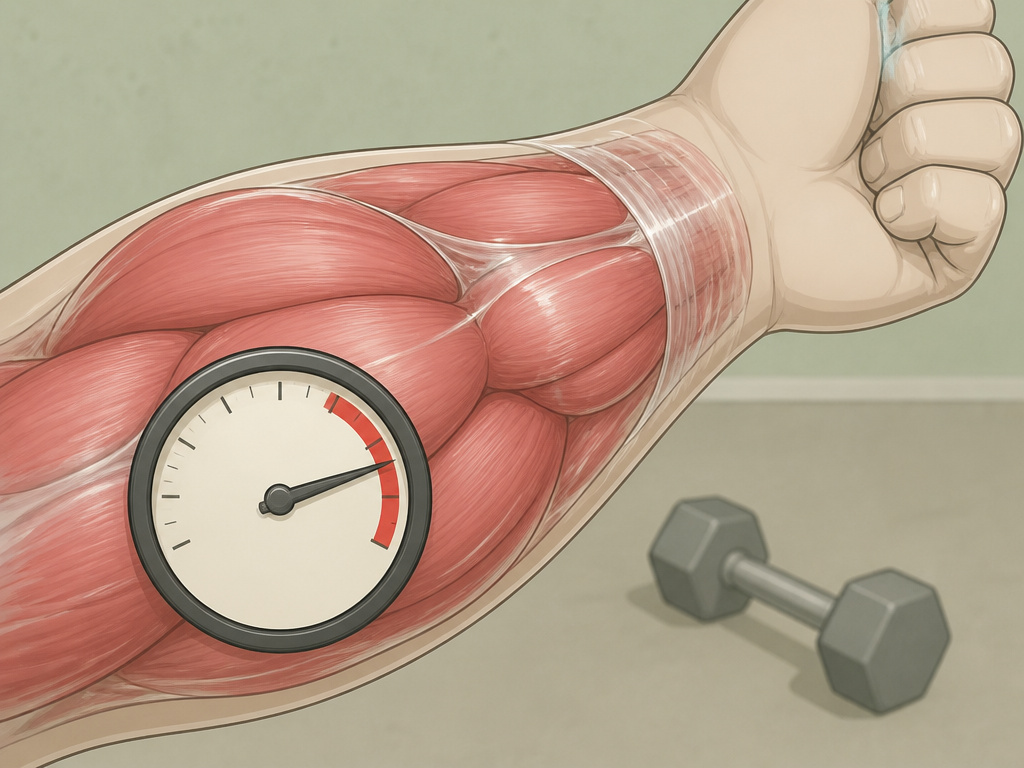
The internet is full of bad advice that sounds logical. Let us clear the air.
Do not build muscle volume in your arms, chest, or shoulders. Building muscle can make arm pump worse. The fascia surrounding your forearm muscles does not stretch much. Bigger muscles mean less space for swelling, which leads to pressure buildup faster. This is why many pro riders avoid traditional bodybuilding routines. Focus on rider exercises that build endurance and core stability, not bulk.
Do not rely on supplements as a cure. Some, like creatine, can be a direct cause of arm pump for certain individuals. They pull water into muscle cells, increasing internal pressure. The evidence for most “pump-reducing” formulas is anecdotal at best. Your money is better spent on quality hydration tablets or a gym membership for cardio work.
Do not skip hydration because you are not thirsty. Drink lots of fluids well before the ride day. Dehydrated muscles are more prone to cramping and fatigue. This is a basic wrist pain prevention strategy that has a direct knock-on effect for your forearms.
Do not ignore warm-ups. Warming up before riding is one of the best ways to prevent arm pump. It increases blood flow and prepares muscles for work. A few minutes of dynamic stretching, a light jog, or even a slow sighting lap can make a dramatic difference in how you feel on the first hard lap.
Recovery and Maintenance: The Work Between Rides
What you do off the bike matters as much as what you do on it. Arm pump is a cumulative stress injury. You need a protocol to manage that stress.
First, direct forearm care. Foam rolling the forearms and stretching the flexor and extensor groups are not optional. They break up adhesions and improve tissue mobility. Follow with cold water on the forearms between motos on race day to reduce inflammation. This practice is about recovery speed.
Second, train the right energy systems. Light weight lifting can reduce symptoms, but avoid exercises that primarily build muscle volume or focus on maximum strength. Think endurance-focused movements. Climbing is an isometric exercise similar to dirt bike gripping that can prevent arm pump. It builds endurance without bulk. The best cross-training? Riding your dirt bike regularly. It encourages neovascularization, the growth of new blood vessels, which improves circulation exactly where you need it.
Finally, manage your overall physical readiness. This is where targeted exercises for motorcycle riders come in. A simple routine focusing on plank variations, dead bugs, and shoulder stability can improve your on-bike posture. It is more effective than any curl or press.
When to Consider Arm Pump Surgery (Fasciotomy)
For a small percentage of riders, technique and fitness are not enough. If you have true Chronic Exertional Compartment Syndrome (CECS), the pressure inside your forearm fascia becomes dangerously high during exercise and does not normalize with conservative treatment.
Surgery, a fasciotomy, involves cutting the fascia to relieve pressure. It typically costs several thousand to over ten thousand dollars per arm in the United States. Recovery takes months, and it is not a guaranteed fix. Some riders need repeat procedures.
Consider surgery only if:
- You have a formal diagnosis of CECS from a sports medicine specialist, confirmed by compartment pressure testing.
- You have diligently followed a structured technique and fitness program for at least 3-6 months with no improvement.
- The pain is severe enough to stop you from riding, and it reoccurs predictably with minimal exertion.
It is a last resort. For most riders, the problem is upstream, in their grip and their bike. Fix those first.
Why You Must Warm Up Before Riding
Warming up prior to hitting the track or trail is one of the best ways to prevent arm pump. This physical preparation gets blood flowing to your muscles before you start riding hard, which can help delay the onset of tightness and pain. A proper warm-up should simulate the demands of riding, preparing your body for the repetitive wrist motions and gripping actions to come. Think of it as priming your system to perform efficiently from the first corner, rather than shocking it into a state of tension. This simple step is one of the best ways to prevent arm pump.
Do Supplements Cause or Prevent Arm Pump?
Be cautious with supplements, as some can directly contribute to arm pump. Creatine, for example, is noted as a potential cause because it can increase water retention and muscle volume within the forearm’s tight fascial compartments. The general guidance is to avoid anything that promotes significant muscle volume growth in the arms, as larger muscles in a confined space can worsen the condition. Focus instead on foundational practices like hydration and cardiovascular fitness. Before adding any supplement, consider its potential to increase muscle size or water retention, as these effects may work against your goal of reducing forearm pressure.
Forearm Stretching and Correct Exercises
Targeted forearm care is not an optional add-on. Regular stretching of the flexor and extensor muscle groups, along with foam rolling, helps maintain flexibility and reduce tightness. For exercises, the focus should be on endurance, not size. Light weight lifting can reduce symptoms, but you must avoid exercises that primarily build muscle volume or focus only on maximum strength, as increased muscle bulk can make arm pump worse. Activities like climbing are recommended as they provide an isometric exercise similar to dirt bike gripping without promoting excessive growth. Always pair this work with exercises for your core and lower body.
Frequently Asked Questions
What helps prevent arm pumps the fastest?
Adjust your bike setup and consciously reduce your grip pressure. Softening your suspension and lubricating your controls can provide immediate relief by reducing the force needed to ride. Pair this with the mental cue to grip at 20% strength. You will feel a difference in your first session.
How to not get arm pump on a dirt bike?
Stand up more, grip less, and ride more often. Standing allows your legs to absorb impacts. A loose grip keeps blood flowing. Regular riding conditions your forearms and improves cardiovascular efficiency specific to the sport. Consistency is more important than intensity when building this tolerance.
What supplements can help with arm pump?
The evidence is thin. Some riders report benefits from certain vasodilators, which may improve blood flow. However, avoid creatine, as it can increase intramuscular water retention and pressure. The most proven “supplements” are water and electrolytes, hydrate well before riding.
What causes an arm pump?
The primary cause is excessive and sustained grip force, often compounded by poor bike setup and inadequate cardiovascular fitness. This force contracts forearm muscles, restricting venous blood return. Pressure builds inside the muscle compartments, causing pain, tightness, and loss of strength, a condition known as exercise-induced compartment syndrome.
The Bottom Line
Arm pump is a correctable inefficiency. Start with the mechanical fix: set your bike up to be forgiving. Then learn the skill: ride with your legs and core, not your fists. Finally, build the engine: better cardio clears the waste that causes the pain.
If you take one thing away, let it be the 20% grip rule. Everything else supports that single change. Your hands are for control, not for holding on. Trust your body and your bike to do the rest.
For related issues like numb hands or general long distance comfort, the principles are the same, reduce load, improve circulation, and ride smarter. The goal is always more ride time, less recovery time.
