
How to Jump Start a Motorcycle: The 5-Second Rule
This post contains affiliate links. As an Amazon Associate, we earn from qualifying purchases.
To jump start a motorcycle, connect jumper cables in this order: red to the dead bike’s positive terminal, red to the donor’s positive terminal, black to the donor’s negative terminal, and black to a clean engine bolt or frame ground on the dead bike, never its negative post. Start the donor, wait a minute, then start the motorcycle. If it doesn’t start within 5 seconds, stop and wait 10 seconds before trying again. Some bikes, like Honda models with lithium-ion batteries, should not be jump-started at all according to their manuals.
That 5-second rule is straight out of a Honda manual. It’s there because cranking a dead battery for longer than that can drop its voltage so low that the bike’s computer forgets its idle settings. You get a no-start, followed by a whole new set of problems. This is why knowing how to jump start a motorcycle correctly is critical. This isn’t just about connecting cables; it’s about protecting the expensive electronics that run your bike.
What follows is the full procedure for how to jump start a motorcycle, with the specific warnings that actually matter. This guide explains how to use a car, another motorcycle, or a jump pack, lists the necessary tools, and describes what to do after a successful start or if the engine still won’t turn over.
Key Takeaways
- Never jump-start a bike with a lithium-ion battery if the manufacturer prohibits it, as Honda does for specific models with a strict “Do not jump-start” warning, it can fry the battery management system.
- Crank for no more than 5 seconds; if the engine doesn’t catch, turn the key off and wait 10 seconds before trying again to protect the ECU.
- Always connect the final black clamp to a bare metal ground on the frame or engine, not the dead battery’s negative terminal, to avoid sparks near battery gases.
- Use jumper cables with small clamps suitable for motorcycle terminals; car cables (often 2- or 4-gauge) are too thick and clumsy for small motorcycle battery terminals.
- Ride for a significant time after a jump to recharge the battery; if it dies again, the battery is likely shot and needs replacement or a full diagnostic.
The One Rule That Changes Everything
Check your battery type before you touch a cable. This is the single biggest point where generic advice fails.
Honda’s manual for the CB1000RA with a conventional lead-acid battery says jump starting with a car battery “can damage your motorcycle’s electrical system and is not recommended.” It’s a strong warning, but it leaves the choice to you. In contrast, Honda’s manual for a model with a lithium-ion battery states an absolute prohibition: “Do not jump-start.”
Where this goes sideways: The manual for a Honda model with a lithium-ion battery is absolute: “Do not jump-start, as this can damage your vehicle’s electrical system and battery.” That’s a prohibition, not a suggestion.
If your bike has a lithium-ion battery, you must find and read your owner’s manual before learning how to jump start a motorcycle. Jumping it could damage the sensitive battery management system, turning a dead battery into a $300 paperweight. For everyone else with a conventional battery, the procedure is a calculated risk you can manage with the right steps.
What You Actually Need: Tools and Donor Sources
You need a donor with 12-volt power and a pair of jumper cables. The donor can be a car, another motorcycle, or a portable jump starter pack. The cables are where people get it wrong.
Car jumper cables are usually 2- or 4-gauge, they’re massive. Their clamps are huge, designed to bite onto car battery posts the size of a soda can. Trying to clamp those onto tiny motorcycle terminals often results in a poor connection, arcing, or slipping off and causing a short.
Get cables meant for the job. A set of 8- or 10-gauge cables with small, pointed clamps gives you control. A portable jump starter is the safest donor source, as it isolates your bike’s electrical system completely. Our jump starter reviews compare the models that fit under a seat.
| Donor Source | Best For | Critical Warning |
|---|---|---|
| Portable Jump Pack | Solo riders, safety | Ensure it’s fully charged before you need it. |
| Another Motorcycle | Riders with friends | Keep both bikes off while connecting cables. |
| Car (Running) | Emergency use only | The car’s high-output alternator can overwhelm bike electronics if left running. |
Before you connect anything, do a 60-second check on the dead bike. Is the kill switch in the “Run” position? Is the bike in neutral? Is the kickstand up? Is there fuel? You’d be surprised.
The Step-by-Step Jump-Start Guide
Park the donor vehicle close, but ensure the bikes or vehicles are not touching. Turn both ignitions off.
- Connect Red to Dead: Attach one red clamp to the positive (+) terminal of the dead motorcycle’s battery. Wiggle it to ensure a solid metal-on-metal bite.
- Connect Red to Donor: Attach the other red clamp to the positive (+) terminal of the donor battery.
- Connect Black to Donor: Attach one black clamp to the negative (-) terminal of the donor battery.
- Connect Black to Ground: This is the safety step. Attach the final black clamp to a clean, unpainted metal bolt on the dead motorcycle’s engine or frame. A engine mounting bolt or a bare bracket works. This is done last and away from the battery to prevent any spark from igniting hydrogen gas the battery may have vented.
Worth knowing before you start: The final spark always happens at the last connection point. By making that connection on the engine block, far from the battery, you move the spark away from any potential gas source.
Now, start the donor vehicle. If it’s a car, let it idle for a full minute to build a charge. If it’s a motorcycle, start it and let it run for a minute to stabilize the electrical system. This stabilizes the electrical system.
Go to the dead bike. Turn the key on. Listen for the fuel pump to prime (a faint whir). Now press the starter.
Important:. Crank for no more than 5 seconds. If the engine doesn’t start, stop. Turn the key all the way off. Wait 10 seconds. This wait allows the battery voltage to stabilize and keeps the ECU from receiving conflicting signals. Then try again.
If it starts, great. Leave it running. Now remove the cables in the reverse order: black from the ground on the dead bike, black from the donor, red from the donor, red from the dead bike. Be careful the clamps don’t touch each other or any metal as you remove them.
What to Do After a Successful Jump
Your battery is still deeply discharged. Idling in the driveway won’t recharge it sufficiently. You need to put a real charge through it.
The part nobody mentions: A 30-minute ride at highway speeds is the minimum. Surface charging from a short ride tricks you, the battery might show 12.6 volts but collapse under load again tomorrow.
If you can’t ride it immediately, connect a battery charger or battery maintainer as soon as you get home. A smart charger will diagnose the battery’s health as it charges. If the battery dies again after a ride and recharge, it’s finished. Time for a new one or a deep diagnostic using our motorcycle won’t start troubleshooting guide.
When the Jump Fails: Troubleshooting
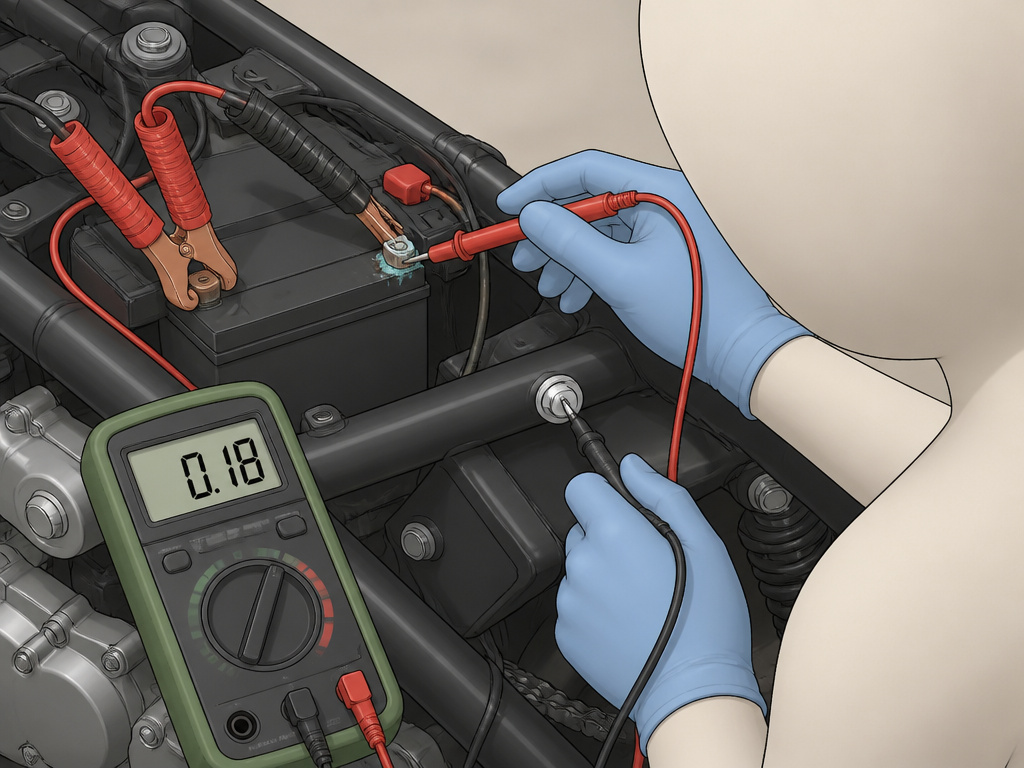
Sometimes you follow the steps and get nothing but a click or slow crank. Don’t just keep trying. You’ll cook the starter or flatten the donor.
First, check your connections. Every clamp must be biting clean, bare metal. Corrosion on the terminal acts as an insulator. If the connection looks good, the problem is likely deeper.
The bike clicks once, then nothing: This usually points to a battery with an internal short or a cell that’s completely dead. It has enough voltage to pull in the starter solenoid (the click) but collapses immediately under load. A jump pack might not even overcome this. You need a new battery.
The engine cranks slowly but won’t start: The jump is providing power, but it’s not enough. This could be a severely sulfated battery, or you might have a fuel or spark issue unrelated to the battery. Check for a tripped tip-over sensor, a clogged fuel filter, or bad gas.
No sound, no lights, no click: You have a break in the main circuit. Check the main fuse. Ensure the cable ground connection on your engine or frame is tight and free of corrosion. This is where a multimeter test is essential to see where the voltage is stopping.
The Push-Start Alternative (Bump Starting)
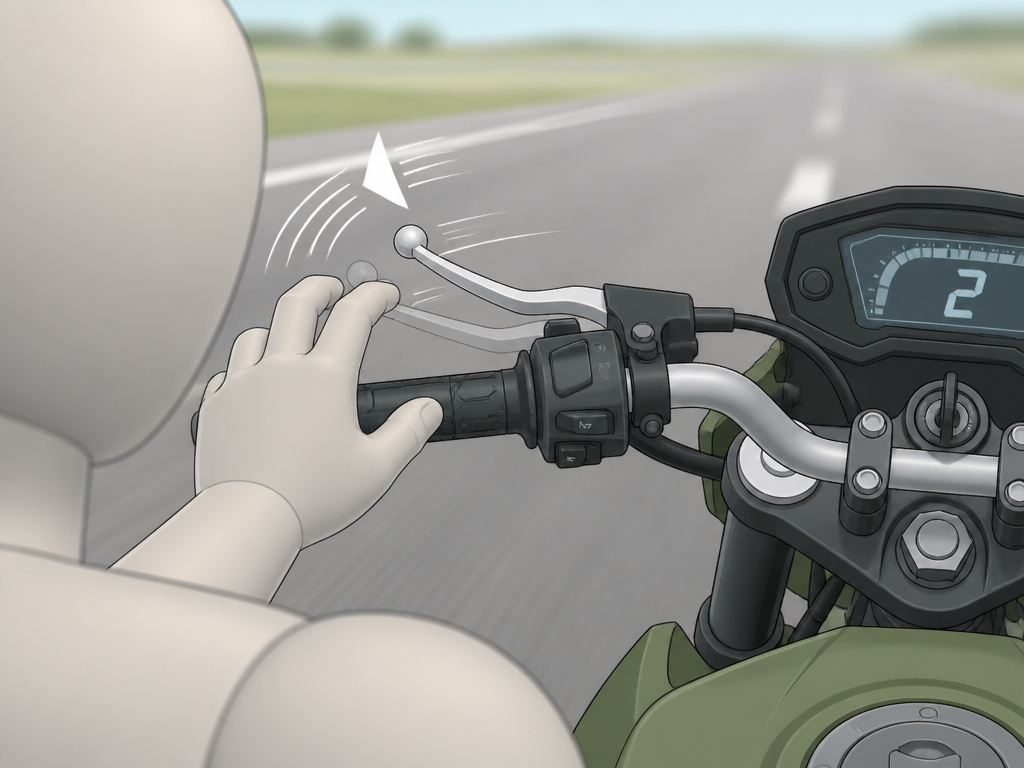
If you have no cables and a manual transmission, you can bump start it. This only works if the battery has some charge left to power the ignition and fuel pump, if it’s completely stone dead, this won’t work.
Find a gentle hill or a flat stretch with room to run. Put the bike in 2nd gear (1st gear is too jerky and can lock the rear wheel). Hold the clutch in and get the bike rolling, either by running alongside or rolling down the hill. Once you’re at a fast jogging speed, jump on the seat and sharply release the clutch. The engine should turn over and catch. As soon as it does, pull the clutch back in and give it some throttle.
Common mistake: Trying this in first gear. The high gear ratio makes the rear wheel lock and skid instead of turning the engine smoothly. Use second or even third gear.
It’s a physical workout and hard on the drivetrain, but it’s saved many riders. Remember to charge the battery properly as soon as you can.
How to Maintain Your Battery After a Jump Start
After a successful jump start, the battery needs proper care. First, ride the motorcycle for a significant time to allow the charging system to replenish the battery. If the battery was completely dead, this may not be enough. For conventional lead-acid batteries, Honda recommends using a ‘motorcycle battery charger’. For a lithium-ion battery, Honda states to only use a charger recommended by the specific lithium-ion battery manufacturer. A jump start is an emergency fix, not a charging solution. If the battery fails to hold a charge after this, it likely needs replacement.
Frequently Asked Questions
Can you jump a motorcycle with a car?
Yes, but with a major caveat. Use the car as the donor, but keep the car’s engine off. A modern car’s charging system can output high amperage, which may surge and overwhelm your motorcycle’s more delicate electronics. With the car off, you’re drawing from its battery alone, which is a much safer, stable 12-volt source. Connect the cables as described, start the motorcycle, then disconnect immediately.
Why connect the black cable to the frame and not the battery?
Safety. A weak or overcharged battery vents hydrogen gas, which is highly explosive. The final connection often creates a small spark. By placing that spark on the engine block, away from the battery, you eliminate the risk of igniting those gases. It’s a simple step that prevents a rare but serious hazard.
How long should I ride to recharge the battery after a jump?
Aim for a long ride at sustained RPMs (highway speeds) to effectively recharge the battery. City stop-and-go riding doesn’t allow the charging system to work effectively. If you can’t take a long ride immediately, plug the bike into a battery tender as soon as you get home.
My motorcycle won’t start even with a jump. What’s wrong?
If the battery is receiving a charge from the donor but the engine still won’t crank or start, the battery itself is likely internally failed and cannot accept a charge. Other possibilities include a failed starter motor, a bad starter solenoid, or a seized engine. Follow a systematic troubleshooting guide to isolate the issue.
The Bottom Line
Jump-starting is a temporary fix, not a solution. That Honda 5-second rule exists because modern bikes are computers on wheels. You’re not just turning an engine over; you’re trying not to scramble the ECU in the process.
If your battery dies once, recharge it properly. If it dies twice, replace it. The money you spend on a new battery and a smart charger is less than the tow bill and diagnostic time for a fried electrical module. And if your manual says “do not jump-start”, like that Honda lithium-ion model, believe it. They wrote that clause after testing what happens when you ignore it.
