
Heated Motorcycle Gloves Pros and Cons: How to Choose
This post contains affiliate links. As an Amazon Associate, we earn from qualifying purchases.
Heated motorcycle gloves are a targeted tool, not a universal upgrade. They deliver decisive warmth below freezing where insulation fails, but they add bulk, wiring, a finite lifespan, and a reliance on power that standard gloves do not have.
That distinction is the whole conversation. Insulation can only slow heat loss; once your body restricts blood flow to your fingers in the cold, a fleece-lined glove has nothing left to conserve. A heated glove’s resistive elements add watts, sidestepping that biological limit entirely. This is why the debate isn’t about which is “better,” but where the temperature line sits for your riding, making a discussion of heated motorcycle gloves pros and cons essential.
What follows is a breakdown of where heated gloves genuinely win, where they create new problems, and the specific specs, from battery life to certification, that decide whether a pair is worth your money.
Key Takeaways
-[Battery-powered gloves on high output are typically good for two to three hours in real-world cold, not the ideal conditions listed on the box.] -[The CE standard for motorcycle gloves is EN 13594:2015; look for Level 1 or Level 2 certification to verify impact protection hasn’t been compromised for the heating elements.] -[For unlimited runtime and maximum heat, a 12V hard-wired system is the answer, but it requires checking your bike’s available amperage headroom.] -[Heated gloves have a realistic lifespan of three to five seasons; the electronics and constant flexing of the leather limit their longevity compared to standard gloves.] -[A thin glove liner costing $19 to $25 can add roughly ten degrees of effective warmth to a standard glove, which changes the calculus on whether you need heat at all.]
Where Heated Gloves Genuinely Win (The Pros)
Below about 40 degrees Fahrenheit at highway speeds, the comparison isn’t close. This is where physics overrides any material science in a standard glove.
The mechanism is vasoconstriction. When your core temperature drops, your body throttles blood flow to the extremities. Your fingers stop producing meaningful heat and cool toward ambient temperature no matter what they’re wrapped in. A heated glove sidesteps this by adding watts back in.
That’s not a marketing claim. It’s the physiological reason a fleece-lined deerskin glove becomes useless after 20 minutes in 32-degree weather, while a heated glove set to medium keeps your hands functional for a two-hour commute.
Superior, Targeted Warmth. The best models heat both the top of the hand and the palm. The Held Inuit gloves, for example, have a Turbo mode that heats both the fingers and palm. In a bench test, that Turbo mode (fingers and palm) delivered full heat for 2 hours and 55 minutes. On a bike in 5°C (41°F) conditions, runtime dropped to a little over two hours, still impressive and more than claimed. This targeted heat is more effective than heated grips alone, which only warm your palms.
Extended Riding Season and Safety. Numb hands are a direct safety issue. You lose fine control over levers, switches, and throttle input. By maintaining feeling and dexterity, heated gloves let you ride confidently in conditions that would otherwise cut a trip short or increase risk. Because they add heat, they can also be built thinner than an equally warm insulated glove. Better lever feel at 25 degrees is a real safety argument, not just a comfort one.
Integration with a Full Heated System. For touring riders, this is the killer feature. Models like the Harley-Davidson Heated Gloves (part 98113 -04V) use a standardized 3-prong harness designed to plug into the brand’s heated jacket or vest liner. You can operate all your heated gear from one controller and power source, which helps control the load on your bike’s electrical system. It turns the gloves from a standalone item into part of a full heated gear setup.
The Inevitable Compromises (The Cons)
A balanced look at the heated motorcycle gloves pros and cons reveals inevitable trade-offs. Anyone selling heated gloves without mentioning these is leaving out half the story.
Bulk and Reduced Dexterity. Wiring, insulation, and battery packs or control modules add volume. Even well-designed gloves like the Volt Heat Fusion use 150 grams of insulation and a Hipora waterproof membrane, which increases finger thickness. Touchscreen compatibility, where it exists, is often spotty. You are trading the sleek feel of a summer glove for a tool.
Power Dependency and Runtime Anxiety. This is the biggest mental shift. A standard glove can’t “run out.” A heated glove can, and it will at the worst time if you don’t plan. The Fact Sheet shows the stark difference between lab and real-world runtimes. Your gear also requires specific operating conditions and a pre-ride checklist.
Cost and Complexity. You’re buying an electronic device wrapped in leather. The Firstgear Carbon Heated gloves have a list price around $170, and that’s before the $70 Heat-Troller or the optional $15 “Y” harness needed to run them independently. You also have to think about wiring, fuses (the Firstgear harness has a 15-Amp blade fuse), and whether your bike’s charging system can handle the load. It’s a more involved choosing a power source for heated gear decision than just buying gloves.
Shorter Lifespan and Special Care. Leather and electronics age differently. The constant flexing of materials over thousands of hand movements stresses wires and connections. A realistic expectation is three to five seasons of regular use. Care is also specific: the Richa Inferno manual explicitly says “Do not wash.” Clean with a damp cloth and lukewarm water only. You can’t just treat them like any other pair of cold weather gloves.
The Core Technology and How It Works
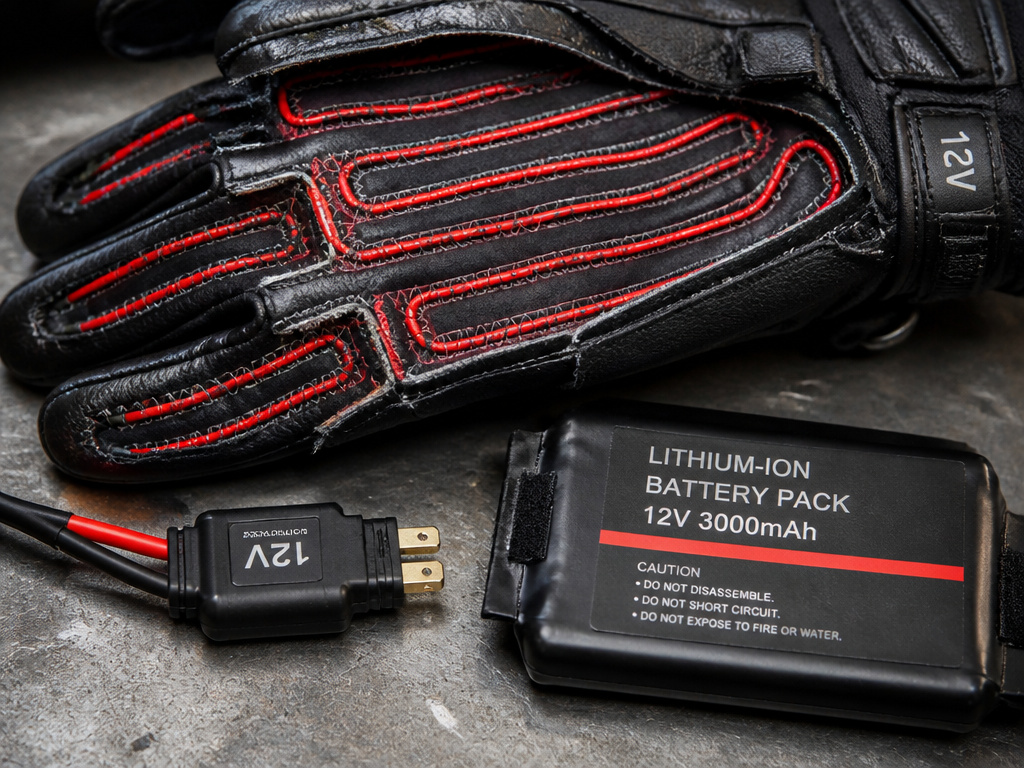
Understanding the two main systems explains the pros and cons at a hardware level.
Heated gloves use resistive wire elements, usually carbon or metal alloy, sewn into channels on the back of the hand and fingers. When powered, these wires convert electrical energy into heat. The system is managed by a thermostat or multi-level controller to prevent overheating and manage battery life.
12V Hard-Wired Systems. These plug directly into your motorcycle’s battery via a fused harness (like the one included with Firstgear Carbon gloves). They offer unlimited runtime as long as the engine is running, and typically higher heat output. The Volt Heat Fusion gloves draw 2 amps at 12V when powering the gloves and charging their internal 7V battery simultaneously. The crucial warning from Harley-Davidson applies here: “Use only on a 12 Volt DC circuit” and be mindful of your bike’s total amperage capacity to avoid draining the battery.
Removable Battery-Powered Systems. These use rechargeable lithium packs, like the 7.4V 3,000mAh units in the Held Inuit gloves. They offer total portability and are ideal for riders without a dedicated power connection or who want to use the heat off the bike. The trade-off is finite runtime and recharge time, about five to six hours from flat for the Held packs.
| System Type | Power Source | Best For | Primary Limitation |
|---|---|---|---|
| 12V Hard-Wired | Motorcycle battery via harness | Touring, long-distance, max heat | Tether to the bike; installation required |
| Removable Battery | Rechargeable lithium pack (e.g., 7.4V) | Commuting, mixed-use, off-bike heat | Finite runtime (2-3 hrs on high in cold) |
| Hybrid (12V + Battery) | Both (e.g., Volt Heat Fusion) | Maximum flexibility, on-bike charging | Increased complexity and cost |
The Hard-Wired vs. Battery-Powered Choice
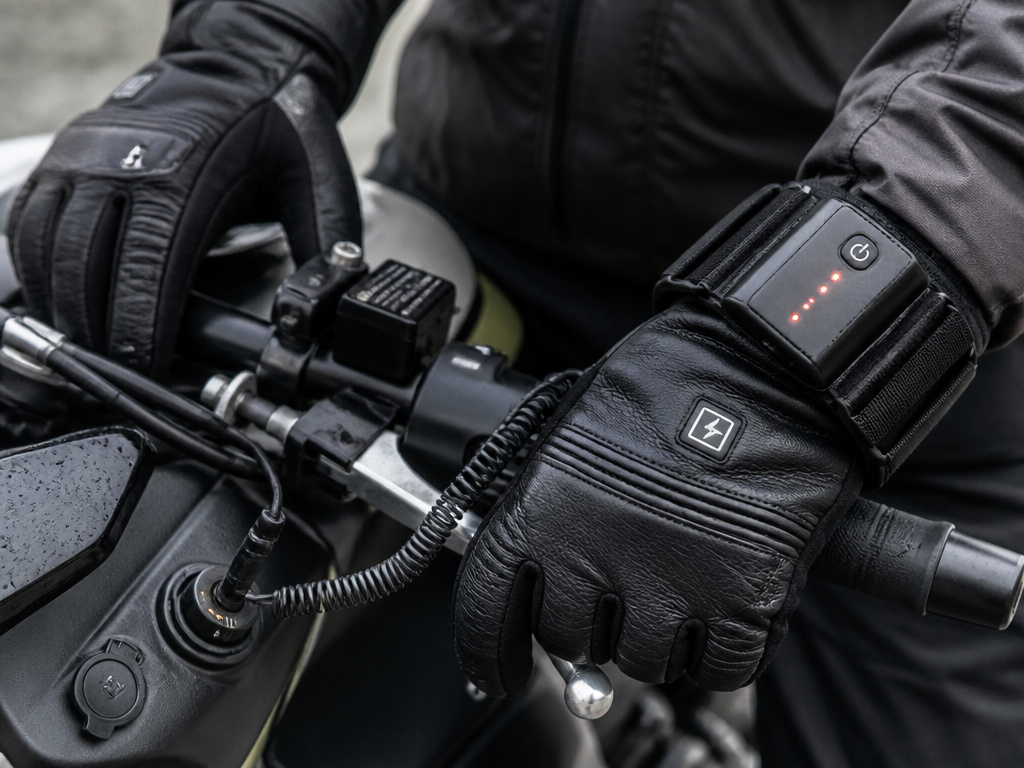
Your riding style dictates this more than any spec sheet when you compare a heated motorcycle gloves pros and cons. For all-day winter touring, hard-wired is the only sensible choice. For a 45-minute cold commute, a battery pack is simpler and sufficient.
When 12V is Non-Negotiable. If you ride for hours in below-freezing temperatures, you need continuous power. The anxiety of a battery dying 90 miles from home is real. A hard-wired system like the Tour Master Synergy Pro-Plus 12V gloves, which can hit 126°F, eliminates that. The installation is a one-time task. You must, however, check your bike’s amperage headroom. The NHTSA heated grip technical bulletin notes Harley-Davidson heated grips draw 1-3 amps; gloves and a liner will draw more.
When Batteries Make Sense. Most riders aren’t doing all-day winter tours. A battery system is plug-and-play. It’s also safer if you frequently get on and off your bike, no cord to snag. The runtime is enough for most short trips. The key is managing expectations: that “little over two hours” for the Held Inuit in 5°C weather is the real number to plan with, not the ideal lab test. For supplemental warmth on otherwise manageable days, batteries work. This is a core part of the power source options decision.
Common mistake: Buying battery-powered gloves for touring because they seem easier. On a six-hour winter day, you’ll be swapping cold batteries by hour three or riding with no heat at all.
Heated Gloves vs. Heated Grips vs. Winter Gloves
This is the most common comparison riders need to solve. Each has a different job.
Heated Grips: Warm only the palms, where your hands lose heat by conduction to cold metal. They are a fantastic first layer of defense and work with any glove. As the heated grips or gloves analysis shows, they are often a better first investment than heated gloves.
Standard Winter Gloves: Rely on insulation and windproofing. They win above 40°F, where they provide warmth without any complexity, wires, or bulk. A good pair of insulated winter gloves can be comfortable for a full tank of gas above 40°F.
Heated Gloves: Are the solution for when the first two options are insufficient, specifically, when the temperature or wind chill drops below the point where insulation fails. They are a specialist tool, not a replacement for the other two.
The smartest, most cost-effective setup for many riders is a combination: heated grips for palm warmth, plus a windproof winter glove. This can extend the comfortable range of a standard glove down into the low 30s (°F) without adding a single wire to your hands. Adding a thin liner can buy another ten degrees.
What to Look For When Buying
If you’ve decided you need them, these are the specs that separate a good purchase from a regret.
1. Certification and Protection. The heating elements shouldn’t mean less safety. Look for CE certification to EN 13594:2015. The Rev’it Fusion 3 GTX is CE Level 1 KP. The Richa Inferno 12V has CE Level 1 D3O knuckle protection. This tells you the armor has been tested around the wiring. Avoid models that are vague or silent on protection.
2. Waterproofing and Construction. Wet electronics fail. A built-in waterproof membrane is critical. Look for a built-in waterproof membrane, such as the Hipora insert used in the Volt Heat Fusion gloves. The construction should be robust, with attention to durability in high-wear areas.
3. Fit and Controls. This is critical. The Tour Master Synergy Pro-Plus are noted to run a half size small. Tight gloves cause numbness; loose gloves create cold spots. The control modules should be easy to operate with the glove on.
4. Power System and Compatibility. Decide between 12V, battery, or hybrid based on your riding. Check what’s included. Does it come with the harness? Does it use a standard connector (like the 3-prong harness on Harley-Davidson gear) that will work with other heated layers you might add later?
Practical Realities: Care, Lifespan, and Troubleshooting
Ownership is where the forum questions pop up. Here’s what most guides skip.
Care Instructions Are Specific. You cannot toss these in the washing machine. Per the Richa manual: clean with a damp cloth and lukewarm water, dry at room temperature, then condition the leather. Follow your brand’s manual, not generic advice.
Expect a 3-5 Year Lifespan. The electronics are the weak point. Wires can break from flexing, connectors can corrode, and batteries lose capacity over cycles. This makes them a higher cost-per-year item than a simple leather glove. Buy from a brand with a solid warranty.
Troubleshooting Basics. If one glove isn’t heating, check the connection first. For hard-wired systems, the NHTSA bulletin provides a clue: for a Harley-Davidson heated grip, if only the right one isn’t working, you should measure 1 to 9 ohms through the grip. Cold spots often mean a broken wire in that channel, usually not a user-repairable fix.
Where this goes sideways: Assuming a heated glove is just a “glove with heat.” It’s an electronic garment with specific care, a finite service life, and failure modes a standard glove never has.
What are some specific heated glove models and their features?
Real-world testing reveals key differences. The Held Inuit gloves, powered by 7.4V battery packs, delivered a bench test runtime of nearly three hours on Turbo mode, but in 5°C riding conditions, that dropped to just over two hours at full power. A full charge takes five to six hours. For bike-powered options, the Harley-Davidson model 98113-04V gloves use a specific 12V DC system with a three-prong harness, and the manufacturer warns against wearing them directly on the skin. The Tour Master Synergy Pro-Plus gloves offer three heat settings and are noted to run small. The Firstgear Carbon gloves include a harness with a 15-amp fuse, while the Rev’it Fusion 3 and Richa Inferno models carry specific CE certifications for impact protection. Battery life remains a practical constraint; high output typically lasts two to three hours, with cold weather reducing that time.
Frequently Asked Questions
Are heated motorcycle gloves worth it?
They are worth it if you regularly ride in temperatures at or below freezing, especially at highway speeds. For occasional cold mornings or above-freezing riding, a combination of heated grips, hand guards, and good methods to keep your hands warm like liners is often a better value.
Which is better, heated grips or heated gloves?
Heated grips are generally a better first investment. They are cheaper, simpler, and warm the palms where you lose the most heat. Heated gloves are better for extreme cold as they heat the entire hand. For the deepest cold, using both together is ideal. Our heated grips vs gloves guide breaks this down further.
What should I look for in the best heated gloves?
Prioritize CE certification (EN 13594:2015), a robust waterproof membrane, a power system that matches your riding (12V for touring, battery for commuting), and a fit that is snug but not tight. Read reviews of the best heated gloves for model-specific insights.
How long do heated glove batteries really last?
In real-world cold weather (around 5°C/41°F), expect 2 to 3 hours on the highest heat setting with both palm and finger elements running. Lab tests in ideal conditions will show longer times. Always plan your ride with the real-world number.
Can I wash heated motorcycle gloves?
No. Do not submerge or machine wash them. Cleaning instructions are specific: wipe the exterior with a damp cloth and lukewarm water, then air dry at room temperature. Internal components and wiring cannot get wet.
The Bottom Line
Heated gloves are a powerful solution to a specific problem: cold-induced numbness below 40°F. They are not an upgrade for every rider or every day.
If your winter involves more than a handful of sub-freezing rides, invest in a hard-wired pair and integrate them into your bike’s 12 Volt DC circuit properly. Check your amperage.
If you only face the cold occasionally, a simpler, more versatile solution is to fit heated grips and pair them with an insulated glove and a liner. This covers a broader temperature range without the complexity.
The honest take: don’t buy heated gloves because they’re “cool tech.” Buy them because you’ve hit the wall with every other keeping hands warm method and your control is suffering. That’s the line. Everything above it is a different conversation.
