
CE Level 1 vs Level 2 Motorcycle Armor: Key Differences
This post contains affiliate links. As an Amazon Associate, we earn from qualifying purchases.
The choice is the difference between a sore shoulder and a broken collarbone when the road comes up to meet you.
That gap between 35kN and 20kN is where the real decision lives. It’s not a marketing claim. It’s a tested, certified performance threshold written into the EN 1621-1 and EN 1621-2 standards, which define CE level 1 vs level 2 motorcycle armor. The armor in your jacket either meets one of those two numbers or it doesn’t. Thickness and feel are irrelevant next to that spec.
What follows: the exact test that decides the rating, the real-world riding situations where each level is enough (and where it isn’t), and the one mistake that leaves you wearing a label instead of real protection.
Key Takeaways
- Check the armor itself, not the jacket tag. The CE level is printed on the plastic shield of the insert. A jacket labeled “CE certified” can legally contain Level 1, Level 2, or no certified armor at all.
- For track riding or highway commuting, Level 2 is nearly essential. Impact energy scales with speed; the force reduction matters.
- Level 1 armor is typically 8-12mm of EVA or polyethylene foam. Level 2 armor often uses advanced viscoelastic polymers like D3O, which are thinner and more flexible for the same protection.
- Upgrading is simple and cheap. Most jacket armor pockets accept aftermarket inserts. Swapping stock Level 1 foam for a Level 2 pad is an affordable upgrade that changes the jacket’s safety profile completely.
The EN 1621 Force Numbers That Define Level 1 vs Level 2
The lab test is brutal in its simplicity. A 5 kg steel impactor is dropped onto the armor sample, which is clamped over a sensor. For limb protectors and Level 1 back protectors, the drop height is one meter; for Level 2 back protectors, it is 1.5 meters. The machine measures how many kilonewtons of force punch through the pad and reach the sensor. That number is the rating.
The European standard EN 1621-1 covers limb protectors (shoulders, elbows, hips, knees). EN 1621-2 covers back protectors, and together they define the CE level 1 vs level 2 motorcycle armor performance levels.
CE Level 1 (EN 1621-1: Limbs): The mean transmitted force from multiple impacts must not exceed 35 kN, with no single result over 50 kN. CE Level 2 (EN 1621-1: Limbs): The mean transmitted force must not exceed 20 kN, with no single result over 30 kN.
For your back, the numbers are lower because the spine is more vulnerable. Sources disagree on comparing scales: MotoGearsPro directly compares the kN thresholds, while MotoStyleWear warns that limb and back protector ratings are measured against different scales and should not be compared directly.
CE Level 1 (EN 1621-2: Back): Mean force ≤ 18 kN, single result ≤ 24 kN. CE Level 2 (EN 1621-2: Back): Mean force ≤ 9 kN, single result ≤ 12 kN.
| Protector Type | CE Level | Mean Force Limit | Single Impact Limit |
|---|---|---|---|
| Limb (EN 1621-1) | Level 1 | 35 kN | 50 kN |
| Limb (EN 1621-1) | Level 2 | 20 kN | 30 kN |
| Back (EN 1621-2) | Level 1 | 18 kN | 24 kN |
| Back (EN 1621-2) | Level 2 | 9 kN | 12 kN |
The jump from Level 1 to Level 2, which is the core of the CE level 1 vs level 2 motorcycle armor distinction, is a substantial reduction in allowed force for limbs and a 50% reduction for the back. In the lab, that’s the difference between the sensor recording a heavy thump versus a light tap. On the road, it’s the difference between bruising and a fracture.
Material, Weight, and the Comfort Trade-Off
So Level 2 is better. Does it turn your jacket into a stiff, heavy suit of plates?
Not anymore. A decade ago, Level 2 armor was often hard plastic shells over dense foam. You knew it was there. Modern material science closed the gap.
Typical CE Level 1 armor construction uses simpler materials: EVA foam, polyethylene foam, or basic viscoelastic polymers. It’s usually 8mm to 12mm thick to meet that 35kN limit. It’s light and flexible, which is why it’s the default in many entry-level jackets.
CE Level 2 armor often employs advanced viscoelastic materials. These materials let them hit the stricter 20kN limit while being thinner and more flexible than old-school Level 2 pads.
The weight penalty is marginal. The flexibility is a non-issue for street riding. You’ll feel the difference when you first handle them. Level 2 pads have a denser, more substantial hand-feel. Once they’re in the jacket pocket and you’re on the bike, you won’t notice.
Where this goes sideways: Assuming thicker always means better. A 15mm slab of cheap foam might not even meet Level 1. A 7mm pad of modern D3O can be Level 2. Judge by the label, not by your fingers.
When Level 1 Is Enough (And When It Absolutely Isn’t)
The sources disagree here, which is telling. One reputable gear site (MotoGearsPro) calls Level 1 “a legitimate, safe choice” for city commuters doing short, low-speed trips. Another (MotoStyleWear) says daily commuters “generally get the most value from CE Level 2.” Who’s right? It comes down to your route, not your riding style.
Level 1 is a defensible choice for:
- Pure urban crawling: Stop-and-go traffic under 30 mph, where tip-overs are more likely than high-energy impacts.
- Low-speed off-road practice: Think training courses or trail riding where falls are frequent but energy is low. Flexibility and ventilation can trump peak protection here.
- The budget-conscious rider who will actually wear the gear. A Level 1 jacket worn every ride is safer than a Level 2 jacket left in the closet because it’s too expensive.
An OECD/ITF study on motorcycle safety notes that impact severity in dense urban collisions is frequently lower than on open roads. The math supports Level 1 for that specific, low-speed environment.
Level 2 shifts from “nice to have” to “need to have” when:
- Your commute includes highway miles. Speed multiplies impact energy. That 35kN limit gets tested fast above 50 mph.
- You ride a sportbike or tour long distances. Higher average speeds and more exposure time shift the statistical risk.
- You sign up for a track day. Many organizers require CE Level 2 back protection as a condition of riding. They’re not being fussy.
- You adventure ride (ADV). Unpredictable terrain means you might hit a rock or a rut wrong. The extra force reduction is worth the minor weight.
| Riding Style | Recommended Armor Level | Why |
|---|---|---|
| Urban Commuter (No Highway) | Sources disagree: MotoGearsPro says Level 1 is a legitimate, safe choice; MotoStyleWear says commuters get the most value from Level 2. | Low-speed crash energy often falls within Level 1 limits, but Level 2 adds a large safety margin for minimal cost. |
| Highway Commuter / Tourer | Level 2. | Increased speed and exposure time make the force reduction of Level 2 a smart investment. |
| Track / Sport Riding | Level 2 is mandatory. | High-speed impacts demand the highest certified protection available. Level 1 is not a serious option. |
| Adventure / Off-Road | Level 2 for back; Level 1 for limbs can be considered. | Back protection is critical for unpredictable impacts; limb armor prioritizes flexibility in low-speed falls. |
The blunt take: if your riding ever touches 55 mph, buy Level 2. The cost difference is smaller than the hospital deductible.
How to Verify What You Already Own (And How to Upgrade)
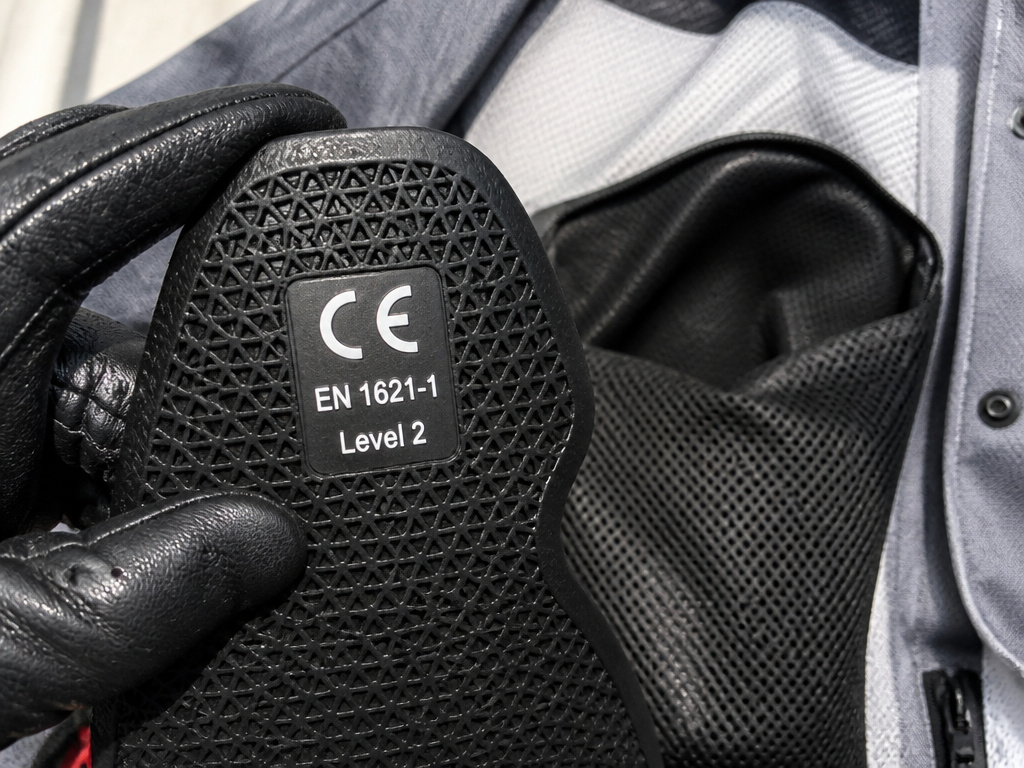
You bought a jacket that said “CE Certified.” What’s actually in the pockets?
The part nobody mentions: The CE mark on the garment tag certifies the jacket’s construction and seam strength. The armor’s certification is separate. You must find the CE shield printed directly on the armor insert.
Pull out a shoulder or elbow pad. Look for a label that says “CE” and either “EN 1621-1 Level 1” or “EN 1621-1 Level 2.” It should say “CE” and either “EN 1621-1 Level 1” or “EN 1621-1 Level 2.” If it just says “CE” or “Protective,” it’s not level-rated. It might be foam that passed a simpler, older test. That’s not the same.
If your armor is unmarked or only Level 1, upgrading is straightforward. Measure the pocket in your jacket. Most aftermarket armor comes in standard sizes. Order a set of Level 2 armor inserts that match.
Swapping them takes two minutes per pad. The performance upgrade is instant. You’ve changed a key safety component without buying a new jacket. For most riders, this is the single most cost-effective safety move you can make.
I’ve pulled “armored” jackets apart to find thin, unmarked foam squares. I’ve also seen riders double their protection by spending $80 on a proper back protector. The label on the jacket is a starting point. The label on the pad is the truth.
Does a CE Rating Mean My Whole Jacket is Certified?
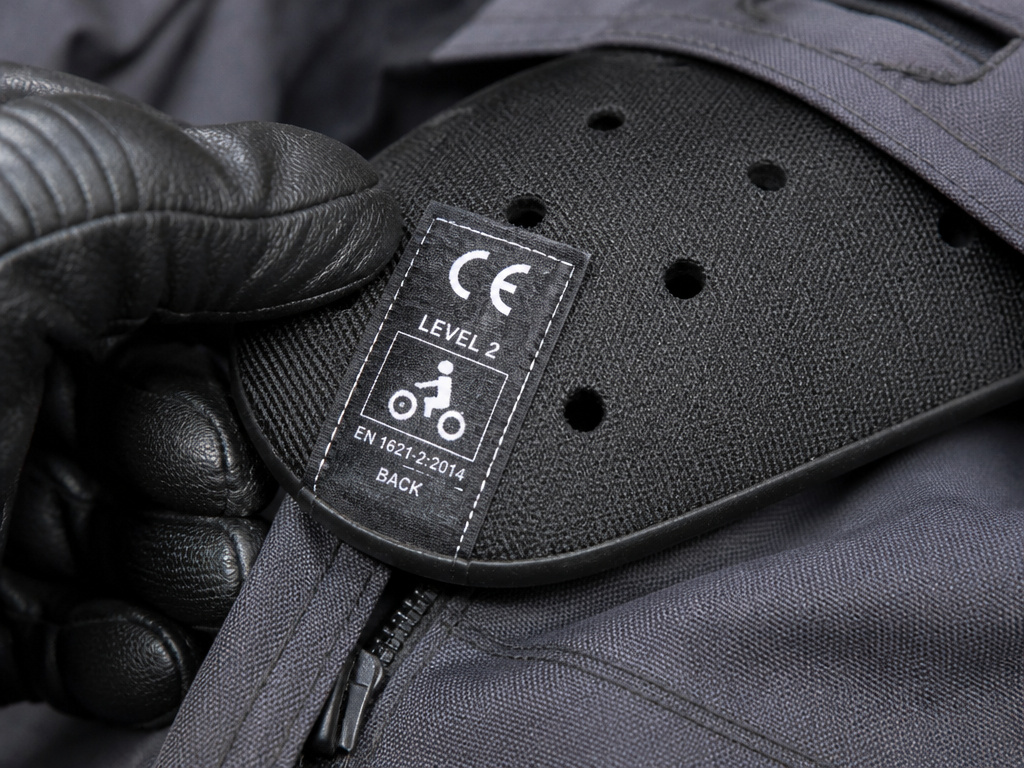
No. The CE Level 1 or Level 2 rating you see applies specifically to the individual armor inserts themselves, tested under standards like EN 1621-1 for limbs and EN 1621-2 for the back. The jacket or pants are a separate piece of gear that holds the armor. A garment can be well-made but contain low-quality, uncertified foam pads. Always verify the certification by checking for a permanent CE label directly on the armor insert. Relying on marketing claims about the jacket alone is a common error. Look for the permanent CE label on the pad.
What Do the AAA, AA, A, and B Garment Classifications Mean?
These letters represent a completely different rating system for the garment’s overall construction, not its armor. This standard, EN 17092, assesses the entire jacket or pant’s abrasion resistance, seam strength, and tear strength in a slide. A higher class like AAA indicates a garment designed to withstand a longer slide on the pavement. It is crucial to understand that a Class AAA jacket could come with basic CE Level 1 armor inserts, or a Class A jacket could be equipped with top-tier Level 2 armor. You need to check both: the garment’s class for abrasion protection and the specific CE level of the armor inserts inside for impact protection.
Frequently Asked Questions
Is level 1 or 2 better for motorcycle armor?
CE Level 2 is objectively better. It is certified to transmit roughly half the force to your body compared to Level 1 armor (20kN vs 35kN for limbs). “Better” in this context is a measurable, lab-tested reduction in impact energy.
What’s better, CE level 1 or CE level 2?
CE Level 2. The standard defines two tiers of protection, and Level 2 is the higher one. For any riding involving speeds above city traffic, Level 2 is the strongly recommended choice. For very low-speed use only, Level 1 meets a certified safety minimum.
Is CE level 2 armor good?
Yes, CE Level 2 armor represents very good protection. It is the highest level of impact protection certified under the EN 1621-1 and EN 1621-2 standards for limb and back protectors. It is the benchmark for serious street, touring, and track riding.
What is the best CE rating for motorcycle gear?
For impact armor (shoulders, elbows, knees, hips, back), CE Level 2 is the best rating.
Before You Go
One rule that reframes the whole choice: if your armor isn’t CE Level 2, it isn’t the best protection you can buy for that spot on your body. Level 1 is a certified minimum, not an optimal target.
The upgrade path is clear. Check the pads in your current gear. If they’re not marked Level 2, replace them. Many brands make drop-in pads for most jackets. This is often under a hundred bucks for a full set, not a $500 proposition.
That leaves one exception. If you only ever putter through neighborhoods at bicycle speeds, and you know that with absolute certainty, Level 1 meets the standard for that environment. For everyone else, commuters, tourers, weekend riders, the jump to Level 2 is a small cost for a large drop in the force that reaches your skin. Buy that margin.
