
Are Tinted Motorcycle Visors Legal: The Clear-Cut Rules
This post contains affiliate links. As an Amazon Associate, we earn from qualifying purchases.
Tinted motorcycle visors are legal for daytime use if they meet a certified minimum light transmission (VLT) and are marked for road use. The specific VLT threshold varies by region: ECE 22.06 standards require at least 35% VLT, while UK rules define a legal tint as 50-80% VLT. Using any tinted visor at night, in tunnels, or in poor weather is illegal in most jurisdictions and voids the safety certification.
The core conflict is between a rider’s need for sun protection and the law’s requirement for adequate vision, which is why the are tinted motorcycle visors legal question is so important. A visor that’s too dark turns a simple tunnel or an overcast dusk into a dangerous gamble.
What follows is a breakdown of the numbers that matter, the time restrictions you can’t ignore, and the real-world consequences of getting the are tinted motorcycle visors legal rules wrong. This section explains how to check your own visor, why photochromic options are significant, and where the law strictly separates track and street use.
Key Takeaways
- A tinted visor must be certified (ECE, VESC-8, etc.) and marked “for daytime use only” to be street-legal. An uncertified dark visor is for track use.
- Never use a tinted visor at night. This is explicitly illegal in states like Wisconsin and violates every major helmet manufacturer’s safety warnings.
- The legal VLT threshold varies: under ECE 22.06 it is at least 35%, while UK law defines a legal tint as 50-80% VLT for daytime use only. Know which standard applies where you ride.
- Combining a tinted visor with an internal sun visor or sunglasses often creates a non-compliant, dangerous setup that fails safety standards.
- Carry a clear visor or use a photochromic model if your ride will extend into dusk. The swap takes two minutes and avoids a ticket, or worse.
The Legal Light Transmission Percentage (VLT) Explained
This is the single most important number. VLT (Visible Light Transmission) is the percentage of light that passes through your visor. A higher number means a clearer view. The law doesn’t care about color or mirror finish; it cares about this measurable percentage.
Manufacturers test for this, and certifying bodies set the floor. Under the widely recognized ECE 22.06 standard, a tinted visor must allow at least 35% of light to pass through to earn its certification for road use. If it transmits less, it’s classified as a dark visor intended only for closed-course competition.
Technical Snippet: The ECE 22.06 standard for motorcycle helmet visors specifies minimum light transmittance levels. A visor marked for daytime use must transmit no less than 35% of visible light to be considered road-legal under this international regulation. This certification is denoted by a circle containing an ‘E’ and a number, physically stamped on the visor.
Other regions use different bands. UK regulations, for example, sort visors into three categories: clear (≥80% VLT for any condition), tinted (50-80% VLT for daytime only), and dark (<50% VLT, not road-legal). This is why a UK-legal tint might seem darker than an ECE-compliant one, the thresholds are different.
| Standard / Region | Clear Visor VLT | Legal Tinted Visor VLT | Not Road-Legal |
|---|---|---|---|
| ECE 22.06 (International) | Not specified | ≥ 35% | < 35% |
| United Kingdom | ≥ 80% | 50% – 80% (daytime only) | < 50% |
| Australia (AS/NZS 1698) | ≥ 85% (marked “Clear”) | 50% – 85% (marked “Tinted”) | < 50% |
Where this goes sideways: Riders often assume a “smoke” or “mirror” visor bought from a brand like SHOEI is automatically legal. It’s not. The SHOEI CNS-3 manual states plainly that its Dark Smoke and Spectra (mirrored) visors have a “light transmittance ratio… Lower than the requirement of ECE R22.06.” They are sold as track-day accessories. Using them on the street is rolling the dice with the law and your safety.
Daytime vs. Nighttime Use: The Non-Negotiable Rule
The “for daytime use only” stamp on a legal tinted visor isn’t a suggestion. It’s a conditional part of its certification. Use it outside of daylight hours, and you’ve invalidated its approval.
State laws make this explicit. The Wisconsin motorcycle helmet law is a clear example: “Eye protection worn during hours of darkness may not be tinted or darkened.” The only exception is for prescription photosensitive glasses. Your tinted visor has no such exemption.
The danger is physical, not just legal. A visor dark enough to cut glare on a bright afternoon will turn a poorly lit street or a sudden tunnel into a black wall. Your eyes need time to adjust that you don’t have at 60 miles per hour.
Common mistake: Thinking you can just flip the visor up if it gets too dark. In many states, riding without eye protection is itself illegal. You’re trading one violation for another, all while trying to manage wind blast and debris.
The practical fix is simple. Stow a clear visor in your bag if there’s any chance your ride will stretch into dusk. Swapping a visor on most modern helmets is a quick process. It’s the cheapest insurance you can buy against a preventable crash.
Visor Certification Standards: ECE, DOT, and VESC-8
Your visor’s certification is its legal passport. Without the right stamp, it doesn’t matter what the VLT is.
For most of the world, the ECE 22.06 label is the gold standard. It’s a self-certification system where the manufacturer tests to the standard and marks the product. You’re looking for a circle with an ‘E’ and a number (like E4 for the Netherlands). If it’s not there, the visor isn’t approved for road use.
In the United States, the landscape is messier. The federal DOT standard doesn’t specifically regulate visor light transmission. Instead, state laws govern rider eye protection, and many of them reference VESC-8 (Vehicle Equipment Safety Commission Regulation No. 8). As the SHOEI manual notes, VESC-8 “is widely referred to and applied in 36 states.” This standard does set light transmission requirements, which is why combining a tinted visor with an internal sun visor fails it.
Three things to check on your own visor:
- The ECE or other standards mark (BSI, AS/NZS, etc.).
- The “Daytime Use Only” marking if it’s tinted.
- The physical condition. Deep scratches can scatter light and effectively reduce your usable VLT, creating glare halos at night.
If your visor lacks these marks, it’s not compliant. It’s that straightforward.
How Tinted Visors Affect Insurance and Police Stops
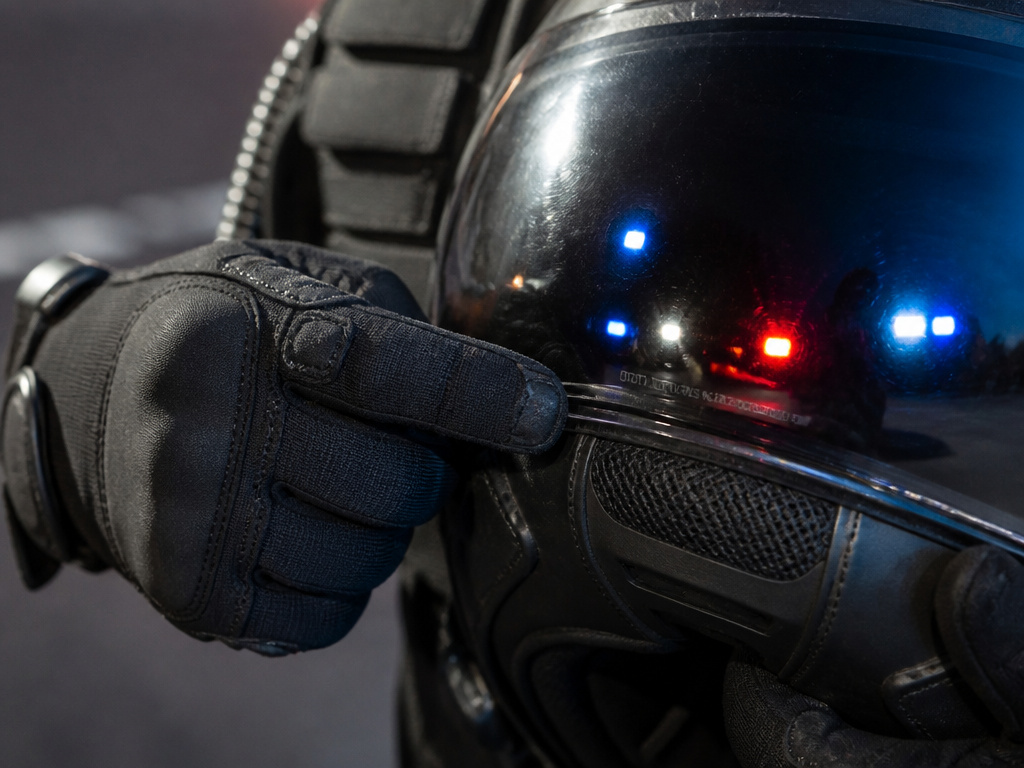
A traffic stop is the most likely place where visor legality becomes a problem. An officer can’t measure VLT on the spot, but they can check for the certification mark. No mark means a probable citation.
The specific penalty depends entirely on your local jurisdiction. It could be a simple fix-it ticket, a fine, or points on your license. In some areas, it could be bundled under a “defective equipment” or “unsafe vehicle” violation.
The insurance angle is more severe. If you are involved in an accident while using a non-compliant visor, especially at night, the insurance adjuster has a clear opening to argue contributory negligence. They could claim your impaired vision contributed to the crash, potentially reducing your settlement or denying your claim altogether. Don’t give them that advantage.
Worth knowing before you start: Some riders think a photochromic or “transition” visor is a magic bullet. While these light-adaptive visors are fantastic for variable conditions, their legality hinges on their minimum VLT in the darkest state. According to the RAD blog, a photochromic visor in its fully tinted state must have a minimum light transmission of 20%. If they don’t carry the certification mark, they’re not exempt from the law.
Practical Solutions: Photochromic Visors and Carrying a Spare
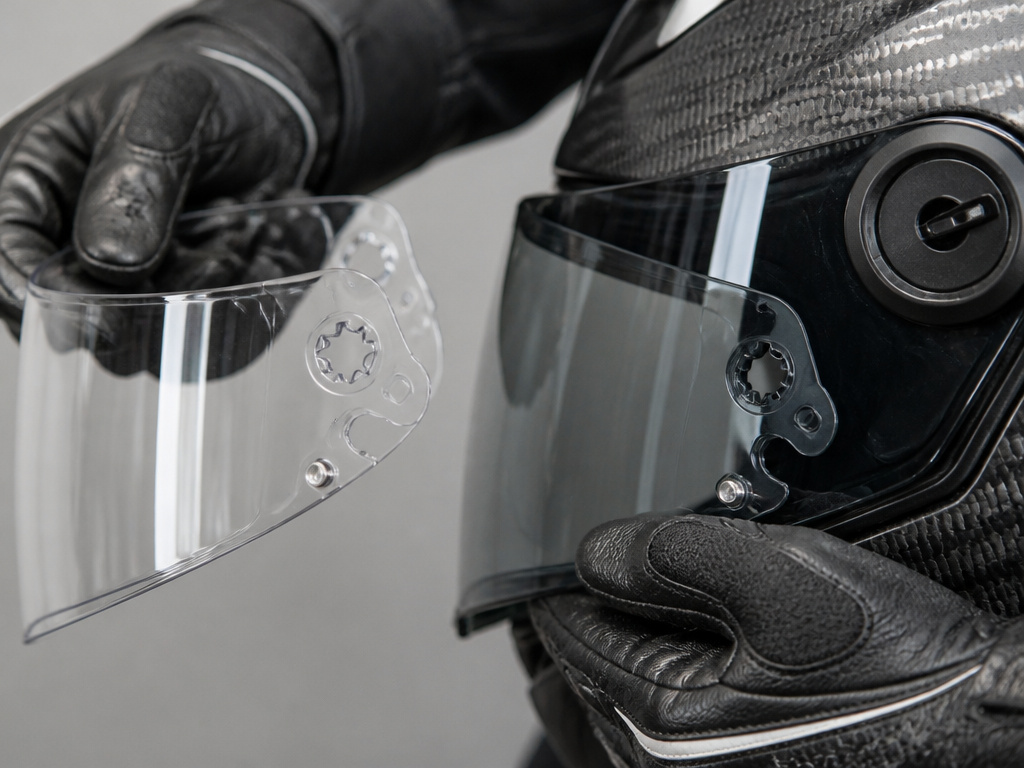
Given the rules, what’s a rider who hates swapping gear supposed to do? You have two main paths that keep you legal and safe.
Photochromic visors (like the Pinlock Photochromic insert or Bell’s Transition shield) are the high-tech solution. They adjust their tint based on UV light, going from near-clear to a moderate tint. Their key advantage is they stay within legal VLT bounds throughout the cycle. You get sun protection without planning a visor swap. The trade-off is typically cost and the fact they are designed for variable light conditions, not instant changes.
The clear-visor-in-the-bag method is the old reliable. It works for every helmet, every time. If your helmet has a quick-change visor system, and most do, practice the swap once in your garage. You’ll know exactly which way the tabs push and how much force the locking mechanism needs. On the road, it is a manageable task if you are prepared.
For riders who wear prescription glasses, the need for certified, legal eye protection remains. A light-tinted visor can act as a substitute for sunglasses. But the same rules apply: it must be certified for daytime use, and you must still swap it or lift it in low light. Prescription inserts can be a long-term solution, as they work behind a clear, always-legal visor.
Are tinted motorcycle visors legal in Wisconsin?
Wisconsin state law mandates that all motorcycle riders wear eye protection unless the bike has a windshield of a minimum height. The specific rule for tint comes into play at night. During hours of darkness, you cannot use any tinted or darkened eye protection. The only exception is for prescription photosensitive glasses. This means a clear visor or glasses are required after sunset, while daytime use of a tinted visor may be permissible if the eye protection itself meets other approval standards.
How do motorcycle visor laws differ from car tint laws?
The rules for motorcycle visors are separate and often stricter than those for car windows. Car tint laws typically regulate the darkness of side and rear windows, measured by Visible Light Transmission (VLT). Motorcycle visor regulations focus on the safety standard for the protective device itself. A visor must be of an approved type, and its certified VLT rating determines if it’s legal for road use. Unlike a car, where tint is often a film applied to glass, a visor is integral safety equipment. Using a non-compliant visor can directly violate motorcycle eye protection statutes.
What do riders say about using tinted visors?
Common safety advice is to treat a tinted visor as a daytime-only tool. Using a dark visor after dusk is known to be dangerously restrictive. A recommended practice is to carry a clear visor to swap for night riding or low-light conditions. Manufacturers like SHOEI warn that combining a tinted visor with an internal sun visor or sunglasses can create a non-compliant, dangerous setup that fails safety standards.
Frequently Asked Questions
Why are tinted visors banned at night?
They reduce the amount of available light reaching your eyes. In low-light conditions, this impairs vision and can delay hazard recognition. The law bans them because they are unsafe for use in darkness.
Are mirrored or iridium visors treated differently?
No. The law is concerned with light transmission (VLT), not color or reflectivity. A mirrored visor must meet the same minimum VLT standards as a smoked one to be road-legal. Some mirrored visors, like SHOEI’s Spectra model, are below the required light transmittance for road use.
Is it illegal to have a tinted visor in the rain or fog?
Manufacturers like SHOEI warn to never use a tinted visor in dark or low visibility conditions. Using one in rain, fog, or heavy overcast likely violates this safety warning and could be considered illegal depending on local interpretation of ‘daytime use’ or ‘low visibility’.
Can I use a tinted visor if my motorcycle has a tall windshield?
Laws like Wisconsin’s provide an exemption from the mandate to wear eye protection if a windshield of minimum height is present. If you choose to wear a visor, it would be subject to the same legal requirements, such as the prohibition on tint at night.
The Bottom Line
Legality comes down to a certified number and a time of day. If your tinted visor has the right stamp and the sun is up, you’re likely fine. The moment light fades, you need a clear alternative.
For street riding, a certified visor used within its legal conditions is required. Visors that do not meet road-legal VLT standards are intended for track use.
