
Motorcycle Rain Suit Pros and Cons: The Real Trade-Offs
This post contains affiliate links. As an Amazon Associate, we earn from qualifying purchases.
A motorcycle rain suit is a shell that keeps water out, but it trades abrasion protection for packability and uses materials with defined limits. The pros are staying dry, easy storage, and low cost versus a full waterproof jacket. The cons are a short waterproofing window, no crash protection, and materials that melt on hot exhaust. For most riders, a separate over-suit is the smart choice.
That shell works because it’s a barrier. It has no insulation, no armor, and it’s not designed to breathe. The trade-off is simple: you get a layer that stops rain for a specific amount of time, but you give up everything else a riding jacket provides. This illustrates the core motorcycle rain suit pros and cons.
What follows is a breakdown of the motorcycle rain suit pros and cons where that trade-off actually lives. We’ll look at the numbers manufacturers print in their manuals, how long waterproofing lasts, what speed a crash scuffs the suit instead of tearing it, and the specific materials that fail when they touch a hot pipe. By the end, you’ll know exactly what you’re buying and what you’re not.
Key Takeaways
- Expect a rain suit’s waterproofing to last one to one and a half hours in sustained rain before leakage starts, per Aerostich’s own manual.
- Textile suits like the Aerostich R-3 are expected to last 5 to 10 years or 50,000 to 100,000 miles, but their Cordura/nylon fabric melts at about 450°F on contact with exhaust.
- In a crash, these suits are rated to only scuff, not tear, at speeds under 30-50 mph (R-3) or 40-60 mph (Classic Roadcrafter), they are not abrasion gear.
- Always check the money-back return window: Aerostich offers 30 days, while brands like Dainese may only offer 15 days from delivery.
- For riders with pacemakers or defibrillators, the four rare-earth magnets in an Aerostich R-3 collar and chest must be removed before wearing.
The Waterproofing Promise: How Long It Actually Lasts
Most product pages say “100% waterproof.” The owner’s manual tells a different, more honest story.
The Aerostich Classic Roadcrafter manual states it directly: your suit should keep you dry for a minimum of an hour to an hour and a half before it may begin to leak.
That one to one and a half hour window is the manufacturer’s verified performance claim. It’s not a guess, it’s the tested limit before moisture wicking starts at the suit’s stress points.
That limit exists because waterproofing is a surface treatment and a seam-sealing job, not a force field. The Classic Roadcrafter uses over 30 yards of Gore-Seam heat-applied tape per garment to seal those seams.
The fix is maintenance. Machine wash on a warm permanent press cycle at 105°F (40°C). After washing, tumble dry the garment for 20 minutes to reactivate the DWR treatment.
This isn’t a defect. It’s the physics of a water barrier under pressure, wind, and movement. A suit that claims to be waterproof “forever” is selling you a idea, not a product.
The Crash & Abrasion Reality: Scuffs, Not Slides
A rain suit is not armor. Its job is to shed water, not to slide on pavement.
The Aerostich manuals put numbers on this. The newer R-3 and R-3 Light suits are designed so that in crashes under 30-50 MPH, the suit is usually only scuffed. The older Classic Roadcrafter manual states that in crashes under 40-60 MPH, suits are usually only scuffed.
| Suit Model | ‘Scuffing’ Speed Threshold | Material | Abrasion Protection Level |
|---|---|---|---|
| Aerostich R-3 / R-3 Light | Under 30-50 MPH | Cordura/Nylon | Scuff-resistant only |
| Aerostich Classic Roadcrafter | Under 40-60 MPH | Textile Blend | Scuff-resistant only |
| Motorcycle Leather Suit | N/A (designed for slides) | Leather | Abrasion-resistant for slides |
The difference is critical. “Scuffed” means the outer fabric is roughed up. The Cordura/nylon fabric in these suits melts at about 450°F.
Where this goes sideways: Treating a rain suit as a primary riding jacket in crash-prone scenarios. Above its rated speed, the material melts or tears, offering no protection to the skin underneath.
You wear a rain suit over your armored jacket and pants. Its abrasion performance is a secondary, limited benefit for low-speed incidents, not a replacement for CE-rated armor and reinforced leather or textile riding gear.
Construction, Care, and Hidden Details
The quality of a rain suit lives in its zippers, seams, and the warnings most people skip.
Waterproof zippers have much closer tolerances than regular zippers. The Aerostich manual notes the plastic waterproof material on the zipper can become softer and slightly more ‘sticky’ in very hot weather. They recommend DuPont Teflon Multi-Use Lubricant (#4966) for maintenance. Forcing a sticky zipper can damage the teeth and break the waterproof seal.
Some suits have unique features that become hazards for specific riders. The Aerostich R-3 contains four removable rare-earth magnets (two in the collar, two in the upper chest) to help with closure.
The part nobody mentions: Those magnets must be removed prior to use by wearers with pacemakers or cardioverter defibrillators. It’s a buried line in the owner’s guide, but it’s a serious safety notice.
Proper care is essential for the suit to last. The limited guarantee against defects in materials and workmanship lasts for two full years for Aerostich suits.
| Maintenance Task | Correct Method | Consequence if Skipped |
|---|---|---|
| Washing | Warm permanent press cycle (105°F/40°C), liquid detergent, second rinse with no soap. | DWR coating strips, waterproofing fails within a few rides. |
| Drying | Tumble dry for 20 minutes after washing. | DWR treatment does not reactivate; water soaks fabric instead of beading. |
| Zipper Care | Lubricate with DuPont Teflon Multi-Use Lubricant. | Zipper sticks, teeth break, waterproof seal is compromised. |
| Storage | Clean, dry, loosely folded. | Mold, mildew, and permanent stains set in. |
Follow the manual. It’s the difference between a suit that lasts five years and one that leaks after one season.
One-Piece vs. Two-Piece: The Practical Choice

This is the main fork in the road. Your choice changes how you ride, store gear, and stay dry.
A one-piece rain suit like the Aerostich Roadcrafter is a full coverall. It goes on over everything, typically has a rear zipper, and seals out water completely. The benefit is total coverage with no waist gap for water to enter. The downside is bulk. You must take off almost all your gear to use a bathroom, and packing it requires more space.
A two-piece rain suit (jacket and pants) is modular. The Dainese Ultralight Rain Suit has a waterproof zipper from neck to knee and oversized leg bottoms for boots. It packs smaller.
Venting is the unsung hero.
Key Features That Actually Matter
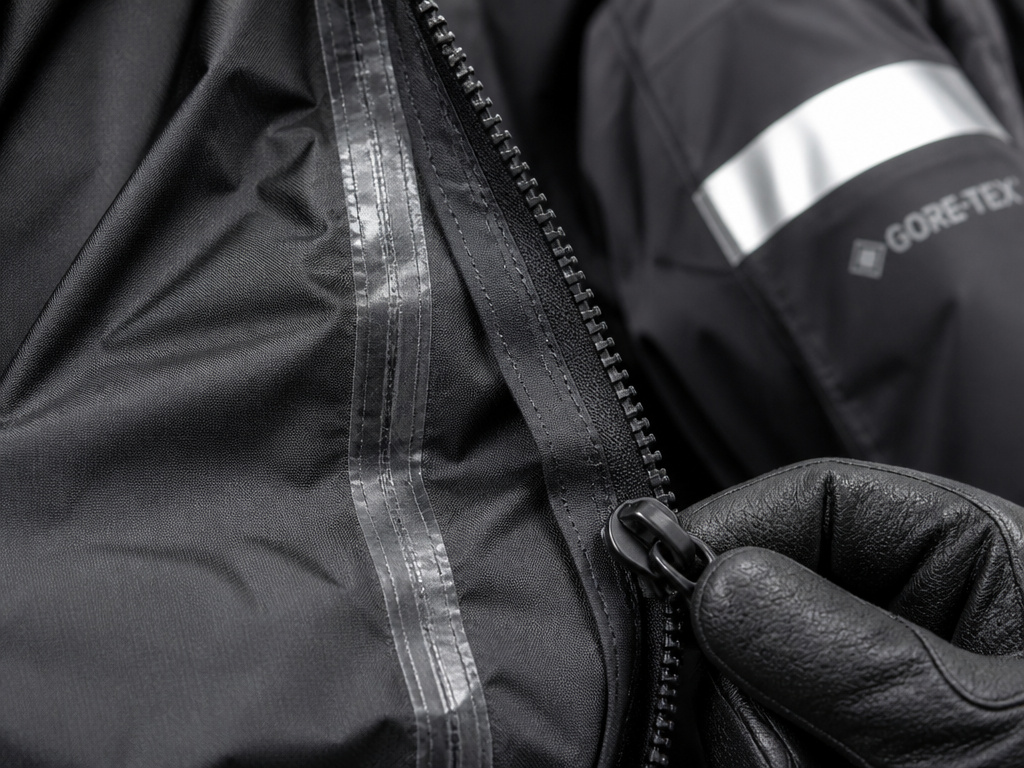
Forget marketing terms. These are the specs that decide if you stay dry.
Sealed Seams: Look for taped or heat-welded seams. Stitched seams alone will leak. The 30+ yards of Gore-Seam tape in an Aerostich suit is what you’re paying for.
Zipper Quality: A waterproof zipper from neck to knee (like on the Dainese) is better than a short front zipper.
Closures: The Dainese suit has oversized leg bottoms for boots.
Reflective Elements: The Dainese Ultralight has reflective inserts. In rain, visibility drops. This isn’t an add-on; it’s a core safety feature.
Packability:
Return Policy: Know the trial window. Aerostich offers a 30-day money-back satisfaction period from delivery. Dainese’s return period for dissatisfaction is within 15 days.
The Integration Challenge: Heated Gear, Helmets, and Boots
A rain suit doesn’t exist in a vacuum. It has to work with the rest of your kit, and that’s where most riders hit snags.
Routing cords for a heated jacket or gloves under a rain suit is a puzzle. The suit’s tight cuffs and seals are designed to keep water out, not to pass wires through. Most don’t have them. The alternative is to wear the heated layer over your riding jacket but under the rain suit, which adds bulk and can compromise the rain suit’s fit.
Helmet fogging gets worse under a rain suit’s sealed collar. Your breath has nowhere to go. A pinlock visor is mandatory, and even then, cracking the visor slightly at stops is often necessary.
Boots are another friction point. The Dainese suit’s oversized leg bottoms are a direct solution. A suit with tight ankle closures will funnel water into your boots if it doesn’t cover them completely. Always test the fit with your actual riding boots on.
The goal is a system, not just a layer. Your rain gear, from rain jackets to waterproof pants, needs to work together. Water can enter if any part of the system fails.
When a Rain Suit Is the Wrong Answer
There are rides and conditions where pulling on a rain suit is a mistake.
If you’re riding in stop-and-go traffic on a warm, humid day, the sweat buildup inside the suit will soak you faster than any rain. In that case, a ventilated riding jacket that accepts a brief wetting might be the more comfortable, if counterintuitive, choice.
For adventure riding or off-road where mud and debris are factors, a thin rain suit will shred on brush and branches. A heavier, abrasion-resistant touring suit or dedicated waterproof overpants and jacket is a better investment.
If your primary riding gear is already a high-end waterproof and breathable jacket like a Klim or Rukka, adding a rain suit on top is overkill and traps heat. Use the gear you paid for.
Finally, if you’re buying a rain suit as your only outer layer for cold weather, you’ve misunderstood its purpose. It has no insulation. You’ll be dry, hypothermic, and miserable.
Aerostich vs Dainese rain suit comparison
Examining specific models reveals clear motorcycle rain suit pros and cons trade-offs. Aerostich suits like the Classic Roadcrafter and R-3 are built for the long haul, with an expected lifespan measured in years and tens of thousands of miles. They offer a longer satisfaction return period and are designed to withstand scuffing in certain low-speed crashes. The Dainese Ultralight Rain Suit is advertised as 100% waterproof with a full-length zipper and reflective inserts for visibility. Its return window is shorter. A key difference is durability versus packability; one line is a heavy-duty investment, while the other is a lightweight, specialized layer.
Motorcycle rain suit cost and value
Assessing value means looking beyond the price tag at what you get for the money. High-cost suits from brands like Aerostich come with expectations of multi-year durability and extensive warranties against defects. They also offer longer trial periods to ensure satisfaction. The construction, using materials like extensive waterproof taping, aims for longevity through all seasons. Lower-cost, packable suits prioritize compact storage and immediate waterproof protection for occasional use. Your riding frequency and conditions dictate the value; a daily commuter needs a different return on investment than a fair-weather weekend rider caught in an unexpected storm.
Frequently Asked Questions
What is the best rain suit for motorcycle riding?
There is no single “best.” The Aerostich Classic Roadcrafter is the benchmark for durable, one-piece protection with a documented lifespan. The Dainese Ultralight Rain Suit is a top choice for packable, two-piece versatility. Your best suit is the one that fits your riding style, integrates with your other gear, and has a return policy long enough for you to test it in actual rain.
What should I look for in a motorcycle rain suit?
Look for taped seams, a long waterproof zipper, adjustable cuffs and ankles, reflective elements, and a stated waterproofing duration from the manufacturer (not just “100% waterproof”). Check the return policy, 30 days is better than 15. Read the owner’s manual for care instructions and specific warnings, like magnet removal for medical devices.
How long does a motorcycle rain suit last?
Well-made suit like the Aerostich Classic Roadcrafter or R-3 is expected to last 5 to 10 years or 50,000 to 100,000 miles with proper care. That lifespan depends entirely on following the washing and drying instructions to maintain the waterproof coating. A cheap suit without sealed seams may fail in a single season.
Can you wear a rain suit over leather?
Yes, and you should. A rain suit is an over-layer. Wear it over your armored leather or textile jacket and pants. The rain suit provides water protection; your riding gear provides abrasion and impact protection. This is the correct, safe way to use both.
The Bottom Line
A motorcycle rain suit is a tool for a specific job: keeping water out for a defined period, usually one to one and a half hours. Its pros are simplicity, packability, and a lower cost than a full waterproof riding jacket. Its cons are real: no abrasion protection, a melting point of about 450°F, and maintenance you cannot skip.
The choice between a one-piece vs two-piece rain suit comes down to your riding. Touring riders benefit from the modular two-piece. Commuters who want a fast, guaranteed seal might prefer the one-piece.
Before you buy any of the best rain suits, read the manual. The numbers that matter, the waterproofing window, the crash-speed threshold, the care temperature, are all in there. Trust those, not the marketing. And always, always try it on with all your gear before the return window closes. Staying dry shouldn’t be a mystery.
