
How Should Motorcycle Gloves Fit: The 3-Step Fit Check
This post contains affiliate links. As an Amazon Associate, we earn from qualifying purchases.
Motorcycle gloves should fit as close to the skin as comfortably possible while allowing full range of movement, with no bunching in the palm and no pressure on the fingertips. Fit is not about comfort alone; it’s about the glove staying on and protecting during a slide.
That 50 mm wrist coverage rule in the standard exists for a reason, ensuring protection extends over vulnerable areas. The closure system’s resistance to a 35 N force is what prevents the glove from pulling off. The closure strap is your last line of defense, and a loose fit defeats it before the slide even starts. A key question is how should motorcycle gloves fit.
What follows: the exact three-step fit check from manufacturer manuals, how material (leather vs. Textile) changes your size choice, the specific signs a glove is wrong, and the answer to how should motorcycle gloves fit when you pair it with your jacket so you don’t get a gap in the rain.
Key Takeaways
- Use the OEM’s three-step fit check: grip a bar, stretch fingers, and test the strap’s pull-off resistance.
- Size for the material: leather gloves should fit snugly at purchase as they stretch; textile and winter gloves need a slightly looser fit for liners or air circulation.
- The glove-to-jacket interface is critical for weather sealing, a gap here lets in water and compromises crash protection.
- Replace gloves as per manufacturer recommendations; for example, Leatt recommends replacing protectors every three years under normal use.
- If your fingertips press the end or you feel bunching under the palm when gripping, the size or cut is wrong.
The 3-Step Fit Check from the OEM Manuals
Forget making a fist for an accurate feel, according to some guides. The Leatt, Scott Sports, and Gravity Sports Group manuals recommend a specific, real-world test.
A correct fit is verified by gripping a motorcycle handlebar or similar cylindrical object, fully outstretching the fingers and thumb, and ensuring the palm is close-fitting with minimal bunching. The cuff strap must be fastened so the glove cannot be pulled off easily.
First, to answer how should motorcycle gloves fit, put the glove on and fasten the cuff.
Now, grip something cylindrical. A handlebar is best, but a broomstick or even a thick marker works. This simulates the actual riding position. Your hand is never fully closed in a fist while riding; it’s wrapped around a grip. You’re checking for excess material under the palm and across the knuckles. Any bunching here will grind against the bar and can create a hot spot.
Finally, test retention. Try to pull the glove off your hand with the strap fastened. It should resist. The EN 13594 standard quantifies this: the closure must withstand a 35 N force. You don’t need a scale, if you can easily yank the glove off, the strap is too loose or the size is too big. This is the single most overlooked step in a store fitting room.
Snug vs. Tight: The Physical Signs You Have It Wrong
Your fingers should not press the ends of the glove. The Leatt manual is clear: finger lengths should be comfortable, “not pressing on the finger tips or compressing the fingers in any way.” If you feel the seam at the very tip of your finger when you stretch, the glove is too short. This isn’t just annoying; it concentrates impact on a single joint in a crash.
Where this goes sideways: Choosing a size too big to avoid fingertip pressure. The excess material bunches in the palm, creating a wrinkle that becomes a friction point in a slide, potentially tearing the glove open at a seam.
Listen to your hand after five minutes of wearing the glove in the store.
- Numbness or tingling in the fingertips or palm means it’s too tight. Blood flow is restricted.
- Difficulty making a full, tight fist indicates restrictive seams or a poor ergonomic cut. You need full dexterity to operate controls.
- A visible gap between the glove material and your skin on the back of the hand or fingers means it’s too loose. That gap is where the material can fold and abrade.
The palm should look smooth when your hand is in a neutral, slightly cupped position. Wrinkles are bad. They mean the glove isn’t matching your hand’s shape.
When to Size Up or Down (It’s About the Material)
Sizing charts give you a starting point, but the material dictates your final choice. This is the practical answer to the in-between sizes dilemma.
| Glove Material | Initial Fit Advice | Reason | Long-Term Change |
|---|---|---|---|
| Leather | Snug, almost tight across the palm and knuckles. | Leather conforms and stretches to your hand’s shape with wear. A perfect fit on day one will be slightly loose after break-in. | Will stretch 10-15% in high-wear areas (palm, knuckle flex points). |
| Textile / Synthetic | True to size, with no tight pressure points. | Most synthetic materials have minimal stretch. What you buy is what you get. | Almost none. May shrink slightly if improperly washed. |
| Winter / Insulated | Slightly loose to accommodate a liner or allow air circulation. | Insulation needs space to trap warm air. A tight fit compresses the insulation, making it less effective. | Minimal. The interior may compact slightly over time. |
If your hand measurement, using an accurate hand measurement guide, puts you between a Medium and a Large in a leather glove, lean toward the Medium. It will mold to you. For the same measurement in a rugged textile adventure glove, the Large might be correct to allow for a thin inner glove on cold mornings.
This is also why trying on gloves with your typical glove types in mind is essential. A summer mesh glove and a winter insulated glove with the same labeled size will fit completely differently.
The Wrist and Jacket Interface: Gauntlet vs. Short Cuff
The cuff isn’t just a style choice; it’s a seal. How the glove meets your jacket sleeve decides whether you stay dry and protected.
Gauntlet gloves (long cuffs) are designed to go over your jacket sleeve. This creates a shingled effect, shedding water and wind downward. In a slide, the jacket sleeve protects the glove’s cuff from rolling up or catching. For street and touring riders, gauntlets are a common choice. The debate between gauntlet or short cuff gloves often considers weather sealing and protection coverage.
Short cuff gloves are meant to go under your jacket sleeve. This can be more comfortable and less bulky. However, it creates a critical junction. If your jacket sleeve rides up, your wrist is exposed. The Gravity Sports Group manual explicitly says to “check the glove in combination with your jacket to confirm there are no conflicts nor gap of protective material.”
Easy to miss: In a riding position, your wrist angles forward. A jacket sleeve that fits at your side will often pull back, exposing several inches of wrist if you’re wearing short cuff gloves. Reach for the bars in the store to check.
If you choose short cuffs, ensure your jacket sleeve is long enough and has a tight enough closure to stay over the glove completely when you’re in your riding stance.
How Safety Standards (EN 13594) Define a Proper Fit
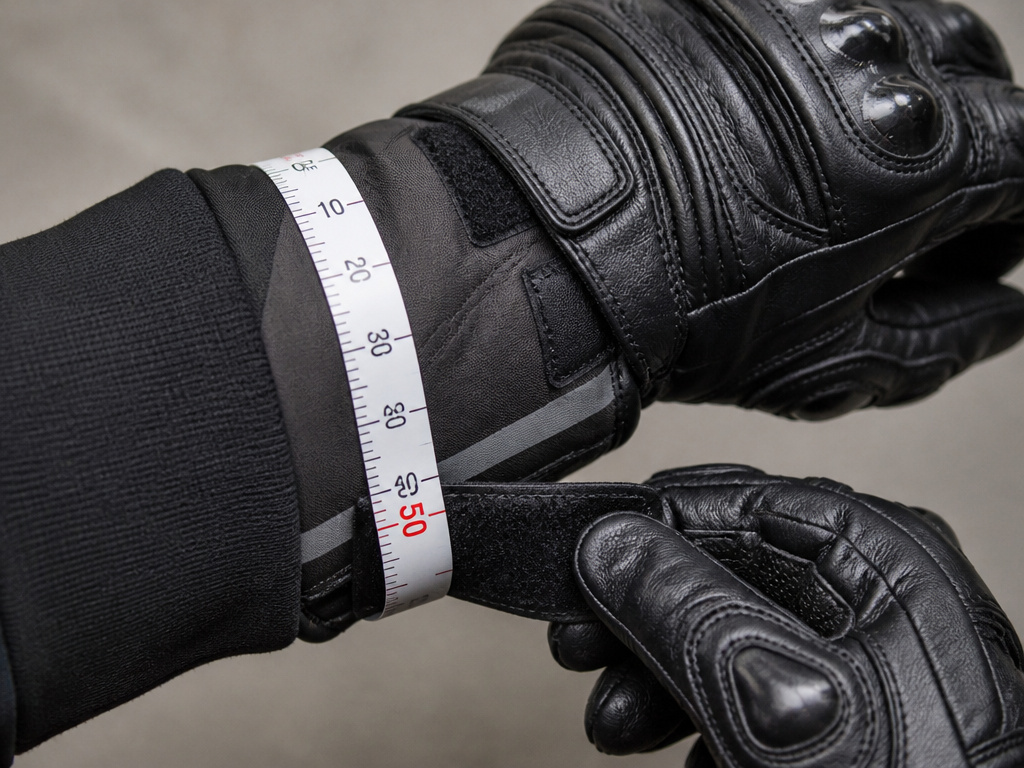
The EN 13594 standard for professional motorcycle gloves doesn’t just test abrasion; it sets physical dimensions for fit and security.
First, coverage. The standard mandates that the glove must cover from the fingertip to a point not less than 50 mm beyond the wrist joint. That’s about two inches past your wrist bone. This ensures the glove protects the vulnerable forearm tendons and provides enough material to stay anchored during a slide.
Second, restraint. The closure system (strap, zipper, elastic) must have an adjustment range of at least 30 mm and must resist a pull-off force of 35 Newtons. This is the engineering version of the “try to pull it off” test. A flimsy strap or a too-wide cuff fails here.
These aren’t marketing specs. They are the baseline for what a protective glove must do: stay on. A fashion glove or an ill-fitting one misses these points entirely. When you see a CE marking with the shield pictogram and a reference to EN 13594, you know the glove has been tested to these dimensional and retention standards.
| EN 13594 Performance Level | Cut Resistance (Palm) | Abrasion Resistance (Palm) | Knuckle Impact Protection |
|---|---|---|---|
| Level 1 | Index ≥ 1.2 | ≥ 3.0 s (single), ≥ 6.0 s (mean) | Optional |
| Level 2 | Index ≥ 1.8 | ≥ 4.0 s (single), ≥ 8.0 s (mean) | Mandatory (≤ 4.0 kN mean force) |
A Level 2 glove requires knuckle impact protection, which may affect its fit and structure. When trying on a Level 2 glove, pay extra attention to finger mobility, the added protection can’t come at the cost of dexterity.
Breaking In and Lifespan: The Long-Term Fit
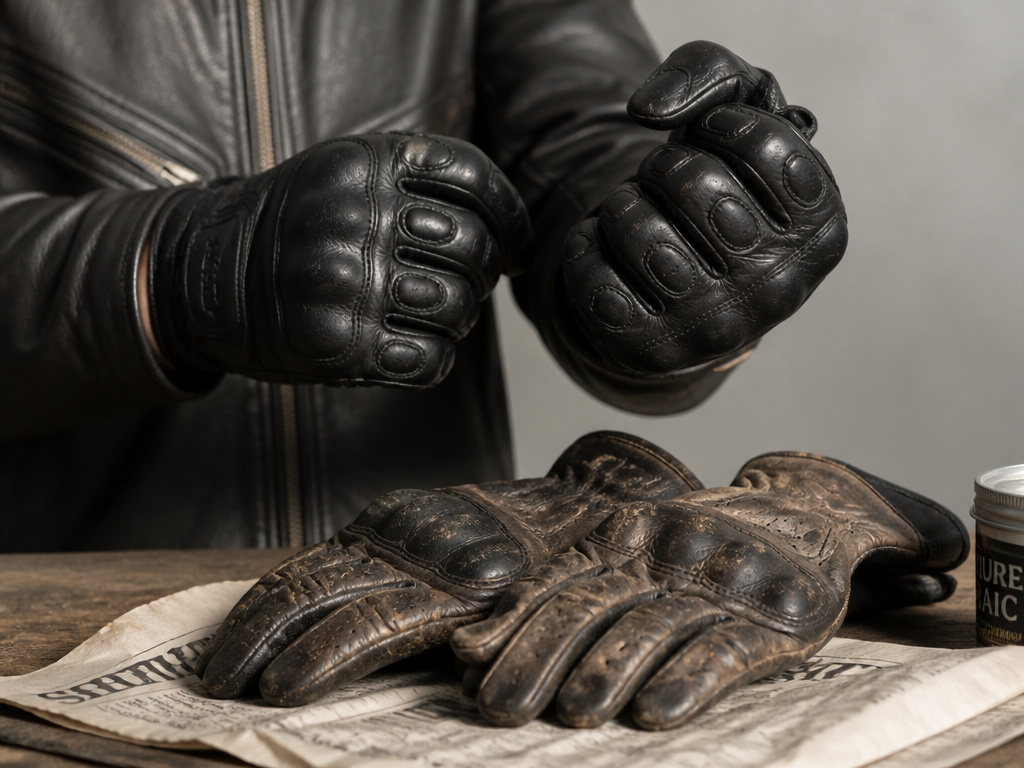
New gloves, especially leather, will be stiff. The break in gloves process is about warming the material and flexing it, not forcing it. Wear them around the house, flex your hands, work the fingers. Heat from your hands and gentle movement does the work. Never use artificial heat sources like ovens or hair dryers; you’ll bake the oils out and make the leather brittle.
The fit will change over years. All manufacturers state a product lifespan. Leatt recommends replacing protectors (like those in gloves) every three years under normal use. Manufacturers advise a product lifespan; for example, Leatt recommends replacing protectors every three years under normal use. Why? Sweat, UV exposure, and repeated flexing degrade the fibers and stitching, even if there’s no visible damage. The glove that fit perfectly in year one might be subtly stretched and weakened by year four, compromising its protective fit in a crash.
This is a gear item you maintain. After a wet ride, dry them at room temperature, not on a radiator. Stuff them with newspaper to absorb moisture and help them keep their shape. Proper care maintains the fit the manufacturer designed.
How to measure hand for sizing
To find your correct glove size, you must measure your hand circumference. Manufacturers provide specific size charts based on this measurement. For example, one brand’s extra small size fits a hand circumference of 17 to 18.5 centimeters, while a large fits 21 to 23 centimeters. The product must have the correct size, chosen from the manufacturer’s size chart. Always refer to the chart for the specific glove you are considering, as sizing can vary between brands and models. Do not guess your size; an accurate measurement is the first step to a proper fit.
Different glove types affect fit (race, touring, winter)
The intended use of a glove influences how it should fit. A glove should be as close fitting as comfortably possible yet allow full range of movement, which is critical for race gloves where precision is key. For touring or general use, the palm should be close fitting with a minimum amount of bunching possible. Winter gloves may require a slightly different approach to accommodate insulation; the fit should allow you to completely outstretch and close your fingers with no limitations. Always check the glove in combination with your jacket to confirm there are no conflicts nor a gap of protective material.
Frequently Asked Questions
Should motorcycle gloves be tight or loose?
They should be snug, not tight. “Snug” means the glove is in full contact with your skin without compression. You should be able to pinch a tiny bit of material at the tip of your finger, but your finger should not forcefully press the end seam. Tight gloves restrict blood flow and movement; loose gloves bunch and can pull off.
How do I know if my motorcycle gloves are too big?
Signs include: visible bunching or wrinkles in the palm when your hand is relaxed, the glove sliding easily on your hand when the strap is fastened, excess material at the fingertips that you can gather, and the cuff sitting too far from your wrist bone (less than 50 mm of coverage).
Do leather motorcycle gloves stretch?
Yes, quality leather gloves will stretch and mold to your hand shape, primarily in the palm and finger flex areas. This is why you should buy them fitting very snugly, not comfortably loose. Goat leather stretches more than cowhide. Synthetics and textiles have minimal stretch.
What if my fingers are long but my palm is narrow?
This is a common fit challenge. Some brands, like Held, are known for a more European cut (narrower palm, longer fingers). Others, like many Alpinestars models, have a broader palm. If you have non-average proportions, you may need to try more brands or look for models specifically designed for small hand gloves or different fits. Don’t settle for a poor palm fit just to get finger length.
How should winter motorcycle gloves fit?
Winter or insulated gloves should fit slightly looser than summer gloves. You need space for a thermal liner and for the insulation to loft and trap warm air. Your fingers should still reach the ends, but the palm should not be tight. Try them on with the liner you intend to use.
Before You Go
Fit your gloves with the same intent you fit your helmet. It’s not an accessory; it’s primary contact protection. The one spec to remember: if you can pull the glove off against a fastened strap without significant effort, it’s too big. Everything else, palm bunching, finger length, material choice, follows from that.
If you’re stuck between two sizes and the glove is leather, size down. If it’s textile, trust the measurement and maybe size up only if you need a liner. And always, always check the fit by gripping something cylindrical, not just making a fist in the air. That’s the difference between a glove that looks right and one that works right when your hand meets the pavement.
