
How to Measure Hand Size for Motorcycle Gloves: 2 Steps
This post contains affiliate links. As an Amazon Associate, we earn from qualifying purchases.
To measure your hand for motorcycle gloves, you need two numbers: the circumference of your dominant hand at the knuckles with your hand flat, and the same measurement while making a tight fist. The larger number is your target measurement. This is the correct method for how to measure hand size for motorcycle gloves. Consult the specific brand’s size chart using that circumference in centimeters or inches to find your size, as sizing is not consistent across all brands.
That two-number check for how to measure hand size for motorcycle gloves is the difference between a glove that fits the shop and one that fits the road. The official European Standard EN 13594:2002 mandates gloves be marked by hand circumference, but it also notes that hand proportions vary widely between people. A single, static measurement misses how your hand expands on the grips.
What follows: the official measuring standard, a table that explains why brands disagree, the two-step method that catches fist expansion, and what to do when your perfect number sits between two sizes on a chart. We’ll also cover how sizing shifts for winter gloves, women’s cuts, and the brands known to run large or small.
Key Takeaways
- Measure your dominant hand’s circumference at the knuckles with your hand flat and thumb out, then measure it again while making a tight fist, use the larger number.
- Brand sizing is not universal; an Alpinestars Large can be a Held Medium. Always check the specific brand’s chart.
- For leather gloves, expect a snug, stiff fit that molds to your hand within a week of riding.
- If your measurement falls between sizes, size up for winter or insulated gloves and size down for summer racing gloves.
- Women’s glove cuts are longer and more slender in the fingers; a men’s Medium often translates to a women’s Large or XL.
The Official Standard: What EN 13594:2002 Says
The European Standard EN 13594:2002 is the rulebook for protective motorcycle gloves. It doesn’t just cover abrasion resistance or seam strength; it dictates how gloves must be sized. Clause 4.6 states that gloves “shall be marked with their numerical sizes conforming to hand circumference measurements.”
That’s the baseline. Your glove size, by regulation, should correspond to the circumference of your hand. The standard also includes a critical note that most online guides skip: “The length and circumference ratios of hands are not constant between populations, or sexes, or with age. To maintain dexterity… The digit lengths of gloves need to be correct for the particular rider.”
Gloves shall be marked with their numerical sizes conforming to hand circumference measurements in EN 420, and hand length measurements conforming to EN 1082-1:1996. The length and circumference ratios of hands are not constant between populations, or sexes, or with age. . EN 13594:2002, Clause 4.6
This is why a simple circumference match from a how to measure hand size for motorcycle gloves guide isn’t a guarantee of perfect fit. Your hand’s proportions, long fingers with a narrow palm, or short fingers with a wide palm, are unique. The standard acknowledges this, which is why you’ll see sizing quirks between brands aimed at different rider demographics.
Where the Guides Disagree: Width vs. Circumference
If sizing were straightforward, every brand would use the same method. They don’t. This is the first hurdle riders hit when trying to convert a measurement into a size.
| Source | Primary Measurement Method | Key Difference |
|---|---|---|
| EN 13594:2002 (Standard) | Hand circumference | The regulatory baseline for numerical sizing. |
| Sportsbike Shop | Width across the palm (most common) / Hand circumference (some brands) | States most brands use width, but some use circumference. |
| MotorcycleGear.com | Largest possible circumference (hand wide and flat, thumb straight) | Advises taking the largest measurement you can get. |
This is why sources disagree: Sportsbike Shop states most brands use a width measurement, while EN 13594:2002 mandates sizing based on circumference, and the RAD blog advises a circumference measurement at the knuckles.
Always consult the brand’s own sizing guide. If they ask for circumference in centimeters, use the circumference method. If their chart is based on width, you’ll need to take that measurement instead.
The Two-Step Measuring Method (Flat Hand & Fist)
Here is the method that accounts for real-world riding. It combines the regulatory circumference baseline with the practical need to accommodate a gripping hand.
What You Need: A soft, flexible measuring tape (the cloth kind from a sewing kit). If you don’t have one, use a non-stretchy string and a ruler.
Step 1: Measure Your Dominant Hand Flat.
Make your hand as wide and flat as possible, with your fingers together and your thumb sticking straight out to the side. Wrap the tape around the widest part of your hand, which is almost always across your knuckles. The tape should sit just below the base of your fingers. Note the measurement in both centimeters and inches. Do not pull the tape tight; it should be snug but not compressing your skin.
Step 2: Measure Your Dominant Hand in a Fist.
Now make a tight fist, as if you were gripping handlebars. Wrap the tape around the same widest point. You’ll feel your hand expand. This number is often larger than your flat-hand measurement. Write this number down.
The number from Step 2 is your target. Your hand will be in a fist-like position while riding, and a glove that’s sized only for your flat hand will be too tight across the knuckles when you’re on the bike. The RAD blog and Sportsbike Shop both advise this two-step check to “account for the expansion of your hand.”
Common mistake: Measuring only with a flat hand. Your hand expands when gripping the bars, and a glove sized to that smaller measurement will strain the seams and restrict blood flow after 30 minutes.
How to Use Your Measurement With a Size Chart
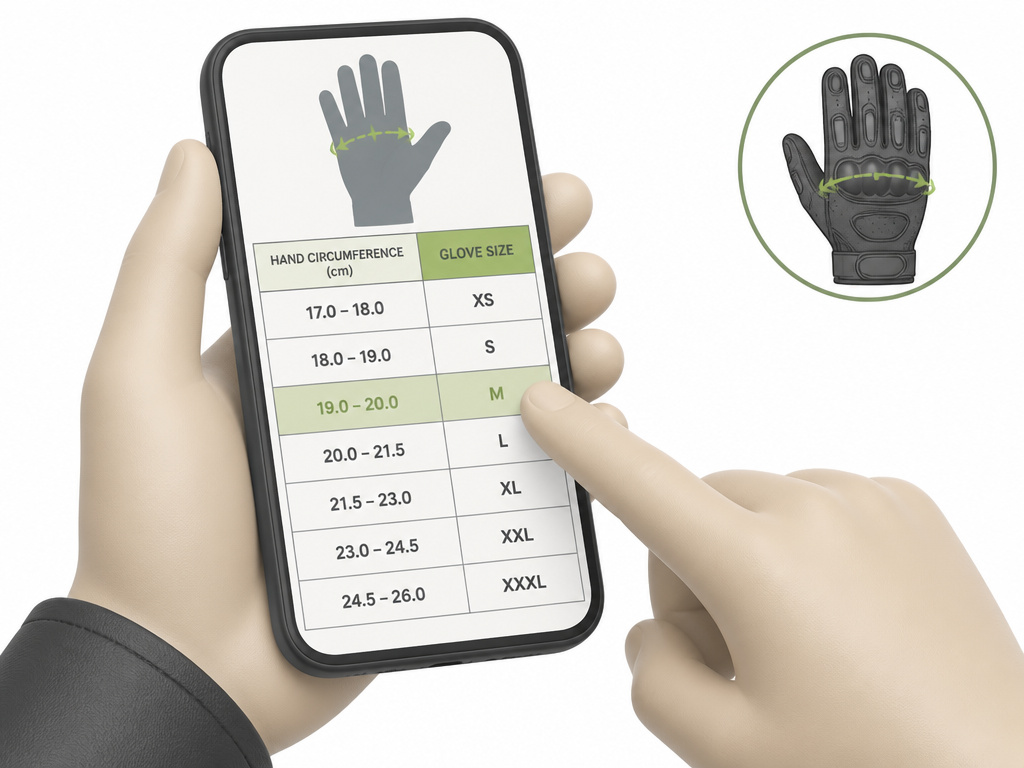
You have your larger circumference number. Now you need to translate it into a glove size (e.g., Medium, 9, XL). This is where the process gets specific.
- Find the Brand’s Chart. Go to the product page or the manufacturer’s website. Never assume a generic “Glove Size Chart” you find on Google applies to the brand you’re buying.
- Match Your Measurement. Find your circumference (in cm or in) in the chart’s left column. Follow that row across to find your corresponding alpha (XS, M, L) or numeric (8, 9, 10) size.
- Note the Units. European brands (Alpinestars, Dainese) typically use centimeters. Some US-centric brands may use inches. Double-check.
What if your measurement falls directly between two sizes on the chart? This is a frequent dilemma.
| If you are buying… | And your measurement is between sizes… | Then… |
|---|---|---|
| Summer / Racing Gloves (leather, slim fit) | Size 9 and Size 10 | Size down to the smaller size (9). Leather will stretch and mold. A racing glove must be initially snug. |
| Winter / Insulated Gloves (thick liner) | Size L and Size XL | Size up to the larger size (XL). You need room for the thermal liner and to maintain blood flow. |
| All-Season / Textile Gloves | Size M and Size L | Consider hand shape. If you have long fingers, size up for length. If you have a wide palm, the larger size may prevent palm bunching. |
This “between sizes” rule is a practical fix you won’t find in the standard, but it prevents the two most common fit failures: tight winter gloves that make your fingers numb, and baggy summer gloves that slide on the grips.
Special Cases: Women’s Gloves, Winter Gloves & Brand Quirks
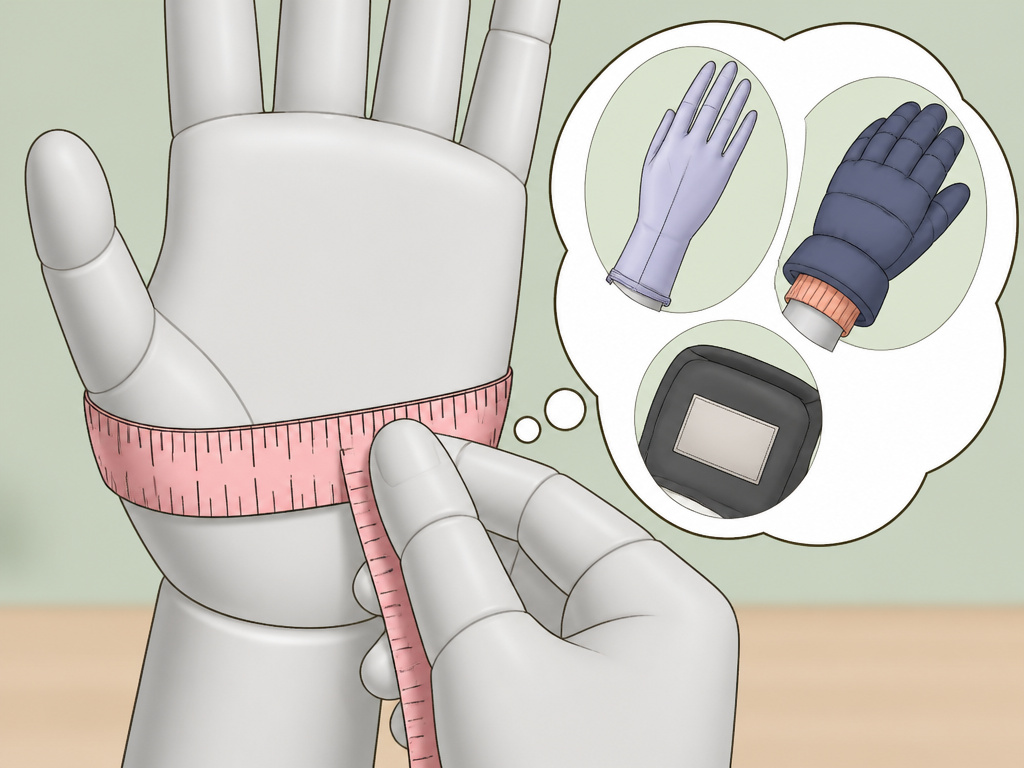
The basic circumference method works, but these scenarios need adjustments.
For Women’s Gloves: The cut is different. As MotorcycleGear.com notes, “ladies gloves are cut longer with more slender fingers.” A men’s Medium often translates to a women’s Large or XL. Don’t just convert your measurement to a unisex “Medium.” If you have a women’s-specific model in mind, use your circumference to find your size on that brand’s women’s chart. Your finger length will thank you.
For Winter or Heated Gloves: You must account for the bulk. The RAD blog advises that “a little bit of space at the fingertips for extra insulation is recommended.” Your measured circumference is your hand size. For a winter glove, you need your hand-plus-liner size. If you’re between sizes, always choose the larger one. A tight winter glove defeats its purpose by restricting circulation.
Brand-Specific Fit Quicks: This is community knowledge, not official sizing. It’s why you must check the brand’s chart.
Where this goes sideways: Buying a winter glove in your summer glove size. The thick liner takes up space, and a glove that fits in the cold store will cut off circulation on a 30-minute ride in sub-freezing temps.
How Should the Glove Actually Feel When You Try It On?
The measurement gets you in the ballpark. The try-on confirms it. This is the essential final step before you buy.
Test the Fit With Your Jacket On. Put on the glove. Then put on your motorcycle jacket. Does the glove’s cuff fit over or under the sleeve as you prefer? A winter glove should slide under to block wind; a summer glove might go over. Check this interaction.
Make a Fist and Grip an Imaginary Bar. Can you fully close your fingers without the material pinching the webs between your fingers? Do the fingertips feel like they’re pressing into the end of the glove? They shouldn’t. There should be no excess material bunching in the palm when you close your hand.
Operate the Controls. Mimic pulling a brake lever and twisting a throttle. You should be able to move your fingers and wrist freely. Stiffness is expected in new leather gloves, they break in, but outright restriction or pinching is a fail.
Check the Wrist Closure. Fasten the strap or zipper. It should be snug enough that you can’t pull the glove off easily when it’s fastened, but not so tight it leaves a deep imprint on your skin. EN 13594:2002 requires the restraint system to resist a force of 35 Newtons to prevent the glove from being pulled off in a crash. A good strap resists a force of 35 Newtons.
Leather gloves will feel tight at first. That’s normal. As the RAD blog says, “Leather motorcycle gloves often feel a bit tight and stiff when trying them on. Keep in mind that these gloves start to mold to your hands after a week and stretch out a bit.” Textile gloves, however, will not stretch much. If a textile glove is tight, it will likely stay tight.
Frequently Asked Questions
What if my hands are different sizes?
Measure both hands. Use the measurement from your larger, dominant hand (usually the right if you’re right-handed) for sizing. A slight fit difference on the smaller hand is better than a glove that’s too tight on your primary control hand.
Should motorcycle gloves be tight or loose?
They should be snug but not restrictive. You should feel the glove conform to your hand without pressure points. A properly fitted glove will have zero excess material in the palm that can bunch up on the grips. A little resistance in new leather is fine; numbness or pain is not.
How much do leather motorcycle gloves stretch?
Leather gloves will mold and soften with wear, stretching out a bit over the first week of regular riding. They do not “size up” a full size. Buy for the fit you want on day 10, not day 1.
Can I use a string instead of a measuring tape?
Yes. Use a non-stretchy string or even a strip of paper. Wrap it around your hand as instructed, mark where it meets, then lay it flat against a ruler to get your length in centimeters or inches.
Do I need to measure finger length separately?
For most brands, the circumference method is sufficient because finger length is proportional in their sizing. However, if you have exceptionally long or short fingers relative to your palm, look for brands that offer “short” or “long” finger length options within the same size, or check our guide on gloves for small hands for discussion of proportion issues.
Before You Go
The rule that decides everything: if you can’t fully flex your fingers around an imaginary grip in the store, the gloves go back. I learned this the hard way with a pair that felt “almost right” in the shop. After 30 minutes on the highway, my hands were fatigued and my control felt vague. Comfort on the bars isn’t a luxury; it’s the foundation of safety.
Your measurement gives you access to the right size chart. The try-on is the final test. Don’t skip either step. For more on what to do after you buy, see our guide on how to break in gloves properly. And remember, the best protective gloves in the world are useless if they don’t fit your hands.
